Are You Sick and Tired Yet?

Matthew 11:28-30, ESV

Weariness and burdens are our common plight. We all have them. They are shared as sort of common identity, like eye color or hair color. We all have them, and wish we didn’t. Sometimes we feel like shutting down, it seems too much to endure.

Weariness, that bone-tiredness that sleep doesn’t seem to help.

We seem to be chronically fatigued by life and what it brings us. We have heavy burdens, we carry a load that only gets heavier (and never lighter.) I suppose we adapt, and simply learn to carry it. But that wears thin, and weariness always breaks through.

Money problems, bills that are past due, marriages, straying children, cars that need fixing, family problems, job hassles, health problems… the list goes on ad nauseam. There are far too many issues, too many problems. Perhaps boredom and tedium are added to the list. They only intensify the hopelessness. (Its own special kind of suffering.)

Some will choose to ‘self medicate’ with alcohol or drugs.

They want something more, and find they only create more burdens (not less). Some will become hopelessly addicted, never finding relief from their burdens, but only increasing them. Suicide very often is seen as the only way out. It seems that it’s an option.

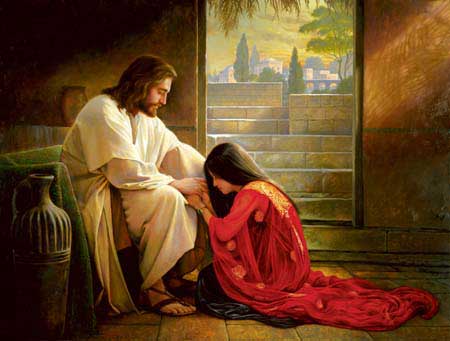
But Jesus will never condemn (leave that to the Pharisees) but instead offers a sort of amnesty to the burnt-out and the burdened. Come to me, all of you who are weary and carry heavy burdens, and I will give you rest.” Jesus did not say, “Get away from me, I am holy and you are not.” Rather, He makes himself to be the solution to all those whose life has overwhelmed.

He desperately wants our burdens and absorbs all our weariness. He wants us. He wants to give us peace and rest. Often Jesus offers but we’ll refuse.

An easy trade, especially since we are so desperate. Some have evaluated Jesus’ offer and made the transaction–piling up our burdens at His feet. We might be a little hesitant about the “my yoke” part, but will quickly find that discipleship can’t be compared to the weight we once carried for so long.

Biblical discipleship is relatively easy. It only asks that we surrender–For my yoke is easy to bear, and the burden I give you is light.” Following Jesus becomes the best way to live. We seem to understand, but unless we commit we will just carry our weight. (But it only gets heavier.)

Here’s a few verses from Isaiah that might help you sort this out:

29 He gives power to the weak
    and strength to the powerless.
30 Even youths will become weak and tired,
    and young men will fall in exhaustion.
31 But those who trust in the Lord will find new strength.
    They will soar high on wings like eagles.
They will run and not grow weary.
    They will walk and not faint.

Isaiah 40:29-31

But you need to deliberately choose. You must decide for yourself–what will you commit to? Will you continue to carry your burden, or will you turn to Jesus?

The Deep Pit

“I waited patiently for the Lord to help me,
    and he turned to me and heard my cry.
He lifted me out of the pit of despair,
    out of the mud and the mire.
He set my feet on solid ground
    and steadied me as I walked along.”

3″He has given me a new song to sing,
    a hymn of praise to our God.
Many will see what he has done and be amazed.
    They will put their trust in the Lord.”

Psalms 40:1-3, NLT

Psalm 40 is jam packed with great and wonderful truth. It contains freedom for the Christian– a way out for the broken believer. We do well when we use it, and that’s what it’s there for. The deep pit has been used over many centuries as the way God teaches us to sing certain songs. But that doesn’t make it easier, does it?

Verse 1

I waited patiently for the Lord to help me, and he turned to me and heard my cry.

Waiting is a critical word, it should not be regarded as trivial. In our daily walk we must be patiently seeking the Lord, that comes first. Admitting you need help is the first step. And guess what? You need help. 😁

The word ‘wait’ is special, it’s kawvah in Hebrew. It can mean ‘to bind together by twisting.‘ It can be used with the idea of braiding strands of rope together. It is never a passive act that just happens. Waiting on God is to be done with intentional purpose.

Remember that the Lord is not some distant deity on a hill far away.

He’s not hiding from you. It’s really quite the opposite.

He is closer to you than you think. He is responsive and aware. He hears your cries and wants to act; He is not deaf, but our patience is critical. Waiting on Him is crucial to being free. We must bind and twist our hearts and live our life to His desires.

Verse 2

He lifted me out of the pit of despair, out of the mud and the mire. He set my feet on solid ground and steadied me as I walked along.

The seeable terrain can be awful, with muddy paths and mucky pits. Things that pull you down and suck you in. They’ll trap the traveler. But the Holy Spirit is quite able to lift us out. He picks us up and secures us. He uses the rope of God’s Word.

He is way more willing to save us, than we are to being saved.

Solid ground is where we are meant to be. It’s become a place of firm standing and secure footing. He makes us steady and He keeps us safe. The Holy Spirit now has intimate care over your soul.

Verse 3-4

“He has given me a new song to sing, a hymn of praise to our God.

Many will see what he has done and be amazed. They will put their trust in the Lord.

Some of the greatest songs are the ones that come from those just delivered from the pit.

These are ‘pit songs,’ offered to God from sincere and true hearts that have once been trapped. There’s something solid heard from the hearts of those redeemed from disaster.

These songs no longer sound religious or contrived.

“YOU CAN SEE GOD FROM ANYWHERE IF YOUR MIND IS SET TO LOVE AND OBEY HIM.”

A.W. Tozer

From our deepest pits come our greatest praises.

There is a passionate quality that saturates these ‘pit praises’ that is highly treasured by God, and esteemed and valued by the Church– a sense of authenticity starts to be finally heard. We can finally start to see that our pits become ‘launching pads’ of true songs of deliverance.

Without Your Wound, Where Would Your Power Be? 

angel6

The subject of “the pool at Bethesda” alludes to the Thorton Wilder play, “The Angel that Troubled the Waters.” 

The play is based on the biblical verses of John 5:1-4, however, it changes the end of the parable. 

The play tells of a physician who comes to the pool of Bethesda, hoping to see the stir, and then be the first in the water, and healed of his melancholy and debilitating depression.  An angel appears and troubles the water. Everybody at the pool hopes to be the first one in and to be healed of their disability.

…………………………………………………………………

An angel appears and blocks the physician at the very moment he is ready to step into the pool and be healed.

angel1

Angel: “Drawback, physician, this moment is not for you.”

Physician: “Angelic visitor, I pray thee, listen to my prayer.

Angel: “This healing dear physician, is not for you.”

Physician: “Surely, surely, the angels are wise. Surely, O Prince, you are not deceived by my apparent wholeness. Your eyes can see the nets in which my wings are caught; the sin into which all my endeavors sink half-performed, cannot be concealed from you.”

Angel: “I know.”

Physician: “Oh, in such an hour was I born, and doubly fearful to me is the flaw in my heart. Must I drag my shame, Prince and Singer, all my days more bowed than my neighbor?”

Angel: Without your wound where would your power be?” 

“It is your very sadness that makes your low voice tremble into the hearts of men. The very angels themselves, cannot persuade the wretched, and blundering children on earth, as can one human being broken on the wheels of living.

Later, the person who enters the pool first, and was healed rejoices in his good fortune, then turns to the physician before leaving and says:

“But come with me first, an hour only, to my home. My son is lost in dark thoughts. I — I do not understand him, and only you have ever lifted his mood.”

“Only an hour… my daughter, since her child has died, sits in the shadow. She will not listen to us, but she will listen to you.”

For me, the play pierces me with the understanding that comes from this wonderful line— “Without your wound where would your power be?“ That causes me to look at my many weaknesses with a very different perspective.

Paul’s teachings offer us a powerful revelation: it is through our weaknesses that we can authentically minister to others, just as Jesus did going to the cross. This concept, slowly permeating my understanding, emphasizes the transformative nature of my own pain and vulnerability.

Paul boldly declares that it is the very things we perceive as weak that have the potential to cultivate strength and truth within us and to others. It is my sincere hope that brokenbelievers.com, through its ministry, will impact lives by embracing this profound truth.

I hope so anyway. Pray for Linda. Pray for me.

I first encountered this excerpt in the book, “Abba’s Child: The Cry of the Heart for Intimate Belonging,” by Brennan Manning. The book is a worthy read, and if you can find it, you’ll be blessed.

Please check out Brennan Manning’s Facebook page for more info.

Please check out my newest, alaskabibleteacher.com.


Grasping Grace, an Excerpt

I was seventeen when I faced the most difficult decision of my life. At the time, I justified it as my only option.

Curled up on my bed, in what had once been my safe haven, I squeezed my eyes tight, holding back a flood of tears. I gasped for air and shuddered at the thought of telling my parents.

The scene played out in my mind over and over. Shaking and trembling, unable to look either of them in the eye, I would force the words “Mom, Dad, I was raped and I’m pregnant.” Dad’s cheerful grin would disappear. Mom would give me the silent stare that said it was all my fault.

Escape plan

With each passing day, I wasn’t getting any less pregnant. I had to do something. But what? I had my whole life ahead of me. I had college plans and a career, which didn’t mesh with becoming a teenage mom. College was going to be my escape from my crummy hometown.

Getting pregnant was a bit like the run on the Bailey Savings and Loan that kept poor George Bailey from getting out of Bedford Falls in It’s a Wonderful Life. Only I didn’t stay and save the town from Potter. I took the money and ran.


The Rest of the Story

This is my story. Well, one of my stories. I, just like you, am made up of many stories. To read the rest of this story, see the full article “Grasping Grace” on Now What?, the online magazine of Bible Advocate Magazine.

anotherfearlessyear.net