These Very Temporary Troubles

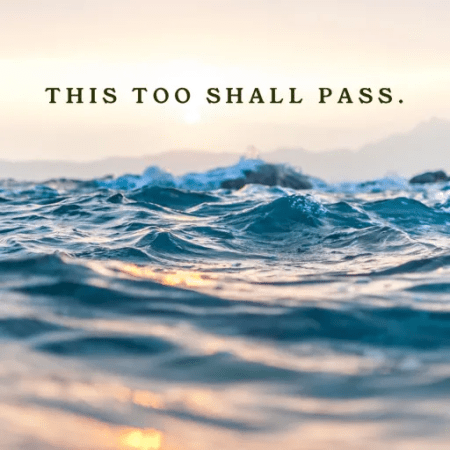
The apostle Paul once wrote, “For our light and momentary troubles are achieving for us an eternal glory that far outweighs them all.” 2 Corinthians 4:17 (NIV).

The troubles we face don’t seem light or momentary. They feel heavy and often permanent. Especially when one struggles with troubles like mental illness, fibromyalgia and other chronic pain syndromes, physical disabilities, and cancer. Surely Paul was mistaken when he described our troubles as light and momentary. Perhaps his life was a different experience?

No, Paul knew what he was talking about; he knew about all about troubles.

He was flogged and beaten, threatened with stoning, and thrown in jail multiple times for proclaiming Christ. He was shipwrecked not once, not twice, but three times. Although the Bible doesn’t tell us how Paul died, other historical documents suggest that he was beheaded.

Once he chose to follow Christ and proclaim His name, Paul’s life was anything but easy, his troubles anything but light and momentary. And yet, compared to the eternal glory his passion for Christ was earning for him, he could truthfully call them light and momentary.

Our burdens become light when we give them to Jesus.

Come to me, all you who are weary and burdened, and I will give you rest.” Matthew 11:28 (NIV). He will carry the load if only we are willing to give it up. Sometimes he brings fellow believers alongside to help with this.

Our troubles become momentary when we see them from an eternal perspective.But do not forget this one thing, dear friends: With the Lord a day is like a thousand years, and a thousand years are like a day.” 2 Peter 3:8 (NIV). In our earthly bodies we are bound by time and can be easily fooled by it.

In God’s kingdom, time becomes somewhat irrelevant.

aasignLinda

When God Doesn’t Heal You

Mike Mason

God heals. Of that I have no doubt. We have many promises and see so much actual healing in Scripture. Jesus’ ministry would connect with hundreds of people who would be physically touched. The Lord would pass the baton on to His Church. We’re called to “lay hands on the sick,” (James 5:14-15).

But not everyone who is sick will receive physical healing. Even those who were active in ministry knew sickness.

In the second episode of season 3 of “The Chosen,” Little James, who we’ve seen walks with a limp, comes to Jesus after He commissions the Apostles. He tells him he finds it hard to believe that he will be healing people, given that Jesus hasn’t healed him.

“Do you want to be healed?” asks Jesus.

“Yes, of course,” James says, “if that’s possible. Why haven’t you?” he asks Jesus—again, a question some of us would’ve asked.

“Because I trust you,” Jesus says. “Little James. Precious Little James. I need you to listen to me very carefully, because what I am going to say defines your whole life to this point and will define the rest of your life. Do you understand?”

Jesus tells James that he will heal many people, and they will have a good story to tell.

“To know how to proclaim that you still praise God in spite of this—to know how to focus on all that matters, so much more than the body—to show people that you can be patient with your suffering here on Earth, because you know you’ll spend eternity with no suffering—not everyone can understand that. How many people do you think the Father and I trust this with? Not many.”

“But the others,” James says, “they are so much more … stronger, better at this.”

“James, I love you,” Jesus says, “but I don’t want to hear that ever again.”

“I know how easy it is to say the Psalm of David, that I am beautifully and wonderfully made, but it doesn’t make this any easier,” says James, begins to weep. “It doesn’t make me feel like any less of a burden.”

“When you pass from this earth,” Jesus says to James, “and you meet your Father in Heaven, where Isaiah promises you will leap like a deer, your reward will be great. So hold on a little longer. And when you discover yourself finding true strength because of your weakness, when you do great things in my Name in spite of this, the impact will last for generations. Do you understand?”

James cries, and says, “Yes. Thank you, Master.”

I believe that there are two truths that every Christian can count on. These are solid, and completely trustworthy. They are forever fixed and will never change.

“Fear not, for I am with you; be not dismayed, for I am your God; I will strengthen you, I will help you, I will uphold you with my righteous right hand.” Isaiah 41:10

“He will wipe away every tear from their eyes, and death shall be no more, neither shall there be mourning, nor crying, nor pain anymore, for the former things have passed away.” Revelation 21:4

     John Henry Newman  

Christ and Cancer

NIH illustration
illustration by NIH

by John Piper

Before I entered college I hardly gave a thought to cancer and terminal illness. But ever since those college days death by disease has walked beside me all the way. Two of my college acquaintances died of leukemia and cancer of the lymph glands before they were 22. At seminary I watched Jim Morgan, my teacher of systematic theology, shrivel up and die in less than a year of intestinal cancer. He was 36. In my graduate program in Germany my own “doctor-father,” Professor Goppelt, died suddenly just before I was finished. He was 62—a massive coronary. Then I came to Bethel, the house of God! And I taught for six years and watched students, teachers, and administrators die of cancer: Sue Port, Paul Greely, Bob Bergerud, Ruth Ludeman, Graydon Held, Chet Lindsay, Mary Ellen Carlson—all Christians, all dead before their three score and ten were up. And now I’ve come to Bethlehem and Harvey Ring is gone. And you could multiply the list ten-fold.

What shall we say to these things? Something must be said because sickness and death are threats to faith in the love and power of God. And I regard it as my primary responsibility as a pastor to nourish and strengthen faith in the love and power of God. There is no weapon like the Word of God for warding off threats to faith. And so I want us to listen carefully today to the teaching of Scripture regarding Christ and cancer, the power and love of God over against the sickness of our bodies.

I regard this message today as a crucial pastoral message, because you need to know where your pastor stands on the issues of sickness, healing, and death. If you thought it was my conception that every sickness is a divine judgment on some particular sin, or that the failure to be healed after a few days of prayer was a clear sign of inauthentic faith, or that Satan is really the ruler in this world and God can only stand helplessly by while his enemy wreaks havoc with his children—if you thought any of those were my notions, you would relate to me very differently in sickness than you would if you knew what I really think. Therefore, I want to tell you what I really think and try to show you from Scripture that these thoughts are not just mine but also, I trust, God’s thoughts.

Six Affirmations Toward a Theology of Suffering

So I would like everyone who has a Bible to turn with me to Romans 8:18–28. There are six affirmations which sum up my theology of sickness, and at least the seed for each of these affirmations is here. Let’s read the text:

I consider that the sufferings of this present time are not worth comparing with the glory that is to be revealed to us. For the creation waits with eager longing for the revealing of the sons of God; for the creation was subjected to futility, not of its own will but by the will of him who subjected it in hope; because the creation itself will be set free from its bondage to decay and obtain the glorious liberty of the children of God. We know that the whole creation has been groaning in travail together until now; and not only the creation, but we ourselves, who have the first fruits of the Spirit, groan inwardly as we wait for adoption as sons, the redemption of our bodies. For in this hope we were saved. Now hope that is seen is not hope. For who hopes for what he sees? But if we hope for what we do not see, we wait for it with patience.

Likewise the Spirit helps us in our weakness; for we do not know how to pray as we ought, but the Spirit himself intercedes for us with sighs too deep for words. And he who searches the hearts of men knows what is the mind of the Spirit, because the Spirit intercedes for the saints according to the will of God.

We know that in everything God works for good with those who love him, who are called according to his purpose. (RSV)

1. All Creation Has Been Subjected to Futility

My first affirmation is this: the age in which we live, which extends from the fall of man into sin until the second coming of Christ, is an age in which the creation, including our bodies, has been “subjected to futility” and “enslaved to corruption.” Verse 20: “The creation was subjected to futility.” Verse 21: “The creation will be freed from slavery to corruption.” And the reason we know this includes our bodies is given in verse 23: not only the wider creation but “we ourselves (i.e., Christians) groan in ourselves awaiting sonship, the redemption of our bodies.” Our bodies are part of creation and participate in all the futility and corruption to which creation has been subjected.

Who is this in verse 20 that subjected creation to futility and enslaved it to corruption? It is God. The only other possible candidates to consider would be Satan or man himself. Perhaps Paul meant that Satan, in bringing man into sin, or man, in choosing to disobey God—perhaps one of them is referred to as the one who subjected creation to futility. But neither Satan nor man can be meant because of the words “in hope” at the end of verse 20. This little phrase, subjected “in hope,” gives the design or purpose of the one who subjected creation to futility. But it was neither man’s nor Satan’s intention to bring corruption upon the world in order that the hope of redemption might be kindled in men’s hearts and that someday the “freedom of the glory of the children of God” might shine more brightly. Only one person could subject the creation to futility with that design and purpose, namely, the just and loving creator.

Therefore, I conclude that this world stands under the judicial sentence of God upon a rebellious and sinful mankind—a sentence of universal futility and corruption. And no one is excluded, not even the precious children of God.

Probably the futility and corruption Paul speaks of refers to both spiritual and physical ruination. On the one hand man in his fallen state is enslaved to flawed perception, misconceived goals, foolish blunders, and spiritual numbness. On the other hand, there are floods, famines, volcanoes, earthquakes, tidal waves, plagues, snake bites, car accidents, plane crashes, asthma, allergies, and the common cold, and cancer, all rending and wracking the human body with pain and bringing men—all men—to the dust.

As long as we are in the body we are slaves to corruption. Paul said this same thing in another place. In 2 Corinthians 4:16 he said, “We do not lose heart, but though our outer man (i.e., the body) is decaying (i.e., being corrupted) yet our inner man is being renewed day by day.” The word Paul uses for decay or corrupt here is the same one used in Luke 12:33 where Jesus said, Make sure your treasure is in heaven “where thief does not come near and moth does not corrupt.” Just like a coat in a warm, dark closet will get moth eaten and ruined, so our bodies in this fallen world are going to be ruined one way or the other. For all creation has been subjected to futility and enslaved to corruption while this age lasts. That is my first affirmation.

2. An Age of Deliverance and Redemption Is Coming

My second affirmation is this: there is an age coming when all the children of God, who have endured to the end in faith, will be delivered from all futility and corruption, spiritually and physically. According to verse 21, the hope in which God subjected creation was that some day “The creation itself also will be set free from its slavery to corruption into the freedom of the glory of the children of God.” And verse 23 says that “We ourselves groan within ourselves waiting eagerly for our adoption as sons, the redemption of our bodies.” It has not happened yet. We wait. But it will happen. “Our citizenship is in heaven from which we await a Savior, the Lord, Jesus Christ, who will transform the body of our lowliness to be like the body of his glory” (Philippians 3:20, 21). “In a moment, in the twinkling of an eye, at the last trumpet, for the trumpet will sound and the dead will be raised incorruptible and we shall be changed” (1 Corinthians 15:52). “He will wipe away every tear from our eyes, and there shall be no longer any death; and there shall be no longer any mourning or crying or pain; the first things have passed away” (Revelation 21:4).

There is coming a day when every crutch will be carved up, and every wheelchair melted down into medallions of redemption. And Merlin and Reuben and Jim and Hazel and Ruth and all the others among us will do cartwheels through the Kingdom of Heaven. But not yet. Not yet. We groan, waiting for the redemption of our bodies. But the day is coming and that is my second affirmation.

3. Christ Purchased, Demonstrated, and Gave a Foretaste of It

Third, Jesus Christ came and died to purchase our redemption, to demonstrate the character of that redemption as both spiritual and physical, and to give us a foretaste of it. He purchased our redemption, demonstrated its character, and gave us a foretaste of it. Please listen carefully, for this is a truth badly distorted by many healers of our day.

The prophet Isaiah foretold the work of Christ like this in 53:5–6 (a text which Peter applied to Christians in 1 Peter 2:24):

But he was wounded for our transgressions, he was bruised for our iniquities; upon him was the chastisement that made us whole, and with his stripes we are healed. All we like sheep have gone astray; we have turned every one to his own way; and the Lord has laid on him the iniquity of us all. (RSV)

The blessing of forgiveness and the blessing of physical healing were purchased by Christ when he died for us on the cross. And all those who give their lives to him shall have both of these benefits. But when? That is the question of today. When will we be healed? When will our bodies no longer be enslaved to corruption?

Continue reading “Christ and Cancer”

Led Aside by Jesus, [Consideration]

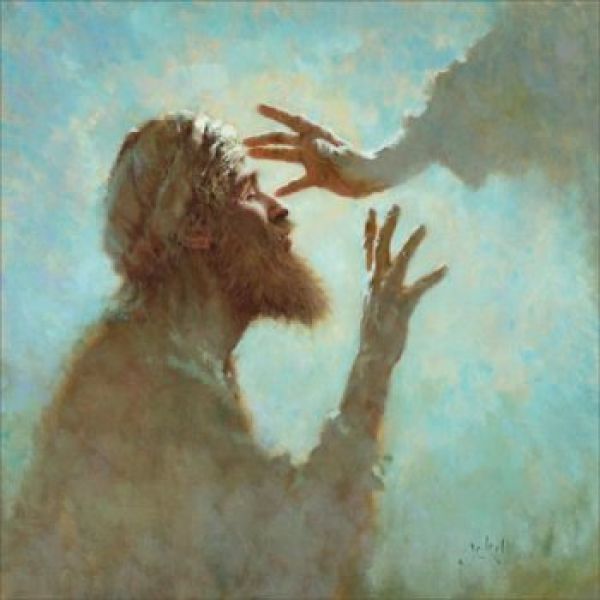
“He took the blind man by the hand and led him outside the village. When he had spit on the man’s eyes and put his hands on him, Jesus asked, “Do you see anything?”

–Mark 8:23, NIV

Here I can imagine the gentleness and the kindness of Jesus–we see Him leading this man out of town to a quieter place. Showmanship?  Not on your life.  Jesus has made the decision to avoid the theatrics of a blind man given sight, and ducked the paparazzi for a moment to touch this man.

In a way, we are all like this blind man.  We stumble around and try to make our way.  But it is raucous confusion– the fields of philosophy, religion, psychology, politics and art are not much more than a blind men tapping with his cane, trying to find their way into the light.  This may be rather simplistic, but I believe it’s more true then we care to admit.  The entire social history of humans is based on confusion and conflict.

We grope in the gloom, and there is none to take our hand and lead us out of the darkness.  We stumble and fall, and come no closer to understanding then when we first started.  It is hopeless.  Our striving borders on madness and insanity.

The blind man in Mark 8 entrusted himself to Jesus’ care.  He willingly went with Jesus, following down the path and out of the village.  Jesus carefully leads him by the hand, which is quite remarkable.  (I guess I’m envious.)  Jesus would have led this man past every obstacle.

Each of us have to encounter Jesus for ourselves.

We are born blind, having no awareness (zero, zilch, nada) of spiritual truth.  We must be taught to see.  At the airport in Salt Lake City recently, I saw a young blind man being led through large crowd.  I was fascinated by his trust in his guide as people jostled to try to make their connections.  There was a quiet composure in him.  (In his place, I would be terrified.)

We must trust Jesus, with that same composure and grace.  When we cannot see, we must trust.

“I do not try to see my way,
Before, behind, or left, or right;
I cannot tell what dangers gray
Do haunt my steps, nor at what height
Above the sea my path doth wind:
For I am blind. 

“Yet not without a guide I wend
My unseen way, by day, by night;
Close by my side there walks a Friend,——
Strong, tender, true: I trust His sight;
He sees my way before, behind,
Though I am blind.”

by an Unknown Author

bry-signat

cropped-christiangraffiti1-3