

- I was born in Milwaukee, Wisconsin at a very young age, lol.
- My parents were very young, my mom 16 and my dad was almost 18.
- I grew up in Northern Wisconsin. In a brick farmhouse. I used a hand-pump and an outdoor toilet for awhile.
- I was very close to my great-grand parents, Ben and Eva Tarbox.
- I joined the Army when I was 17, and stationed in Hawaii, was a hospital corpsmen.
- When discharged I came to Homer, Alaska to attend the Alaska Bible Institute. I graduated in 1984.
- Lynn and I met in 1987 in San Francisco, we married in 1989 and lived in the city for several months.
- I was stranded for 36 hours in a small car north of Fairbanks in January 1986. It got down to 30 below zero. A week later I was almost burned to death in a cabin fire. I have lots of scar tissue on my back.
- I drove an old van from Mexico to Alaska in 1998, I patched a big hole in the gas tank using a bar of lye soap. I drove it all the way to Homer without it leaking. Go figure.
- I pastored Kachemak Bay Christian Church for three years. I loved it.
- I had several medical crisis’ beginning in 2002. Brain surgery was needed, I found I had contracted HCV in 2003.
- I aspire to be a writer. I’m now negotiating with a publisher. I also have three blogs.
- I have severe tinnitus. I hear noise all the time. It gets old.
- As a boy, my dream was to be a writer, or a forester.
Category: lost causes
Two O’ Clock in the Morning Poetry, #5
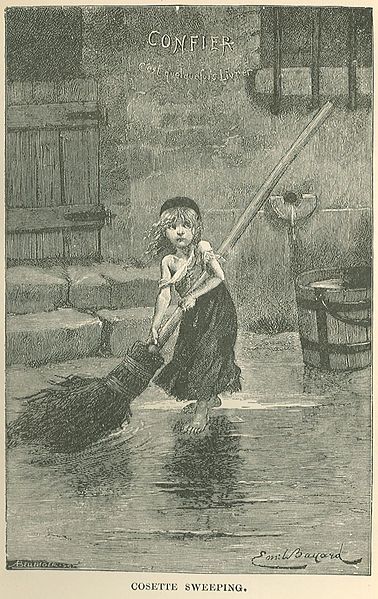
~Victor Hugo – Les Miserables
“Deep hearts, wise minds, take life as God has made it. It is a long trial; An unintelligible preparation for an unknown destiny. This destiny, the true one, begins for man at the first step in the interior of the tomb.”
“There he begins to discern the definite. The definite, think of this word! The living see the infinite; the definite reveals itself only to the dead. Meantime, love and suffer, hope and contemplate. “
“Woe, alas! to him who shall have loved forms, bodies, appearances only. Death will take all from him. Try to love souls, you shall find them again.”
yY
Victor Marie Hugo (French pronunciation: [viktɔʁ maʁi yɡo]; 26 February 1802 – 22 May 1885) was a French poet, novelist, and dramatist of the Romantic movement. He is considered one of the greatest and best known French writers. In France, Hugo’s literary fame comes first from his poetry but also rests upon his novels and his dramatic achieveme’
nts. Among many volumes of poetry, Les Contemplations and La Légende des siècles stand particularly high in critical esteem. Outside France, his best-known works are the novels Les Misérables, 1862, and Notre-Dame de Paris, 1831 (known in English as The Hunchback of Notre-Dame).
y

Related articles
- Victor Hugo’s Hilarious Chapter Titles (sandguppy.wordpress.com)
- From atop Notre-Dame de Paris (ireport.cnn.com)
- Inside Notre Dame Cathedral (outandaboutinthecity.com)
Two O’ Clock in the Morning Poetry, #3

Middle Parts of Fortune, by Frederic Manning
“The air was alive with the rush and flutter of wings; it was ripped by screaming shells, hissing like tons of molten metal plunging suddenly into water, there was the blast and concussion of their explosion, men smashed, obliterated in sudden eruptions of earth, rent and strewn in bloody fragments, shells that were like hell-cats humped and spitting, little sounds, unpleasantly close, lie the plucking of tense strings, and something tangling his feet, tearing at his trousers and puttees as he stumbled over it, and then a face suddenly, an inconceivably distorted face, which raved and sobbed at him as he fell with it into a shell-hole.”
(Accounts of The Great War)
R
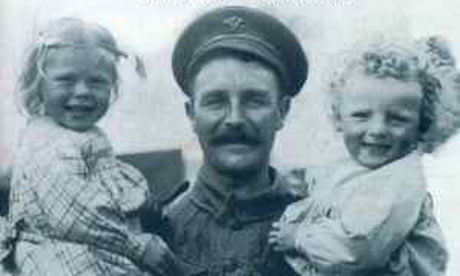 Manning was an Australian aspiring intellectual, already in his mid-30s when he enlisted as a private soldier in 1915. His prewar existence in England was dogged by unfulfilled literary hopes and emotional confusions. He served for only a few months in France, and his military career ended in alcoholism and disgrace. But in 1929 he composed a novel, obviously autobiographical, about three soldiers’ experience of the trench nightmare, which is outstanding. Almost certainly the finest work of its kind to emerge from the war. (Penguin)
&
Manning continued to write. In 1917 he published a collection of poems under the title Ediola. This was a mixture of verse predominantly in his former style alongside war poems heavily influenced by the imagism of Pound, which deal introspectively with personal aims and ideals tempered in the crucible of battle. He contributed to anthologies, for example, The Monthly Chapbook which appeared in July 1919 edited by Harold Monro, containing twenty-three poems by writers including John Alford, Herbert Read, Walter De La Mare, Osbert Sitwell, Siegfried Sassoon, D. H. Lawrence, Edith Sitwell, Robert Nichols, Rose Macaulay and W. H. Davies alongside Manning and Aldington. He wrote for periodicals, including The Criterion, which was produced by T. S. Eliot.
&&&
Poetry did not pay, and so in 1923 Manning took a commission from his publisher John Murray to write The Life of Sir William White, a biography of the man who, as Director of Naval Construction, led the build-up of the Royal Navy in the last years of the nineteenth century. Galton had died in 1921, which not only left Manning effectively homeless, but also lacking a forceful directing influence in his life. He lived for much of the time at the Bull Hotel in Bourne, apart from a short spell when he owned a farmhouse in Surrey. At this time he was friendly with T. E. Lawrence, then serving in the Royal Air Force at RAF Cranwell, some twenty miles (a motorcycle ride) from where Manning was living. In 1926 he contributed the introduction to an edition of Epicurus’s Morals: Collected and faithfully Englished by Walter Charleton, originally published in 1656, published in a limited edition by Peter Davies. — from Wikipedia and Penguin
&
Bonus–
Related articles
- The Rear Guard (daisy12andrews12.wordpress.com)
- She had a great… (janniselfering.wordpress.com)
- Poetry Reflections: War Poems (nuratiqahmohdisa.wordpress.com)
- The Blind Pedlar (poetrybok.wordpress.com)
*Dis–joint-ed Ideas* Out of Matthew 25:1-13
 KJV—————————->
Then shall the kingdom of heaven be likened unto ten virgins, which took their lamps, and went forth to meet the bridegroom.
2 And five of them were wise, and five were foolish. 3 They that were foolish took their lamps, and took no oil with them: 4 But the wise took oil in their vessels with their lamps. 5 While the bridegroom tarried, they all slumbered and slept. 6 And at midnight there was a cry made, Behold, the bridegroom cometh; go ye out to meet him. 7 Then all those virgins arose, and trimmed their lamps. 8 And the foolish said unto the wise, Give us of your oil; for our lamps are gone out. 9 But the wise answered, saying, Not so; lest there be not enough for us and you: but go ye rather to them that sell, and buy for yourselves. 10 And while they went to buy, the bridegroom came; and they that were ready went in with him to the marriage: and the door was shut. 11 Afterward came also the other virgins, saying, Lord, Lord, open to us. 12 But he answered and said, Verily I say unto you, I know you not. 13 Watch therefore, for ye know neither the day nor the hour wherein the Son of man cometh. King James Version |
NLT—————————>
“Then the Kingdom of Heaven will be like ten bridesmaids who took their lamps and went to meet the bridegroom. 2 Five of them were foolish, and five were wise. 3 The five who were foolish didn’t take enough olive oil for their lamps, 4 but the other five were wise enough to take along extra oil. 5 When the bridegroom was delayed, they all became drowsy and fell asleep.
6 “At midnight they were roused by the shout, ‘Look, the bridegroom is coming! Come out and meet him!’ 7 “All the bridesmaids got up and prepared their lamps. 8 Then the five foolish ones asked the others, ‘Please give us some of your oil because our lamps are going out.’ 9 “But the others replied, ‘We don’t have enough for all of us. Go to a shop and buy some for yourselves.’ 10 “But while they were gone to buy oil, the bridegroom came. Then those who were ready went in with him to the marriage feast, and the door was locked. 11 Later, when the other five bridesmaids returned, they stood outside, calling, ‘Lord! Lord! Open the door for us!’ 12 “But he called back, ‘Believe me, I don’t know you!’ 13 “So you, too, must keep watch! For you do not know the day or hour of my return. New Living Translation |
In recent years I have heard nothing relevant from Matthew 25. Zilch. Why? I honestly don’t know.
The language he uses in this chapter is not only important– but also quite evocative. Even winsome, like the resplendently gorgeous flowers you just have to pick from your neighbors flowerbed. They are the solar plexus kind of trouncingly beautiful.
 Whichever version you like best must carry the authority of the original speaker– his imprimatur if you will– to be real, and valid and even significant. Now Jesus Christ is not speaking out some “weirdy nursery tale” to comfort us. This isn’t “Goldilocks and the Three Bears.” Not even close.
This group of parables, spoke from the mouth and mind of the Lord Jesus Christ (the Creator and Savior and Lord) is meant to connect with us. Try running out in a empty field, with a steel fence post in a the middle of a fierce, lightning storm– you’ll get connected with– real quick! Now back on the farm, you know that you take the needed shelter in a bad storm. One of my great-Aunties was electrocuted in a cast iron bed while sleeping (this led to the conversion of my Uncle Art, who became a prolific evangelist.)
The words of Jesus are not meant to be ignored, or even trifled with. Maybe minimized or entertained or even played with. His words are meant to sizzle, or “crisp us up.” Either way we dare not disregard, or demean them. If we even try, we will end up as very foolish virgins. 
It must be duly noted that 50% missed it completely. But to their credit they really tried to make it work, having the awareness to try to “fix” things, and become available. But the painful part of these 13 verses was the stark-mad fear of not being able to “catch up.”
 But run this through your “hopper.” MAYBE, I am missing something here? (It wouldn’t be the first time.) Let me know, ok?
(Lord, have mercy)
*
Related articles
- Have You Foresakened God? “Who, then, is a faithful and wise servant?” (planet.infowars.com)
- Billy Graham Believes The 2nd Coming of Jesus Is Near (inspirationalchristiansfortoday.com)
- The Oil of the Ten Virgins (brandontward.blogspot.com)
- Keeping your lamps Burning (sermonsonpoint.wordpress.com)
 Broken Believers
