Dog Poop in the Living Room! (Stigma)

One out of five Americans will experience a mental disorder during their lifetime.  But, people can get better.  With proper treatment, most people with a mental illness recover quickly, and the majority do not need hospital care, or have only brief admissions.

Mental illness has traditionally been surrounded by community misunderstanding, fear, and stigma.  Stigma towards people with a mental illness has a detrimental effect on their ability to obtain services, their recovery, the type of treatment and support they receive, and their acceptance in the community.

Often when we discover a pile of dog poop in the living room there can be issues. Frustration, a bit of anger, and some disgust are typical reactions.

Exactly what is stigma?  Stigma means a mark or sign of shame, disgrace or disapproval, of being shunned or rejected by others.  It emerges when people feel uneasy or embarrassed to talk about behavior they perceive as different.  The stigma surrounding mental illness is so strong that it places a wall of silence around this issue.

The effects are damaging to the community as well as to the person will the illness and his/her family and friends. But at Mental Health agencies and many churches are working hard to erase the stigma associated with having a mental illness.

In-House-46638176283_xlarge

The emphasis needs to be on supporting and treating people in their own communities, close to their families, friends and familiar surroundings.

Yet discrimination and community misconceptions remain among the most significant barriers to people with a mental illness being able to actively participate in the community and gaining access to the services they need.

But it is not only people with a mental illness who experience discrimination and stigma.  Rejection of people with mental illness inevitably spills over to the caregiver and family members.

Improving community attitudes by increasing knowledge and understanding about mental illness is essential if people with a mental illness are to live in, and contribute to, the community, free from stigma and discrimination.

People with mental problems are our neighbors. They are members of our congregations, members of our families; they are everywhere in this country. If we ignore their cries for help, we will be continuing to participate in the anguish from which those cries for help come. A problem of this magnitude will not go away. Because it will not go away, and because of our spiritual commitments, we are compelled to take action.”

~Rosalynn Carter

Welcome to Schizophrenia

Do you know someone who seems like he or she has “lost touch” with reality? Does this person talk about “hearing voices” no one else can? Does he or she see or feel things that others can’t? Does this person believe things that aren’t true?

Sometimes people with these symptoms have schizophrenia, a serious illness.

What is schizophrenia?

Schizophrenia is a serious brain illness. Many people with schizophrenia are disabled by their symptoms.

People with schizophrenia may hear voices other people don’t hear. They may think other people are trying to hurt them–we call this paranoia. Sometimes they don’t make any sense when they talk. The disorder makes it hard for them to keep a job or take care of themselves.

Who gets schizophrenia?

Anyone can develop schizophrenia. It affects men and women equally in all ethnic groups. Teens can also develop schizophrenia. In rare cases, children have the illness too.

When does it start?

Symptoms of schizophrenia usually start between ages 16 and 30. Men often develop symptoms at a younger age than women. People usually do not get schizophrenia after age 45.


What causes schizophrenia?

Several factors may contribute to schizophrenia, including:

  • Genes, because the illness runs in families
  • The environment, such as viruses and nutrition problems before birth
  • Different brain structure and brain chemistry.

Scientists have learned a lot about schizophrenia. They are identifying genes and parts of the brain that may play a role in the illness. Some experts think the illness begins before birth but doesn’t show up until years later. With more study, researchers may be able to predict who will develop schizophrenia.

What are the symptoms of schizophrenia?

Schizophrenia symptoms range from mild to severe. There are three main types of symptoms.

Positive symptoms refer to a distortion of a person’s normal thinking and functioning.

They are “psychotic” behaviors. People with these symptoms are sometimes unable to tell what’s real from what is imagined. Positive symptoms include:
  • Hallucinations: when a person sees, hears, smells, or feels things that no one else can. “Hearing voices” is common for people with schizophrenia. People who hear voices may hear them for a long time before family or friends notice a problem.
  • Delusions: when a person believes things that are not true. For example, a person may believe that people on the radio and television are talking directly to him or her. Sometimes people believe that they are in danger-that other people are trying to hurt them.
  • Thought disorders: ways of thinking that are not usual or helpful. People with thought disorders may have trouble organizing their thoughts. Sometimes a person will stop talking in the middle of a thought. And some people make up words that have no meaning.
  • Movement disorders: may appear as agitated body movements. A person with a movement disorder may repeat certain motions over and over. In the other extreme, a person may stop moving or talking for a while, a rare condition called “catatonia.”

Negative symptoms refer to difficulty showing emotions or functioning normally.

When a person with schizophrenia has negative symptoms, it may look like depression. People with negative symptoms may:
  • Talk in a dull voice
  • Show no facial expression, like a smile or frown
  • Have trouble having fun
  • Have trouble planning and sticking with an activity, like grocery shopping
  • Talk very little to other people, even when they need to.

Cognitive symptoms are not easy to see, but they can make it hard for people to have a job or take care of themselves.

Cognitive symptoms include:
  • Trouble using information to make decisions
  • Problems using information immediately after learning it
  • Trouble paying attention.

Helpful Links for Further Thought

The Mayo Clinic: Good, solid and trustworthy, a great introduction.

WebMd: Early Signs to look for.

World Health Organization: More advanced, but still accessible and understandable.


When There’s Blood in the Water

It’s a fact. Biologists tell us that sharks can smell blood from 2-3 miles away. They follow their noses to the place where they sense it. They have an ‘attack mechanism’ that drives them to their victim . Blood acts as a trigger inside their brains. Occasionally dozens of sharks attack in a feeding frenzy.

Over 40 years in the Church has taught me that sharks aren’t the only ones that turn on the wounded.

The Church is supposed to be a safe and a healing place.

This is what the Holy Spirit wants. That isn’t always the case. Someone fails, another falters. Sin is uncovered and the sharks move in. There is blood in the water. Now things don’t always work this way, but it does happen.

There are some who might be restored, and yet others are trampled down instead.   There’re many who would rather pounce than pray. Unfortunately when the “sharks” attack it almost always ends up being a as a vicious personal attack. It only creates more blood in the water.

There are many who are bleeding.

They are those with a mental illness, or confined to a wheelchair, or with Downs Syndrome, they are the first that come to mind. They’re often the the very sick, the developmentally disabled, the drunk, the addict, the adulterer, the disabled, the homosexual, the poor, and the ex-con who are just several kinds of people that regularly get hurt in our churches.

Matthew 5:7, ESV

Mercy is what God extends to people who don’t deserve any. Failure to understand God’s deep penchant for the broken puts us in a bad place. We don’t always understand. Keep in mind that the Prodigal’s older brother refused to party with the forgiven son.

How terribly sad, and religiously confusing. I have to wonder, who really has been attacked by the enemy? The Kingdom of God is specifically designed for losers; it exists for the sick, the stumbler and the sinner.

In theory, we agree with Matthew 5:7.

We find tremendous inspiration when this verse is read. But the noble feelings don’t always translate into dedicated action. I’ve come to see that I must consciously press this into action. I must actively show mercy for the healing of others– and if anything, just to protect my own heart.

The Great Physician has come for the sick, not so much who consider themselves healthy.

He loves each of us, but Jesus cares in different ways. He tailors His grace to fit our sin. He’s concerned for the very worst of us. Yes, repentance is necessary and crying out to Jesus for healing is always needed.

Jesus has always been associated with the lowly.

If there is blood in the water, let’s turn it up a notch, and let’s show special mercy for those who are struggling. Let us be kinder than we have to be. If we err— let us always err on the side of mercy and kindness. 

For further studyPsalm 72:13; Psalm 82:4; Matt. 9:12; Romans 15:1; 1 Thess. 5:14;

&

When There’s No Exit: Psalm 88

  Lord, God of my salvation,
    I cry out day and night before you.
Let my prayer come before you;
    incline your ear to my cry!
For my soul is full of troubles,
    and my life draws near to Sheol.
I am counted among those who go down to the pit;
    I am a man who has no strength,
like one set loose among the dead,
    like the slain that lie in the grave,
like those whom you remember no more,
    for they are cut off from your hand.
You have put me in the depths of the pit,
    in the regions dark and deep.

Psalm 88:1-6, ESV

I definitely needed this Psalm today. Yesterday I went to the doctor and was blindsided by news that really isn’t good, at all.  Of course, I also have this ongoing struggle with depression.  Today I feel like I’m running a marathon with ‘leg weights’ on. 

This particular Psalm is radically different than the others. 

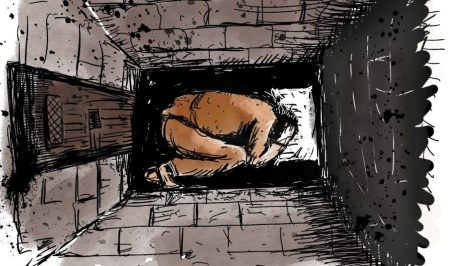
This Psalm has no kind words, and no praise to God for deliverance.  It is a singularly sad song.  Imagine if you will, a huge stone fortress in the mountains.  Every room has a door, and every room a window.  All except one.  No light enters this room.  There is no entrance or exit, no way to get free.  Psalm 88 describes living that torturous experience.

I like my Psalms to be strengthening or encouraging. 

But then comes this one!  Life unravels and frays.  Everything gets confusing. Life comes apart.  The thought of being one who is irretrievably lost and damned, it saturates my thinking.  The despair is beyond belief, I have no words to describe its special variety of darkness. 

Anyone who has walked into this hell will understand.

Am I ‘less’ a Christian because of this vicious despair?  Some would say so.  The writer in verse 1-2, calls out to God.  (I guess this what you are supposed to do).  There is a sense of consistency in his cry.  In verses 3-5, we see him evaluating his position.  Again, there is a underground current of despair. 

There is simply no help, no deliverance for him.

It’s a bitter and painful place to be.  There are no explanations why life has gotten so nasty and bitter and out-of-control.  But one thing that Psalm 88 does quite well, it strips you of any dignity that you have left. 

(Does this make any sense at all?)

There is so much embedded in the book of Psalms.  Comfort, faith, victory and hope are what we find. But in Ps. 88, we find a black pearl, the only one of its kind.  Somehow, we dare not leave it behind, just because we don’t understand it. 

I’m convinced that it has tremendous power to the disciple who is in endless pain.  Just vocalizing this Psalm does something to us.  These real words help.  This Psalm is ours. 

God has provided it for us.