Life with Thorns

From desiringgod.org

Finding Strength in Physical Weakness

It’s easy to romanticize physical suffering — especially when you’re not the one experiencing it.

Saints like Amy Carmichael, who spent over twenty years bedridden, and Joni Eareckson Tada, a quadriplegic who lives in constant pain, can evoke peaceful images of unbroken communion with God. We may imagine that it’s easier for them to endure pain and weakness than it is for the rest of us.

Yet the reality of physical suffering is that it’s insistent and intrusive. No one gets used to it. Pain demands our attention. Time slows to a crawl, particularly in the middle of the night, when we’re begging God for the relief of sleep. We feel alone and isolated. No one else can enter the prison that our bodies have become.

Pain Accumulates

If that weren’t enough, physical pain rarely exists in isolation — it’s usually accompanied by loss, weakness, and dependence. Often, we require help with basic daily needs, and we worry about the burden we’re putting on others. We second-guess every request, not wanting to bother someone one more time. Will people get tired and think we’re “too much”? Do they resent their lack of freedom?

We longingly remember the carefree days before our physical struggles altered our lives, when we could do what we wanted. Now we measure our energy in teaspoons rather than buckets. We weigh every decision, every action. Saying yes to one activity means saying no to many others. It is hard not to envy those with fit bodies, who seem to have no cares.

Pain, loneliness, and longing can give way to depression and despair. We cry out to the Lord for relief, but relief doesn’t come. The cancer spreads. Sleep eludes us. The pain intensifies. The medicine stops working. The side effects multiply. Our caregivers grow weary. Our friends stop checking in. Our resources run dry.

Doubt Advances

The vibrant faith we once had begins to fade — which is exactly what Satan wants to happen as we suffer. He wants us to doubt and fall away from God, convinced that he is indifferent to our cries. Satan knows that we’re susceptible to discouragement when we’re physically depleted, so that’s when he attacks. As physical needs scream for attention, Satan whispers to us, “Does God even hear you, let alone really care for you? If he does, why isn’t he delivering you?”

Insidious doubts slip in, making us question beliefs we once held rock-solid: Are we deeply loved by an all-powerful Father? As soon as we recognize the mental shift, we need to stop and cry out to God, asking him to meet us in our sorrow, to deliver us from our pain, and to show us evidence of his goodness and love. Are we fixating on all that we’ve lost, on how God hasn’t delivered us, on how hopeless we feel? Or do we recognize that God is with us, working for our good, and caring for us each moment?

What we think about in the moments of our deepest pain is critical. Our mindset will determine how we approach the questions that bombard us. Here are three common questions I’ve asked:

  1. How can God be “for me” if I’m still suffering?
  2. How can God use my weakness for good?
  3. What good can come in moments of overwhelming pain?

How can God be ‘for me’ if I’m still suffering?

Sometimes God miraculously delivers us when we plead for relief, like at the parting of the Red Sea. Other times he sustains us, as he did with manna in the wilderness. The Red Sea deliverance freed the Israelites, but their need for manna kept them dependent on God. In gathering manna, they had a harder time forgetting their reliance on God. And if God’s greatest blessing is himself, then perhaps sustenance is a more precious gift than deliverance, since it can keep us in constant communion with him.

Take the apostle Paul. He begged God for deliverance from his thorn in the flesh, but instead he received grace — grace to bear the thorn, grace to be content with weakness, grace that would carry him through other trials as well (2 Corinthians 12:7–10).

When we realize that we can depend on God in our weakness, we learn to trust him in everything. Anyone can thank God for quick deliverance from physical suffering, but we often forget him until the next crisis. Yet when he sustains us in our pain, we’re confident that he is with us always.

How can God use my physical weakness for good?

We may think our physical weakness is keeping us from maximum fruitfulness, but that’s impossible. Our weaknesses are a part of God’s plan for our lives; they are intertwined with our calling. Paul thought his thorn was hampering his ministry, but God knew that it was the key to his strength: it forced Paul to be wholly dependent on God. When we are depleted and exhausted, lacking any resources of our own — it is then that we fully rely on God.

And in that reliance, we discover the power of God flowing through us — the same power that raised Jesus from the dead (Ephesians 1:19–20). This power keeps us enduring when we want to give up; it showcases God’s glory and brings lasting change. Because Paul relied on God’s provision, he accomplished more for the kingdom with his thorn than he could have without it. His greatest strength lay in his submission to Christ.

Even Jesus’s greatest strength appeared in his greatest physical weakness.

Throughout his ministry, Jesus impacted others by his actions. He calmed the storm with a word. He fed five thousand with a few loaves and fish. He cast out demons, healed the sick, and raised the dead. He turned the world upside down.

But at the end of his ministry, from the Last Supper on, Jesus allowed others to act upon him: he was led away, he was whipped and mocked, he was beaten and crucified. When he submitted to his captors, the crowds saw weakness rather than what was really there: Jesus’s strength and power.

Just before these horrific events, Jesus begged God to take the cup of suffering from him. But it was through Christ’s submission to the will of the Father — to torture and humiliation, to physical abuse and carrying his own cross — that God brought about the most astonishing display of his power and grace.

Article by Vaneetha Rendall Risner

Peter’s Greatest Flops

The apostle Peter was well acquainted with failure. He understood blowing it big time. I’ve identified at least 11 times when he did the wrong thing; He stumbled repeatedly, but that encourages me. (I’m glad he struggled.)

I suppose that we must acknowledge that Jesus saw something in Peter–a definite future of a ministry that would be critical in the lives of the other disciples, but it wasn’t going to be easy for Peter. Jesus was alert and He prayed specifically for His bumbling disciple.

“…but I have prayed for you that your faith may not fail. And when you have turned again, strengthen your brothers.”

Luke 22:32, ESV

Here’s my list of Peter’s greatest flops:

  • Peter can’t figure out the Parable of the Sower, so he asks Jesus for further explanation. We too don’t understand all the things Jesus taught, we get confused. Peter’s example is a strength for us. Jesus doesn’t reject our ignorance. (Matthew 15:15-16.)
  • Peter and the others try to keep the children away from Jesus. (Mark 10:13-14.)
  • Peter is full of selfish ambition and argues with the other disciples as they walk with Jesus. (Mark 9:33-34; Luke 22:24.)
  • Peter tried to follow Jesus by walking on the water. He failed and sank; Jesus took him by the hand and gave him a gentle rebuke. (Matthew 14:28-33.)
  • On the Mountain of the Transfiguration Peter witnessed an incredible event when Jesus was seen in all His glory. Peter blew it by not understanding what had just happened. (Mark 9:2-8.)
  • Peter actually is strongly rebuked by Jesus and called, “Satan.” (Matthew 16:23.)
  • Peter resists Jesus when He is washing the disciple’s feet. (John 13:5-9.)
  • Peter fails to listen to Jesus in the garden of Gethsemane and falls asleep. He was told to watch and pray. Peter failed, and fell asleep. (Matthew 26:36-46.)
  • Peter, with “oaths” and “curses” denies knowing Jesus in the courtyard of the High Priest. (Matthew 26:69-75.) See also, Matt. 10:33.
  • Peter is broken over his denial of Jesus. It seems that he’s a complete failure as a disciple and returns to his boat and goes fishing. The other disciples follow him.(John 21:1-3.) We also see Jesus restoring Peter to Himself. (John 21:15-19.)
  • Peter is intimidated by the Jews, and withdraws from fellowshipping with the Gentile believers. He is soundly rebuked by Paul “to his face.” (Gal. 2:11-14.)

It seems that none of these are spiritually fatal, but perhaps they could be. In every case listed we can see the tenderness and goodness of the Lord Jesus who forgave and restored Peter. He loves His disciple much more than Peter realizes.

At times our walk is also somewhat discouraging.

We sin, and we fail in so many ways. It seems overwhelming at times. The Holy Spirit calls us to pray and sing, but if we’re honest we often can’t really do these things. Our failures seem to disqualify us to be disciples. A kind of “spiritual depression” falls over us. We seem to believe that God is angry with us. We think He condemns us.

But God’s love for you is total and everlasting.

 “I give them eternal life, and they will never perish, and no one will snatch them out of my hand.”

John 10:28

On that day you accepted Him as your Savior a covenant was made. He’s committed to bring you through life and to Himself. Forever. Jesus is completely faithful and He loves you deeply and most unreasonably. We call this “grace.” And it’s amazing.

  1. God has initiated your salvation. He launched it and is in charge of it.
  2. God works over and over in your life to make you like His Son.
  3. When you die and stand before Him that process will be finished completely.

“And I am sure of this, that he who began a good work in you will bring it to completion at the day of Jesus Christ.”

Philippians 1:6

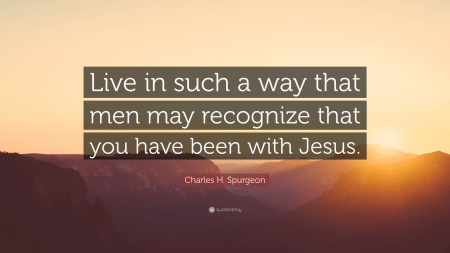
Have You Been With Jesus Lately?

I need Him constantly. Just maybe that’s the backbone of true discipleship. We dare not think that discipleship, which is following Jesus Christ, can happen without any real intimacy to Him.

We’re called to love Him first.

Some of us struggle physically and mentally. We are the handicapped ones, and we know it–we understand our shortcomings and flaws. The purpose of this blog has been to encourage and comfort, that is the focus of brokenbelievers.com. What follows is the motto of this ministry:

Linda and I will emphasize this over and over, these posts are written by us three times a week. We want to encourage you in your struggle. I know you battle, and we want to serve you.

Both of us have struggled and found Jesus. I myself have had my lion’s share of raging battles, I have a paralyzed right arm and am also a brain tumor survivor. I’ve struggled with chronic depression and must take meds–these lay me at His feet. And I lay my issues at His.

We are called to be with Jesus every day–maybe in each moment. I really do think that intimacy with Him can be the cure for all that disturbs us about ourselves. Now I’m not saying that our issues evaporate, but we begin to see that they can be conquered, and only if we draw close and are filled with the Holy Spirit daily.

I’m convinced that we’ll see significant breakthroughs as we sit at the feet of Jesus. The passage above (v. 3) describes a satanic attack that seduces us from a 100% pure devotion to Jesus. We read of Paul’s deep concern–apparently the Corinthians were under attack.

“But I have this against you, that you have abandoned the love you had at first.”

Revelation 2:4

“For I feel a divine jealousy for you, since I betrothed you to one husband, to present you as a pure virgin to Christ. But I am afraid that as the serpent deceived Eve by his cunning, your thoughts will be led astray from a sincere and pure devotion to Christ.”

2 Corinthians 11:2-3

And Paul warns them. And us as well.

We’re Inconsistent Rascals

jesusembrace
Unknown artist

“Loving Father God, my heart is filled upon rethinking the greatness of your love and the completeness of your plan.  I want to please you, but how often my flesh folds under the pressure of temptation.  I thank you that you know my frame, and you remember that I am but dust.  And I thank you for the abundance of Grace and the gift of righteousness that you have made available to me through the cross of your son, the Lord Jesus Christ.  Thank you for receiving me back, my gracious Lord.   Amen. ” 

Jack Hayford

When my children do wrong I ache inside.  As a father I so want to hear their confession and see their repentance.  But I cannot imagine disowning them. Never, ever!  How much more is our Heavenly Father ready to receive us back, and hold us close to his heart.

This profound love turns us back to Himself. The very fact you feel the Holy Spirit’s tug is evidence enough that you haven’t been permanently forsaken and ‘cast aside.’ You’ll need to take a step of faith however. Always remember— proximity to Jesus is always a good thing. Stay close, and watch the enemy flee. He will, but only if you make a stand Satan.

Become brutally real with yourself, but never despairingly.

Confess your sin to the real God who loves you unconditionally. Let Him fill you with His Spirit again. Sin is not the ultimate place or condition of the true believer in Jesus–his love has the incredible power to bust through all of our disobedience and rebellion. And he is the only one who can do it–you can’t.

66 At this point many of his disciples turned away and deserted him. 67 Then Jesus turned to the Twelve and asked, “Are you also going to leave?”

68 Simon Peter replied, “Lord, to whom would we go? You have the words that give eternal life.

John 6:66-68

Who else would take us in after all the evil we have done?

Jesus loves each one of us as if there were only one of us. Sink into that love, and have the assurance that He alone has the power to save us- We’re his; even when we’re rascals. And he has decided that we are now his friends. Isn’t that wild!

Bryan Lowe