When God Makes Toast

What_Is_Nichrome_Wire_Used_for_4818659_460

“The sinners in Zion are terrified;
    trembling grips the godless:
“Who of us can dwell with the consuming fire?
    Who of us can dwell with everlasting burning?”

Isaiah 33:14, NIV

There is a strange lack in the Church, and quite frankly, it is disturbing. Our churches have operated on nothing for so long, what we think is normal isn’t even close. We really should compare ourselves to the young Church in the early chapters of the Book of Acts. Each believer had his own personal “flame” resting and abiding on them.

“Suddenly a sound like the blowing of a violent wind came from heaven and filled the whole house where they were sitting. They saw what seemed to be tongues of fire that separated and came to rest on each of them.”

Acts 2:2-3

Our churches should be places where we directly encounter the Lord God. I would like to suggest that our elders, and our ushers, start handing out life-preservers, and flares. (Rafts, of course, should be readily available.) For who can know what will happen when we make “first contact” with the Living God. All provision for survival should be made. Ambulances should become routine when the Church meets.

Agape love can completely undo us. It seems meeting with God is a bit like dwelling in a nuclear reactor, of love and of mercy and grace.

When God’s presence rips into us full blast, we will have to decide whether to take Him in His tumultuous power, or walk away unscathed. Do we fully understand the power that we so blithely invoke? We often tolerate something less, to see that our life isn’t turned upside down. Perhaps we reason, or think, that this is the most terrible thing that could happen to us.

His special grace just can’t be filtered out without changing the gospel.

We are bread in His toaster. He sears us with divine grace. (He then slathers us with ‘butter.’) Something akin to a deep agape love singes on us, and perhaps we might easily ignite. But perhaps that is what it is all about anyway, isn’t it?

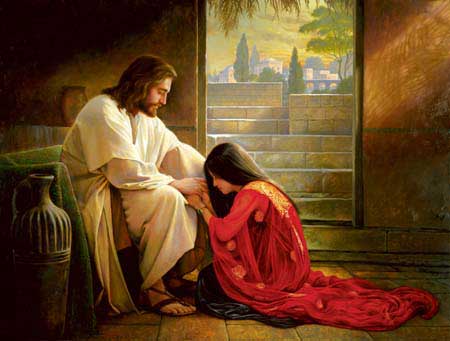
Little Sin, Little Love— Much Sin, Much Love


She was forgiven many, many sins, and so she is very, very grateful. If the forgiveness is minimal, the gratitude is minimal.”

Luke 7:47, Message

I have been a disciple of Jesus for over 40 years.  But it seems that I really haven’t been a desperate lover of Jesus until recently.

I have seen a lot of stuff, so I made a quick list–

  • the charismatic movement
  • the Imperials
  • New Wine Magazine
  • “I Found It”
  • Larry Lea‘s Prayer Program
  • the PTL Club
  • the Shack
  • preaching on the streets of San Francisco
  • Jesus’ festivals, Festival of the Son
  • Promise Keepers
  • Anita Bryant
  • the Living Bible, youth edition
  • YWAM teams, the Candle– SF
  • Four Spiritual Laws
  • ’88 Reasons Why
  • “Honk if You Love Jesus”
  • preaching on death row
  • Don Francisco
  • carrying the cross, Arthur Blessit
  • the Hiding Place
  • Watchman Nee
  • Outdoor baptisms in city parks

I’ve been exposed to a lot of winds blowing through, and moving on.  You learn to separate the chaff from the grain.  Much of my life has been spent winnowing out to get to the good stuff.  God, through his word describes a coming “trial by fire” over each person’s works.  Romans 14:12 says,

“Yes, each of us will give a personal account to God.” 

One time I walked as a backslidden Christian. I remember once waking up from a drunken stupor with my t-shirt soaked in blood. That blood was someone elses.  I sobered up really quick.  I had this shadowy awareness of beating someone almost to death.  I still catch myself wondering what exactly happened.  There is so much stuff that will be revealed, and I have done many despicable things.

The judgment seat of Christ, therefore, involves believers giving an account of their lives to Christ. The judgment seat of Christ does not determine salvation; that was determined by Christ’s sacrifice on our behalf and our faith in Him. All of our sins are forgiven, and we will never be condemned for them.

We should not look at the judgment seat of Christ not as condemnation but as love, but rather as the Lord speaking into our lives. Yes, as the Bible says, we will have to give an account of ourselves. Part of this is surely answering for the sins we committed.   

But the One who will judge me is also my Savior. That comforts me.

The Greek word for the judgement of Christians is “bema seat.” It was where the judge sat during athletic contests.  Think of the high chair on which a court official sits during a tennis match.  

The issue will not be our salvation, but our faithfulness.    

Loving Jesus must become your critical objective for the rest of your days, 1 Peter 4:8, “Love covers a multitude of sins.”  We also read of the sinful woman who washed Jesus feet, “therefore I tell you, her sins, which are many, are forgiven—for she loved much. But he who is forgiven little, loves little.” (Luke 7:47)

Dear one, practice loving him– starting today.  Many are the doers, few be the lovers.  The demanding weight of evangelism and world missions has quadrupled in the last 10 years.  Now is our time!  We love much!  Time is getting very short.


Repeated Sin

I must tell you this right from the start! You must believe it before we can go any further.

(I want to apologize for my brother pastors who may have told you otherwise.)

1 John 3:6-9 

Over and over, we sin the same sin until it has become habitual. It is exactly the opposite of godliness (that’s why we call it ungodliness.) It’s truly the other side of the proverbial coin. It haunts everyone who sincerely wants to follow Jesus.

Let’s understand these things. I’ve listed seven consequences of repeated sin.

  1. It creates hypocrisy and self-hatred.
  2. It nullifies witness, and the work of missions.
  3. It cancels out real praise, worship, and Bible reading.
  4. It destroys real fellowship between other believers.
  5. Any personal ministry is degraded and turned upside down.
  6. It blinds others, and deceives them to who we really are inside.
  7. It always engenders guilt and unworthiness, especially toward God.

I once lived in a house that had a severe mold problem. The previous owner, in an attempt to make things liveable, painted over the offending walls. He meant well, of that I am sure, but the problem of the mold was never dealt with properly. No matter how much you slathered on the paint, the mold was still alive and well. It simply worked its way to the surface. Sin is like this.

Paul’s letter to the Romans, chapter 7, gets to the root of our “mold.” If we read it carefully (as we should) we’ll start to grasp what it means to walk biblically.

Paul floats different concepts our way. Law, sin, nature. Each word must be processed.

“Law” is something that is always true. (Think of the Law of gravity.) “Sin” or falling short. The Greek word is pretty descriptive–it means “an arrow that misses the target.” “Nature,” or the intrinsic character of something.

We use these words so seldom that they seem archaic and outdated; but not so. Understanding these three opens up the entire realm of spiritual holiness. When we realize that the Word explains our situation so clearly we become convinced that holiness is possible. We begin to hope again.

Tolerating repeated sin is a terrible form of “spiritual suicide.” It always breaks fellowship with the living God. But as a believer, God doesn’t break fellowship with us, rather He comes closer and patches up our self-inflicted wounds. But even then we will not understand Him.

The Father’s heart is for us to be heart-holy. This is His perfect plan for us. 

1 Peter 1:14-16

You must become convinced. You dare not continue to sin and live in terrible guilt and risk “spiritual suicide.” You must decide that the Spirit of holiness is in residence in your heart, and live willingly as true saints. 

But there is an all powerful remedy to our sickness-plague of repeated sin. Almost always we stare at this ugliness, it seems we’re fixated on it. Often there are two approaches we take regarding repeated sin. 1) We ignore and flail out a life of “holiness.” We minimize this. 2) We become hyper-aware of our sin and guilt. We maximize sin to the point where we lose all joy and peace.

“Looking at the wound of sin will never save anyone. What you must do is look at the remedy.”

D.L. Moody

I need to stop teaching now. Rereading this has made me slightly frustrated about what I’ve written. If any of this has helped, I’m glad. I’d like to close this with a Billy Sunday quote. He explains the seriousness of repeated sin. 

“I’m against sin. I’ll kick it as long as I’ve got a foot, and I’ll fight it as long as I’ve got a fist. I’ll butt it as long as I’ve got a head. I’ll bite it as long as I’ve got a tooth. And when I’m old and fistless and footless and toothless, I’ll gum it till I go home to Glory and it goes home to perdition!” 

 Billy Sunday

Are You Sick and Tired Yet?

Matthew 11:28-30, ESV

Weariness and burdens are our common plight. We all have them. They are shared as sort of common identity, like eye color or hair color. We all have them, and wish we didn’t. Sometimes we feel like shutting down, it seems too much to endure.

Weariness, that bone-tiredness that sleep doesn’t seem to help.

We seem to be chronically fatigued by life and what it brings us. We have heavy burdens, we carry a load that only gets heavier (and never lighter.) I suppose we adapt, and simply learn to carry it. But that wears thin, and weariness always breaks through.

Money problems, bills that are past due, marriages, straying children, cars that need fixing, family problems, job hassles, health problems… the list goes on ad nauseam. There are far too many issues, too many problems. Perhaps boredom and tedium are added to the list. They only intensify the hopelessness. (Its own special kind of suffering.)

Some will choose to ‘self medicate’ with alcohol or drugs.

They want something more, and find they only create more burdens (not less). Some will become hopelessly addicted, never finding relief from their burdens, but only increasing them. Suicide very often is seen as the only way out. It seems that it’s an option.

But Jesus will never condemn (leave that to the Pharisees) but instead offers a sort of amnesty to the burnt-out and the burdened. Come to me, all of you who are weary and carry heavy burdens, and I will give you rest.” Jesus did not say, “Get away from me, I am holy and you are not.” Rather, He makes himself to be the solution to all those whose life has overwhelmed.

He desperately wants our burdens and absorbs all our weariness. He wants us. He wants to give us peace and rest. Often Jesus offers but we’ll refuse.

An easy trade, especially since we are so desperate. Some have evaluated Jesus’ offer and made the transaction–piling up our burdens at His feet. We might be a little hesitant about the “my yoke” part, but will quickly find that discipleship can’t be compared to the weight we once carried for so long.

Biblical discipleship is relatively easy. It only asks that we surrender–For my yoke is easy to bear, and the burden I give you is light.” Following Jesus becomes the best way to live. We seem to understand, but unless we commit we will just carry our weight. (But it only gets heavier.)

Here’s a few verses from Isaiah that might help you sort this out:

29 He gives power to the weak
    and strength to the powerless.
30 Even youths will become weak and tired,
    and young men will fall in exhaustion.
31 But those who trust in the Lord will find new strength.
    They will soar high on wings like eagles.
They will run and not grow weary.
    They will walk and not faint.

Isaiah 40:29-31

But you need to deliberately choose. You must decide for yourself–what will you commit to? Will you continue to carry your burden, or will you turn to Jesus?