Affliction Understood, [Daily Pain]

The 2009 Pulitzer Prize Winner

There is the unquestionable presence of affliction that is present in our lives.  Affliction is the general term for specific instances of trials, tribulations, persecutions, emotional or physical pain and suffering.

The ancient Assyrians used the word for “affliction” as the same word to describe their method of a public execution, which involved being impaled to the ground.  Rocks were gradually piled high until the victim expired.  The combination of being impaled and the rocks piled on you was quite devastating.

And you know what?  That is a terribly specific concept of what afflictions feel like.  Just ask someone, it is exceedingly terrible to be in pain and feel ‘buried’ at the same time.  There is a feeling of suffocating in suffering.  Some have described it, like being ‘hit with a 2×4’. You have just been completely blindsided.

In the letters from the Early Church there was a patentability, or openness when it came to persecution and pain.  The writers of the New Testament operated out of a profound awareness of the pain of the believers of their day.

  • “We think you ought to know, dear brothers and sisters, about the trouble we went through in the province of Asia. We were crushed and overwhelmed beyond our ability to endure, and we thought we would never live through it.”   2 Cor. 1:8
  • “We are pressed on every side by troubles, but we are not crushed. We are perplexed, but not driven to despair.”  2 Cor. 4:8
  •  “You have greatly encouraged me and made me happy despite all our troubles.”   2 Cor. 7:4

‘The Ostrich Effect’ in Affliction

One of the most extensive arguments concerning ‘affliction’ develops around the nature of the atonement.  The thought is that Jesus died and rose to bless me.  Sin and sickness, poverty or lack are not part of God’s plan for the redeemed.

Now, it is possible to refute this in this little post.  But I will try to nudge you a bit to examine the issues of the Early Church.  Know however that there are many people who will follow the ostrich’s example and bury their heads to avoid reality of affliction.  But, I can understand this impulse– this desire to honor God, even if we “play word games” with our faith.

I also know first-hand that the struggles are hard.  Wrestling with them is a brutal way to live the abundant life.  Failure and frustration are trying to short circuit our faith.  And our faith must be protected and valued.

“Afflictions add to the saints’ glory. The more the diamond is cut, the more it sparkles; the heavier the saints’ cross is, the heavier will be their crown.”

–Thomas Watson

 What Does the Scripture Say About Affliction?

  • “Dear friends, don’t be surprised at the fiery trials you are going through, as if something strange were happening to you.”   1 Peter 4:12
  • “…where they strengthened the believers. They encouraged them to continue in the faith, reminding them that we must suffer many hardships to enter the Kingdom of God.”   Acts 14:22
  • I have told you all this so that you may have peace in me. Here on earth you will have many trials and sorrows. But take heart, because I have overcome the world.”   John 16:33

“The wisdom of God appears in afflictions. By these He separates the sin which He hates, from the son whom He loves. By these thorns He keeps him from breaking over into Satan’s pleasant pastures, which would fatten him indeed, but only to the slaughter.”  

-James H. Aughey

I want to try to visit this subject again.  We will trust that ‘real light’ will come to our twilight worlds.
1brobry-sig4 (2)


cropped-christiangraffiti1-3-1

*

Tourette Syndrome [Awareness]

To understand and name something is often half the battle.  An understanding of Tourette Syndrome can help us to serve people who painfully struggle with this particular challenge.

What is Tourette syndrome?

Tourette syndrome (TS) is a neurological disorder characterized by repetitive, stereotyped, involuntary movements and vocalizations called tics. The disorder is named for Dr. Georges Gilles de la Tourette, the pioneering French neurologist who in 1885 first described the condition in an 86-year-old French noblewoman.

The early symptoms of TS are almost always noticed first in childhood, with the average onset between the ages of 7 and 10 years. TS occurs in people from all ethnic groups; males are affected about three to four times more often than females.

It is estimated that 200,000 Americans have the most severe form of TS, and as many as one in 100 exhibit milder and less complex symptoms such as chronic motor or vocal tics or transient tics of childhood. Although TS can be a chronic condition with symptoms lasting a lifetime, most people with the condition experience their worst symptoms in their early teens, with improvement occurring in the late teens and continuing into adulthood.

What are the symptoms?

Tics are classified as either simple or complex. Simple motor tics are sudden, brief, repetitive movements that involve a limited number of muscle groups. Some of the more common simple tics include eye blinking and other vision irregularities, facial grimacing, shoulder shrugging, and head or shoulder jerking.  Simple vocalizations might include repetitive throat-clearing, sniffing, or grunting sounds.

Complex tics are distinct, coordinated patterns of movements involving several muscle groups. Complex motor tics might include facial grimacing combined with a head twist and a shoulder shrug. Other complex motor tics may actually appear purposeful, including sniffing or touching objects, hopping, jumping, bending, or twisting. Simple vocal tics may include throat-clearing, sniffing/snorting, grunting, or barking. More complex vocal tics include words or phrases.

Perhaps the most dramatic and disabling tics include motor movements that result in self-harm such as punching oneself in the face or vocal tics including coprolalia (uttering swear words) or echolalia (repeating the words or phrases of others). Some tics are preceded by an urge or sensation in the affected muscle group, commonly called a premonitory urge. Some with TS will describe a need to complete a tic in a certain way or a certain number of times in order to relieve the urge or decrease the sensation.

Tics are often worse with excitement or anxiety and better during calm, focused activities. Certain physical experiences can trigger or worsen tics, for example tight collars may trigger neck tics, or hearing another person sniff or throat-clear may trigger similar sounds. Tics do not go away during sleep but are often significantly diminished.

What is the course of TS?

Tics come and go over time, varying in type, frequency, location, and severity.  The first symptoms usually occur in the head and neck area and may progress to include muscles of the trunk and extremities. Motor tics generally precede the development of vocal tics and simple tics often precede complex tics.  Most patients experience peak tic severity before the mid-teen years with improvement for the majority of patients in the late teen years and early adulthood. Approximately 10 percent of those affected have a progressive or disabling course that lasts into adulthood.

Can people with TS control their tics?

Although the symptoms of TS are involuntary, some people can sometimes suppress, camouflage, or otherwise manage their tics in an effort to minimize their impact on functioning. However, people with TS often report a substantial buildup in tension when suppressing their tics to the point where they feel that the tic must be expressed. Tics in response to an environmental trigger can appear to be voluntary or purposeful but are not.

What causes TS?

Although the cause of TS is unknown, current research points to abnormalities in certain brain regions (including the basal ganglia, frontal lobes, and cortex), the circuits that interconnect these regions, and the neurotransmitters (dopamine, serotonin, and norepinephrine) responsible for communication among nerve cells. Given the often complex presentation of TS, the cause of the disorder is likely to be equally complex.

What disorders are associated with TS?

Many with TS experience additional neurobehavioral problems including inattention; hyperactivity and impulsivity (attention deficit hyperactivity disorder—ADHD) and related problems with reading, writing, and arithmetic; and obsessive-compulsive symptoms such as intrusive thoughts/worries and repetitive behaviors. For example, worries about dirt and germs may be associated with repetitive hand-washing, and concerns about bad things happening may be associated with ritualistic behaviors such as counting, repeating, or ordering and arranging.

People with TS have also reported problems with depression or anxiety disorders, as well as other difficulties with living, that may or may not be directly related to TS.  Given the range of potential complications, people with TS are best served by receiving medical care that provides a comprehensive treatment plan.

1brobry-sig4 (2)


cropped-christiangraffiti1-3-1

Source for this post: http://www.ninds.nih.gov/disorders/tourette/detail_tourette.htm#147223231

Great site at: http://tsa-usa.org/

He Won’t Give Up, [Patience]


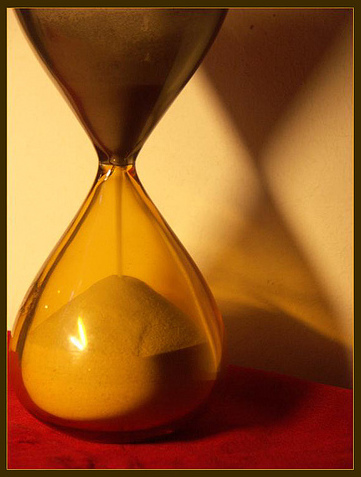
hourglass

But God had mercy on me so that Christ Jesus could use me as a prime example of his great patience with even the worst sinners.”

1 Timothy 1:16, NLT

I find that I often worry about the patience of God. Not that my worrying makes any difference. But I am quite aware of my sin and my failure. I am definitely not a “model citizen” of the Kingdom of God. I believe I’ve committed more sin as a Christian, than I ever did as a pagan.

But I must insist on God’s patience. I would easily slide through His fingers if I didn’t. But it is good to pay attention to the fact of patience. It is a good thing for us that He’s completely patient.

And remember, our Lord’s patience gives people time to be saved.”

2 Peter 3:15 , NLT

The very idea that God can be patient both chafes and comforts. We might see Him “tolerating” sinners. But yet we also see Him forgiving our sin. Patience gives Him the freedom to do both.

We could get critical, and maybe even frustrated with God’s love for lost people. He loves the world (John 3:16.)  However, our love doesn’t extend this far. We see the superficial, and believe that to be the whole story. But it isn’t. We give up on people, but He doesn’t.

Often, “sinners” will become disciples. (And mighty fine ones, at that.) The patience of God works effortlessly in the hearts of “sin-confused” people. At times it seems like it is “two steps forward and one back.” But that is ok. God will wait for sinners like us.

The patience of God draws us into a repentant life. He is “long- suffering,” which means that He will suffer long. But slowly, inexorably He brings us to His side. We offend Him, disregard Him, but He continues to love us. It makes no sense at all.

But He teaches us, by example to be long-suffering. We see in Him such kindness and mercy. His love for us is immeasurable. He takes it far, far beyond human reason. His patience is illogical. But I wouldn’t have it any other way.

“Have patience with all things, but chiefly have patience with yourself. Do not lose courage in considering your own imperfections, but instantly set about remedying them — every day begin the task anew.”

Francis de Sales

bry-signat (1)

cropped-christiangraffiti1.jpg

***

Washed, and Waiting

In the past, some of you were like that, but you were washed clean. You were made holy, and you were made right with God in the name of the Lord Jesus Christ and in the Spirit of our God.

 1 Corinthians 6:11, NCV

But we are hoping for something we do not have yet, and we are waiting for it patiently.

Romans 8:25, NCV

Washing and waiting. These two words together form an idea of formation. To be washed implies need. Our world is a filthy place, we must get clean. Often. When my son has spent his morning playing, he needs to be washed. (I sometimes wonder if he intentionally just finds a mud puddle and rolls in it.) To be spiritually cleansed is something God insists on.

Waiting. It’s funny, but waiting is an active thing. Hope is a component of waiting, without a hope we simply loiter. We wander and drift into a life of futility. And if you don’t hope deeply, you can’t wait truly.

Very often, those of us who are damaged and flawed will slide into a despair and a despondency. Depression can often be satanic, the enemy is trying to remove any hope we may have.  The dark prince lusts for your soul. A Christian with his hope removed is immediately shackled and led into the night.

To be washed, and to wait. These two ideas should be yoked together like oxen. They provide strength, and assist us to be fruitful. If we’re not washed, and we are not really waiting, we wander aimlessly. Humans do have a responsibility to be washed, and waiting. We mustn’t lose this team.

“….you need a strong ox for a large harvest.”

Proverbs 14:4


cropped-christiangraffiti1.jpg