“And you will feel secure, because there is hope;
you will look around and take your rest in security.”
Job 11:18
“If you lie down, you will not be afraid;
when you lie down, your sleep will be sweet.”
Prov. 3:24
Bedding down in the ruins of an old adobe church gave me a great deal of apprehension. I was anxious because at night all the scorpions, snakes and tarantulas do most of their exploring. Now I have an uncommon fear of tarantulas, at night I have seen them come out and the ground was churning. But as a missionary in rural Mexico and I guess I figured that I ought not shirk my expected routine. But I was spooked. I am a true arachnophobiac.
Job and the Book of Proverbs combine to correctly identify the personal security issues for the believer. We’re most vulnerable when we lie down to sleep. When you think about it, that’s when we are most accessible and open to assault.
But there are promises that are given to believers that reassure us and secure us. It is a remarkably basic promise, that we can lay down and God will stand watch over us as we rest. But I contend that there other times, times when He watches us and guides us through a myriad of unseen difficult things. He secures us, and then keeps us.
My time in the Mexican desert taught me some incredible lessons. I must admit though, that sleeping on the ground was an ordeal. I had to trust that the Lord would take special care over me as I lay defenseless. I could not defend myself, so I trusted Him and slept. I ‘shut down’ my imagination and trusted Him who I could not see. (I didn’t even bother to look for tarantula ‘tracks’ around my bedroll in the morning.)
We live in a time of complex danger. Bad things have become increasingly routine and we have come to the point were we just can’t protect ourselves, or those we love. Jesus warned us that this would happen.
Paul writes of this intensification of evil things.
We must trust Him who is unseen. We are to be people that move toward ‘the wings’ to find shelter. I believe this is a volitional decision. We make a verbal commitment to our protecting One, that He will shield us from those who are evil and perhaps even deranged.
He loves us so much. We can trust Him completely and fully. Even in the face of very big spiders.
The following is Psalm 16:3 in several different versions. They differ from each other but all express the same fundamental thought. The variation is refreshing and allows for a stronger development of thought.
3 As for the saints who are on the earth, “They are the excellent ones, in whom is all my delight.” (NKJV)
3As for the saints who are in the earth,
They are the majestic ones in whom is all my delight. (NASB)
3 The godly people in the land
are my true heroes! I take pleasure in them! (NLT)
_______________________
No matter how we look at it, the Psalmist knows the value of other believers. He exults in their companionship and rejoices in their presence in his life. He knows that they have an excellence in them and about them. He savours all contact with them.
We could say the psalmist has struck gold. Whenever he has contact with them, good things start to happen. A joy is awakened in him and bubbles to the surface. ( This Psalm 16 should be read in its entirety, I am only pulling out a single verse because of the light within it.)
Friendship, or companionship is a critical necessity for us, especially when the momentum of our culture is towards isolation. I’ve been told of a certain kind of rock will begin to resonate, becoming warm in the presence of a rock of the same type. (IDK if this is true but it is a great story).
I need brothers and sisters to awaken me. As a man who struggles with physical and mental illness that connection brings me healing and wholeness. I in turn through this same connection transmit grace and wisdom to them (or whatever).
There is not a lot of things better, and more invigorating than coffee with a Christian friend. In heaven, there will be a Starbucks on every other corner serving up Vanilla Lattes for disciples wanting to visit and share their hearts (that is my personal theory anyway.)
The Psalmist puts our relationships into the light and evaluates them by the encouragement they bring. We need to have that awareness as we contact each other. As a “closet-hermit” I need that extra push. I would anticipate or even expect it.
The Holy Spirit works in the specific area of relationships. That is His strength and forte’. I believe that the way the Kingdom of God works, flows and advances is in large part because of godly relationships. The more we cultivate them, the more the Church grows.
One of the weightiest issues of caring for a mentally ill spouse, child, or friend, is that it is so phenomenally relentless. The disease is so unpredictable, in its intensity and its spontaneity. You think you have the situation in hand, and it breaks out somewhere else, and often in public and causing major problems. This is wearing on anyone, including the Christian believer. And sometimes that can even make it more challenging.
You will need a support network, if you’re going to be a caregiver. This support is received in three different ways.
First, emotional support. Without someone who can listen and give words that encourage you, you’ll grow in resentment and frustration with your particular “lot”.
Second, I would suggest physical support. You will need someone to help you make sure the practical issues are met. (washing the car, fixing the shower, etc.) My wife as a caregiver has had to do things that she would normally wouldn’t be called on to do (fix the stove, do the taxes, etc.) because of my illness.
Third, spiritual support. It has three concentrations. Worship, prayer, and fellowship. These three have obvious effects on the caregiver. Just a word to the wise–when you pray you are going into it as two people (as well as for yourself). You must maintain and strengthen yourself and for the person you are serving. I think this is critical to your relationship. Try to see challenges, not obstacles. Don’t forget the power of a worshipping heart or the warmness of good Christian fellowship.
God gives special grace to the caretaker. My advice is to take it, and then use it. Draw upon Jesus who is your caregiver. Present your afflicted one to Him. Be supernatural in the mundane. The story of the paralyzed man on his cot being brought into Jesus’ presence by his friends fascinates me. It has many parallels for you to be a good caregiver.
“And behold, some men were bringing on a bed a man who was paralyzed, and they were seeking to bring him in and lay him before Jesus,”
Luke 5:18, ESV
My last word of advice is that you don’t be self-critical or feel guilty. Remember, it is your friend or family member who is the sick one. Don’t get consumed by your responsibilities. Don’t fall in the trap of judging yourself by how well you do or don’t do as a caregiver. Remember, you are not performing for others, but for an audience of One, who sees all.
Educate yourself, use the internet to track down information. If I can help you further, please feel free to contact me. I’m not a rocket scientist but if I can encourage you I will. May the Holy Spirit touch your heart. You are going to need it.
Professor Mitchell, what is the difference between being depressed and just feeling bad about yourself?
Sometimes it’s easy to tell the difference; sometimes you’re not certain. I look for clinical indicators of depressive illness: whether the person’s life is becoming impaired by these bad feelings, when it’s starting to interfere with people’s sleep, appetite and weight, when it’s interfering with their work and concentration, they’re having suicidal thoughts, they can’t buck up. Those symptoms help me to sort out whether it’s just life problems or whether it’s more.
So depression is an illness?
Yes. Even though there are both psychological and physical parts to it, it makes sense to think of severe depression as an illness. There are good medical and psychological treatments that can help people get out of it.
What proportion of the population is depressed?
Figures vary, but over a lifetime about 15% of the population are prone to getting depression on at least one occasion. So it’s relatively common. Some people only have one episode, but for at least half of those who suffer depression once, it is a recurring experience.
Is depression the sort of thing that certain personality types are likely to suffer?
I think that’s true. Anybody is vulnerable to becoming depressed, if things get difficult for them, but some personality types are more prone than others. For instance, if you tend to look for your own failings and weaknesses, if you expect disasters, you are prone to becoming depressed. People who have fragile self-esteems are prone; people who are excessively perfectionistic can be thrown when things don’t go quite right; people who have long-term high levels of anxiety.
Can you describe what it is like to be depressed?
Patients find it quite hard to describe. They often use analogies, like there is a ‘black cloud’ or a ‘weight’ on them. They say that they just can’t enjoy things any more, that they can’t get the drive to do anything; they stay in bed because they just have no energy or enthusiasm. They tend to ruminate and think about their failings, their hopeless situation. But many people find it hard to communicate the experience; even very articulate people have told me how difficult it is to communicate the experience to other people.
On the other side of the fence, what is it like to be close to someone who is depressed?
I think it’s very wearing. It never ceases to amaze me how couples stay together, particularly when it’s prolonged. Even with the best of good will and human kindness, long-term depression can be a very tiring experience for a spouse or close friend. You may get little response from a depressed person, little enthusiasm, withdrawal. They don’t want to interact socially and sometimes they can be quite irritable. Within a marriage, tension may be increased because the depressed person has no interest in sexual activity. So these things exacerbate the problem.
I sometimes hear it said that depressed people ought to just ‘snap out of it’. Can they do that?
Not when the depression is severe in the way we have been talking about. If someone can snap out of it, usually they have by that stage. In general, a depressed person doesn’t like the experience and if it was a matter of just getting on and doing something, they would have tried it. Sometimes people need to learn psychological ways of getting out of the depressed state. But sometimes there is a biochemical process going on that means the person isn’t physically able to snap out of it, without professional help.
Often there is a mixture of the physical and the psychological. It’s very rarely one or the other. The more I see depression, the more I see a complex interplay between personality, the biology of our brains and our life experience.
So depressed people can’t snap out of it, but they also can’t explain very easily what is actually troubling them. It’s a very frustrating illness!
Absolutely. It’s hard for people who haven’t dealt with it professionally to have any idea what it’s like to be depressed. So people have this difficulty understanding it, and this tendency to think that the person should be able to get out of it, and the depressed person has difficulty explaining the experience and feels frustrated and stigmatized when people are telling them to snap out of it, because they know they can’t snap out of it. There is enormous tension.
I suppose the big question is, for both the depressed person and those around them, can depression be cured?
Most people with depression can either be cured or significantly helped by available treatments. These days, we have very good treatments. We can’t help everybody, but we can help the vast majority of people we see.
Is it always a long-term cure, or can it happen quickly?
It varies. Often within a few weeks many people have benefited significantly. Some forms of depression require more long-term psychological treatment, others respond very quickly to medication. And there are grades in between.
Is depression like alcoholism, where you can get it under control but never really be beyond its reach?
For most people, that’s probably a realistic comparison. I tell people that they are always going to be prone to becoming depressed, so they need to be wary about relapses in the future. They need to be sensible about their medications, learn techniques to help them, think about whether there are aspects of their lives that they need to change. We can’t always prevent future episodes, but we can usually make them less likely.
William Cowper, Poet 1731-1800
The poet Les Murray recently has been very public about coming out of his depression. It’s interesting that some of the best poetry is written by people who have been depressed. Look at William Cowper, a Christian poet and hymn writer who wrote some of his most moving material during periods of profound depression. So depression can be both creative and destructive.
This raises an important issue for Christians. How do we connect our mental and our spiritual lives?
Cowper became very doubting at times, during his depression. One thing many Christian patients say is that God seems very distant during such periods. I’ve come to accept that as part of the depressive experience rather than a problem with their faith. I’ve seen people with a very deep faith, who yearn to be close to God, and who when depressed feel very barren and remote from God. For instance, J. B. Phillips, the Bible translator, was profoundly depressed for much of his adult life. He has described this sense of distance from God.
JB Phillips, 1906-1982
That is very distressing for Christians. They begin to worry that it is a lack of faith or lack of spiritual growth. But having seen it enough, I think it is just an expression of the depressive experience. Many Christians also feel that depression is a sign of weakness, of spiritual inadequacy, and they have a strong sense of guilt. Unfortunately, I think that often the church, explicitly or implicitly, has encouraged that—that if you have depression, it’s a reflection on your spiritual life. This adds an incredible burden to people who are already feeling guilty and self-critical. It’s a bit like Job’s encouragers, who basically made him feel worse.
Why does there seem to be a large number of depressed people in our churches?
It’s often the more sensitive people who become depressed, and there are often a lot of obsessional and sensitive people in churches. My experience is that there is a lot of depression in our congregations and that we don’t handle it at all well. We often infer, explicitly or implicitly, that the Christian shouldn’t have the experience of depression—that it’s not part of the victorious Christian life. And that causes enormous guilt and makes people less likely to talk about it. I think we have a lot of silent suffering going on in our churches. People just aren’t getting helped, because they feel guilty about having depression. We need to bring out into the open the fact that depression is a common experience, even within the church. And that being a Christian doesn’t stop you from getting depression. And that having depression is no more a failing than having diabetes.
In general, the church deals very badly with mental illness. In the middle ages, it was considered demon possession; in the late 20th century it’s considered a symptom of spiritual inadequacy. But it isn’t necessarily either of these things.
Are people in very demanding ministries especially prone?
They are prone; I don’t know about especially. They are in line for so many of the factors that contribute to depression: burn-out, demoralization, excessive demands, not looking after your own emotional needs, not having time to yourself. I see some of the casualties, and often by then it’s too late because someone has resigned from the ministry or become completely disillusioned. And it’s all too hidden, too hush-hush. We’re dealing with it no better than the secular world; in some ways we’re doing worse.
What then are the ways that a depressed person can be helped, both by individuals and by the church?
Well, especially in the early days, one can be supportive, help people get back into their lives—those normal things of friendship and support, being a sounding board, willing to listen to difficulties. These things might be sufficient to alleviate the early experience of depression.
But if we’re looking at a fully formed depression that’s been going on for a while, the person should be encouraged to seek proper professional help. That doesn’t always mean a psychiatrist; it might mean a GP or a counsellor. Just someone with the skills and training to help. So that’s the first thing, when the support networks have been stretched to the limit.
While that process is happening, it’s important to be around for the depressed person, accepting the fact that it might be a frustrating experience until that person picks up. Not feeling that you have to do everything yourself. There has to be a point where a friend accepts that they can’t provide everything the person needs. That point is usually indicated by signs like someone crying constantly, their work falling apart, withdrawing inexplicably, perhaps losing weight. These things indicate that the depression is getting severe.
Finally, do you think depression has become more of a problem today than it used to be?
It’s an area of debate. There’s no doubt that depression has always existed. The old Greek medical writers are clearly describing patients with depression. There was a book written in the 17th century called The Anatomy of Melancholy which described what we would call depressed patients. So it goes back through the ages; it’s part of the general human experience.
The issue is whether it has become more frequent. People have looked at the occurrence of depression in groups of people born in different decades in this century, and the frequency of occurrence seems to go up as the decades continue. People born in the 60s are more prone to depression than those at similar ages, but born in the 30s. Now, the significance of that is debated. It could be that people in recent decades simply have become more willing to admit to their depression, hence the higher rate of reports. Or it could be true that it is becoming a more common experience, and presumably that reflects changes in society. What those changes are is a very difficult question to answer.
So it’s hard to say whether the loneliness of urban living is a major factor?
Well yes, and it’s a very interesting area of debate. The World Health Organization has released predictions of the impact of different illnesses over the next century. They are saying that depression will be the 21st century’s most disabling condition, in terms of the impact on the individual, frequency and cost to society, on a worldwide basis. That survey included all medical conditions, including cancer and heart disease. So there is a recognition that it is a very prevalent condition, and that it is a very disabling condition to have. Whatever is causing it, we’re going to have to deal with it.
Philip Mitchell is a Professor at the School of Psychiatry, Prince Henry Hospital in Sydney, Australia.










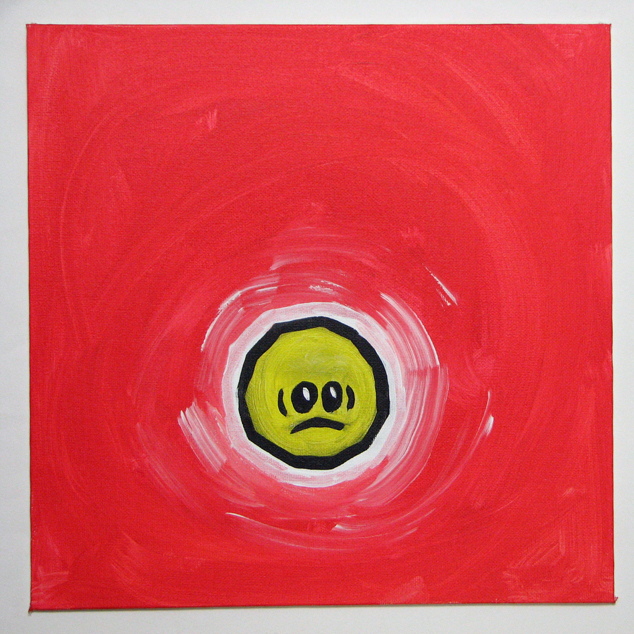




 Broken Believers