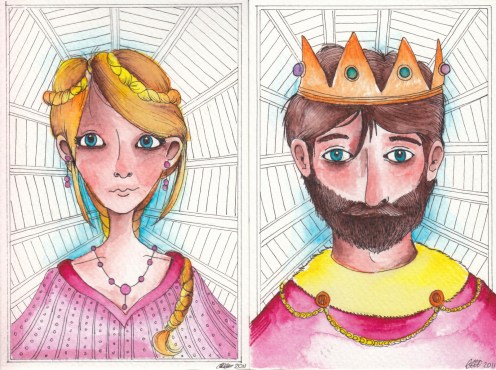
The Lady and the Knight in Shining Armor

“Be kind to one another, tenderhearted, forgiving one another, as God in Christ forgave you.”

Eph. 4:32

“It’s unfortunate and I really wish I wouldn’t have to say this, but I really like human beings who have suffered. They are kinder.”

Emma Thompson

She has nailed down a thought here.  It is only a starting point, a beginning that one should work-out, over and over.  We begin at this realization that there can be a definite link between suffering and kindness.  It’s like two wheels of a bicycle.

I’m in love with kind people.  All the people I have met who were truly wonderful, had very kind hearts.  Kindness set them apart.

Historically, kindness was regarded as one of the “Knightly Virtues” of medieval times.  Having it was to be a mark of chivalry.  In theology, it was one of seven virtues, that mirrored the “Seven Deadly Sins.” It seems to me that believers who practice kindness are to be regarded as part of a spiritual nobility.

This connection between suffering and kindness isn’t so much as a “cause and effect,” but rather a ‘fruit’ which has to ripen, or mature.  Pain is not always this productive in our lives.  It can bring bitterness and loss as easily as it can bring kindness and gentleness.  And many of us who struggle with mental illness or substance abuse understand this all to well.

The apostle Paul was right to link his sufferings to spiritual growth.  If you can do this you are moving in the right direction.  It will not lift you out of the pain; you will still have the sense of being overwhelmed, but you will see through it with the eagle eye of faith.

Why is it that so many who have suffered, will go on to become kind people?

It may have to do with two dynamic principles. The first metaphor would have to be the smelter/the potter.  These are significant because they illustrate how believers are always in process.  We are in flux, either moving under the hand or under the heat.

The second metaphor is the grape vine dresser/bread maker.  These strike me as harsh, although it may not always feel that way.  But both are definite “hands-on” from a supervisory source–the Holy Spirit.

Suffering is a lot like learning another language.  Some days it will just click, and then other days you can’t remember your previous lesson.  But if you are really patient you will learn to speak the dialect of suffering.  Learning languages can open up the world to you.  If you learn to speak “suffering” you will be able to touch the hearts of millions.

But there needs to be patience.  You must wait for “kindness.”  Transformation will never be smooth or easy.  There are no switches for God to flip to make you Christlike.  You will not wake up tomorrow morning with the character of Jesus–his mercy, love, wisdom and kindness.  I’m sorry.  (Choose to dispute this, and I will let you.)

flourish-bird

“I prefer you to make mistakes in kindness than work miracles in unkindness.”

Mother Teresa’s counsel 

“God has chosen you and made you his holy people. He loves you. So you should always clothe yourselves with mercy, kindness, humility, gentleness, and patience.”

Col. 3:12, NCV 

1brobry-sig4 (2)


cropped-christiangraffiti1-2


Tourette Syndrome [Awareness]

To understand and name something is often half the battle.  An understanding of Tourette Syndrome can help us to serve people who painfully struggle with this particular challenge.

What is Tourette syndrome?

Tourette syndrome (TS) is a neurological disorder characterized by repetitive, stereotyped, involuntary movements and vocalizations called tics. The disorder is named for Dr. Georges Gilles de la Tourette, the pioneering French neurologist who in 1885 first described the condition in an 86-year-old French noblewoman.

The early symptoms of TS are almost always noticed first in childhood, with the average onset between the ages of 7 and 10 years. TS occurs in people from all ethnic groups; males are affected about three to four times more often than females.

It is estimated that 200,000 Americans have the most severe form of TS, and as many as one in 100 exhibit milder and less complex symptoms such as chronic motor or vocal tics or transient tics of childhood. Although TS can be a chronic condition with symptoms lasting a lifetime, most people with the condition experience their worst symptoms in their early teens, with improvement occurring in the late teens and continuing into adulthood.

What are the symptoms?

Tics are classified as either simple or complex. Simple motor tics are sudden, brief, repetitive movements that involve a limited number of muscle groups. Some of the more common simple tics include eye blinking and other vision irregularities, facial grimacing, shoulder shrugging, and head or shoulder jerking.  Simple vocalizations might include repetitive throat-clearing, sniffing, or grunting sounds.

Complex tics are distinct, coordinated patterns of movements involving several muscle groups. Complex motor tics might include facial grimacing combined with a head twist and a shoulder shrug. Other complex motor tics may actually appear purposeful, including sniffing or touching objects, hopping, jumping, bending, or twisting. Simple vocal tics may include throat-clearing, sniffing/snorting, grunting, or barking. More complex vocal tics include words or phrases.

Perhaps the most dramatic and disabling tics include motor movements that result in self-harm such as punching oneself in the face or vocal tics including coprolalia (uttering swear words) or echolalia (repeating the words or phrases of others). Some tics are preceded by an urge or sensation in the affected muscle group, commonly called a premonitory urge. Some with TS will describe a need to complete a tic in a certain way or a certain number of times in order to relieve the urge or decrease the sensation.

Tics are often worse with excitement or anxiety and better during calm, focused activities. Certain physical experiences can trigger or worsen tics, for example tight collars may trigger neck tics, or hearing another person sniff or throat-clear may trigger similar sounds. Tics do not go away during sleep but are often significantly diminished.

What is the course of TS?

Tics come and go over time, varying in type, frequency, location, and severity.  The first symptoms usually occur in the head and neck area and may progress to include muscles of the trunk and extremities. Motor tics generally precede the development of vocal tics and simple tics often precede complex tics.  Most patients experience peak tic severity before the mid-teen years with improvement for the majority of patients in the late teen years and early adulthood. Approximately 10 percent of those affected have a progressive or disabling course that lasts into adulthood.

Can people with TS control their tics?

Although the symptoms of TS are involuntary, some people can sometimes suppress, camouflage, or otherwise manage their tics in an effort to minimize their impact on functioning. However, people with TS often report a substantial buildup in tension when suppressing their tics to the point where they feel that the tic must be expressed. Tics in response to an environmental trigger can appear to be voluntary or purposeful but are not.

What causes TS?

Although the cause of TS is unknown, current research points to abnormalities in certain brain regions (including the basal ganglia, frontal lobes, and cortex), the circuits that interconnect these regions, and the neurotransmitters (dopamine, serotonin, and norepinephrine) responsible for communication among nerve cells. Given the often complex presentation of TS, the cause of the disorder is likely to be equally complex.

What disorders are associated with TS?

Many with TS experience additional neurobehavioral problems including inattention; hyperactivity and impulsivity (attention deficit hyperactivity disorder—ADHD) and related problems with reading, writing, and arithmetic; and obsessive-compulsive symptoms such as intrusive thoughts/worries and repetitive behaviors. For example, worries about dirt and germs may be associated with repetitive hand-washing, and concerns about bad things happening may be associated with ritualistic behaviors such as counting, repeating, or ordering and arranging.

People with TS have also reported problems with depression or anxiety disorders, as well as other difficulties with living, that may or may not be directly related to TS.  Given the range of potential complications, people with TS are best served by receiving medical care that provides a comprehensive treatment plan.

1brobry-sig4 (2)


cropped-christiangraffiti1-3-1

Source for this post: http://www.ninds.nih.gov/disorders/tourette/detail_tourette.htm#147223231

Great site at: http://tsa-usa.org/

Hearing Voices


5117230-1x1-700x700

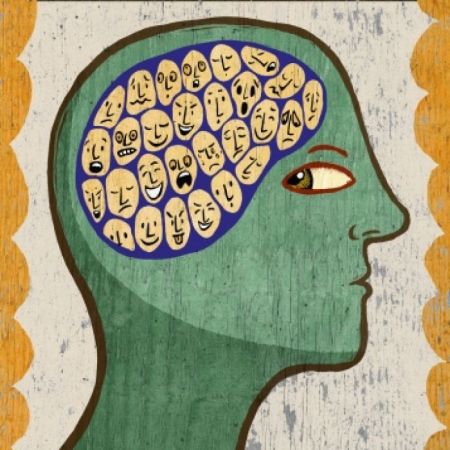
I guess I’m in a wandering/wondering frame of mind.  I’ve been hearing voices off and on.  They are clear, distinct and I suppose  rather commanding.  Previously I’ve dealt with ‘tinnitus’, but this is definitely different.  The voices are not incredibly sophisticated–its usually just one or two words.  Quite simple actually.

Perhaps the full reason of why this is a problem,  because I wonder about some sort of ‘mental degradation’.

  • Am I getting worse?
  • Are the ‘voices’ the sign of the end for me?
  • Will they take over?
  • Will I turn into a blathering idiot?
  • Could they be ‘demonic’ or worse?

I have this image of a stark raving crazy guy, hung up on religion and ‘right-wing extremism’, foaming at the mouth and ‘heading for a bunker up in the mountains.’  But I am none of these things.  Maybe that’s why it scares me so.  I cannot relate to any of this, and I don’t want to.  I am not that person. This is not me.

The voices by themselves, not extrapolating their content, are disruptive enough.  They don’t have to be specific, all they have to be is loud and insistent.  It really doesn’t matter if I obey them.  They disrupt me just by speaking. (I hope they never decide to expand their vocabulary!)

I have a new insight to my brothers and sisters who struggle with schizophrenia/bipolar.  Many are on the streets, and they are desperately homeless.   On almost a ‘medieval’ level they battle with dragons.  Sometimes they push back the beastie, and then sometimes they themselves are slammed back.  But no matter what will happen that day, God’s love meets the warrior, and He lifts them up.

Voices.  These are not dredged up, or manipulated.  I definitely do not ‘manufacture’ them.  I certainly not doing this for attention.  But when they do press me (with an order or command) I do know that it is an alien voice, coming from outside of me.   I know the presence of Jesus pushes them away. I call on His name and they flee.

I have to believe, that God is holding on to me with both hands. 

He will not let me slide into the night, alone.  He has determined that darkness will never claim me.  I turn as I can, to look at Him, face-to-face by faith.  “He has come to heal the broken-hearted.  A bruised reed,  He will not break.  A smoking wick, He will not quench” (Isa. 43:3). What an awesome promise! We serve a gentle and protective God.

There may (or may not) be spiritual warfare issues. I believe that there is a magnificent power in the name of Jesus. The blood and the cross are for my protection. I shelter in all He is and all He has done, If anything, they push me toward the Lord Jesus and He protects me.


1brobry-sig

cropped-christiangraffiti1-2


Intensely Loved, but Definitely Broken, [Reality]

bryondeck-2For everyone who loves Jesus, but yet has had an experience of terrible loss, sickness or the death of a loved one…this post is meant for you.

I am evangelical, a former pastor, and a Bible college instructor. I also have bipolar depression, and a bit of paranoia and delusional thinking. I have been hospitalized in mental hospitals seven times in 10 years.  But, I love Jesus more than anything. And I’ve been told by many who repeatedly insist that He loves me as well.

I have experienced the darkest and most crippling depressions.  There are some weeks (months?) I could not get out of bed, shower or even eat.  For this Bipolar, I must take Lithium, Zoloft, and Lamictal.  These meds hold me in place. I’m being treated for a seizure disorder, and have had surgery to remove a tumor in my brain. I now walk with a cane.

“He comforts us in all our troubles so that we can comfort others. When they are troubled, we will be able to give them the same comfort God has given us.”

1 Corinthians 1:3

This blog is geared for the mentally ill believer, the terminally ill, habitual sinners and all who are confused and dismayed by their own brokenness. But you don’t need a diagnosis to read this blog.

It seems like failures—

  • the mentally feeble,
  • lame,
  • chronically ill
  • blind, and deaf
  • sinners, great and small
  • and mentally ill have not always been welcome in the Church. I think that is about to change.

I’m honestly convinced that it has been the churches’ loss. How is the Church ever going to learn to love the unlovely without us to ‘train’ them? We the disabled are sprinkled into each fellowship to tutor them through our illnesses.

The church need not look to new ‘fund raising ideas’ or to pave the parking lot, it just needs to reach out to the broken– one at a time.  I think God will bless every church who will do this. This is the work and passion of Jesus. This is what Jesus’ church looks like. “For the Son of Man came to seek and to save the lost.” (Luke 19:10.)

The Church needs us, whether it realizes it or not.  It is as broken people that we model our fallenness as the paradigm to intimacy with Jesus.  We often are the first to know that it has never been about our giftedness, but our intimacy. 

We are a witness, a tangled but tangible reminder, of how God’s grace gives His power to the weak and despised (2 Cor. 2).

“For I have come to call not those who think they are righteous, but those who know they are sinners.” 

Matthew 9:13

“Then Jesus said, “Come to me, all of you who are weary and carry heavy burdens, and I will give you rest. 29 Take my yoke upon you. Let me teach you, because I am humble and gentle at heart, and you will find rest for your souls. 30 For my yoke is easy to bear, and the burden I give you is light.”

Mathew 11:28-30

I simply can not say anything more. Just please love us.

“The power of the Church is not a parade of flawless people, but of a flawless Christ who embraces our flaws. The Church is not made up of whole people, rather of the broken people who find wholeness in a Christ who was broken for us.”

–Mike Yaconelli

(

bry-signat (1)

cropped-christiangraffiti1.jpg


All scripture quotations are from the New Living Translation.