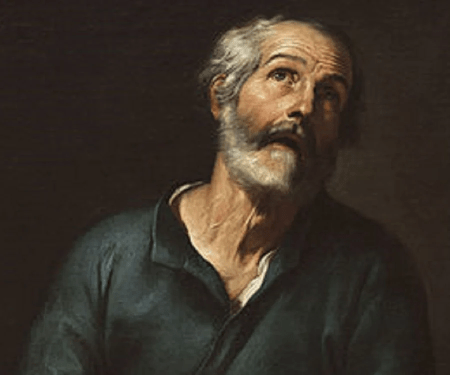
The Prisoner of Jesus

Does being in prison change a person? How would it affect you? I imagine the Apostle Paul’s frustration. He loved to disciple and establish churches. To be confined like this would be quite difficult. What a spiritual trial it would’ve been. Me, personally, I would have definite issues. I made a list. I probably would be:

  • Angry? Depressed?
  • Frustrated? Anxious?
  • Full of self-pity?
  • Isolated, lonely?
  • Frightened?

During his imprisonment, I’m sure that the Apostle Paul had to work through all of these things–I’m certain that Satan tempted him repeatedly. I think the man Paul had dealt with the enemy through all of this (and more besides). Most feel that he would be imprisoned in Rome for at least two years. That’s a long time.

It’s generally agreed that he wrote the four epistles in 60-62 AD. These letters are regarded as written from his prison cell in Rome: Ephesians, Philippians, Colossians, and Philemon. Each of these four is different. (But admittedly, Philemon is the most unalike.)

And yet the scent of the prison can be found in these writings.

Despite the possible response of an incarcerated man, Paul’s writings from the Mamertine Prison are incredibly encouraging–he shows none of the issues of a man locked in a cell–but yet there are hard things he must deal with. Take a second to look at some direct references to his imprisonment.

  • “I appeal to you, instead, on the basis of love. I, Paul, as an elderly man and now also as a prisoner of Christ Jesus,” (Philemon 9.)
  • I am going to Jerusalem, constrained by the Spirit, not knowing what will happen to me there, except that the Holy Spirit testifies to me in every city that imprisonment and afflictions await me. But I do not account my life of any value nor as precious to myself, if only I may finish my course and the ministry I received from the Lord Jesus, to testify to the gospel of the grace of God (Acts 20:22-24).
  • “For this reason I, Paul, a prisoner of Christ Jesus on behalf of you Gentiles,” (Ephesians 3:10).
  • “I, Paul, write this greeting with my own hand. Remember my chains. Grace be with you.” (Col. 4:18).
  • “I want you to know, brothers, that what has happened to me has really served to advance the gospel, so that it has become known throughout the whole imperial guard and to all the rest that my imprisonment is for Christ.” (Philippians 1:12-14).
  • “The following night the Lord stood by him and said, “Take courage, for as you have testified to the facts about me in Jerusalem, so you must testify also in Rome.” (Acts 23:11).

It’s clear to me that Paul used this time to witness through his writings. He never grew bitter, only better. One could suggest that it’s we have been blessed by these epistles. His time in prison was the time he needed to bless us today. Where would we be without these books?

A papyrus fragment from Paul’s epistle to the Ephesians.

How many times was Paul imprisoned? Was he jailed once, twice, or several times? I’ve read different commentaries and they can’t decide. It’s a challenge to put together a solid timeline. There seems to be more evidence for two different confinements. Check out this site if you want to dig deeper.

But no matter what. These writings are God’s gift to us today.

From a dark prison, Paul writes these absolutely incredible letters. I believe Satan wanted to destroy Paul. I also think that this was a tremendous trial for him. He was a spiritual dynamo, wanting to establish and strengthen churches and then being chained to a wall must’ve been a challenge for him. There was so much for him to do.

But we desperately needed these letters!

Perhaps, out of our confusion and challenges, God’s purpose goes far beyond what we think. Sometimes we have no idea what our “imprisonment” is going to do. That encourages me. He turns our hard times into spiritual gold!

Through these letters, we’ve been given so much. These epistles are written from Rome’s dungeon, and yet they continue to shake the world!

Without Your Wound, Where Would Your Power Be? 

angel6

The subject of “the pool at Bethesda” alludes to the Thorton Wilder play, “The Angel that Troubled the Waters.” 

The play is based on the biblical verses of John 5:1-4, however, it changes the end of the parable. 

The play tells of a physician who comes to the pool of Bethesda, hoping to see the stir, and then be the first in the water, and healed of his melancholy and debilitating depression.  An angel appears and troubles the water. Everybody at the pool hopes to be the first one in and to be healed of their disability.

…………………………………………………………………

An angel appears and blocks the physician at the very moment he is ready to step into the pool and be healed.

angel1

Angel: “Drawback, physician, this moment is not for you.”

Physician: “Angelic visitor, I pray thee, listen to my prayer.

Angel: “This healing dear physician, is not for you.”

Physician: “Surely, surely, the angels are wise. Surely, O Prince, you are not deceived by my apparent wholeness. Your eyes can see the nets in which my wings are caught; the sin into which all my endeavors sink half-performed, cannot be concealed from you.”

Angel: “I know.”

Physician: “Oh, in such an hour was I born, and doubly fearful to me is the flaw in my heart. Must I drag my shame, Prince and Singer, all my days more bowed than my neighbor?”

Angel: “Without your wound where would your power be?” 

“It is your very sadness that makes your low voice tremble into the hearts of men. The very angels themselves, cannot persuade the wretched, and blundering children on earth, as can one human being broken on the wheels of living.

Later, the person who enters the pool first, and was healed rejoices in his good fortune, then turns to the physician before leaving and says:

“But come with me first, an hour only, to my home. My son is lost in dark thoughts. I — I do not understand him, and only you have ever lifted his mood.”

“Only an hour… my daughter, since her child has died, sits in the shadow. She will not listen to us, but she will listen to you.”

For me, the play pierces me with the understanding that comes from this wonderful line— “Without your wound where would your power be?“ That causes me to look at my many weaknesses with a very different perspective.

Paul’s teachings offer us a powerful revelation: it is through our weaknesses that we can authentically minister to others, just as Jesus did going to the cross. This concept, slowly permeating my understanding, emphasizes the transformative nature of my own pain and vulnerability.

Paul boldly declares that it is the very things we perceive as weak that have the potential to cultivate strength and truth within us and to others. It is my sincere hope that brokenbelievers.com, through its ministry, will impact lives by embracing this profound truth.

I hope so anyway. Pray for Linda. Pray for me.

I first encountered this excerpt in the book, “Abba’s Child: The Cry of the Heart for Intimate Belonging,” by Brennan Manning. The book is a worthy read, and if you can find it, you’ll be blessed.

Please check out Brennan Manning’s Facebook page for more info.

Please check out my newest, alaskabibleteacher.com.


Peter’s Greatest Flops

The apostle Peter was well acquainted with failure. He understood blowing it big time. I’ve identified at least 11 times when he did the wrong thing; He stumbled repeatedly, but that encourages me. (I’m glad he struggled.)

I suppose that we must acknowledge that Jesus saw something in Peter–a definite future of a ministry that would be critical in the lives of the other disciples, but it wasn’t going to be easy for Peter. Jesus was alert and He prayed specifically for His bumbling disciple.

“…but I have prayed for you that your faith may not fail. And when you have turned again, strengthen your brothers.”

Luke 22:32, ESV

Here’s my list of Peter’s greatest flops:

  • Peter can’t figure out the Parable of the Sower, so he asks Jesus for further explanation. We too don’t understand all the things Jesus taught, we get confused. Peter’s example is a strength for us. Jesus doesn’t reject our ignorance. (Matthew 15:15-16.)
  • Peter and the others try to keep the children away from Jesus. (Mark 10:13-14.)
  • Peter is full of selfish ambition and argues with the other disciples as they walk with Jesus. (Mark 9:33-34; Luke 22:24.)
  • Peter tried to follow Jesus by walking on the water. He failed and sank; Jesus took him by the hand and gave him a gentle rebuke. (Matthew 14:28-33.)
  • On the Mountain of the Transfiguration Peter witnessed an incredible event when Jesus was seen in all His glory. Peter blew it by not understanding what had just happened. (Mark 9:2-8.)
  • Peter actually is strongly rebuked by Jesus and called, “Satan.” (Matthew 16:23.)
  • Peter resists Jesus when He is washing the disciple’s feet. (John 13:5-9.)
  • Peter fails to listen to Jesus in the garden of Gethsemane and falls asleep. He was told to watch and pray. Peter failed, and fell asleep. (Matthew 26:36-46.)
  • Peter, with “oaths” and “curses” denies knowing Jesus in the courtyard of the High Priest. (Matthew 26:69-75.) See also, Matt. 10:33.
  • Peter is broken over his denial of Jesus. It seems that he’s a complete failure as a disciple and returns to his boat and goes fishing. The other disciples follow him.(John 21:1-3.) We also see Jesus restoring Peter to Himself. (John 21:15-19.)
  • Peter is intimidated by the Jews, and withdraws from fellowshipping with the Gentile believers. He is soundly rebuked by Paul “to his face.” (Gal. 2:11-14.)

It seems that none of these are spiritually fatal, but perhaps they could be. In every case listed we can see the tenderness and goodness of the Lord Jesus who forgave and restored Peter. He loves His disciple much more than Peter realizes.

At times our walk is also somewhat discouraging.

We sin, and we fail in so many ways. It seems overwhelming at times. The Holy Spirit calls us to pray and sing, but if we’re honest we often can’t really do these things. Our failures seem to disqualify us to be disciples. A kind of “spiritual depression” falls over us. We seem to believe that God is angry with us. We think He condemns us.

But God’s love for you is total and everlasting.

 “I give them eternal life, and they will never perish, and no one will snatch them out of my hand.”

John 10:28

On that day you accepted Him as your Savior a covenant was made. He’s committed to bring you through life and to Himself. Forever. Jesus is completely faithful and He loves you deeply and most unreasonably. We call this “grace.” And it’s amazing.

  1. God has initiated your salvation. He launched it and is in charge of it.
  2. God works over and over in your life to make you like His Son.
  3. When you die and stand before Him that process will be finished completely.

“And I am sure of this, that he who began a good work in you will bring it to completion at the day of Jesus Christ.”

Philippians 1:6

He Wears the Crown

He Wears the Crown

“A Christian is not a person who believes in his head the teachings of the Bible. Satan believes in his head the teachings of the Bible! A Christian is a person who has died with Christ, whose stiff neck has been broken, whose brazen forehead has been shattered, whose stony heart has been crushed, whose pride has been slain, and whose life is now mastered by Jesus Christ.”

John Piper

“No longer do I call you servants, for a servant does not know what his master is doing; but I have called you friends, for all things that I heard from My Father I have made known to you.”

John 15:15

It seems that the purpose of life is not to find our freedom,  it is really meant to find our Master.

The idea of being a slave to anyone is repugnant–a blow to our pride. We chafe at this, and yet man was never meant to be separated from the Lordship of Jesus. We’re instructed repeatedly with the New Testament idea that “our life is not our own”  Over and over God proclaims Himself as the King.

That really can trouble us somewhat.

Not so much when life is fairly good, granted, but in those hard moments when a decision must be made between enjoying the titillating “lusts of the flesh,” or accepting the fruits of the Spirit. This is one of those “lordship moments.” They come and go, and they show us exactly who we are. We cannot escape this–it’s part of our faith.

If you’re really going to be authentic–that is to be a legitimate and real disciple, then you must determine who is going to be in charge, and this isn’t one of those casual decisions. Your decision must become a settled issue.

You must fix your decision in your heart.

The thief on the cross knew salvation, he was promised an eternity with God simply by faith. But I submit to you that he had put himself under the Lordship of Jesus, simply by recognizing the sign, “the King of the Jews.” I believe he saw and understood its implications. Jesus was King! He knew and understood.

This is a very hard word for some, but so many of our personal issues hinge on this

I know this first-hand. It’s a monumental struggle. You must admit to not only having Jesus as your Savior, but you also must put your life under His total Lordship.  You need to pick up your cross daily in order to follow.  You need to learn how to kneel in total surrender to  Him.

I’ve chosen a crown to open up this post–it’s done on purpose.  I simply want you to understand the supreme call He has on your life.

You must learn here and now how to kneel before the Sovereign King. 

Your resistance to His lordship will end up bringing total pain. You MUST bow and accept Jesus’ crown– to recognize His lordship over every area of your life.

 If you look up into His face and say, “Yes, Lord, whatever it costs,” at that moment He’ll flood your Life with His presence and power.

     Alan Redpath

This image has an empty alt attribute; its file name is bryan-refuge.jpg