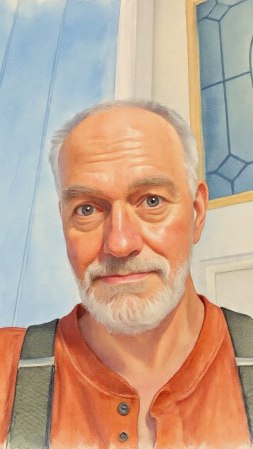
Ignoring a Mentally Ill Believer

“And he will answer, ‘I tell you the truth, when you refused to help the least of these my brothers and sisters, you were refusing to help me.’”

Matthew 25:45, NLT

The truth of the matter is that the Church can be the wrong place to have a mental illness. This is a generalization, I know. But many times it is true. We have a strong tendency to offer only token acknowledgement of “the least among us.” We will smile and nod, and, oh so quickly move away; we feel we’ve performed our ‘duty’ as a Christian. We are somewhat relieved to ‘get away’ and dodge the problem person.

Stereotypes abound for the mentally ill.

After all, they can be demanding, unpredictable, and dangerous. The worst are those who are dirty, unkempt. They say things that are odd and out-of-place. Have weird delusions and paranoia. They move to the margins, and usually sit in the back. But as a general rule, the mentally ill get ignored.

“People with mental illness sometimes behave in ways other people don’t understand and can’t make sense of. People with severe depression sometimes stay in bed all day, unable to manage the most basic motivation to move. People with anxiety disorders can be gripped by irrational or even unidentifiable fears that don’t incapacitate other people. Those affected by psychotic disorders may see things that aren’t real, hear voices that don’t exist, and sometimes lose the ability to discern reality at all.”

Amy Wilson, Christianity Today, 4/10/13

Often, a believer must find valuable help outside ‘the four walls’ of the Church. Some resources are often found with wise psychiatrists and caring therapists in clinical care. Medications (which can be a godsend) cab give the afflicted somd relief. The local Church just don’t always have the resources, but that is ok It isn’t their role exactly.

However, the Church has the only ‘real corner’ of the spiritual side of things.

The body of believers encourages, teaches and guides. Without it, the mentally ill Christian would be severely effected. The local church feeds us spiritually. It can’t be replaced. It has ‘the goods’ for discipleship. It has the Word of God and motivating worship. It has elders and other leaders who shepherd each believer, into a holy life. It provides fellowship which the believer with a mental illness must have.

It’s also a place of ministry: each one using his/her gift in the corporate body of the saints. This is vital. The broken believer has an opportunity to serve, which is such a factor in the walk of the disciple. We need them in our fellowships, and they need to be there too. God blesses those who will serve Him in this. Fellowship is critical for disabled believers.

As Jesus’ representatives in this present moment, we need to extend our hands. We may not fully understand the afflicted, but we can reach through the issues (ours and theirs) and administer the love of Jesus.

We should pray that this scourge of mental illness will be lifted out of our society.

Please follow this post up. Check out:HTTPS://BROKENBELIEVERS.COM/2026/04/17/HAVE-YOU-BEEN-WITH-JESUS-LATELY/



Punched in the Face

Learning how to forgive

Once I was punched in the face while preaching. At the time I was an evangelist with SOS Ministries in 1987. I was leading a group to Haight/Ashbury St. in San Francisco. I remember it was really busy, and it was a good team, and they were excited to take their church to the streets.

Haight/Ashbury was the place the “summer of love” kicked off, it peaked in 1968. It has a certain sense of notoriety, and even in 1983 it still had a dubious reputation as a center of the counter-culture. “A cult a day is born in San Francisco,” a pastor friend once shared with me.

Normally the neighborhood where I took a team would direct me on how to preach. Tonight especially I focused on God’s love for sinful people.

That message seemed appropriate for this place, especially on this street. God loves these people very much.

A young man came forward. He told me that he was a backslidden Christian, and his father was an Assembly of God pastor. He had run away from home. Suddenly he began to weep. The entire team seemed to lean forward and I know they were praying earnestly for him. It seemed to me that he was teetering on the brink.

His punch however came unexpectedly.

His fist hit me square in the nose. My eyes began to water. Oddly enough he took a step back and began to really cry out. My team wasn’t quite sure how to respond, but I hoped they prayed even harder. I sort of gasped and tried to shake it off. Someone must have called the police.

The Holy Spirit was very much present, both convicting and comforting each of us.

One or two minutes went by and suddenly he stopped sobbing and he became really angry. He took a step and then tried to kick me in the stomach, but I dropped the mic and caught his foot. I was ready for him this time.

About 20 minutes went by before SFPD showed up and asked if I wanted to press charges. I thought for a bit, but deep down I knew that wasn’t the will of my Father. Maybe I should of, I don’t know. But I thought about my own sin and couldn’t judge no one.

The Father was reaching him while teaching me!

God loves His prodigal children very much, He understands the guilt and shame (and frustration) they feel. The Father however is always watching and waiting. He works through life’s circumstances to lead them home. Each belongs to Him. He continues far past what we think is possible. He will never give up.

1 John 3:16

I suddenly saw a “wounded” brother, very confused and quite angry. Not with me, the team, or the music–but with God who created him, and died for him.

At that moment I just happened to be God’s love for this prodigal.

     John Stott

Delusions of the First Person Variety

I need to briefly share what delusions are like.  I’m going to flip the switch and flood the room with light, and watch the “critters” scuttle to find a hiding place. 
I’m doing this to help heal myself, and for you to understand this awful state of mind.
First of all, let’s define things. 

Delusion n.
A false belief held despite strong evidence against it; self-deception. Delusions are common in some forms of psychosis. 

Delusion de·lu·sion n.
A false belief strongly held in spite of invalidating evidence, especially as a symptom of mental illness.

Typically, my delusions have a common core of pride or self-centered thinking. For instance, I have experienced all of these to a degree:

  1. A woman loves me and she is secretly trying to be with me. This is very flattering and egocentric.  This  one can really mess with your thought-life. (Ego.)
  2. I’m the center of the universe, people really do not exist, except when they come into my life or influence.  [This one is a bit metaphysical.] See #7.
  3. I have special powers that ‘know” a person’s motives, plans and heart.  I am hyper-discerning.  The opposite can be true at times, where I become exposed to people, which necessitates me never leaving my room. I feel “naked” and of course, very uncomfortable.
  4. I get paranoid, thinking people are plotting with each other behind my back, working to destroy me.  Chat rooms, and Facebook are focal points for me with this one, but not always.  With this one I get really verbal, and I start zapping people.  I guess because it’s the internet I can do this with impunity.
  5. Clocks are always at the top of the hour, like- 7:00 am.  Or they are at the bottom of the hour, like 11:30 pm.  I call this “chronosynchronism.” I believe this is evidence that my life is orchestrated, purposeful, and this is evidence I am very significant.  This is my latest.  And it really isn’t super disruptive.
  6. I can read secret messages in books meant for me.  I also line up spaces in what I’m reading to form an unbroken line.  I compulsively do this.
  7. The big one is this, I am in my form of “The Truman Show”.  The universe is just a set and I am the only living thing out there.  Everything is focused on me (of course).
  8. I hear voices sometimes, but mostly a radio or sometimes the “dot-dash-dot” of a telegraph.  I think its trying to warn me in some code.  It can be persistent. And it can be disruptive. Paranoid because my giftedness is the primary reason for the NSA to control me.
  9. My wife intends to poison me.
  10. Personal hygiene issues. Afraid of being murdered in the shower creates a super-phobia. I once went 6 weeks without showering. (I made my own eyes ‘water’, lol).
I guess all of these have one thing in common. 

They are self-centered.  They are unreasonable and illogical.  They are compulsive. And yes, meds do work.  And the above list?  The delusions are only mild-to-moderate issues of delusional paranoia.  There are so many Christians and non-Christians who have worse. I once met a man who seriously believed he was Jesus. (And no, I didn’t worship him).

As a believer working out his discipleship, I’ve discovered that humility and openness is always the way of keeping one tethered to reality.  However, I have a fear that I will break loose and never come out again.  I MUST live in “brokenness”.  (So in a strange way, following Jesus Christ is easier.)

Also, I must be open to things that will invalidate my delusion.  Even if I’m 99% convinced, that 1% will cause me to consider thinking through a scenario.  Truth is your best friend when you are challenging a delusional paranoid.  But it has to be gently applied. Life doesn’t have be lived this way. Also, delusions will often ‘morph’ and change and take on modified characteristics. This seems to be part of the mental illness, but can also indicate demonic oppression (or both even).

A psychiatrist should be informed in most cases. Very often meds will be necessary to get you through this time, but not always. But sometimes.

Praying for delusional behavior

People have prayed for me, more then I have prayed for myself.  Your intercession bridges a gap over this illness.  When you pray, you power up the energy cells and get instructions.  It may mean wait, or proceed.  Every person and situation is different.

“Do not believe that he who seeks to comfort you lives untroubled among the simple and quiet words that sometimes do you good. His life has much difficulty and remains far behind yours. Were it not otherwise he would never been able to find these words.”
Rainer Maria Rilke
Prayer is always the best approach.

So many delusions and so little time. They will vary from person-to-person. An active prayer may help, “Lord, may it be the real me who touches the real You.” Remember, Jesus stands at the right hand of his Father praying for you [which can’t be all bad].

 
 “Who is to condemn? Christ Jesus is the one who died—more than that, who was raised—who is at the right hand of God, who indeed is interceding for us.”

Romans 8:34

bry-signat (1)