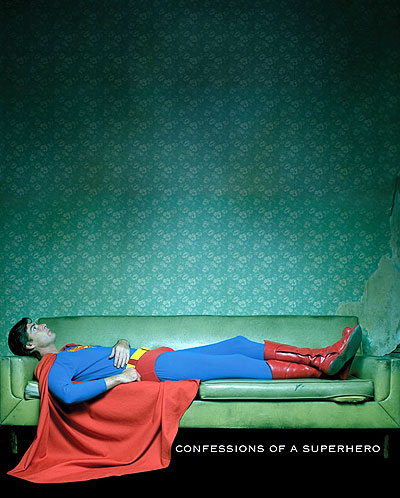
Paranoia & Delusions

superhero_400pxDelusional disorder, (previously called paranoid disorder,) is a type of serious mental illness called a “psychosis in which a person cannot tell what is real from what is imagined. The main feature of this disorder is the presence of delusions, which are unshakable beliefs in something untrue.

People with delusional disorder experience non-bizarre delusions, which involve situations that could occur in real life, such as being followed, poisoned, deceived, conspired against, or loved from a distance. These delusions usually involve the misinterpretation of perceptions or experiences.

In reality, however, the situations are either not true at all or highly exaggerated.

People with delusional disorder often can continue to socialize and function normally, apart from the subject of their delusion, and generally do not behave in an obviously odd or in a bizarre manner. This is unlike people with other psychotic disorders, who also might have delusions as a symptom of their disorder. In some cases, however, people with delusional disorder might become so preoccupied with their delusions that their lives are disrupted.

Types of delusional disorder

There are different types of delusional disorder based on the main theme of the delusions experienced. The types of delusional disorder include:

  • Erotomanic — Someone with this type of delusional disorder believes that another person, often someone important or famous, is in love with him or her. The person might attempt to contact the object of the delusion, and stalking behavior is not uncommon.
  • Grandiose — A person with this type of delusional disorder has an over-inflated sense of worth, power, knowledge, or identity. The person might believe he or she has a great talent or has made an important discovery.
  • Jealous — A person with this type of delusional disorder believes that his or her spouse or sexual partner is unfaithful.
  • Persecutory — People with this type of delusional disorder believe that they (or someone close to them) are being mistreated, or that someone is spying on them or planning to harm them. It is not uncommon for people with this type of delusional disorder to make repeated complaints to legal authorities.
  • Somatic — A person with this type of delusional disorder believes that he or she has a physical defect or medical problem.
  • Mixed — People with this type of delusional disorder have two or more of the types of delusions listed above.

Basic Principles

There are no systematic studies on treatment approaches and results in Delusional Disorder. The patient’s distrust and suspiciousness usually prevents any contact with a therapist.

Hospitalization

Hospitalization is indicated if a potential for danger is present; otherwise outpatient management is advisable. Unfortunately, involuntary hospitalization may increase distrust and resentment and increase the patient’s persecutory delusions.

Antipsychotic Drugs

Antipsychotic medication may be useful, particularly for accompanying anxiety, agitation, and psychosis. Because patients may be suspicious of medication, depot forms may be helpful. Although antipsychotics may have a good response, they are often only marginally effective for specific forms of Delusional Disorder.Other Therapies

Other treatments have been tried (electroconvulsive therapy, insulin shock therapy, and psychosurgery), but these approaches are not recommended.


Copied materials. NO COPYRIGHT INFRINGEMENT INTENDED. All content belongs to its rightful owners. Not for monetary gain. For educational purposes only.
 

Depression: A Few Questions

Here are things I’ve heard over the years that we must take a second look at. Here are some possible answers.

“There must be something wrong with your spiritual life.”

Yes, depression CAN be a result of sin. BUT depression is NOT always a result of sin! If it is, God will tell you loud and clear what the problem is. This saying piles on the guilt for the depressed Christian. It’s unlikely that their depression has a spiritual cause, and this implies that they are not good enough spiritually.  

“Repent and ask forgiveness for your sin!”

Depression is a result of sin, in that if there was no sin in the world depression wouldn’t exist. But then, neither would diabetes, cancer, or any other illness… Sin caused the world to be not-perfect, therefore illness exists. It’s a sin to be depressed, any more than it is to have any other illness. Depression can be used by God to encourage repentance, but in that case, it will be crystal clear exactly what sin you should repent of. If you don’t know or have just a vague sense of guilt, your depression is not the result of sin. 

You need to have more faith.” or  “Have faith in God.”

Hebrews 11:1, “Now faith is the substance of things hoped for, the evidence of things not seen.” How much faith does it take to hold onto the Christian faith when emotions scream at you daily to give up, get out and turn against God? Very often a depressed Christian will be hanging onto faith by their fingernails in something that requires a ton of faith.  

“Taking antidepressants is playing God, He can heal you.”

Yes, God can heal. Sometimes he doesn’t just flick a switch to make the illness vanish, sometimes the healing comes through the conventional ways of doctors, psychiatrists, counselors, therapists, and medication. By persuading someone not to take their medicines in preference for a quick, supernatural healing that God may not have in store for them, the sufferer is being denied something that will help them, right now. 

“Scripture says everything that happens is for your own good!”

The actual verse found in Romans 8:28, “And we know that in all things God works for the good of those who love him, who have been called according to his purpose.” This verse in no way implies that the sufferer should sit back and accept the illness for the rest of their life. It also does not say that illnesses are not to be fought with the intention of a cure. While God may well have things to do with a depressed person, the illness is not a good thing itself, and it may take years before you see positive results from it.  

“You’ve been prayed for, why has nothing changed?”

This can be expressed in several ways and spoken by one of two different groups of people: either the person who asked for prayer or those who prayed for them. We’ll break the underlying situation into two areas: something definite was experienced in the prayer time: chains were obviously broken and new freedom gained, or, nothing apparently happened at all. That is, “I know God set you free,” why aren’t you free yet?

“Depression is a self-discipline problem.”

Self-discipline is important to a Christian. We have to be disciplined enough not to break the laws of the land, and to obey our God. But no amount of discipline will get rid of a medical problem. This statement implies that the sufferer is lazy and could become better by sheer force of will. This is not possible and causes a lot of guilt.

“You’re depressed because you choose to be.” 

Why would anyone choose depression? It is hell on earth. It destroys everything it touches. Families, marriages, jobs, churches, and ministries- faith, peace, hope, and love. Depression corrodes all that it touches.

Does a diabetic or cancer patient choose their disease? Does the blind or the deaf person wake up in the morning and decide they aren’t going to keep being handicapped? These are the questions I would ask.

This image has an empty alt attribute; its file name is image-12.png

“You just need to rebuke that spirit of depression and tell it to leave you. Don’t let Satan steal your joy.”

There are two problems with this statement. One problem is the assumption that depression is caused by demonic oppression. The other problem is the assumption that joy and happiness are the same things. Blaming a “spirit of depression” can be a wonderful cop-out. Just cast out the spirit and you’re cured! No need for long-term support, prayer, counseling, or anything at all! And with this statement comes the implicit assumption that once again it’s your fault you’re depressed, this time because you’re not “spiritual” enough to get rid of the troublesome spirit yourself.

Yes, it is possible that demonic oppression can cause depression. No, demons are not responsible for every case of depression. Imagine what would happen if this statement was directed at someone with cancer, hemophilia, or osteoporosis (“Just cast out that demon attacking your bones and be strong again! God wants to see you running marathons!”).

The second problem with this statement is that joy is equated with happiness. People with depression are not going to be the happiest souls in the church. I’ve heard it said that happiness depends on what happens, whereas joy can exist in very unhappy situations.

“There’s no such thing as mental illness, it’s all in your mind”

Saying this denies that there is anything actually wrong with the depressed person, and implies that they are just making it up. This piles on the guilt again! A mental illness can be defined as one that affects the mind; the brain is allowed to get ill, just as the liver and lungs are.

“It’s your own fault you’re depressed”

This is the kind of thing that Job’s “comforters” said, and it didn’t help then either. Bad things can happen to good people. Denying this hurts the sufferer.

“Pull yourself together”

If you’ve been trying, someone saying this to you comes across as “You haven’t been trying hard enough, do more, and more, and more until you get it right.” So back you go, pushing more and more, and still getting nowhere because you cannot pull yourself out of depression by your bootstraps, and you can’t fix a medical problem by force of will.

bry-signat-1

Have You Been With Jesus Lately?

I need Him constantly. Just maybe that’s the backbone of true discipleship. We dare not think that discipleship, which is following Jesus Christ, can happen without any real intimacy to Him.

We’re called to love Him first.

Some of us struggle physically and mentally. We are the handicapped ones, and we know it–we understand our shortcomings and flaws. The purpose of this blog has been to encourage and comfort, that is the focus of brokenbelievers.com. What follows is the motto of this ministry:

Linda and I will emphasize this over and over, these posts are written by us three times a week. We want to encourage you in your struggle. I know you battle, and we want to serve you.

Both of us have struggled and found Jesus. I myself have had my lion’s share of raging battles, I have a paralyzed right arm and am also a brain tumor survivor. I’ve struggled with chronic depression and must take meds–these lay me at His feet. And I lay my issues at His.

We are called to be with Jesus every day–maybe in each moment. I really do think that intimacy with Him can be the cure for all that disturbs us about ourselves. Now I’m not saying that our issues evaporate, but we begin to see that they can be conquered, and only if we draw close and are filled with the Holy Spirit daily.

I’m convinced that we’ll see significant breakthroughs as we sit at the feet of Jesus. The passage above (v. 3) describes a satanic attack that seduces us from a 100% pure devotion to Jesus. We read of Paul’s deep concern–apparently the Corinthians were under attack.

“But I have this against you, that you have abandoned the love you had at first.”

Revelation 2:4

“For I feel a divine jealousy for you, since I betrothed you to one husband, to present you as a pure virgin to Christ. But I am afraid that as the serpent deceived Eve by his cunning, your thoughts will be led astray from a sincere and pure devotion to Christ.”

2 Corinthians 11:2-3

And Paul warns them. And us as well.

“Darkness is My Only Companion”

Ambrose of Milan (340-397)

Our theology makes all the difference in fighting depression, writes Kathryn Greene-McCreight, Author of “Darkness, Is My Only Companion” and Episcopal priest.

In his Problem of Pain, C. S. Lewis says that suffering is uniquely difficult for the Christian, for the one who believes in a good God. If there were no good God to factor into the equation, suffering would still be painful, and  ultimately meaningless.

For the Christian, who believes in the crucified and risen Messiah, suffering is always meaningful. It is meaningful because of the one in whose suffering we participate, Jesus. This is neither to say, of course, that suffering will be pleasant, nor that it should be sought. Rather, in the personal suffering of the Christian, one finds a correlate in Christ’s suffering, which gathers up our tears and calms our sorrows and points us toward his resurrection.

In the midst of a major mental illness, we are often unable to sense the presence of God at all. Sometimes all we can feel is the complete absence of God, utter abandonment by God, the sheer ridiculousness of the very notion of a loving and merciful God. This cuts to the very heart of the Christian and challenges everything we believe about the world and ourselves.

I have a chronic mental illness, a brain disorder that used to be called manic depression, but now is less offensively called bipolar disorder. I have sought help from psychiatrists, social workers, and mental health professionals; one is a Christian, but most of my helpers are not. I have been in active therapy with a succession of therapists over many years, and have been prescribed many psychiatric medications, most of which brought quite unpleasant side effects, and only a few of which relieved my symptoms. I have been hospitalized during the worst times and given electroconvulsive therapy treatments.

All of this has helped, I must say, despite my disinclination toward medicine and hospitals. They have helped me to rebuild some of “myself,” so that I can continue to be the kind of mother, priest, and writer I believe God wants me to be.

During these bouts of illness, I would often ask myself: How could I, as a faithful Christian, be undergoing such torture of the soul? And how could I say that such torture has nothing to do with God? This is, of course, the assumption of the psychiatric guild in general, where faith in God is often viewed at best as a crutch, and at worst as a symptom of disease.

How could I, as a Christian, indeed as a theologian of the church, understand anything in my life as though it were separate from God? This is clearly impossible. And yet how could I confess my faith in that God who was “an ever-present help in trouble” (Ps. 46:1) when I felt entirely abandoned by that God? And if this torture did have something to do with God, was it punishment, wrath, or chastisement? Was I, to use a phrase of Jonathan Edwards’s, simply a “sinner in the hands of an angry God”?

I started my journey into the world of mental illness with a postpartum depression after the birth of our second child. News outlets are rife with stories of women who destroy their own children soon after giving birth. It is absolutely tragic. Usually every instinct in the mother pushes toward preserving the life of the infant. Most mothers would give their own lives to protect their babies. But in postpartum depression, reality is so bent that that instinct is blocked. Women who would otherwise be loving mothers have their confidence shaken by painful thoughts and feelings.

Depression is not just sadness or sorrow.

When I am depressed, every thought, every breath, every conscious moment hurts.

And often the opposite is the case when I am hypomanic: I am scintillating both to myself, and, in my imagination, to the whole world. But mania is more than speeding mentally, more than euphoria, more than creative genius at work. Sometimes, when it tips into full-blown psychosis, it can be terrifying. The sick individual cannot simply shrug it off or pull out of it: there is no pulling oneself “up by the bootstraps.”

And yet the Christian faith has a word of real hope, especially for those who suffer mentally. Hope is found in the risen Christ. Suffering is not eliminated by his resurrection, but transformed by it. Christ’s resurrection kills even the power of death, and promises that God will wipe away every tear on that final day.

But we still have tears in the present.

We still die. In God’s future, however, death itself will die. The tree from which Adam and Eve took the fruit of their sin and death becomes the cross that gives us life.

The hope of the Resurrection is not just optimism, but keeps the Christian facing ever toward the future, not merely dwelling in the present. But the Christian hope is not only for the individual Christian, nor for the church itself, but for all of Creation, bound in decay by that first sin: Cursed is the ground because of you … It will produce thorns and thistles for you …” (Gen. 3:17-18).

This curse of the very ground and its increase will be turned around at the Resurrection. All Creation will be redeemed from pain and woe. In my bouts with mental illness, this understanding of Christian hope gives comfort and encouragement, even if no relief from symptoms. Sorrowing and sighing will be no more. Tears will be wiped away. Even fractious [unruly, irritable] brains will be restored.

“Darkness: My Only Companion”

Kathryn Greene-McCreight is assistant priest at St. John’s Episcopal Church in New Haven, Connecticut, and author of Darkness Is My Only Copanion: A Christian Response to Mental Illness (Brazos Press, 2006).

Click to read Psalm 88