Standing With Her in the Rain

standingaloneintherain1

“Share each other’s burdens, and in this way obey the law of Christ.”

Galatians 6:2, NLT

By Lisa Schubert, Guest Author

Samantha issued commands to the person on the other end of the line. When she hung up, the rant continued against our church, our staff, the weather, and this meal that would serve as her Thanksgiving dinner. I had to let her go mid-rant, but not before reminding her that I would keep her in my prayers.

Samantha approached me outside the church on Thanksgiving morning with her hair disheveled and her coat covered with dirt smudges and raindrops. She demanded to borrow my cell phone to find if the Thanksgiving dinner she had requested from a charitable organization would be ready for pick-up in an hour. I was in a hurry. I needed to be inside preparing to lead worship. I begrudgingly let her borrow my phone, but I insisted on dialing the number myself and standing with her in the gentle rain.

Cross-in-the-Rain-

My encounters with Samantha have continued over the past few months. She’s almost always confused, angry, and paranoid. She tells stories about growing up with another member of our staff, who never met her until recently. It’s hard to know how to respond to Samantha.

A friend called me recently to ask if our church had any resources for helping congregations to welcome those who struggle with mental illness. I pointed her in a few directions, including the National Alliance on Mental Illness (NAMI) at www.nami.org. Even as I offered her the information, I felt uneasy. Connecting with those who have mental illnesses is a complex, difficult journey.

It was raining again on Monday when I saw Samantha. She was sitting in the front lobby of the church. She shouted at me as I walked out the door, “Be careful out there! Two guys tried to kidnap me, and I wouldn’t want that to happen to you.” Unwilling to believe her, I replied, “Samantha, I’m sorry you had a rough morning. I’ll be thinking of you. Hope your day gets better.” I continued out the church doors and opened my umbrella.

I later discovered that Samantha was mugged that morning. Thankfully, the police believed her while I had blown her off. They arrested the alleged perpetrators that afternoon.

I’m embarrassed by my lack of gentleness and compassion toward Samantha, and I know I’m not alone. I wonder what it means for the Church to embrace, accept and listen to those who have mental illnesses. I wonder how church leaders like myself can grow and help others to deepen their care for people like Samantha.

There are no simple answers, but I think the answer starts in a simple place:

We stand with them in the rain.

Lisa Schubert is Associate Pastor of Discipleship and Formation of North United Methodist Church, Indianapolis.

Under Quarantine

quarantine

Quarantines are a real possibility, even to this day. A quarantine is imposed when a disease is contagious enough that it would harm a society: Measles, Smallpox, and the recent COVID-19 are just a few physical diseases where isolation must be imposed.

It can be severe— an epidemic, with desperate consequences if not adhered to; in some rare cases, the use of deadly force has been authorized to maintain a quarantine until the disease is no longer communicable.

This may surprise you, but there are examples of ‘quarantines’ in the Bible.

The term ‘unclean’ was used for ‘leprosy.’ Those afflicted had to isolate themselves; they had to ‘announce’ their presence when in contact with society. Lepers lived in groups away from the general populace, as a result of their disease.

In Paul’s epistle to the Corinthians, he addresses another kind of ‘quarantine.’ The situation was dire; the church had advocated a Christian living with his father’s wife.

“I have already passed judgment on this man in the name of the Lord Jesus. You must call a meeting of the church. I will be present with you in spirit, and so will the power of our Lord Jesus. Then you must throw this man out and hand him over to Satan so that his sinful nature will be destroyed and he himself will be saved on the day the Lord returns.”

1 Corinthians 5:3-5, NLT

Understanding the Principle of Usefulness

Now in a large house, there are not only gold and silver vessels, but also vessels of wood and of earthenware, and some to honor and some to dishonor.”

2 Timothy 2:20, NASB

Found in God’s pantry are lots of pots and pans of various uses.  Paul writes Timothy about the ‘large house’ which is the Church inclusive. Look around Timothy, there are gold ones, and there are silver ones. They have a noble purpose fitting for such a great house. These are the ones the guests will use; they befit the significance of the Lord himself. These vessels have great value for they are made of precious metals.

There are vessels of different categories. These are the ones made of wood, and of clay. These are part of the household, make no mistake about it. But their use is one of function, they’re utilized in common and ignoble ways. (A clay ‘bed-pan’ perhaps?!)

21 “Therefore, if anyone cleanses himself from these things, he will be a vessel for honor, sanctified, useful to the Master, prepared for every good work.”

2 Timothy 2:21

Paul, the author of the New Testament doctrine of grace emphasizes the place of personal holiness. We are to ‘cleanse’ ourselves to become a vessel of honor. There is good news here:

  • All are vessels in the Father’s house. Each of us belongs to Him. He alone determines their use.
  • Things are not yet in their final state. Changes in status can be experienced. In God’s economy, clay pots can become ‘golden.’ Silver can become ‘wood.’

Some sin is contagious.

It affects believers, and the Church becomes compromised by what we’ve done. And then sometimes we are quarantined by the Holy Spirit–until the contagion passes. This spiritual disease must not be permitted.

I have experienced this several times in my own discipleship. These are not pleasant times, but there is no condemnation. I’m still His servant, His love for me stays outrageously constant. He has never turned away a sinning child who repents of their sin.

“Yes, I am His servant, but I must wait out in the hall. I haven’t been faithful. So I sit in His waiting room, waiting for His call. This is for my good. And my Father knows what is best.” 

Dancing With Bruises

ballerina stretching
Photo by Beto Franklin on Pexels.com

It seems like bruises are part of our life.

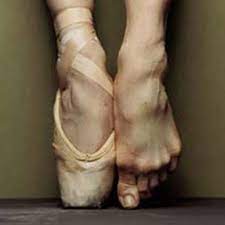
Dancers are some of the most talented people I know. Their gracefulness can be seen both on and off the stage. A dancer’s training is far from easy. But by choosing to become dancers they have made a decision to absorb pain.

Their toes and feet are blistered and bruised; they take constant abuse. Some live with chronic tendonitis. Their feet bleed sometimes, and pain is their constant companion, but they still choose to dance.

Two things to consider.

  • They choose to dance. Dancers must operate with an iron will and an elegant grace. I suppose that is why they can dance the way they do. They have painfully blended the two.
  • The scars and bruises often become “badges of honor.” They would rather dance in pain, than not dance at all.

I once heard someone describe depression as having a mental bruise. I understand this. It makes sense.

As one prone to depression, I know what it is like to bury myself in my bed for weeks at a time. My own mental bruise was simply more than I could take. There was a sensation of sinking into blackness, a sense of total and complete despair. I felt lost and completely alone.

I prayed. I groaned, and I prayed again. Things weren’t going well.

dancer-feet

My sense of being totally lost in sad, dark thoughts was beyond comprehension. Dear reader, this was something quite real, and you must become aware of these things. Some of your friends are suffering, and it is often a hellish and desperate depression.

We would never say that diabetics are that way because of the enemy. The dark one will surely exploit it, but I think you give him far too much credit if you suggest he was able to initiate it. I don’t think Satan has the spiritual “voltage.”

I refuse to hide my mental bruises from those who share my pain. I will make the choice to dance. I’m bruised, but I will try to ignore the pain. I would exult in my God, walk in His love, and “leaping with joy like calves let out to pasture” (Malachi 4:2.)

“A bruised reed he will not break, and a smoldering wick he will not snuff out, till he has brought justice through to victory.”

Isaiah 42:3

The great pastor/evangelist Charles Spurgeon once spoke about his own personal battle with depression. Read this quote slowly and deeply:

 “I find myself frequently depressed – perhaps more so than any other person here. And I find no better cure for that depression than to trust in the Lord with all my heart, and seek to realize afresh the power of the peace-speaking blood of Jesus, and His infinite love in dying upon the cross to put away all my transgressions.”

Charles Spurgeon

When There’s Blood in the Water

It’s a fact. Biologists tell us that sharks can smell blood from 2-3 miles away. They follow their noses to the place where they sense it. They have an ‘attack mechanism’ that drives them to their victim . Blood acts as a trigger inside their brains. Occasionally dozens of sharks attack in a feeding frenzy.

Over 40 years in the Church has taught me that sharks aren’t the only ones that turn on the wounded.

The Church is supposed to be a safe and a healing place.

This is what the Holy Spirit wants. That isn’t always the case. Someone fails, another falters. Sin is uncovered and the sharks move in. There is blood in the water. Now things don’t always work this way, but it does happen.

There are some who might be restored, and yet others are trampled down instead.   There’re many who would rather pounce than pray. Unfortunately when the “sharks” attack it almost always ends up being a as a vicious personal attack. It only creates more blood in the water.

There are many who are bleeding.

They are those with a mental illness, or confined to a wheelchair, or with Downs Syndrome, they are the first that come to mind. They’re often the the very sick, the developmentally disabled, the drunk, the addict, the adulterer, the disabled, the homosexual, the poor, and the ex-con who are just several kinds of people that regularly get hurt in our churches.

Matthew 5:7, ESV

Mercy is what God extends to people who don’t deserve any. Failure to understand God’s deep penchant for the broken puts us in a bad place. We don’t always understand. Keep in mind that the Prodigal’s older brother refused to party with the forgiven son.

How terribly sad, and religiously confusing. I have to wonder, who really has been attacked by the enemy? The Kingdom of God is specifically designed for losers; it exists for the sick, the stumbler and the sinner.

In theory, we agree with Matthew 5:7.

We find tremendous inspiration when this verse is read. But the noble feelings don’t always translate into dedicated action. I’ve come to see that I must consciously press this into action. I must actively show mercy for the healing of others– and if anything, just to protect my own heart.

The Great Physician has come for the sick, not so much who consider themselves healthy.

He loves each of us, but Jesus cares in different ways. He tailors His grace to fit our sin. He’s concerned for the very worst of us. Yes, repentance is necessary and crying out to Jesus for healing is always needed.

Jesus has always been associated with the lowly.

If there is blood in the water, let’s turn it up a notch, and let’s show special mercy for those who are struggling. Let us be kinder than we have to be. If we err— let us always err on the side of mercy and kindness. 

For further studyPsalm 72:13; Psalm 82:4; Matt. 9:12; Romans 15:1; 1 Thess. 5:14;

&