Are You Depressed, Or Just Human?

rainy-day

Depression can be devastating. Its worst form, major depressive disorder, is marked by all-encompassing low mood, thoughts of worthlessness, isolation, and loss of interest or pleasure in most or all activities.

But this clinical description misses the deep, experiential horror of the condition; the suffocating sense of despair that can make life seem too arduous to bear. Here’s something else we can say confidently about depression: it is complex. The cause is often a mix of factors including genetic brain abnormalities, sunlight deprivation, poor nutrition, lack of exercise, and social issues including homelessness and poverty. Also, cause and effect can be hard to tease apart — is social isolation a cause or an effect of depression?

Unfortunately, we can make one more unassailable observation about depression: the disorder — or, more precisely, the diagnosis — has gone stratospheric. An astonishing 10 percent of the U.S. population was prescribed an antidepressant in 2005; up from 6 percent in 1996.

Why has the diagnosis become so popular? There are likely several reasons. It’s possible that more people today are truly depressed than they were a decade ago. Urbanized, sedentary lifestyles; nutrient-poor processed food; synthetic but unsatisfying entertainments and other negative trends, all of which are accelerating, may be driving up the rate of true depression. But I doubt the impact of these trends has nearly doubled in just ten years.

So here’s another possibility. The pharmaceutical industry is cashing in. In 1996, the industry spent $32 million on direct-to-consumer (DTC) antidepressant advertising. By 2005, that nearly quadrupled, to $122 million. It seems to have worked. More than 164 million antidepressant prescriptions were written in 2008, totaling $9.6 billion in U.S. sales. Today, the television commercial is ubiquitous:

  •  A morose person stares out of a darkened room through a rain-streaked window.
  • Quick cut to a cheery logo of an SSRI (selective serotonin reuptake inhibitor, the most common type of antidepressant pharmaceutical).
  • Cross-fade to the same person, medicated and smiling, emerging into sunlight to pick flowers, ride a bicycle or serve birthday cake to laughing children.
  • A voiceover gently suggests, “Ask your doctor if [name of drug] is right for you.”

The message — all sadness is depression, depression is a chemical imbalance in the brain, this pill will make you happy, your doctor will get it for you — could not be clearer. The fact that the ad appears on television, the ultimate mass medium, also implies that depression is extremely common.

Yet a study published in the April, 2007, issue of the Archives of General Psychiatry, based on a survey of more than 8,000 Americans, concluded that estimates of the number who suffer from depression at least once during their lifetimes are about 25 percent too high. The authors noted that the questions clinicians use to determine if a person is depressed don’t account for the possibility that the person may be reacting normally to emotional upheavals such as a lost job or divorce (only bereavement due to death is accounted for in the clinical assessment). And a 15-year study by an Australian psychiatrist found that of 242 teachers, more than three-quarters met the criteria for depression. He wrote that depression has become a “catch-all diagnosis.” What’s going on? It’s clear that depression, a real disorder, is being exploited by consumer marketing and is over-diagnosed in our profit-driven medical system.

Unlike hypertension or high cholesterol — which have specific, numerical diagnostic criteria — a diagnosis of depression is ultimately subjective. Almost any average citizen (particularly one who watches a lot of television) can persuade him or herself that transient, normal sadness is true depression. And far too many doctors are willing to go along. The solution to this situation is, unsurprisingly, complex, cutting across social, medical, political and cultural bounds.

But here are three major changes that are needed immediately: Medically, thousands of studies confirm that depression, particularly mild to moderate forms, can be alleviated by lifestyle changes. These include exercise, lowered caffeine intake, diets high in fruits and vegetables, and certain supplements, particularly omega-3 fatty acids. Physicians need to be trained in these methods, as they are at the Arizona Center for Integrative Medicine at the University of Arizona in Tucson. See Natural Depression Treatment for more about these low-tech methods, or the “Depression” chapter in the excellent professional text, Integrative Medicine by David Rakel, M.D. (Saunders, 2007).

Politically, if Congress — which seems hopelessly addicted to watering down all aspects of health care reform — can’t manage to ban all DTC ads in one stroke, it should start by immediately ending those for antidepressants. Personally, be skeptical of all DTC ads for antidepressants. The drugs may turn out to be no more effective than placebos. Many of them have devastating side effects, and withdrawal, even if done gradually, can be excruciating. While they can be lifesavers for some people, in most cases they should be employed only after less risky and expensive lifestyle changes have been tried.

Finally, recognize that no one feels good all the time. An emotionally healthy person can, and probably should, stare sadly out of a window now and then. Many cultures find the American insistence on constant cheerfulness and pasted-on smiles disturbing and unnatural. Occasional, situational sadness is not pathology — it is part and parcel of the human condition, and may offer an impetus to explore a new, more fulfilling path. Beware of those who attempt to make money by convincing you otherwise.

…………………………..

Weil's-new-book-availableAndrew Weil, M.D., is the founder and director of the Arizona Center for Integrative Medicine and the editorial director of http://www.DrWeil.com. Become a fan on Facebook. Follow Dr. Weil on Twitter. Read more at: http://www.huffingtonpost.com/andrew-weil-md/are-you-depressed-or-just_b_307734.html


Sorting Out What is Real

It’s a windy cold, gray day here in Alaska.  Very typical for November up here in “the Last Frontier.” Just as typical  is that I have had a heaviness descend on me, (just like when the fat kid sits on the little kid at the bus stop.)

But this onslaught of present grayness seems to be a premonition, I feel, of what I face trying to survive through another long Alaskan winter, (and I don’t know if  I’m going to make it this year.)

Oddly enough, I’ve been thinking about ecosystems and symbiosis How the trees in a forest touch each other with their roots.  The big tree in the sun, “shares” with the little tree in the shade.  It’s the way they gently touch each other– helping, and encouraging and strengthening.

The Church is very much like this.  As a mentally ill believer, I have a lot of needs and weaknesses.  But knowing this, I draw from what God supplies by means of fellowshipping with others, and prayer, and the Word. (FYI.  I’m not good at any of the three.) But I guess I am planted in a good spot.

I think that when we finally make it to eternity, we will be interlaced with each other to the extent we really aren’t sure who is us, and who are our loved ones and our Christian ‘brothers and sisters.’  One thing is certain–we’re not going to survive the journey alone.  We just can’t do it on our own.

I must keep myself rooted firmly into “today”.  I can’t handle tomorrow’s sorrow today.  I have a special friend who believes he has to live “moment-to-moment”.  He says that this helps him navigate the hopelessness and the despair from depression.  One day at a time, and pace myself.  This, and perhaps, be just a little more gentle with myself? Maybe?

An interesting thought, not sure who said it, but it seems true:

“There are places in the heart that do not yet exist; suffering has to enter in for them to come to be.” 

The transformational reason is that we grow after we hurt, that pain endured will change us.  I think this is what God has intended to happen.  (Good thing, not to waste our sorrows.  After all, we’ve already earned them.)

kyrie elesion, Bryan

(Lord, have mercy)
 
cropped-christiangraffiti1-2


The Melancholy of Edvard Munch

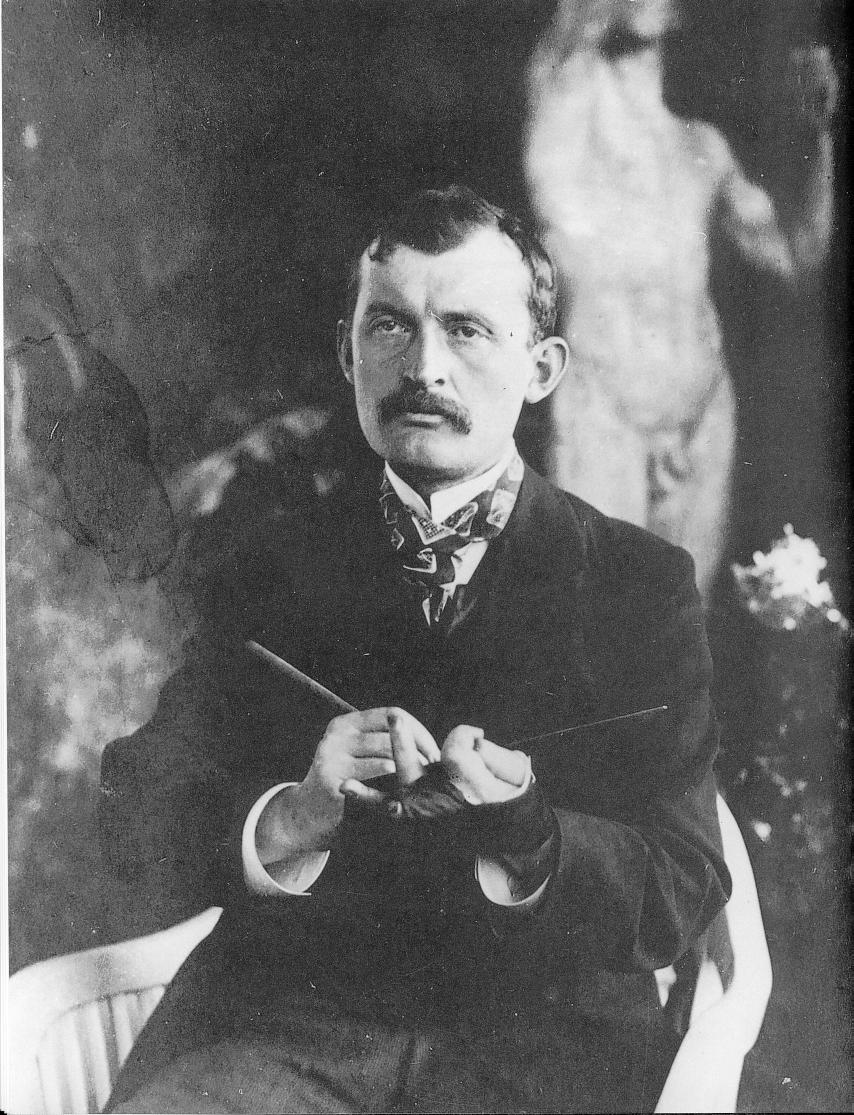
munchDecember 2, 1863 – January 23, 1944, he was a Norwegian painter. He is regarded as a Symbolist and a forerunner of expressionism. He focused on themes of fear, anxiety, melancholy, and death. He did not believe in heaven, or other Christian themes or doctrines, as far as I know.

My intention is to reintroduce you to an artist that I highly esteem.  The challenge I suppose is to understand the issues that Munch discovers in his work. He clearly taps into the ‘angst’ of the modern man, and what he does perpetuates a mindset for our generation.

Obviously these paintings are just an introduction, and I understand that they are selective. I have refrained from any kind of interpretation, other than laying down a general principle–  to Munch, color is everything.

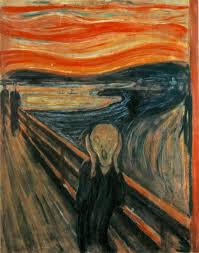
Munch was probably not a cheery person. He essentially was driven by anxiety through his whole life. It seems that he could be very ambitious. His classic work was “The Scream” which he made several versions to sell. He used different mediums to do this– tempera, lithograph and pastel. Interestingly, “The Scream” is a favorite target for art thefts. It captures the minds of every modern thinker.

Within our culture, “The Scream” is iconic. Warhol, Gary Larson, Dr. Who and even “The Simpsons” have cashed in on a parody of it.

Quotes

“I painted the picture, and in the colors the rhythm of the music quivers. I painted the colors I saw.”

“Painting picture by picture, I followed the impressions my eye took in at heightened moments. I painted only memories, adding nothing, no details that I did not see. Hence the simplicity of the paintings, their emptiness.”

“For as long as I can remember I have suffered from a deep feeling of anxiety which I have tried to express in my art.”

“Disease, insanity, and death were the angels that attended my cradle, and since then have followed me throughout my life.”

munch-thescream
The Scream, 1893
Munch’s best known painting ^


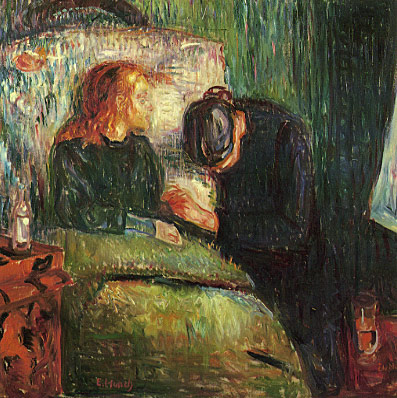
The Sick Child (1885)
Melancholy, 1894
Melancholy, 1894
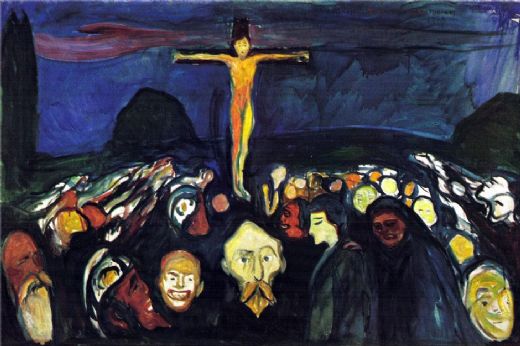
Golgotha, 1900
Golgotha

Whim-Whams

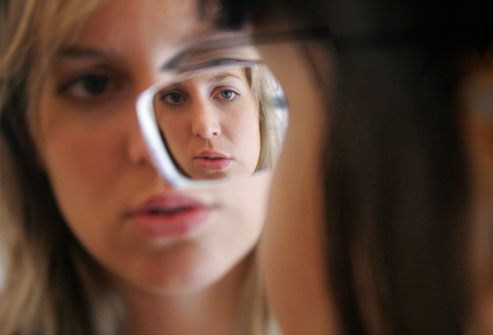
getty_rm_photo_of_woman_seen_through_eyeglasses_of_another

“In our family “whim-wham” is code, a defanged reference to any number of moods and psychological disorders, be they depressive, manic, or schizoaffective. Back in the 1970s and ’80s – when they were all straight depression – we called them “dark nights of the soul.” St. John of the Cross’s phrase ennobled our sickness, spiritualized it. We cut God out of it after the manic breaks started in 1986, the year my dad, brother, and I were all committed. Call it manic depression or by its new, polite name, bipolar disorder. Whichever you wish. We stick to our folklore and call it the whim-whams.”

— David LovelaceScattershot: My Bipolar Family

flourish2

Speaking in code is often our way of communicating to those who are curious. We seldom tell anyone we have bipolar disorder outright. Some of us tried, and failed; we fall back to “I’m just a little blue today,” or the classic, “I’m just woke up on the wrong side of the bed.” We really can be somewhat disingenuous.

All too often these are half-truths that deflect the sticky issues of a mental breakdown. We seek to salvage some kind of dignity, or evade the inevitable stigma that would certainly come if we told the truth. We choose to evade, but at a cost.

I struggle with the stigma of both bipolar disorder and epilepsy. I’m still uncomfortable when others seem uncomfortable with me. So, I have developed a general rule:

Bryan’s Rule #14, “Never reveal your illness, except to qualified people.”

I suppose this adds a layer of personal security. The occasions I have violated this rule have resulted in awkward pauses and odd looks. Afterwards, the relationship changed. It was as if I suddenly sprouted a second head, or something.

As Christian believers, I know we are supposed to walk in the truth. But exactly how truthful am I supposed to be? I’ve always had an iconoclastic streak, and I love stretching the social boundaries of others. Bipolar disorder has been an illness made-to-order for people like me.

Bryan’s Rule #15, “Openness can be a true step toward my healing.”

But it take truth to change. We really need to be honest by bringing things into the light. Obscuring the truth keeps us isolated and distant from others. Will speaking forthrightly about my bipolar disorder be a challenge? Of course. But necessary if I want to heal and cope.

I’m not advocating making a big sign and parading down Main Street. Just to be a bit more honest with others, and ultimately with ourselves. Let’s be comfortable with our own personal “whim-whams.”

aabryscript