“Darkness is My Only Companion”

Ambrose of Milan (340-397)

Our theology makes all the difference in fighting depression, writes Kathryn Greene-McCreight, Author of “Darkness, Is My Only Companion” and Episcopal priest.

In his Problem of Pain, C. S. Lewis says that suffering is uniquely difficult for the Christian, for the one who believes in a good God. If there were no good God to factor into the equation, suffering would still be painful, and  ultimately meaningless.

For the Christian, who believes in the crucified and risen Messiah, suffering is always meaningful. It is meaningful because of the one in whose suffering we participate, Jesus. This is neither to say, of course, that suffering will be pleasant, nor that it should be sought. Rather, in the personal suffering of the Christian, one finds a correlate in Christ’s suffering, which gathers up our tears and calms our sorrows and points us toward his resurrection.

In the midst of a major mental illness, we are often unable to sense the presence of God at all. Sometimes all we can feel is the complete absence of God, utter abandonment by God, the sheer ridiculousness of the very notion of a loving and merciful God. This cuts to the very heart of the Christian and challenges everything we believe about the world and ourselves.

I have a chronic mental illness, a brain disorder that used to be called manic depression, but now is less offensively called bipolar disorder. I have sought help from psychiatrists, social workers, and mental health professionals; one is a Christian, but most of my helpers are not. I have been in active therapy with a succession of therapists over many years, and have been prescribed many psychiatric medications, most of which brought quite unpleasant side effects, and only a few of which relieved my symptoms. I have been hospitalized during the worst times and given electroconvulsive therapy treatments.
All of this has helped, I must say, despite my disinclination toward medicine and hospitals. They have helped me to rebuild some of “myself,” so that I can continue to be the kind of mother, priest, and writer I believe God wants me to be.

During these bouts of illness, I would often ask myself: How could I, as a faithful Christian, be undergoing such torture of the soul? And how could I say that such torture has nothing to do with God? This is, of course, the assumption of the psychiatric guild in general, where faith in God is often viewed at best as a crutch, and at worst as a symptom of disease.

How could I, as a Christian, indeed as a theologian of the church, understand anything in my life as though it were separate from God? This is clearly impossible. And yet how could I confess my faith in that God who was “an ever-present help in trouble” (Ps. 46:1) when I felt entirely abandoned by that God? And if this torture did have something to do with God, was it punishment, wrath, or chastisement? Was I, to use a phrase of Jonathan Edwards’s, simply a “sinner in the hands of an angry God”?

I started my journey into the world of mental illness with a postpartum depression after the birth of our second child. News outlets are rife with stories of women who destroy their own children soon after giving birth. It is absolutely tragic. Usually every instinct in the mother pushes toward preserving the life of the infant. Most mothers would give their own lives to protect their babies. But in postpartum depression, reality is so bent that that instinct is blocked. Women who would otherwise be loving mothers have their confidence shaken by painful thoughts and feelings.

Depression is not just sadness or sorrow.
When I am depressed, every thought, every breath, every conscious moment hurts.

And often the opposite is the case when I am hypomanic: I am scintillating both to myself, and, in my imagination, to the whole world. But mania is more than speeding mentally, more than euphoria, more than creative genius at work. Sometimes, when it tips into full-blown psychosis, it can be terrifying. The sick individual cannot simply shrug it off or pull out of it: there is no pulling oneself “up by the bootstraps.”

And yet the Christian faith has a word of real hope, especially for those who suffer mentally. Hope is found in the risen Christ. Suffering is not eliminated by his resurrection, but transformed by it. Christ’s resurrection kills even the power of death, and promises that God will wipe away every tear on that final day.

But we still have tears in the present.

We still die. In God’s future, however, death itself will die. The tree from which Adam and Eve took the fruit of their sin and death becomes the cross that gives us life.

The hope of the Resurrection is not just optimism, but keeps the Christian facing ever toward the future, not merely dwelling in the present. But the Christian hope is not only for the individual Christian, nor for the church itself, but for all of Creation, bound in decay by that first sin: Cursed is the ground because of you … It will produce thorns and thistles for you …” (Gen. 3:17-18).

This curse of the very ground and its increase will be turned around at the Resurrection. All Creation will be redeemed from pain and woe. In my bouts with mental illness, this understanding of Christian hope gives comfort and encouragement, even if no relief from symptoms. Sorrowing and sighing will be no more. Tears will be wiped away. Even fractious [unruly, irritable] brains will be restored.

“Darkness: My Only Companion”

Kathryn Greene-McCreight is assistant priest at St. John’s Episcopal Church in New Haven, Connecticut, and author of Darkness Is My Only Copanion: A Christian Response to Mental Illness (Brazos Press, 2006).

Click to read Psalm 88

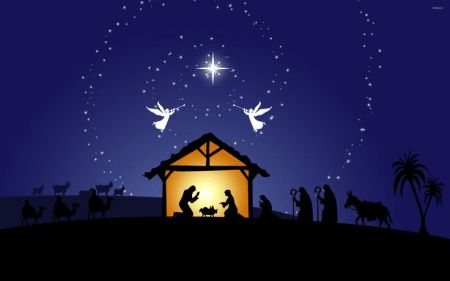
Contemplating the Crib

When we think about Jesus, when we start to contemplate the crib, we explode into joy over what we have seen. We inaugurate a convincing of His second coming. You might say that we suddenly adjust to a Jesus who just drops in on us.

“And when Christ, who is your life, is revealed to the whole world, you will share in all his glory.”

Col. 3:4, NLT

Jesus anticipates that His visits to earth, will start to bear fruit. There will be many who will be validated to step up into this place of salvation. But many of us will be part of many others who are involved in this sharing. Jesus has come, and all of us enter into something quite exceptional.

But this is all a future event, it hasn’t happened yet, but we do think about when He will return. But this is not an occasional, fleeting awareness. But we are confident we do understand that His return alters everything. All of a sudden, we are launched into real and eternal promises. These critical assignments coming from this world, will never take the place of being in God‘s purposes.

Paul is wrapped up with a deep and profound understanding of things that are on the threshold.  He is the apostle of the aware. He seems to sizzle with understanding that progresses out of his initiative and creative effort.

But Paul develops, after he sees, a careful sense of certain things that are moving. But he knows what He has seen, and he insists that others join him in this.

This is why we must procure this awareness. To operate in the realm of Paul will be worth our weight in “celestial gold.”  Things are rich and fecund, and they wait in a exceptional awareness. As Paul follows, so we follow. In the Heavenly places, we are being counted as being faithful and quite true.

Be Thoughtful This Christmas

Some thoughts about the meaning of Christmas. Take these slow, they might be a bit dangerous if applied too fast. :-)

He was created of a mother whom He created. He was carried by hands that He formed. He cried in the manger in wordless infancy, He the Word, without whom all human eloquence is mute.    

–Augustine

There were many who saw the babe, but did not see the salvation.  

–Author Unknown

For the Christ-child who comes is the Master of all; No palace too great, no cottage too small.  

 –Phillips Brooks

Rejoice, that the immortal God is born, so that mortal man may live in eternity.    

–John Hus

His poverty was so great that He was born in another man’s house, and buried in another man’s tomb.    

–John Boys

It is here, in the thing that happened at the first Christmas, that the most profound unfathomable depths of the Christian revelation lie. God became man; Nothing in fiction is so fantastic as this truth of the incarnation.  

–J.I. Packer

Who can add to Christmas? The perfect motive is that God so loved the world. The perfect gift is that He gave His only Son. The only requirement is to believe in Him. The reward of faith is that you shall have everlasting life.  

–Corrie Ten Boom

The Almighty appeared on earth as a helpless human baby, needing to be fed and changed and taught to talk like any other child. The more you think about it, the more staggering it gets. Nothing in fiction is so fantastic as this truth of the Incarnation.  

— J.I. Packer

There were only a few shepherds at the first Bethlehem. The ox and the donkey understood more of the first Christmas than the high priests in Jerusalem. And it is the same today.    

–Thomas Merton

Christmas is based on an exchange of gifts, the gift of God to man – His unspeakable gift of His Son, and the gift of man to God – when we present our bodies a living sacrifice.   

 –Vance Havner

The idea that there’s a force of love and logic behind the universe is overwhelming to start with, if you believe it. Actually, maybe even far-fetched to start with, but the idea that that same love and logic would choose to describe itself as a baby born in shit and straw and poverty is genius, and brings me to my knees, literally. To me, as a poet, I am just in awe of that. It makes some sort of poetic sense. It’s the thing that makes me a believer, though it didn’t dawn on me for many years.    

–Bono

The central miracle asserted by Christians is the incarnation. They say that God became man.   

— C.S. Lewis

Infinite, and an infant. Eternal, and yet born of a woman. Almighty, and yet hanging on a woman’s breast. Supporting a universe, and yet needing to be carried in a mother’s arms. King of angels, and yet the reputed son of Joseph. Heir of all things, and yet the carpenter’s despised son.   

–Charles Spurgeon

Carols stir us. Holy words inspire us. The golden glow from the manger warms us. A little religion at Christmas is fine. But that glow in the manger comes from the Light of the world. It exposes evil and either redeems it or destroys it. The babe in the manger is far more than an object for sentimental sighs. He is the Son of God who must be accepted as ruler – or confronted as rival.  

–John G. Stackhouse, Jr.

It is good to be children sometimes, and never better than at Christmas when its mighty Founder was a child Himself.  

–Charles Dickens

Christmas is for children. But it is for grown-ups too. Even if it is a headache, a chore, and a nightmare, it is a period of necessary defrosting of chilled hidebound hearts.  

–Lenora Mattingly Weber

Hark the herald angels sing,
Glory to the newborn king.”
Peace on earth, and mercy mild,
God and sinners reconciled.

–Charles Wesley

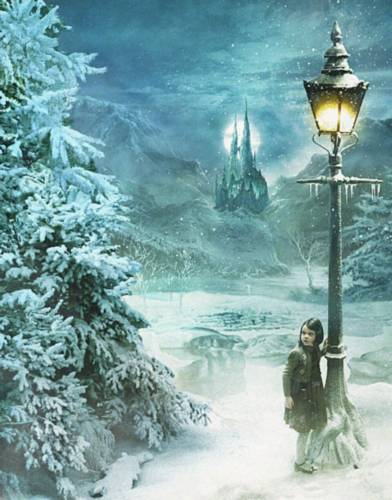
This Gospel anticipates a world far different from C.S. Lewis’s Narnia, where it is “always winter, and never Christmas.” The promise of the Gospel is that it is “always Christmas.”  To be “in Christ” is to enjoy each morning as a Christmas morning with the family of God, celebrating the gift of God around the tree of life.  

–Kevin VanHoozer

The spirit of Christmas needs to be superseded by the Spirit of Christ. The spirit of Christmas is annual; the Spirit of Christ is eternal. The spirit of Christmas is sentimental; the Spirit of Christ is supernatural. The spirit of Christmas is a human product; the Spirit of Christ is a divine person. That makes all the difference in the world.  

–Stuart Briscoe

Here’s a side to the Christmas story that isn’t often told: Those soft little hands, fashioned by the Holy Spirit in Mary’s womb, were made so that nails might be driven through them. Those baby feet, pink and unable to walk, would one day walk up a dusty hill to be nailed to a cross. That sweet infant’s head with sparkling eyes and eager mouth was formed so that someday men might force a crown of thorns onto it. That tender body, warm and soft, wrapped in swaddling clothes, would one day be ripped open by a spear. Jesus was born to die.    

–John MacArthur

This Special Place, Where it is Always Christmas

“This Gospel anticipates a world far different from C.S. Lewis’s Narnia,where it is “always winter, and never Christmas.” But the promise of the Gospel is that it is always Christmas. To be “in Christ” is to enjoy each morning as a Christmas morning with the family of God, celebrating the gift of God around the tree of life.”

–Kevin Van Hoozer

Christmas can be a torment and tribulation for so many. I have no doubt it brings grief. Family, friends, finances– mixed liberally with heavy doses of materialism and manipulation will always bring us issues.  The music and decorations are mostly mere Novocaine (which doesn’t always work). Stress builds up. And we want none of that.

Being mentally or physically ill often accentuates these issues. I’m not sure why exactly, but suicide increases during this season. Perhaps the challenges Christmas brings just overwhelm a person who is struggling hard just to make it.

“Christmas is for children. But it is for grown-ups too. Even if it is a headache, a chore, and a nightmare, it is a period of necessary defrosting of chilled hidebound hearts.”  

–Lenora Mattingly Weber

As I think about Christmas, it is helpful for me to see it as a “mirror.” It is my reflection back to me. What we see, is who we are. If we have issues in our own life, the Season will just magnify them.  But this doesn’t mean its bad, far from it. There is always conflict, but this spiritual combat can bring us success. Some things must be fought for.

I’m convinced that in all of this, there is opportunity.  

The chance to connect to “Christmas”. The very idea is quite strange.  But Christmas can be an exquisite treat.  It is made by mixing love and truth in generous portions. As we look hard for it, there is something that moves us to a place far beyond us. Grace makes us to stand and look, perhaps for the first time.

When we truly process this, we’ll find “Christmas”. And honestly, it is more than a holiday. For the Christian, it is special time. And yes, there will be times when it is trying, but in my own thinking, Christmas has become a time of great joy and anticipation.

It won’t take much, maybe a little imagination on your part.

But those things you do may ignite and become a blaze that will direct them through their lives. Be kinder then you need to.

“The universal joy of Christmas is certainly wonderful. We ring the bells when princes are born, or toll a mournful dirge when great men pass away. Nations have their red-letter days, their carnivals and festivals, but once in the year and only once, the whole world stands still to celebrate the advent of a life. Only Jesus of Nazareth claims this world-wide, undying remembrance. You cannot cut Christmas out of the Calendar, nor out of the heart of the world.”   

Anonymous

bry-signat (1)