The Ugliness of Self-Pity

pity

14 “Yet I curse the day I was born!
May no one celebrate the day of my birth.
15 I curse the messenger who told my father,
“Good news—you have a son!”
16 Let him be destroyed like the cities of old
that the Lord overthrew without mercy.
Terrify him all day long with battle shouts,
17 because he did not kill me at birth.
Oh, that I had died in my mother’s womb,
that her body had been my grave!
18 Why was I ever born?
My entire life has been filled
with trouble, sorrow, and shame.”

Jeremiah 20:14-18, NLT

One of our most common battles is with the sin of self pity.  I looked “self-pity” up in the dictionary and found the following definition: “A self-indulgent dwelling on one’s own sorrows or misfortunes.”   When we view ourselves, we will engage things that are hurting us, and when we dwell on those things we are saddened and depressed.

Believe it, or not, our pride is at the center of self pity.  When we start to dwell on our hurts continuously–whether they are real or imagined–we start to push out the Holy Spirit.  For years I have been victimized by pain, and hurt.  I perceived the “slights” from people to be worth dwelling on to a morbid degree.

I live in Alaska, and one year, I went commercial fishing for halibut.  It was very hard work.  When we made it back to port, the captain cheated me out of  some of the wages that I was due.  I was so angry, I felt I would explode.  And this man professed to be a believer!  Even though it was only $400.00, I carried an anger and a resentment over those stolen wages. I was hurt and bitter, and things festered.  I tried to forget, and forgive but things only grew worse.

Our hearts are like a ball of soft wax.  They get “rolled” around through the dirt, and the gravel.  They pick-up things that are embedded quickly, and the clean wax becomes full of dirty ugliness.  This was never the intent with the Father.  And rather than clean up we choose to be hurt, dwelling over all injuries that we have absorbed.self pity

Full of self pity, we feed on ourselves.  And we have a voracious appetite.  The prophet, Jeremiah turned on himself.  Afflicted, and miserable he wanted to die.  Everything inside was filled with misery.  A few years ago I went through an exceptionally dark time.  I had this mental picture of a huge fountain in a city square.  Rather than flowing with fresh water, it spewed out filth.  It was a “feces fountain.”  A sewer bubbling in a beautiful place.

That is how I once pictured myself, full of stink, the feces fountain.  Bursting out a stream of sewage.  So much of this is based out of self pity.  I was dealing with many morbid feelings and thoughts.  I would dwell on the past, and combined with present issues created a nasty concoction.

Self pity is evil, it is a form of self-destruction.  We come to the place where we can’t imagine forgiveness.  To be forgiven means self-acceptance.  And we simply can’t accept ourselves.  We are way too evil, we are filthy, and we seem to want to be forever filthy.

Self pity is pride.  Humility is repentance.  We honestly need to move through this, and start liking ourselves.  There is no question we have operated out of ugliness and our personal sin.  But all of a sudden in the midst of our evil, faith steps out and we must believe that every sin is hidden by the blood of the Lamb.


bry-signat (1)


cropped-christiangraffiti1.jpg

The Melancholy of Edvard Munch

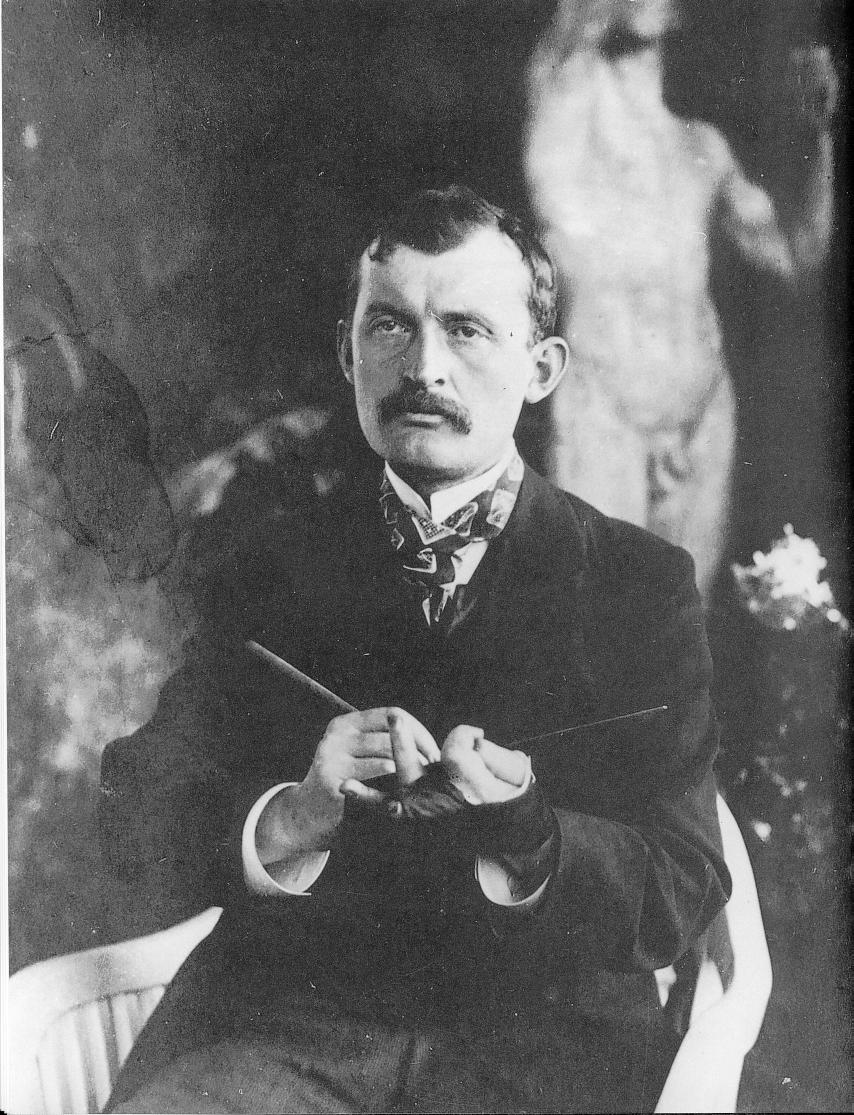
munchDecember 2, 1863 – January 23, 1944, he was a Norwegian painter. He is regarded as a Symbolist and a forerunner of expressionism. He focused on themes of fear, anxiety, melancholy, and death. He did not believe in heaven, or other Christian themes or doctrines, as far as I know.

My intention is to reintroduce you to an artist that I highly esteem.  The challenge I suppose is to understand the issues that Munch discovers in his work. He clearly taps into the ‘angst’ of the modern man, and what he does perpetuates a mindset for our generation.

Obviously these paintings are just an introduction, and I understand that they are selective. I have refrained from any kind of interpretation, other than laying down a general principle–  to Munch, color is everything.

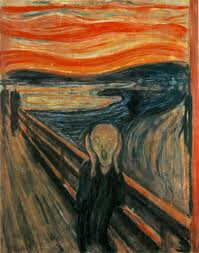
Munch was probably not a cheery person. He essentially was driven by anxiety through his whole life. It seems that he could be very ambitious. His classic work was “The Scream” which he made several versions to sell. He used different mediums to do this– tempera, lithograph and pastel. Interestingly, “The Scream” is a favorite target for art thefts. It captures the minds of every modern thinker.

Within our culture, “The Scream” is iconic. Warhol, Gary Larson, Dr. Who and even “The Simpsons” have cashed in on a parody of it.

Quotes

“I painted the picture, and in the colors the rhythm of the music quivers. I painted the colors I saw.”

“Painting picture by picture, I followed the impressions my eye took in at heightened moments. I painted only memories, adding nothing, no details that I did not see. Hence the simplicity of the paintings, their emptiness.”

“For as long as I can remember I have suffered from a deep feeling of anxiety which I have tried to express in my art.”

“Disease, insanity, and death were the angels that attended my cradle, and since then have followed me throughout my life.”

munch-thescream
The Scream, 1893
Munch’s best known painting ^


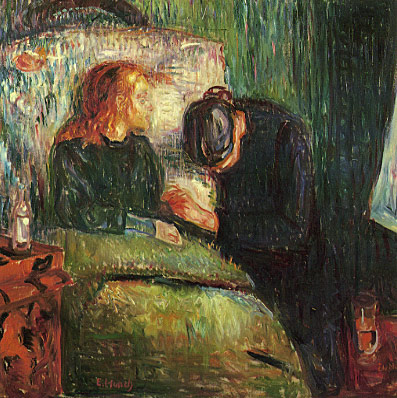
The Sick Child (1885)
Melancholy, 1894
Melancholy, 1894
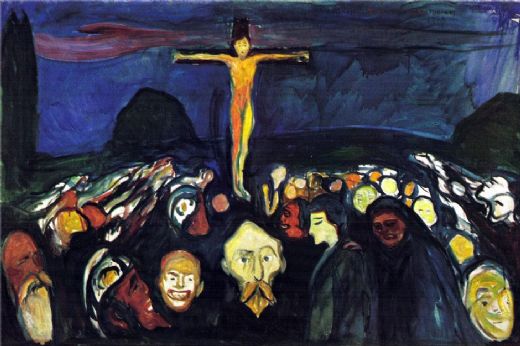
Golgotha, 1900
Golgotha

My Favorite Psalm

psalms_2

Probably the best known Psalm in the Bible is Psalm 23:The Lord is my shepherd, I shall not be in want . . .” And I do like this Psalm. I particularly like the part that says “Even though I walk through the valley of the shadow of death, you are with me.” I like this part because of the preposition “through,” which indicates the valley of the shadow of death is not a permanent dwelling place, but rather a place we travel through to get somewhere else. But this is not my favorite Psalm.

Psalm 22 is also another popular one, especially since Jesus quoted it on the cross when he said, “My God, my God, why have you forsaken me?” I like this Psalm because of it’s prophetic nature. Looked at closely you can find many of the things that would later happen to Jesus talked about by David in this Psalm even though David did not know that is what he was doing. But this is not my favorite Psalm either.

Psalm 27 is another favorite of many because it gives courage when it says, “ The Lord is my light and my salvation; whom shall I fear? The Lord is the stronghold of my life; of whom shall I be afraid?” In a sometimes terrifying and wearying world, this Psalm provides great comfort to those enduring trials. But this is not my favorite either.

If you ask most Christians (and even some non-Christians), they will have a favorite Psalm, and I am no different. My favorite is Psalm 116. This Psalm starts in verse 1 with: “I love the LORD, for he heard my voice; he heard my cry for mercy.” This is a Psalm of David when he was in great anguish and danger. The verses that speak to me the most are 3-4 and 8-9.

3 The cords of death entangled me,
       the anguish of the grave came upon me;
       I was overcome by trouble and sorrow.

 4 Then I called on the name of the LORD :
       “O LORD, save me!”

8For you, O LORD, have delivered my soul from death,
       my eyes from tears,
       my feet from stumbling,

 9 that I may walk before the LORD
       in the land of the living.

Reading this Psalm reminds me of my journey through major depression and how God was with me in it all. It reminds me why I trust in Him – because He has proven Himself faithful to me in the past and has heard my cries for mercy. I supposed Psalms 23, 22, or 27 could serve the same purpose, but the language of Psalm 116 more closely fits the trouble and sorrow I went through, especially the part about delivering my eyes from tears. If you have ever experienced major depression, or known someone who has, you know that tears are an almost constant companion, and yet there is no understanding of why they are there.

I still have times of melancholy, and I certainly cry from time to time. But now I can identify what is making me blue and my tears have a reason and purpose when they come. And my God is always there to hear my cries of mercy.

So this is my favorite Psalm. What’s yours?

ysic, Linda K.

flourish15


Promises that Give Me a Workout

a-cheerful-heart-is-good-medicine-christian-message-card-copy What a difficult struggle the last several days have been.  I have tried to function but have been broadsided by several things at once.  I have asked God to draw near, He has made me a promise that He would never leave me, or forsake me.  I hold on to this and will not let go.  Where would I be without them?

The Bible is full of God’s promises, especially the Psalms. I believe the Psalms have a special meaning for those who struggle with issues (like a mental illness.)  Many times when troubles have been abundant, I have opened my Bible and found a precious promise waiting for me that has proven to be a great comfort.

But we don’t have to go through troubled times to appreciate God’s promises. His blessings are new every morning. Thank God! The Lord has promised us freedom from anxiety, along with His peace that passes all understanding. Here are the ‘top five’:

  1. If we simply trust Him with everything (Philippians 4:6-7).
  2. He promised to supply all our needs (Philippians 4:19),
  3. With supernatural joy to His followers (John 15:11),
  4.  an abundant life (John 10:10)
  5. answered prayers (John 14:14)

“How I relate to the promises in the Word often we will determine the dimensions of my depression.” 

Its length, and depth, and width are determined by my action with the promises.  By squeezing out His promises I can find hope to continue on with life. For me, the Word is more important than life.

Some have described depression as the ‘common cold’ of the mental illness world.  If that is true, then God’s Word is the Vitamin C.  I can’t prevent a cold, but I sure can reduce its impact.  How severe will it get this time?

I woke up this morning, and before I even opened my eyes I could feel the oppression of depression.  I want to die, why did I wake up?  Maybe if I close my eyes I will be able to go back to sleep, and not wake-up. To the depressed, sleep (death’s cousin) is easiest way to escape. It provides a profound release from the anguish of depression. But there isn’t a 24 hour sleeping pill yet.

I find I want to deal with my depression in two ways: Escape or deny.  Both avoid the real world.  And both have a tremendous impact on the way I function.  God’s promises to help you are real and profound.  Properly administered, they offer hope and life beyond taking an anti-depressant.  Consider them to be the medicine your soul needs!   aabryscript