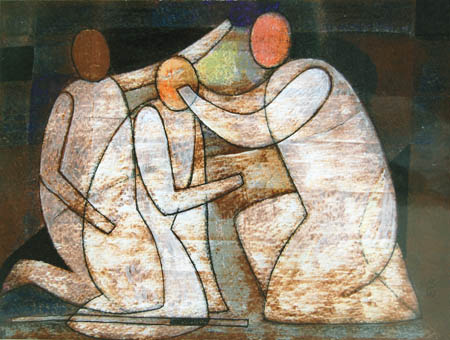
Anger That Will Destroy You

“Be not quick in your spirit to become angry, for anger lodges in the heart of fools.”

-Ecclesiastes 7:9

“Of the Seven Deadly Sins, anger is possibly the most fun. To lick your wounds, to smack your lips over grievances long past … to savor to the last toothsome morsel both the pain you are given and the pain you are giving back — in many ways it is a feast fit for a king. The chief drawback is that what you are wolfing down is yourself. The skeleton at the feast is you.”

-Frederick Buechner

What really happens when I get angry? I suppose my B/P goes up and I get all red, but just perhaps it’s a bit more than that. The Bible is painfully clear on the subject of anger. It seems there is an anger that is righteous; and one that is unrighteous. It is the latter I’m most familiar with, unfortunately. And repeatedly our anger, the earthly kind, is condemned by Scripture. It is terribly wrong, and it is sin.

Merriam-Webster defines anger as “a strong feeling of displeasure and usually of antagonism, or rage.” This definition seems right on. First–it’s a strong feeling. There is an intensity to it, and it ‘clouds’ my sense of what is reasonable. Second–it has some form of frustration and irritation. Third–it escalates into “rage.” And I suppose that anger at this particular level is where it really, really gets destructive. At this point we become totally irrational and unbelievably destructive. When we get to this point we become “fools.”

I remember clearly having a dog that killed a chicken. My dad took the carcass and wired it to the dogs neck. After some time that chicken began to rot. It putrefied to the point where pieces of that carcass started to fall off. I can still see the dog’s eyes rolling, and he was slobbering all over. the place. That dog never even touched another chicken. It completely cure him. (I suppose the ASPCA would object today.)

I suppose that is what carnal anger is like. It’s something that we carry around and it defiles us. We learn that evil attaches itself to each of us and pollutes us. We soon realize that this kind of life is really death. When anger is attached to us, we are poisoned inside. Someone once said that “he who angers you, conquers you.”

No matter how just your words might be, you ruin everything when you speak with anger.”

–John Chrysostom

There is another kind of anger though. It’s the kind that is turned on when we are angry with ourselves. We call this “self-condemnation.” Internalized disgust with yourself is extremely corrosive to our personality and our spirits. Instead of an authentic confidence in what Jesus’ has done, we look inside with hate, anger and disgust. We condemn and put ourselves under a twisted form of justice that is not biblical, nor is it true.

When we become angry with ourselves (and yes, we sin constantly) we dismiss the sacrifice of Jesus and His forgiveness. We become a law unto ourselves, and we pass a guilty judgement on our sinfulness. Christians are quite often ‘crippled’ by self-condemnation and a vicious guilt. Perhaps we are the most ‘visible’ when it comes to this kind of self-hatred.

Satan is the prime instigator of this attack. He desires to split you from fellowship with God. That is the way he functions, you might say that this is his evil ‘ministry.’ His specialty is guilt, an inciting an unholy anger which we turn inward. We give him the right to accuse us before God. We no longer see the blood of Christ as our covering for our sin. He indicts us before a holy God, and all we see is our guilt. Is it any wonder that we are angry with ourselves?

“The salvation and the power and the kingdom of our God and the authority of his Christ have now come. The accuser of our brothers and sisters, who accused them day and night before our God, has been thrown down.” (Revelation 12:10)

I suppose this anger at ourselves is perhaps our most difficult challenge we face. More believers are ‘hamstrung’ by this than any other sin. When we turn on ourselves, we become angry and self-condemned. We avoid His healing presence, His Word and the fellowship of other saints. Most of all, we don’t want to pray or worship.

Dear one, come to Jesus, and bring along your issues. He is the one who loves you. He died, and He has covered you with His blood. He is God’s Passover lamb who takes away all your sin. Jesus’ present day ministry is not just sitting on a golden throne, He is actively interceding for you even as you read this.

” He poured out his life unto death, and was numbered with the transgressors. For he bore the sin of many, and made intercession for the transgressors.” (Isaiah 53:12)

Your forgiven brother,

Bryan

The Prisoner of Jesus

Does being in prison change a person? How would it affect you? I imagine the Apostle Paul’s frustration. He loved to disciple and establish churches. To be confined like this would be quite difficult. What a spiritual trial it would’ve been. Me, personally, I would have definite issues. I made a list. I probably would be:

  • Angry? Depressed?
  • Frustrated? Anxious?
  • Full of self-pity?
  • Isolated, lonely?
  • Frightened?

During his imprisonment, I’m sure that the Apostle Paul had to work through all of these things–I’m certain that Satan tempted him repeatedly. I think the man Paul had dealt with the enemy through all of this (and more besides). Most feel that he would be imprisoned in Rome for at least two years. That’s a long time.

It’s generally agreed that he wrote the four epistles in 60-62 AD. These letters are regarded as written from his prison cell in Rome: Ephesians, Philippians, Colossians, and Philemon. Each of these four is different. (But admittedly, Philemon is the most unalike.)

And yet the scent of the prison can be found in these writings.

Despite the possible response of an incarcerated man, Paul’s writings from the Mamertine Prison are incredibly encouraging–he shows none of the issues of a man locked in a cell–but yet there are hard things he must deal with. Take a second to look at some direct references to his imprisonment.

  • “I appeal to you, instead, on the basis of love. I, Paul, as an elderly man and now also as a prisoner of Christ Jesus,” (Philemon 9.)
  • I am going to Jerusalem, constrained by the Spirit, not knowing what will happen to me there, except that the Holy Spirit testifies to me in every city that imprisonment and afflictions await me. But I do not account my life of any value nor as precious to myself, if only I may finish my course and the ministry I received from the Lord Jesus, to testify to the gospel of the grace of God (Acts 20:22-24).
  • “For this reason I, Paul, a prisoner of Christ Jesus on behalf of you Gentiles,” (Ephesians 3:10).
  • “I, Paul, write this greeting with my own hand. Remember my chains. Grace be with you.” (Col. 4:18).
  • “I want you to know, brothers, that what has happened to me has really served to advance the gospel, so that it has become known throughout the whole imperial guard and to all the rest that my imprisonment is for Christ.” (Philippians 1:12-14).
  • “The following night the Lord stood by him and said, “Take courage, for as you have testified to the facts about me in Jerusalem, so you must testify also in Rome.” (Acts 23:11).

It’s clear to me that Paul used this time to witness through his writings. He never grew bitter, only better. One could suggest that it’s we have been blessed by these epistles. His time in prison was the time he needed to bless us today. Where would we be without these books?

A papyrus fragment from Paul’s epistle to the Ephesians.

How many times was Paul imprisoned? Was he jailed once, twice, or several times? I’ve read different commentaries and they can’t decide. It’s a challenge to put together a solid timeline. There seems to be more evidence for two different confinements. Check out this site if you want to dig deeper.

But no matter what. These writings are God’s gift to us today.

From a dark prison, Paul writes these absolutely incredible letters. I believe Satan wanted to destroy Paul. I also think that this was a tremendous trial for him. He was a spiritual dynamo, wanting to establish and strengthen churches and then being chained to a wall must’ve been a challenge for him. There was so much for him to do.

But we desperately needed these letters!

Perhaps, out of our confusion and challenges, God’s purpose goes far beyond what we think. Sometimes we have no idea what our “imprisonment” is going to do. That encourages me. He turns our hard times into spiritual gold!

Through these letters, we’ve been given so much. These epistles are written from Rome’s dungeon, and yet they continue to shake the world!

Walking in the Darkness

  • We are afflicted in every way, but not crushed
  • perplexed, but not driven to despair
  • persecuted, but not forsaken
  • struck down, but not destroyed;

2 Corinthians 4:8-9, ESV

The issues we face can be formidable. Our relationships and our circumstances can bring daunting obstacles to joyful Christlike living. We live out at times from unpleasant realities and less than ideal situations. We are broken believers who follow Jesus through our deadly minefields.

Struggling with mental illness is just as much a challenge as with any other handicap. The young man struggling with bipolar disorder or someone else who faces a clinical depression, may seem to be tangled up in something quite brutal and very hopeless. “Will I ever find normal again?

I know that struggle and at times it has ripped me apart. But I suppose the grinding hopelessness is the worst part of that.

I want to encourage you in this. The issues we face on a daily basis are hard. And we don’t minimize their complexity or diminish their bitterness. They can be awful. But the Holy Spirit is with you in the midst of your issues. That’s a promise.

There is a wisdom emanating from the fire. It’s only waiting for discovery. The flames can not destroy us when God shows up.

I believe that the constant presence of difficulty produces a faith and tenderness that can’t be just prayed for.

The most kind and gentle people are those who themselves have been afflicted.

Please understand we have a real challenge. We have to walk through the trials or tests, not around them. We see a mountain, and God gives us a shovel. But He also gives us the strength we need.

But I’ve discovered a tenuous joy in these issues— more precisely, a joy because of them. Our illness is not meant to destroy us. That is not why God has allowed you to be afflicted.

I definitely did not choose this path I’m on.

Think about Jesus’ great love for people with hard issues:

Luke 7:21

Jesus has special spot for the afflicted, we see him repeated touching them. He drew them like a magnet draws iron. And he is the same today in our time. It is comforting to know that he cares for us and that we are understood. Let him draw you into his caring presence.

Our disabilities do not trouble him. Yes, I know the issues are formidable. But your obedience in them is an exquisitely special commodity to Jesus. I believe He values the shaking faith of broken people far more than the happy shiny people with no pain or scars.

Faith is precious in his sight and holds its value for all eternity.

Understanding this should be a cause for joy for the broken believer. Having the lightness of heart, right in the middle of our disability, often transforms these issues into a lighter burden. We are  beaten but not totaled. Incredibly challenged but not completely devastated. The apostle wrote this in his letter to the Corinthians, and it gives us hope.

I have learned that if I can bless a difficult thing it will bless me.

If we curse it and it will curse us. If you bless a situation, it has no power to hurt you, and even if it is troublesome for a time, it will gradually fade out, but only you can only sincerely bless it.  

There’s a deep joy waiting for those who choose to do this.

I guarantee it!

A New Face, or a New Heart?

James H. Aughey

We live in challenging times. As people of faith, we’re slowly learning what Jesus really wants us to recognize. It seems every generation must understand all over again. Sometimes it seems we are taking two steps forward, and one step back. Oh well.

The Church must reacquaint itself with the total love of God for all people once again.

The Father hasn’t given up on us. Repeatedly, over and over, (and then over again) we learn about His unreal faithfulness to the Church and His love for all people. But sometimes we have a hard time believing these things. Honestly, we’re not what we should be, but thank God we’re not like we were. We’re learning this as well.

He’s more faithful than the most loyal person who has ever lived!

And we also must understand this. He is always seeking those who are on the margins: the lame, blind, sick and crippled. But thank God He’s still in the business of ‘collecting’ people who are desperate. (And if you can’t really see this, perhaps you should.)

The Church, and the churches we attend, are meant for those who are sick–the outcasts. It’s primarily a hospital, and the “sentinels” (pastors and elders, and others) must understand this. We must know and believe this. And we must know for ourselves the love “that passes all understanding.”

Jesus loves everyone, but if you must know, He’s specifically looking for the outcasts.

A really good study is those persons in scripture, who in their neediness, scream out “Son of God, have mercy on me.” There are 4-5 in the Gospels who said that. Although they modify this plea/prayer in slightly different ways, all of them are terribly desperate.

I encourage you to study this out, and get a deep handle on it. 

Our churches mustn’t lose sight of this kind of love, and if your fellowship isn’t doing this, just maybe you’re the one called to implement it. And if this isn’t possible, you might consider moving on. (I loathe to advise this.)

But please reject ‘the country club’ version of the Church.

It isn’t right and it’s not the heart of God. It’s religion that comes to us in its gradient forms of foolishness. It doesn’t really reflect the intense seeking of God. Somehow, along the way, churches got lost in the routine efforts of a religious routine.

The challenge is not just getting seekers to renounce the pigpen like the prodigal did. Most understand and are ready to do this. But sometimes the issue is within us, the Church– we dare not become the older brother– (Luke 15:1-2 and vv. 30-32). Usually we will be one or the other.

The question facing the Church is this:

Do we want to see face lifts, or a heart transplant?

One is for looking better, the other describes an entire overhaul. One is cosmetic, the other is a matter of life and death and reaches the heart. One is relatively minor, the other is definitely not. What kind does your Church have?

We really must sort this out.

I suppose the sooner the better.