Version Choices, [Your Bible]

types-of-bible-translations


  • Word-for-word is a literal translation from the original languages.
  • Thought-for-thought is considering context in English to translate.
  • Paraphrase is meant to convey a throughly modern language translation.

What are you looking for in your Bible? Personally I use an ESV, but I also like the NLT. I have used almost every translation listed above, but no matter what you use you should read it. You might have what you believe is the “best” translation known to man, but if you don’t read it you’ll be sorely mistaken.

___________________________

 “All Scripture is breathed out by God and profitable for teaching, for reproof, for correction, and for training in righteousness,”

2 Timothy 3:16, ESV

“Odd, the way the less the Bible is read the more it is translated.”

  –C.S. Lewis

“A readiness to believe every promise implicitly, to obey every command unhesitatingly, to stand perfect and complete in all the will of God, is the only true spirit of Bible study.”

 — Andrew Murray

“The Word of God well understood and religiously obeyed is the shortest route to spiritual perfection. And we must not select a few favorite passages to the exclusion of others. Nothing less than a whole Bible can make a whole Christian.”

–A.W. Tozer

“Where one man reads the Bible, a hundred read you and me.”

  –D.L. Moody

1brobry-sig4

cropped-christiangraffiti1 (1)

Becoming a Part of What is Really Real


195

“Six days later, three of them saw that glory. Jesus took Peter and the brothers, James and John, and led them up a high mountain. His appearance changed from the inside out, right before their eyes. Sunlight poured from his face. His clothes were filled with light.”

Matthew 17:1-2, The Message

These three disciples belonged to the inner circle of our Lord’s friends. There must have been something in them that peculiarly endeared them to Him. We know that Peter was a leader among the apostles, and also a bold confessor; that John was “the disciple whom Jesus loved;” and that James was the first of the band to die as a martyr.

It is very encouraging to look at Peter who was admitted to such high privileges; a man with so many faults, who made so many mistakes, who even at the last shamefully denied Christ, and yet we remember that he was one of our Lord’s closest friends. It gives encouragement to us that, with all our faults, we may yet be very dear to Christ.

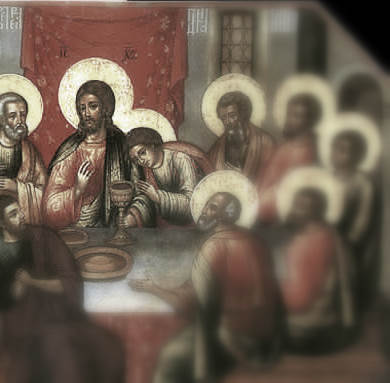
It does not seem so strange that John was allowed to enter the inner circle. His disposition was gentle and amiable, very much like the Master’s. Yet it is probable that John owed his sweetness and gentleness of character to his being with Jesus. It could be he was not always a man of love.

rose-little1There is a Persian fable of a piece of clay made fragrant by lying on a rose; the perfume of the rose passed into the clay. So it probably was with John. He crept into his Master’s bosom, and lay close to His heart; and his Master’s spirit of love and gentleness passed into his life and transformed it. Thus we have a lesson, too, from John: constant and loving communion with Christ will change us into His likeness.

The lesson from this choosing of three out of the whole band for peculiar privileges is that while Jesus loves all His friends, there are certain ones whom He takes into closer confidence than the others. There are degrees of nearness to Him, even in this world. Should we not strive to be among those who, by disposition and by service, win their way to the closest places? We must remember that those who serve most are chiefest. –JRM

*

kyrie elesion, Bryan

(Lord, have mercy on me, a sinner)
cropped-christiangraffiti1.jpg
 
&


Making Sense of a Deep and Kind Love

Love.

In the face of doctrine, creeds and faith systems…isn’t the important thing that we just love?

Isn’t love the superior truth we should be after?

_______________

1 Corinthians 13, “The Message”

The Way of Love

1 If I speak with human eloquence and angelic ecstasy but don’t love, I’m nothing but the creaking of a rusty gate. 2If I speak God’s Word with power, revealing all his mysteries and making everything plain as day, and if I have faith that says to a mountain, “Jump,” and it jumps, but I don’t love, I’m nothing. 3-7If I give everything I own to the poor and even go to the stake to be burned as a martyr, but I don’t love, I’ve gotten nowhere. So, no matter what I say, what I believe, and what I do, I’m bankrupt without love.”

About the time I have my discipleship all figured out, I come across a passage like this. It seems I continually try to move beyond it, somehow regarding love as something diminished. I get it in my head that love is a “primitive teaching”, something I’ve somehow outgrown.

8 “Love never fails. But where there are prophecies, they will cease; where there are tongues, they will be stilled; where there is knowledge, it will pass away. 9 For we know in part and we prophesy in part, 10 but when perfection comes, the imperfect disappears. 11When I was a child, I talked like a child, I thought like a child, I reasoned like a child. When I became a man, I put childish ways behind me. 12 Now we see but a poor reflection as in a mirror; then we shall see face to face. Now I know in part; then I shall know fully, even as I am fully known”.

When we try to define love, we need to look at what love is not. The above list helps us make certain distinctive. Soaking ourselves in the scripture gives us limited authority in the vital area of discernment of real love. Love has a sterling quality that sets it far above everything else. Just as fine gold is valued and tinsel debased, so love is superior to all else.

8-10″Love never dies. Inspired speech will be over some day; praying in tongues will end; understanding will reach its limit. We know only a portion of the truth, and what we say about God is always incomplete. But when the Complete arrives, our incompletes will be canceled.

11When I was an infant at my mother’s breast, I gurgled and cooed like any infant. When I grew up, I left those infant ways for good.

12We don’t yet see things clearly. We’re squinting in a fog, peering through a mist. But it won’t be long before the weather clears and the sun shines bright! We’ll see it all then, see it all as clearly as God sees us, knowing him directly just as he knows us!

13But for right now, until that completeness, we have three things to do to lead us toward that consummation: Trust steadily in God, hope unswervingly, love extravagantly. And the best of the three is love.”

Love is the constant and an eternal security  for the believer. Get it now, dig for it. Mine deep and pull it out,  for love is the steady currency of heaven.
1brobry-sig4 (2)


cropped-christiangraffiti1-3-1

Roadside Assistance, [Word]

auto-p

A song for pilgrims ascending to Jerusalem.

I look up to the mountains—
    does my help come from there?
My help comes from the Lord,
    who made heaven and earth!

He will not let you stumble;
    the one who watches over you will not slumber.
Indeed, he who watches over Israel
    never slumbers or sleeps.

The Lord himself watches over you!
    The Lord stands beside you as your protective shade.
The sun will not harm you by day,
    nor the moon at night.

The Lord keeps you from all harm
    and watches over your life.
The Lord keeps watch over you as you come and go,
    both now and forever.

Psalm 121, New Living Translation

“A song for pilgrims ascending to Jerusalem.”

Travelling in biblical times was not easy, everyone walked. Pilgrims on the way to Jerusalem (three times a year) would travel in large groups for safety and companionship. For many the journey would take five or six days, and it meant about 20 miles a day. This ‘song’ was sung corporately as the people walked; it contained truths that would encourage them. Perhaps these are lessons are still living for us today.


 I look up to the mountains—
    does my help come from there?
My help comes from the Lord,
    who made heaven and earth!”

The hills or ‘high places’ are centers for pagan worship, so a singular question is asked. “Is this where help will come?” Verse 2 gives an affirming answer and declares a confidence in the Almighty God.


3 “He will not let you stumble;
    the one who watches over you will not slumber.
Indeed, he who watches over Israel
    never slumbers or sleeps.”

God is very protective, He is hyper-vigilant over those who call on His name. There is never been a time when He is caught off guard. It is good for our souls to meditate on this constant security. He doesn’t sleep, ever.


5 “The Lord himself watches over you!
    The Lord stands beside you as your protective shade.
The sun will not harm you by day,
    nor the moon at night.”


I once had the ‘joy’ of sacking bags of rock in the blistering sun in August. I caught myself scanning the sky, wishing for just one cloud to block out the baking heat. In the tropics, an umbrella is commonly used to shield oneself from the sun in the middle of the day. The reference to the moon is the idea that over exposure to it was as harmful as the sun could be.


 7 “The Lord keeps you from all harm
    and watches over your life.
The Lord keeps watch over you as you come and go,
    both now and forever.”

One of the most common images of God is that of a diligent shepherd watching over his sheep. The metaphor is used frequently and carries the connotation of continual care and attention. When I think on this it gives me great comfort.

********


These all are conditional promises that, although they are true, they won’t give you a pass through heartache and trial. But God promises to measure out each affliction with pain-staking carefulness. He is always, always, always present no matter what.

“What joy for those whose strength comes from the Lord,
    who have set their minds on a pilgrimage to Jerusalem.”

Psalm 84:5

bry-signat (1)

cropped-christiangraffiti1.jpg