Making Your Prayer Real

“I urge you, first of all, to pray for all people. Ask God to help them; intercede on their behalf, and give thanks for them. 2 Pray this way for kings and all who are in authority so that we can live peaceful and quiet lives marked by godliness and dignity. 3 This is good and pleases God our Savior.”

1 Timothy 2:1-3, NLT

“The Church has not yet touched the fringe of the possibilities of intercessory prayer. Her largest victories will be witnessed when individual Christians everywhere come to recognize their priesthood unto God and day by day give themselves unto prayer.”

–John R. Mott

You are a priest without a collar. Your work is called “intercession.” It isn’t for cowards or the spiritual lazy. It needs to be ‘hidden’ in order to really work. No one should see, there will be no adulation or recognition. You may not even feel special. But God sees and hears you. Jesus told each one of us,

“But when you pray, go away by yourself, shut the door behind you, and pray to your Father in private. Then your Father, who sees everything, will reward you.”

Mathew 6:6

When we ignite in prayer, we will see things as Jesus sees them. We will share His view and take part in His high priestly ministry. Jesus isn’t complacent, sitting on His throne, waiting for time to run out. I suppose that is the view of some, but it honestly isn’t real.

“So then, since we have a great High Priest who has entered heaven, Jesus the Son of God, let us hold firmly to what we believe. 15 This High Priest of ours understands our weaknesses, for he faced all of the same testings we do, yet he did not sin. 16 So let us come boldly to the throne of our gracious God. There we will receive his mercy, and we will find grace to help us when we need it most

Hebrews 4:14-16, NLT

“Who then is the one who condemns? No one. Christ Jesus who died—more than that, who was raised to life—is at the right hand of God and is also interceding for us.”

When we start to really intercede we become a sort of a “sub-priest.” We serve under the Lord Jesus the High Priest’s direction. We engage our work under the Holy Spirit’s oversight, and we start to plead for those who need Him most. We are the one’s who make things happen when we stand with Jesus.

So who and what do we pray for?

  1. Family and friends
  2. the sick, those in distress
  3. the stranger, the one who bags our groceries
  4. the church we attend, the pastor and elders, the congregation
  5. missions, or missionaries in a certain country, or in general
  6. for ministries working under God’s direction
  7. finances, supplies, for more workers in the ‘vineyard’
  8. safety and protection from the evil one, cults and businesses that ‘traffic’ in evil
  9. more wisdom and grace for all who are ministering God’s Word, for other intercessors
  10. our government, police, soldiers–from the ‘dog catcher’ to the president

These ten are just a start to get you going, this list is not complete by no means, but it’s a beginning. As you start praying you will add and expand these things. Remember that faith is a key component in the work of intercession. You must come in harmony with His present ministry. You do this through:

  1. praise and worship
  2. Bible reading and thinking about the Word
  3. listening and discerning what is happening around you
  4. asking questions that really matter
  5. being humble and broken, not haughty or proud as you pray
  6. becoming alert to all of the needs around you, be sneaky but holy
  7. instill in your heart the Kingdom of God and the supreme ministry of the King
  8. exercise His authority over the earth, see things as they really are
  9. personal prayer times that get you ready to pick up the ‘mantle’ of intercession
  10. see yourself joined in this ministry of Jesus, who wants “all men to be saved”

Don’t be surprised if the Spirit draws you to a specific need. I believe that there are ‘specialists’ in the Body of Christ. One person will concentrate his attention on the sick or the demonized. Another may be dedicated to praying for the president or the Supreme Court, and someone else might pray for certain missionaries or countries. In short, you must listen to the High Priest, and get your cue from Him. He most certainly will direct you on where you should stand!

There is definite power in joining with another or in a group. It seems to me though that this can be a challenge as we can get disengaged or passive. Spiritual laziness extinguishes the fire of God. Yet if we are sincere our intercession can become ‘turbocharged’ when we are actively with another. It should be a skill we develop over time. It will take concentrated work on your part to stay focused.

None of this is concrete.

Your brother, who is still learning,

Bryan


Setting Yourself on Fire

Difficulty and pain sometimes come from others, and challenges to the Lordship of Jesus often come from our unique circumstances.

But what if it was something we’ve done?

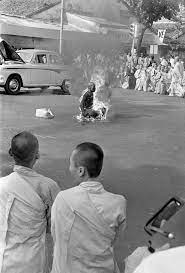
I remember the classic picture of a Buddhist monk who sat in the middle of a street. He was serene as he soaked himself with gasoline, and lit himself on fire as a protest against a war he believed was wrong and evil. He burned himself in front of the cameras.

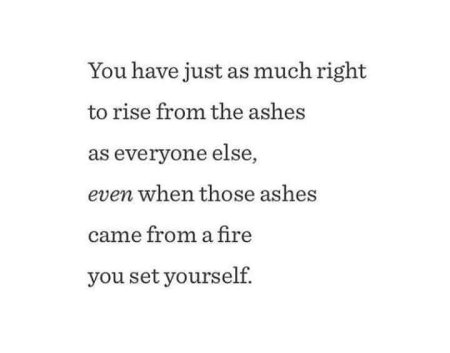
All too often we’re pretty much responsible for our own self-immolation. It is we (and we alone) that set ourselves ablaze. Sin affects our minds and hearts. We set ourselves on fire.

When we sin– when we walk in ‘known’ disobedience we always put ourselves in an awful place. We love it but learn to hate it too. But we continue to do it regardless of the awful death that ensues.

God promises to forgive us. Out of our ashes, He keeps bringing us life and hope.

You can be forgiven. You can find life again, even if you’re fully responsible for the evil we’ve done to yourself. Yes, we all sin, and yes we walk in our own personal rebellion. But Jesus knows it all. These awful things we’ve all done can be forgiven.

As a man and a preacher of the Gospel, I realize that I often choose to sin. In spite of all I know and teach I realize that I can live in the ashes of my own making. As one who also struggles with bipolar, I understand that I’m even more susceptible to doing awful things. I understand that I choose darkness even though others will call me “a man of God.”

As you read this I’m praying that you find His forgiveness and mercy. You’ve come a long way it seems, but you must see His blood that was ‘released’ from His veins and arteries for you.

He desperately loves you–even if you’ve set yourself on fire, and sit in the ashes of your doing.

“To appoint unto them that mourn in Zion, to give unto them beauty for ashes, the oil of joy for mourning, the garment of praise for the spirit of heaviness; that they might be called trees of righteousness, the planting of the Lord, that he might be glorified.“

Isaiah 61:3

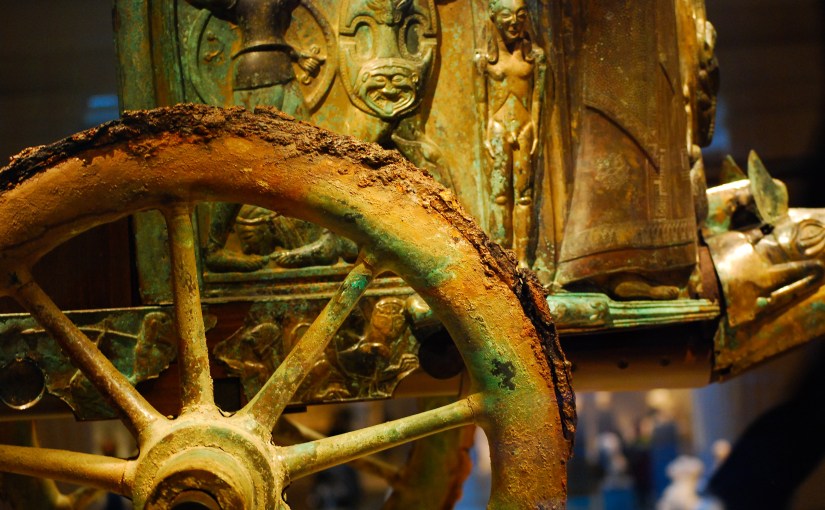
When Teachability Rides a Chariot

I think this post will wander around a bit, we’ll see if the Father will speak to us somehow.

I really think our lives are made up of the decisions we’re making. At least, it sometimes sees that way.

Some decisions are like ‘forks’ in the road.  They’re made and then they shunt us in another direction. Most are minor–(will it be McDonalds or Pizza Hut?) But the biggies really alter us–very quickly we see that the road is going to take us in a radically different path.

Sometimes, if we’re honest, we will admit to backtracking; retracing our route back to the point we turned.  A lot of time it’s too late, and the moment has past. But we will sometimes learn that sometimes even our detours are part of the journey. (Amazing, isn’t? But He controls it all, and that’s comforting.)

I think I’m starting to learn how to receive correction from others. 

I’ve been mulling over the decision of the Ethiopian eunuch in Acts 8:30-31, he wanted to understand the truth:

“So when Philip ran toward the chariot, he heard the man reading from Isaiah the prophet [on his Kindle]. Philip asked, “Do you understand what you are reading?”
 31 He answered, “How can I understand unless someone explains it to me?” Then he invited Philip to climb in and sit with him.”

We see here such a very ‘thoughtful humbleness’– a teachableness of the heart that this eunuch seems to have learned.  He is confident enough in himself to acknowledge that he just doesn’t know. He invites Philip to a Bible study in the chariot.

We are responsible for our receptivity to truth. 

It’s our personal decision to either seek or not seek, to learn, or not to learn.  No one else can do this for us.  We come to a decision point and we go the way things seem to direct us, or we don’t. Again, we must choose.

Sometimes to not make a decision, is a decision.

The book of Proverbs is saturated with ideas on being guided by our humility when it comes in contact with truth.  Furthermore, there are many warnings about receiving correction and reproof gracefully.  For me, I’m learning slowly to receive hard counsel.

When my wife and I made the decision to work in the migrant camps in Mexico there was one elder who kept saying “no!” At first it was a real issue for us. We sort of resented it. But we began to see the blessing of his resistance. It caused us to really analyze our decision, and “count the cost.” We were stepping into a very hard place, and we needed that voice. We were being called to break in “new ground.” It was to be a challenge.

It seems that scriptural truth is almost always negative when it’s first encountered. It often irritates more than it comforts.

It often will not sit well, and I will try to shake it off.  But truth can be remarkably persistent.  ‘Forgive your brother’, the Holy Spirit says.  And you say right away, ‘Not a chance!’  But, give it time, and the Word will soften rock.  If you respond properly, humbly, you be able to make the right decision.

One more thing, Jesus told us in Matthew 18:3,

“I promise you this. If you don’t change and become like a child, you will never get into the kingdom of heaven.”

We’ll need to be a complete alteration in our hearts if we are to accommodate His command.  Becoming a child is more difficult as an adult– then becoming an adult is for a child.  Becoming small again takes a great amount of brokenness and it’s never really mastered.

God fully intends to work with you in this. 

God wants you to learn teachableness. He brings others to direct you. The Holy Spirit ignites the Word that’ll light your path. He doesn’t seem to ever give up.  He is wonderfully persistent–He never really does give up.

“The intelligent man is always open to new ideas. In fact, he looks for them.”

Proverbs 18:15, LB

A Life for a Life

entertain-cross

We must decide upon some things. This is not easy theology. It calls us to take decisive action.

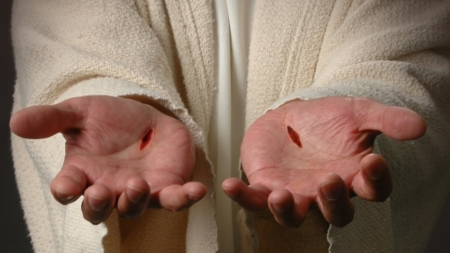
The idea of Jesus dying on the cross for my sin is brutal. I’m left with the idea that I contributed to His death. But my sin had to be covered, and alas, and He did so. But I can never repay God for the drastic measures He took. But I do know that my life is now His. His for mine.

In many cultures it is a life for a life.

Some people groups believe that the person who saves another person is owed a “life debt” out of gratitude. I become His “property” because He died in my place. A life for a life. His for mine.

There are sins that I commit that He must pay for. This is not as easy as you might think; I confess my sin, and Jesus Christ picks it up. He has chosen to pay every and all penalties for it. I go “scot-free” while He must die. This is what He decided to do for me. A life for a life.

The cross was not just a Roman method of execution. It was planned in eternity for the rebellion of mankind. It was God’s “method.” He knew those “from the foundation of the world” but had to find a way to atone for their sin, and redeem them from Satan’s control. He must die for them. And it’s a life for a life. His for mine.

I’ve been ransomed and redeemed.

His death gives me eternal life– something which can ever be taken away. His own death makes me “holy.” The Bible promises me even more than this: forgiveness, peace, joy and “real” holiness. He has done everything, I have done nothing except believe.

His life for mine. A life for a life.

“Oh, the depth of the riches and wisdom and knowledge of God! How unsearchable are his judgments and how inscrutable his ways!”

Romans 11:33, ESV