Freezing a Brother

 Bearing with one another and, if one has a complaint against another, forgiving each other; as the Lord has forgiven you, so you also must forgive.”

Colossians 3:13, ESV

Since this blog originates in Alaska, and since winter is upon us, this post seems fitting. It’s cold. And, well, I’ve been thinking about things that have happened to me recently.

We have a sinful tendency to “freeze” people that offend us.

We do it with our words, attitudes, actions. It is called unforgiveness, or stigma, or just plain contempt. It locks another person in a place were they will stay forever, and you won’t ever have to deal with them.

We glaciate others with extraordinary ease.

Someone offends me, or irritates me and I blast them. In my mind I solidify them into one spot, and there they are locked. Sealed away, and out of my thinking. I sometimes call it “discernment.” And then I can avoid those pesky urges to humble myself.

I have been frozen by others, and to be quite honest, I have been the ‘freezer’ as well.

The sad part is that we ourselves are so far from perfect. When we zap someone we will never, ever ‘receive’ from that person. We can even preclude them as outside of the grace of God. (And usually that’s what happens.)

“You offend me, and I will never forget it, and you will never be more than an evil miscreant to me.” My rationale is “life is too short for hassling with jerks like you.” But yet I can’t fully accept that idea. That is not God’s will for me, and I know it.

We end up debasing ourselves by our own unforgiveness.

We restrict others from the Holy Spirit’s transforming ability. In our mind’s eye, the wicked person will never be able to offer up anything of value. We freeze–locking them into a place. And a vast amount comes from an unforgiveness that is ‘fallen,’ and an unbelief in God’s grace and power.

Mr-Freeze-1Furthermore, any use of our ‘freeze gun’ freezes us as well. Unforgiveness turns on us (which we didn’t count on) and the effect is cumulative. We can only absorb so much an we get hard and cold.

One more thing. We do this to whole groups of people. The alcoholics, the mentally ill, other races. This can be called prejudice or stigma. Ask yourself this–have you ever been stigmatized or demonized?  You will usually know it. But we cannot afford to be controlled by our unforgiveness.

There is far too much at stake.

“And whenever you stand praying, if you have anything against anyone, forgive him and let it drop (leave it, let it go), in order that your Father Who is in heaven may also forgive you your [own] failings and shortcomings and let them drop.”

Mark 11:25, Amplified

*bry-signat (1)Related articles:

Can You Say No?

objection2 (1)

11 “For the grace of God has appeared that offers salvation to all people. 12 It teaches us to say “No” to ungodliness and worldly passions, and to live self-controlled, upright and godly lives in this present age.”

Titus 2:11-12

My life runs better when I learn to say “no.”

I can’t make it any simpler. We have become part of a culture that almost always says yes. To deny ourselves the fulfillment of our particular desires seems impossible– considering our track record. We pretty much seek out our particular pleasure, and then take our lumps and absorb all the consequences.

Things then, digress and “solidify” from this point. Deeply ingrained habits become almost impossible to break. We are now being held in a very certain bondage. And all because we can’t say “no”.

Quote23-300x74

Perhaps this will become a learning point, when we start to say “no” to our desires. We can’t let temptation have its way, we must stand and say “no!” It is no sin to be tempted, Jesus was tempted, and yet did not sin against His Father.

When we consistently say no and to deny ourselves, we’re actually starting to obey and it’s then we begin to follow Him. Your discipleship depends on this.

“If anyone would come after me, let him deny himself and take up his cross and follow me.”

Mark 8:34

The deep and earnest passion of our Father is that we learn to do this. To joyfully discover each morning  we are “will-doers.” But in order to do this we must also be “no-sayers.”

There is an unholy trinity that is working against us: the world, our flesh, and Satan. When our enemy tempts us, we must object. We must take a stand against his schemes.

Will you just say “no” to the enemy? Can you say “no?” These are questions that only you can answer.

1brobry-sig4 (2)

cropped-christiangraffiti1-3-1


Standing With Her in the Rain

standingaloneintherain1

“Share each other’s burdens, and in this way obey the law of Christ.”

Galatians 6:2, NLT

By Lisa Schubert, Guest Author

Samantha issued commands to the person on the other end of the line. When she hung up, the rant continued against our church, our staff, the weather, and this meal that would serve as her Thanksgiving dinner. I had to let her go mid-rant, but not before reminding her that I would keep her in my prayers.

Samantha approached me outside the church on Thanksgiving morning with her hair disheveled and her coat covered with dirt smudges and raindrops. She demanded to borrow my cell phone to find if the Thanksgiving dinner she had requested from a charitable organization would be ready for pick-up in an hour. I was in a hurry. I needed to be inside preparing to lead worship. I begrudgingly let her borrow my phone, but I insisted on dialing the number myself and standing with her in the gentle rain.

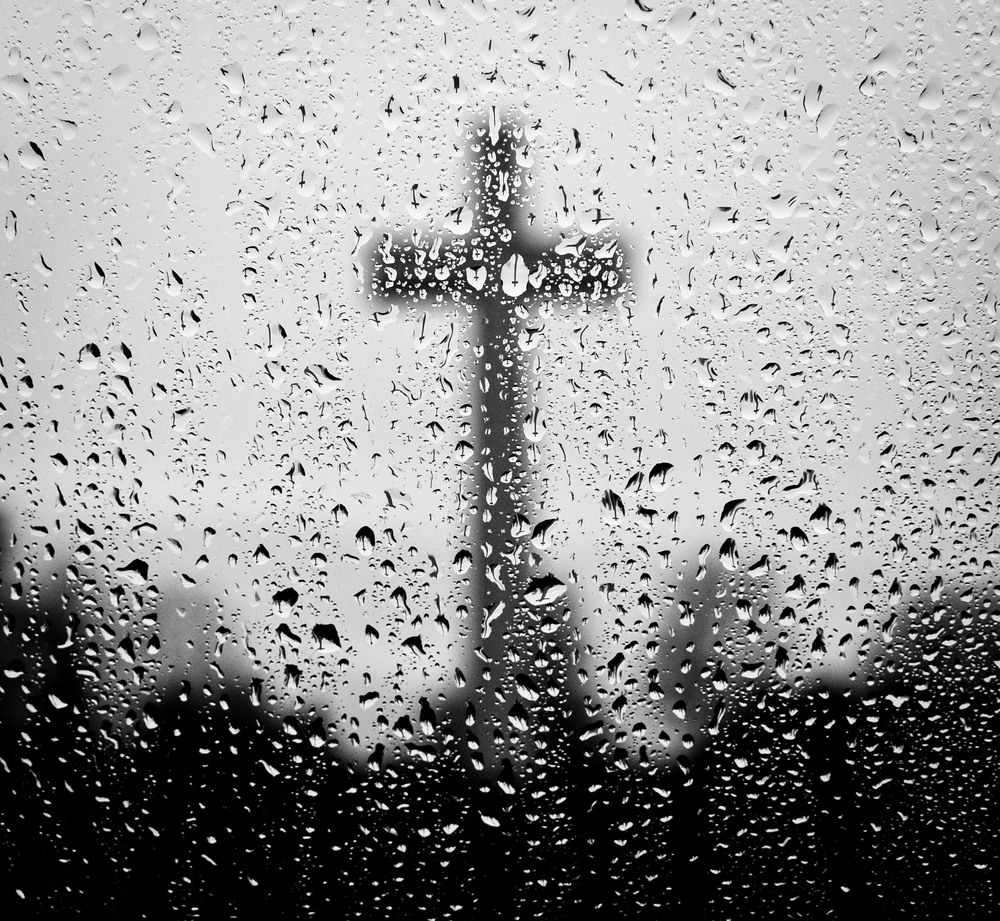
Cross-in-the-Rain-

My encounters with Samantha have continued over the past few months. She’s almost always confused, angry, and paranoid. She tells stories about growing up with another member of our staff, who never met her until recently. It’s hard to know how to respond to Samantha.

A friend called me recently to ask if our church had any resources for helping congregations to welcome those who struggle with mental illness. I pointed her in a few directions, including the National Alliance on Mental Illness (NAMI) at www.nami.org. Even as I offered her the information, I felt uneasy. Connecting with those who have mental illnesses is a complex, difficult journey.

It was raining again on Monday when I saw Samantha. She was sitting in the front lobby of the church. She shouted at me as I walked out the door, “Be careful out there! Two guys tried to kidnap me, and I wouldn’t want that to happen to you.” Unwilling to believe her, I replied, “Samantha, I’m sorry you had a rough morning. I’ll be thinking of you. Hope your day gets better.” I continued out the church doors and opened my umbrella.

I later discovered that Samantha was mugged that morning. Thankfully, the police believed her while I had blown her off. They arrested the alleged perpetrators that afternoon.

I’m embarrassed by my lack of gentleness and compassion toward Samantha, and I know I’m not alone. I wonder what it means for the Church to embrace, accept and listen to those who have mental illnesses. I wonder how church leaders like myself can grow and help others to deepen their care for people like Samantha.

There are no simple answers, but I think the answer starts in a simple place:

We stand with them in the rain.

Lisa Schubert is Associate Pastor of Discipleship and Formation of North United Methodist Church, Indianapolis.

The Awful Weariness of It All

“Now hear my prayer;
    listen to my cry.
For my life is full of troubles,
    and death draws near.
I am as good as dead,
    like a strong man with no strength left.”

Psalm 88:2-4

Not really ‘positive’ is it? Life can be monotonous and difficult, especially for those dealing with significant mental and physical challenges. It’s relentless, a constant struggle.

We experience depression, confusion, paranoia, and frustration that come and go pretty much at will. Sometimes it feels like these feelings have become an integral part of us, and it almost seems these awful things have settled in for good.

There can be a terrible hopelessness in living like this.

An ugly realization that there is no hope for today, and that tomorrow will not be any different. Some consider ending it all–rather than continue without hope. It is a terrible way to live, and hopelessness isn’t something people can handle well.

Contained in the scriptures are many stories and parables about wedding feasts and the king’s banquets.  On one occasion, somebody ‘finagles’ his way into the party. It seems ok at first but suddenly it all goes south for him and he is strongly confronted. 

He simply did not belong there.

The bouncers bind his hands and feet, carry him out.  He is thrown out into the “outer darkness.”  What prompted this was his attire, it was all wrong.  He simply wasn’t dressed for the wedding.

Matthew 22:11-14

Many have given in to their despair, they now reside in “the outer darkness.”  They are no longer dressed for the banquet. They’ve stripped themselves of their wedding garments. How tragic. They have given up and tried to walk away.

But the Father understands and increases his deposit of grace to make up for this deficiency. He doesn’t treat his beloved sons equally. Extra grace is given to the chronically ill. God’s grace comes to the hurting. And it truly meets the struggler who needs an extra portion to survive.

You must wear His kindness and grace. It’s now time. The Wedding starts soon.

God has created us for a wedding feast for believers. And it is with confidence that we look forward to this feast, for in Christ we will not be found naked but clothed in the white garments of His righteousness.  He takes our dirty and muddy clothes and exchanges them for his own beautiful white ones. 

We wear his “clothes,” and oh my what a wonder we are!

“I will greatly rejoice in the Lord;
    my soul shall exult in my God,
for he has clothed me with the garments of salvation;
    he has covered me with the robe of righteousness,”

Isaiah 61:10, NLT