The Plow and Jesus

57 As they were walking along the road, a man said to him, “I will follow you wherever you go.”

58 Jesus replied, “Foxes have dens and birds have nests, but the Son of Man has no place to lay his head.”

59 He said to another man, “Follow me.”

But he replied, “Lord, first let me go and bury my father.”

60 Jesus said to him, “Let the dead bury their own dead, but you go and proclaim the kingdom of God.”

61 Still another said, “I will follow you, Lord; but first let me go back and say goodbye to my family.”

62 Jesus replied, 

“No one who puts a hand to the plow and looks back is fit for service in the kingdom of God.”

Luke 9:57-62, NIV

There’s to be no whitewashing the way of discipleship–there’s no glamour, no special recognition–no acclaim in it to speak of it openly. I guess this is the “real” way of being His follower. The path Jesus has for me demands I give Him my whole heart. Heart enough to turn it all to Him. Heart enough to give Him total commitment.

Jesus seems to make it hard to follow Him. But is it really?

We can see this in His responses to each prospective disciple. His statements to each possible follower seem harsh, difficult, and a bit “unreasonable,” but He doesn’t receive these men unless they do what He says.

Discipleship demands that we give up what we hold dearest.

What happened to these three “would-be” followers? Did they return home dejected and frustrated? To follow in Jesus’ footprints means we give up our personal agendas, and turn our backs on what is closest and dearest. We must renounce everything, and give Him preeminence over all.

These are hard verses with profound implications.

But this passage is given to us for a reason. We dare not minimize what it means to be a disciple. We must grasp the plow with both hands, and we can’t look back. All that we do is a fair response to His mercy, and His kindness. There is incredible joy in all of this.

“Christianity without discipleship is always Christianity without Christ. Unless he obeys, a man cannot believe.”
    Dietrich Bonhoeffer

brokenbelievers.com

Dog Poop in the Living Room! (Stigma)

One out of five Americans will experience a mental disorder during their lifetime.  But, people can get better.  With proper treatment, most people with a mental illness recover quickly, and the majority do not need hospital care, or have only brief admissions.

Mental illness has traditionally been surrounded by community misunderstanding, fear, and stigma.  Stigma towards people with a mental illness has a detrimental effect on their ability to obtain services, their recovery, the type of treatment and support they receive, and their acceptance in the community.

Often when we discover a pile of dog poop in the living room there can be issues. Frustration, a bit of anger, and some disgust are typical reactions.

Exactly what is stigma?  Stigma means a mark or sign of shame, disgrace or disapproval, of being shunned or rejected by others.  It emerges when people feel uneasy or embarrassed to talk about behavior they perceive as different.  The stigma surrounding mental illness is so strong that it places a wall of silence around this issue.

The effects are damaging to the community as well as to the person will the illness and his/her family and friends. But at Mental Health agencies and many churches are working hard to erase the stigma associated with having a mental illness.

In-House-46638176283_xlarge

The emphasis needs to be on supporting and treating people in their own communities, close to their families, friends and familiar surroundings.

Yet discrimination and community misconceptions remain among the most significant barriers to people with a mental illness being able to actively participate in the community and gaining access to the services they need.

But it is not only people with a mental illness who experience discrimination and stigma.  Rejection of people with mental illness inevitably spills over to the caregiver and family members.

Improving community attitudes by increasing knowledge and understanding about mental illness is essential if people with a mental illness are to live in, and contribute to, the community, free from stigma and discrimination.

People with mental problems are our neighbors. They are members of our congregations, members of our families; they are everywhere in this country. If we ignore their cries for help, we will be continuing to participate in the anguish from which those cries for help come. A problem of this magnitude will not go away. Because it will not go away, and because of our spiritual commitments, we are compelled to take action.”

~Rosalynn Carter

Dancing With Bruises

ballerina stretching
Photo by Beto Franklin on Pexels.com

It seems like bruises are part of our life.

Dancers are some of the most talented people I know. Their gracefulness can be seen both on and off the stage. A dancer’s training is far from easy. But by choosing to become dancers they have made a decision to absorb pain.

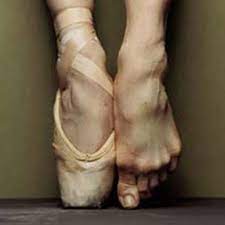
Their toes and feet are blistered and bruised; they take constant abuse. Some live with chronic tendonitis. Their feet bleed sometimes, and pain is their constant companion, but they still choose to dance.

Two things to consider.

  • They choose to dance. Dancers must operate with an iron will and an elegant grace. I suppose that is why they can dance the way they do. They have painfully blended the two.
  • The scars and bruises often become “badges of honor.” They would rather dance in pain, than not dance at all.

I once heard someone describe depression as having a mental bruise. I understand this. It makes sense.

As one prone to depression, I know what it is like to bury myself in my bed for weeks at a time. My own mental bruise was simply more than I could take. There was a sensation of sinking into blackness, a sense of total and complete despair. I felt lost and completely alone.

I prayed. I groaned, and I prayed again. Things weren’t going well.

dancer-feet

My sense of being totally lost in sad, dark thoughts was beyond comprehension. Dear reader, this was something quite real, and you must become aware of these things. Some of your friends are suffering, and it is often a hellish and desperate depression.

We would never say that diabetics are that way because of the enemy. The dark one will surely exploit it, but I think you give him far too much credit if you suggest he was able to initiate it. I don’t think Satan has the spiritual “voltage.”

I refuse to hide my mental bruises from those who share my pain. I will make the choice to dance. I’m bruised, but I will try to ignore the pain. I would exult in my God, walk in His love, and “leaping with joy like calves let out to pasture” (Malachi 4:2.)

“A bruised reed he will not break, and a smoldering wick he will not snuff out, till he has brought justice through to victory.”

Isaiah 42:3

The great pastor/evangelist Charles Spurgeon once spoke about his own personal battle with depression. Read this quote slowly and deeply:

 “I find myself frequently depressed – perhaps more so than any other person here. And I find no better cure for that depression than to trust in the Lord with all my heart, and seek to realize afresh the power of the peace-speaking blood of Jesus, and His infinite love in dying upon the cross to put away all my transgressions.”

Charles Spurgeon

When Life is Dark and Heaven Seems Quiet

God’s people have always had to wrestle with the things from the dark.  As believers, the Bible tells us that we’re in a permanent state of war against Satan. There has never been an armistice or treaty signed to my knowledge.  Each one of us is on the front lines.  The devil has been practicing with a deadly form of “spiritual terrorism.”

  • The Holy Spirit allows us to experience a small portion of the battle to strengthen our faith and dependence on Him.
  • Satan’s lies are hollow. Jesus has completely defeated him. Yet the enemy terrorizes many with his posturing and manipulation.
  • The promises found in the Word are our weapon against the devil’s lies.

Unquestionably, life can get quite dark and desperately bleak. No one needs to educate us about the dark nightmare that is now active. Over a couple of millennia, God’s covenant people have been harmed and harassed.  Enemies are constantly manipulating and twisting God’s Word. As disciples, we’re under steady surveillance by the dragon.

Sometimes heaven is silent. But I believe it is never, ever disinterested or unaware.

And He certainly has not overlooked us.  As we read our Bible, our faith becomes like strong Teflon.  Nothing can stick–even though so much is thrown at us.  When life is really dark or terribly bleak, we can protect ourselves and others. There will be times when we can sense nothing.

“Therefore, since we are surrounded by so great a cloud of witnesses, let us also lay aside every weight, and sin which clings so closely, and let us run with endurance the race that is set before us.”

Hebrews 12:1

We’re not theologians, we are just simple disciples. The Lord knows this.  I believe He simplifies things in order to help us understand. God has little reason to complicate things for us.

2 Corinthians 4:8-9

There is genealogy of the Spirit. If you’re a believer you have a spiritual lineage that includes Joseph and David and Esther. There is a real connection with the faithful. Your spiritual ancestry is now godly and victorious.

I believe that I’m “surrounded” by saints of all ages. And I must admit, that helps me.  I am part of a continuum. My faith in Jesus has given me a definite link to all the saints that have gone before me. I’m part of God’s chain of faithful believers. (Hebrews 11:4-38.)

But now the torch has now been passed, and now I must run with it faithfully and honestly.  And when all is so dark, and things seem far too quiet, I still intend to hold up that torch and carry it all the way to my Father’s house.

Consequently, he is able to save to the uttermost those who draw near to God through him, since he always lives to make intercession for them.

Hebrews 7:25

*

bry-signat (1)