Deeply Hurt for a Reason

Pastor A.W. Tozer seems to have gotten a hold on something here. Those who step into discipleship or ministry will inevitably be hurt in some significant way. I wouldn’t say it was a ‘given’, but it seems to be the common path we must take. We must be aware–but often we can’t or won’t understand. This is hard and we’re easily confused.

God really isn’t our problem.

He loves us and saves us and He really wants to bless us. He is all goodness and grace. He has no evil intentions concerning you, and certainly has no desire to see you suffer in a crisis of suffering or trial. Even in times of temptation, He simply views it as a step to strengthen us–He never is out to trip us up.

I really think that the issue is us.

Our old nature–the sinner inside, delights in things like pride and selfishness (even in religious matters). Some of the most difficult people I have ever had to work with were in places of oversight within the Church!  May I suggest something?

Could it be that the problem isn’t that we are too weak, rather, it is because we are too strong?

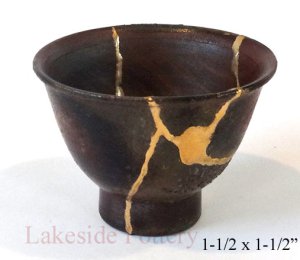
God’s intention is ‘to bless greatly.’ But my pride and self-will must be left at the door (repeatedly). My old nature cannot truly work in the Kingdom. Only when these issues are dealt with (repeatedly) will humility and brokenness transform us. Quite simply, there is no way around this. God uses broken things. We must be broken as well.

“It takes broken soil to produce a crop, broken clouds to give rain, broken grain to give bread, broken bread to give strength. It is the broken alabaster box that gives forth perfume.”

“It is Peter, weeping bitterly, who returns to greater power than ever.”

Vance Havner

Becoming broken often takes years of trial, temptation, and affliction.

But God is patient. He’s not in any hurry.

You will ‘log-in’ many hours in the desert. Many of His best soldiers have been recruited from that barren place. The Holy Spirit is our best guide through the difficult loneliness and aridity of this place. He will guide you, and comfort you.

I sometimes teach at a local Bible college–I love Song of Solomon and choose to teach it whenever I can. Here’s a verse that has encouraged me over and over:

“Who is that coming up from the wilderness, leaning on her beloved?”

Songs 8:5, ESV

“Before God could bring me to this place He has broken me a thousand times.” 

Smith Wigglesworth

So What Happens Next ?

Mark 10:53, ESV

God has touched you in a profound way, (at least I hope so.) Only He could’ve done this. You’re not the same person now. Just like Jesus healed blind Bartimaeus, you too can really see. The beggar becomes a follower. (Mark 10:46-53.)

So what’s next?

There is always another step to take as we follow Jesus. Everyday there is something new. Our salvation is given freely, but we discover that it’s something active–more like a flowing stream and less like a stagnant pool. If we truly have been “healed,” we’ll want to follow. And now each day is a joyous adventure.

After all, we’ve been terribly blind for a long, long time.

Bartimaeus would never be able to truly explain what had happened to him, at least not in a perfect or complete way to the others–but no matter, it really wasn’t necessary. (But I must believe he tried.) He could see!

Notice the sequence of events in verse 53

  • Jesus: “Go your own way.”
  • Bartimaeus: “..followed Him on the way.”

He was now a true follower. No longer a blind beggar, but he now was a true companion of Jesus and the “church.” He now walked with other believers in the Master’s band of disciples. (Having been blind and instantaneously given sight changed him forever.)

So what happened next?

I suspect Bartimaeus followed the Lord all the way. Although scripture doesn’t say what happened, I believe this ‘ex-blind’ man was now a visible witness to any with eyes to see. Bartimaeus became an authentic witness–God’s megaphone to the power and mercy of Jesus Christ.

To follow the One who saved us is the most wonderful adventure. Each of us comes with awful “sicknesses” and sins. Some of us were physically or mentally ill. We might have been thieves, liars and murderers–but no more. Some of us were adulterers, gay, child molesters, “perverts”–twisted and caught in our own sin. Proud, angry, selfish. Drunks and addicts. Sinners, and rebels.

(I could keep it going, after all I don’t want to miss you.) 😁

But we are now forgiven and healed; and now Jesus calls us to follow Him, every day. I believe that there is always another step. So, what happens next? I believe that there is always something.

I can’t say exactly. Each believer has a different story.

But I do know tomorrow’s life episode is going to be something fantastic, and a challenge. The fruit of the Holy Spirit is given to each who are truly being discipled to follow. The road in front of you just might be excruciatingly hard, but truly there is joy in our journey with Jesus.

“You called, You cried, You shattered my deafness, You sparkled, You blazed, You drove away my blindness, You shed Your fragrance, and I drew in my breath, and I pant for You.”

   Augustine

The Desiderata

Desiderata (Latin: “desired things”, plural of desideratum) is a 1927 prose poem by American writer Max Ehrmann (1872-1945).

It exhorts the reader to “be at peace with God, whatever you conceive Him to be”, and to “keep peace with your soul”. “With all its sham, drudgery, and broken dreams,” wrote Ehrmann, “it is still a beautiful world.”Wikipedia

Unquestionably, some of this prose-poem may be a bit pretentious, it revolves around concepts, at times which are not entirely sound, especially for the Christian believer.

We note these things and look for what we need. My old pastor liked to observe, “Swallow the meat, and spit out the bones.” That seems fitting, especially now. But no matter what we say, this particular work has very much wisdom for each of us. It is worthwhile I think.

This world that we’re immersed in needs hope and peace. Especially now.

  The Desiderata

Go placidly amid the noise and haste,
and remember what peace there may be in silence.
As far as possible without surrender
be on good terms with all persons.
Speak your truth quietly and clearly;
and listen to others,
even the dull and the ignorant;
they too have their story.
Avoid loud and aggressive persons,
they are vexatious to the spirit.
If you compare yourself with others,
you may become vain or bitter;
for always there will be greater and lesser persons than yourself.
Enjoy your achievements as well as your plans.
Keep interested in your own career, however humble;
it is a real possession in the changing fortunes of time.
Exercise caution in your business affairs;
for the world is full of trickery.
But let this not blind you to what virtue there is;
many persons strive for high ideals;
and everywhere life is full of heroism.
Be yourself.
Especially, do not feign affection.
Neither be cynical about love;
for in the face of all aridity and disenchantment
it is as perennial as the grass.
Take kindly the counsel of the years,
gracefully surrendering the things of youth.
Nurture strength of spirit to shield you in sudden misfortune.
But do not distress yourself with dark imaginings.
Many fears are born of fatigue and loneliness.
Beyond a wholesome discipline,
be gentle with yourself.
You are a child of the universe,
no less than the trees and the stars;
you have a right to be here.
And whether or not it is clear to you,
no doubt the universe is unfolding as it should.
Therefore be at peace with God,
whatever you conceive Him to be,
and whatever your labors and aspirations,
in the noisy confusion of life keep peace with your soul.
With all its sham, drudgery, and broken dreams,
it is still a beautiful world.
Be cheerful.
Strive to be happy.

Max Ehrmann, 1927


When Teachability Rides a Chariot

I think this post will wander around a bit, we’ll see if the Father will speak to us somehow.

I really think our lives are made up of the decisions we’re making. At least, it sometimes sees that way.

Some decisions are like ‘forks’ in the road.  They’re made and then they shunt us in another direction. Most are minor–(will it be McDonalds or Pizza Hut?) But the biggies really alter us–very quickly we see that the road is going to take us in a radically different path.

Sometimes, if we’re honest, we will admit to backtracking; retracing our route back to the point we turned.  A lot of time it’s too late, and the moment has past. But we will sometimes learn that sometimes even our detours are part of the journey. (Amazing, isn’t? But He controls it all, and that’s comforting.)

I think I’m starting to learn how to receive correction from others. 

I’ve been mulling over the decision of the Ethiopian eunuch in Acts 8:30-31, he wanted to understand the truth:

“So when Philip ran toward the chariot, he heard the man reading from Isaiah the prophet [on his Kindle]. Philip asked, “Do you understand what you are reading?”
 31 He answered, “How can I understand unless someone explains it to me?” Then he invited Philip to climb in and sit with him.”

We see here such a very ‘thoughtful humbleness’– a teachableness of the heart that this eunuch seems to have learned.  He is confident enough in himself to acknowledge that he just doesn’t know. He invites Philip to a Bible study in the chariot.

We are responsible for our receptivity to truth. 

It’s our personal decision to either seek or not seek, to learn, or not to learn.  No one else can do this for us.  We come to a decision point and we go the way things seem to direct us, or we don’t. Again, we must choose.

Sometimes to not make a decision, is a decision.

The book of Proverbs is saturated with ideas on being guided by our humility when it comes in contact with truth.  Furthermore, there are many warnings about receiving correction and reproof gracefully.  For me, I’m learning slowly to receive hard counsel.

When my wife and I made the decision to work in the migrant camps in Mexico there was one elder who kept saying “no!” At first it was a real issue for us. We sort of resented it. But we began to see the blessing of his resistance. It caused us to really analyze our decision, and “count the cost.” We were stepping into a very hard place, and we needed that voice. We were being called to break in “new ground.” It was to be a challenge.

It seems that scriptural truth is almost always negative when it’s first encountered. It often irritates more than it comforts.

It often will not sit well, and I will try to shake it off.  But truth can be remarkably persistent.  ‘Forgive your brother’, the Holy Spirit says.  And you say right away, ‘Not a chance!’  But, give it time, and the Word will soften rock.  If you respond properly, humbly, you be able to make the right decision.

One more thing, Jesus told us in Matthew 18:3,

“I promise you this. If you don’t change and become like a child, you will never get into the kingdom of heaven.”

We’ll need to be a complete alteration in our hearts if we are to accommodate His command.  Becoming a child is more difficult as an adult– then becoming an adult is for a child.  Becoming small again takes a great amount of brokenness and it’s never really mastered.

God fully intends to work with you in this. 

God wants you to learn teachableness. He brings others to direct you. The Holy Spirit ignites the Word that’ll light your path. He doesn’t seem to ever give up.  He is wonderfully persistent–He never really does give up.

“The intelligent man is always open to new ideas. In fact, he looks for them.”

Proverbs 18:15, LB