Killing My Sin, Before It Kills Me

killing-sin-act

We are for the most part anyway, eager to please God. We are Jesus’ people with the occasional brush with sin. But hey, who doesn’t? But that attitude must be questioned.

“My little children, these things I write to you, so that you may not sin.”

1 John 2:1

John hopes that his readers would make a choice— not to commit sin. After all, what soldier goes into battle with the intent of getting just a little wounded? Often we will sin just because it seems so inevitable, and we feel we can’t help ourselves. (But the reality is that we can.)

But the Holy Spirit now lives inside. Cooperation with Him is needed. Often we will work ourselves into a ‘no win scenario’ where we believe that sin rules. We can’t beat it, so we stop trying. That is common, and sad.

‘Passivity’ is defined as not participating readily or actively; inactive. When we are passive spiritually, we disengage ourselves from any effort of living holy and pure lives. Not being ‘hot’, but content to be lukewarm. At this point sin becomes, reluctantly, tolerated. “After all, I’m a sinner, what else can I do?”

Mentally ill people are often passive. We are told that we have an uncontrolled illness which dictates that we act ‘irresponsible.’ Our depression often escalates and we feel victimized by it. My experience has taught me that there are three kinds of depression:

  • organic depression, or the ‘biochemistry’ of the disease,
  • guilty depression, the kind that feels bad because of what we’ve done (or didn’t do),
  • reactionary depression, the type we feel when experiencing a loss, a loved one, or a job

Depression will almost always fall in these three categories. And passivity plays a part in all three. We  frequently feel victimized and ‘acted upon.’ When it comes to our discipleship we don’t act, we react. We are utterly convinced of the Bible— God’s truth, but we are so sporadic we can’t seem to get it to work for any length of time.

Yes, we are believers. And yes, we have issues. We’re waiting for a miracle, and hope we get a breakthrough soon.

At the base point of our lives, quite often, there is a passive attitude. Passivity aggravates our depression or mental illness. It deepens, spreading through our lives like a contagious illness. Our discipleship sputters and stalls. We no longer act on God’s Word, but we find ourselves fabricating a faith that makes allowances for our situation.

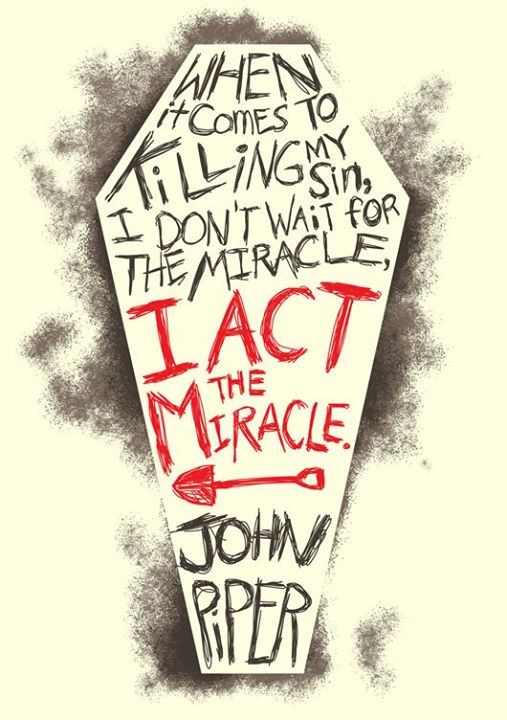
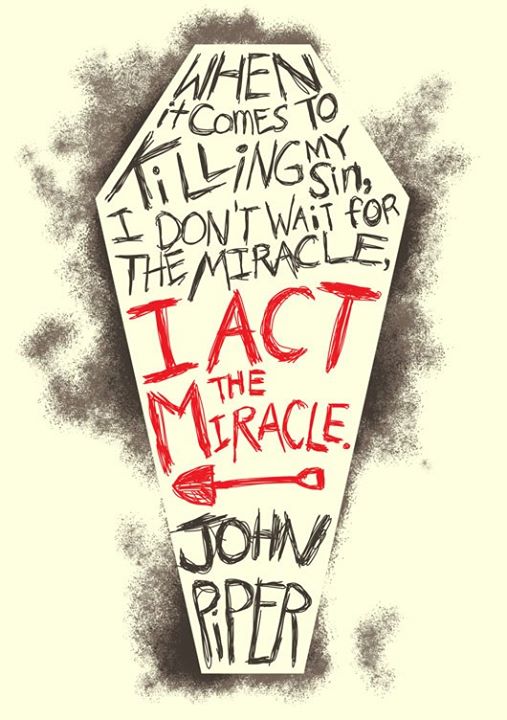
But we must ‘act the miracle.’ Everything God gives… everything… must be received by a convinced faith. We must be persuaded to give up our flawed ideas, and believe God for the real thing. I opened up this with 1 John 2:1. But there’s much more to this verse:

“My little children, these things I write to you, so that you may not sin.  And if anyone sins, we have an Advocate with the Father, Jesus Christ the righteous.”

I don’t want you to sin. Avoid sin. But even if you do— we have someone who will plead our case before God. He stands and argues our plight. He loves us that much.


bry-signat (2)

cropped-christiangraffiti1.jpg


The Urgency of This Moment

 
“Johnny Quick”

 “We must quickly carry out the tasks assigned us by the one who sent us. The night is coming, and then no one can work.”

John 9:4, NLT

To be quick means that we move very fast; being slow often implies a reluctance or a mental delay.  To hesitate while doing God’s will for us suggests a degree of ignorance or stubbornness.  Our quickness is to be seen while doing “the tasks assigned to us.”

Urgency should be woven into our hearts.  We need to have wings on our feet, a fleetness and an alacrity.  A “double-eagerness” as we carry out His work.  It should be of no surprise that God sets before us an itinerary of work He wants us to do.

So many brothers and sisters sleepwalk through their salvation. They snooze when Jesus desires they “watch and pray” with Him.

Jesus was on a  timetable. He communicated a need of doing.  He is in tune with the work of God, and is involved in the urgency of his present moment.  Jesus knows this, and he clearly communicates the need to do.  We are not called to be manic for Jesus; we are expected to be alert and aware.

This is a cry for urgency to his disciples.

“The night is coming.”  It is getting late.  In response Jesus issues an order.  Work at what the Father has assigned you.  It is almost dark now.  There is a “principle of spiritual velocity” calling us to an alertness and an awareness of needful things to do before “the time is up.”

In Acts 9 the disciples show a holy zeal in their day’s work.  We can’t stop speaking what we have seen and heard.”  The Old Testament prophets carried this urgency–Jeremiah and Amos both declared to us this avidity placed on the believer.  Jesus desires that we factor in this concentrated awareness of the approaching night.

I recently read of an evangelist in the last century.  He had a watch made, and on the dial he had a picture of a setting sun.  And over it, the words, “the night comes.”  Everytime he would look at his watch he would be reminded of the shortness of life and the need of the performance of his duty.  That lesson should be transmitted to each zealous believer.

The key word I guess, in all of this, is zeal.  And often the older we get the more this word becomes diminished, and distant.  (I believe our Father understands this about us.) No matter what we do, He focuses His love on us.  There will never be a condemnation on us.  But we can still waste away our lives in a tragic way, which we will later regret. 

But we have to ask ourselves this, will I just be an admirer, or can I become a zealous disciple of Christ?

bry-signat (1)

cropped-christiangraffiti1.jpg

A Blessed Discomfort

Love One Another

What follows is NOT an ordinary, run-of-the-mill blessing.  Some would undoubtedly wish for one, and others anticipating what follows, will skip this blog.  It happens all the time.  But, at distinct times, the Holy Spirit surgically slices through our foggy-ness and illuminates us to ourselves.

May God bless you with discomfort at easy answers,
half truths, and superficial relationships,
so that you may live deep within your heart.


May God bless you with anger at injustice,
oppression, and exploitations of people,
so that you may work for justice, freedom, and peace.


May God bless you with tears to shed for those
who suffer from pain, rejection, starvation, and war,
so that you may reach out your hand to comfort them
and to turn their pain into joy.


And may God bless you with enough foolishness
to believe that you can make a difference in this world,
so that you can do what others claim cannot be done.

–From a Franciscan Benediction

Blessed with discomfort, anger, tears and foolishness.  Too often, we often think our discipleship as a massive undertaking for a personal renovation.  And when that does happen, thank God!   But we must drive this home, spiritual make-overs are not the point of holy living! 

We are directed to engage the world and to hammer away at the lies, in order to free people, under the direct supervision of the Holy Spirit.  When we serve, give, love, we will be surprised to find that our own lives will change, almost as an after-thought. Just maybe, that is what God intends? Maybe.

“And the King will say, ‘I tell you the truth, when you did it to one of the least of these my brothers and sisters, you were doing it to me!’

Matthew 25:40, NLT


bry-signat (1)

cropped-christiangraffiti1.jpg

He Has Come For Us

“I am the good shepherd. I know my own and my own know me, just as the Father knows me and I know the Father; and I lay down my life for the sheep.” 

John 10:14-15 ESV

Jesus declares and reveals something substantial here.  He is the “good shepherd.”  If we split this statement apart, we get “good.”  We also get “shepherd.”  And we simply must insist on both.  Somehow, deep down, these two ‘particulars’ take on the most definite positions in our lives.  We are desperate for anything good; and we know our need for a shepherd.  We struggle so hard, and this understanding will carry us a very long way.

This verse tells us– He knows us!

He is fully aware of you in this present moment.  This is amazing, to be aware that He engages us on the level were we are now at.  Think about, its like He has our ‘x-ray’  in front of Him.  He knows and understands us completely and fully.

The remainder of this verse goes on to suggest that we (yes, we) know Him. Now I have a multitude of issues, but when I sift them out, there is a deep awareness of His presence.  I completely understand (as much as I’m able) of who He is, and I can’t shake Him.  Once touched we’ll never be satisfied with anything else (and Lord knows we will try.)

While visiting this planet, Jesus maintained His connection with the Father.  He would take this sense of intimacy with His Father down ‘into the stretch.’  And that pattern of love would take place in our hearts and minds.  And now we have finally found our place– with him, with the Father.

The very last part, v. 15, places itself right in the middle of our understanding.  He will definitely die for us.  He wants to, and is eager to lay down His life to make us His own.  It all seems foolish, I know.  But He very much wants to bring us into His deep presence.

The idea that we are sheep is factored in.  He dies for us.  The Shepherd will now face crucifixion in order to claim His sheep. He will go to a painful and ugly death to give us life that is eternal.

aabryscript