Nothing But Leaves

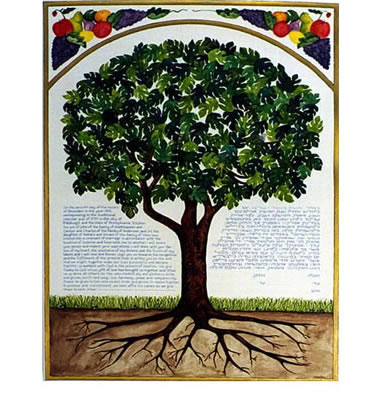
“Seeing at a distance a fig tree in leaf, He went to see if perhaps He would find anything on it; and when He came to it, He found nothing but leaves, for it was not the season for figs.”

Mark 11:13, NASB

Perplexing isn’t it?  I personally have had a certain amount of ambiguity with this passage.  I have questions that I’ve swept under the rug.  Why did that poor tree get cursed?  It wasn’t the trees fault, after all.  And didn’t Jesus realize this?  So why go through the theatrics?

I don’t know if this is the case with anyone else. 

I hesitate to ask around.  But recently have come to a better place about this entire event.  The traditional view is that it comes immediately after “the cleansing of the temple” and that explains a lot.  The fig tree is always emblematic of Israel.  (The Old Testament is well populated with these references.) The disciple Mark adroitly organized his Gospel in order to connect both events.

I assure you, Jesus has no issues or vendettas against trees.  😁

But He does take an issue with things that claim fruit, but really have nothing.  There’s nothing but leaves. I’ve been told that the figs do grow, almost as fast as leaves.  The lush greenness is the prime indicator of the succulent fruit. At least, in theory, it has the potential.

Luke 12:7-9,

Look, for three years now I have come seeking fruit on this fig tree, and I find none. Cut it down. Why should it use up the ground?’ And he answered him, ‘Sir, let it alone this year also, until I dig around it and put on manure. Then if it should bear fruit next year, well and good; but if not, you can cut it down.’”


The beautiful leaves declare its fruitfulness.  This tree was loaded, but had nothing to show but leaves.  Within God’s plan for Israel was for fruit.  Enough to feed the nations that would stream to Jerusalem.  Instead, it was worthless.  There was nothing to be had.  Loads of leaves, and the promise of an incredible harvest, but zilch, zero, nothing.

Hypocrisy is a deadening experience, with a definite sterility.

Israel was finding this out, and Jesus is now declaring it to the nation.  A corrupt temple, and a fruitless tree; this were all indicators of hypocrisy and showiness.  The luxuriant leaves loaded the tree, but ‘where’s the fruit?!’

Sometimes we declare that we are fruitful, on the mere basis of our lovely leaves. 

At times maybe even green?  Leaves are pretty much all we can do.  And we do it quite well. But the fruit is from the Holy Spirit, (Galatians 5:22.)

Israel failed God.  They became religious and neglected mercy, and justice.  Humility and graciousness.  The widow and the orphan were not part of their personal equation.  They produced leaves by the wheelbarrow load, but were missing out on the authenticity to what was true, and what really mattered.

Pharisees will do this all the time.

They turn into hypocrites who do not possess what they profess. A hypocrite values true godliness, but he personally falls short of all those things he admires. But he will never, ever admit it to anyone.  And even we who struggle so, must continually admit that we stumble and falter as we try to follow.

The terrible temptation of this time is to look good without being good.

It’s the awful curse of legalistic religion, and it runs rampant in our nation today, even in our government. The Lord absolutely detests it. God help us understand, and repent from what He shows us.

Personally, I may be a ‘screwy’ excuse of being a disciple, but I have decided I don’t want to deceive people anymore. 

God, help me.

“This year, or this month, or, more likely, this very day, we have failed to practice ourselves the kind of behavior we expect from other people.”  

C.S. Lewis
 

1brobry-sig4

cropped-christiangraffiti1 (1)

Being a Feet-Finder

A terrific study is finding the people who fell at Jesus’ feet. Tucked in the Gospels you’ll find stories of those who despair. You’ll also see them come to Jesus in brokenness and humility, without any other recourse. I call these the feet-finders.

They came to Jesus because they had no hope otherwise. They were people who were hopeless and wretched, they had long ago run out of options. They came to Jesus, falling down in front of Him. They were all feet-finders.

They were men and women who were truly desperate.

Now when Mary came to where Jesus was and saw him, she fell at his feet, saying to him, “Lord, if you had been here, my brother would not have died.”

John 11:32

One of the classic scenes in the Gospels is when Mary meets Jesus after her brother’s death. She doesn’t understand Jesus’ delay, Lazarus has been very ill and Jesus could have healed him. She is grieving and confused. But she only has one posture and one place in her heart to be– at the feet!

There are some common characteristics that feet-finders have:

  • A great need that can’t be met without His touch
  • To understand one’s true condition–humility, brokenness
  • To beg for a healing, for self or family
  • To honor Jesus as the Messiah
  • To be more receptive to His teaching, to understand Him
  • To become a witness to others (although it does seem secondary)

The following 3 verses are just a small selection of those who fell at Jesus feet.

“And great crowds came to him, bringing with them the lame, the blind, the crippled, the mute, and many others, and they put them at his feet, and he healed them.”

Matthew 15:30

“But immediately a woman whose little daughter had an unclean spirit heard of him and came and fell down at his feet.

Mark 7:25

“Then people went out to see what had happened, and they came to Jesus and found the man from whom the demons had gone, sitting at the feet of Jesus, clothed and in his right mind.”

Luke 8:35

But there are several other instances where people came to sit at Jesus’ feet:

  • Mark 5:22-23, Jairus, a leader in the local synagogue
  • Luke 7:37-38, a sorrowing mother for her daughter
  • Luke 8:41, also Jairus
  • Luke 10:39, Mary, when Jesus was teaching
  • John 11:32, Mary, meeting Jesus entering Bethany
  • John 12:3, Mary, with her perfume
  • Revelation 1:17, John to express what he was seeing (also 19:10)

In every case we find people consciously coming and kneeling at the feet of the Lord Jesus. It was a deliberate action that came from their hearts. Each had a terrible need, and each was without hope.

Formality and religious politeness are jettisoned. Brokenness and true humility takes their place. A foot-finder is no longer operating on spiritual niceties. Religion is comfortable, noble, and respectable, but it cannot heal or change people deeply.

Feet-finders know that they need Jesus desperately and will go to any length just to be touched by Him. They defy what is conventional and proper. They are not what we call respectable. You can find them at the feet of Jesus. They are feet-finders. Foot-finders weep, kneel, beg, shout. Too many tears and maybe some snot.

Hardly decent to religious people.

Are you really that desperate yet? Have you seen your need, and do you realize how lost you would be without His healing touch?

Often when I do pray, I sometimes think of the woman who was unclean. She speaks to me about approaching Jesus. I see myself in a crushing crowd of people, and I’m reaching out just to touch the hem of His robe. I know only Jesus can stop my own uncleanness. (Matthew 9.)

I’m convinced only Jesus can make me clean and whole.

I’ve tried to be holy and acceptable to Him. But I felt like a juggler, trying to keep my balls in the air all at the same time, and I could never pull it off. So I tried again and again. I was the unofficial master of religious effort.

But I found my rightful place at His feet. It’s where I belong. I love Him.

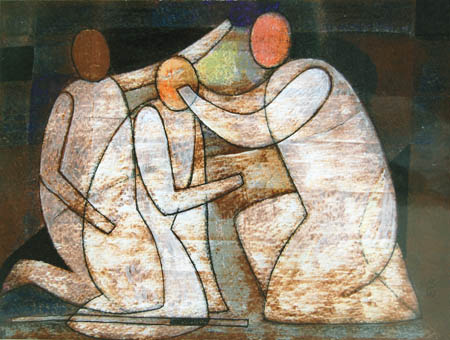
I’m not ashamed to be found kneeling.

bry-signat (1)

*

Deformed Hands

The Man with a Deformed Hand, Mark 3:1-5

Jesus went into the synagogue again and noticed a man with a deformed hand. 2 Since it was the Sabbath, Jesus’ enemies watched him closely. If he healed the man’s hand, they planned to accuse him of working on the Sabbath.
3 Jesus said to the man with the deformed hand, “Come and stand in front of everyone.” 4 Then he turned to his critics and asked, “Does the law permit good deeds on the Sabbath, or is it a day for doing evil? Is this a day to save life or to destroy it?” But they wouldn’t answer him.
5 He looked around at them angrily and was deeply saddened by their hard hearts. Then he said to the man, “Hold out your hand.”So the man held out his hand, and it was restored!
Mark 3:1-5

It was the Sabbath. I was led to the synagogue by a Pharisee who promised me money. I had no idea what was going to happen. This is my story,

I was born with a deformity in my hand. It was misshapened and more like a club than a hand. I had perfect use of the other and I learned to adapt. It seemed perfectly natural to me now. I suppose I just got used to it, but it would be nice to have a normal hand. The children in the streets would always made fun of me. I suppose I became the neighborhood outcast.

Life was never normal for me. I lived on handouts and spent my days sitting on the sidewalk out of the hot Judean sun. I suppose that there must been sin in my life for God to judge me so, that is what they told me anyway.

When the Pharisee approached me with the promise of money I jumped at the chance. “All you have to do is stand there and show off your hand.” That was easy enough. I could do that. Little did I know that I was just a pawn in the Pharisee’s plan to trap Jesus.

I entered the synagogue which was a new experience for me. I had never been inside but the Pharisee who was leading me said it was OK, that I was expected. I stood in the back trying not to be noticed. I held out my deformed just like they asked me to.

At one point Jesus noticed me. “Come up here,” he said, “Come up front.” I had no idea of what was going to happen, no way of anticipating what Jesus was going to do. Jesus challenged the Pharisees. “Is it part of the Law to do good on the Sabbath day. Should we not do what is right?” I was scared, I had no idea what I was mixed up in. The room was very quiet.

Jesus was angry and I was afraid. He looked around to see if anyone would answer him. No one did although the answer seemed plain enough, even for me. Yet I still had no idea what was going to happen next.

Jesus looked at me. I sensed his love and his peace in his gaze. “Hold out your hand,” he asked me. There were no theatrics. No hoopla, just a simple command. So I did exactly that, and in an instant I was completely healed.

What more could I say. My deformity was turned into a healthy hand. Bones and tendons and muscle instantly reorganized themselves and something normal appeared where their was once twistedness. I flexed new fingers and wondered exactly what had happened to me.

It took me years to realize that there was a deeper deformity in the Pharisees understanding that Jesus wanted to heal. It was an issue of grace and goodness over error and legalism. Yes, I was healed on the Sabbath, but that was what was supposed to happen. People were meant to be made whole on God’s special day of rest.

It is a tremendous thing to have two healthy and whole hands. I marvel at the goodness of God every time I think about it. The Lord has been gracious to me and I rejoice at that grace. He has made me a wonder.

Lord, at times I feel deformed. But please don’t forget me. I will always stumble if you’re not holding my hand, Remind that being religious is a poor substitute for your nearness. Amen.


A New Face, or a New Heart?

James H. Aughey

We live in challenging times. As people of faith, we’re slowly learning what Jesus really wants us to recognize. It seems every generation must understand all over again. Sometimes it seems we are taking two steps forward, and one step back. Oh well.

The Church must reacquaint itself with the total love of God for all people once again.

The Father hasn’t given up on us. Repeatedly, over and over, (and then over again) we learn about His unreal faithfulness to the Church and His love for all people. But sometimes we have a hard time believing these things. Honestly, we’re not what we should be, but thank God we’re not like we were. We’re learning this as well.

He’s more faithful than the most loyal person who has ever lived!

And we also must understand this. He is always seeking those who are on the margins: the lame, blind, sick and crippled. But thank God He’s still in the business of ‘collecting’ people who are desperate. (And if you can’t really see this, perhaps you should.)

The Church, and the churches we attend, are meant for those who are sick–the outcasts. It’s primarily a hospital, and the “sentinels” (pastors and elders, and others) must understand this. We must know and believe this. And we must know for ourselves the love “that passes all understanding.”

Jesus loves everyone, but if you must know, He’s specifically looking for the outcasts.

A really good study is those persons in scripture, who in their neediness, scream out “Son of God, have mercy on me.” There are 4-5 in the Gospels who said that. Although they modify this plea/prayer in slightly different ways, all of them are terribly desperate.

I encourage you to study this out, and get a deep handle on it. 

Our churches mustn’t lose sight of this kind of love, and if your fellowship isn’t doing this, just maybe you’re the one called to implement it. And if this isn’t possible, you might consider moving on. (I loathe to advise this.)

But please reject ‘the country club’ version of the Church.

It isn’t right and it’s not the heart of God. It’s religion that comes to us in its gradient forms of foolishness. It doesn’t really reflect the intense seeking of God. Somehow, along the way, churches got lost in the routine efforts of a religious routine.

The challenge is not just getting seekers to renounce the pigpen like the prodigal did. Most understand and are ready to do this. But sometimes the issue is within us, the Church– we dare not become the older brother– (Luke 15:1-2 and vv. 30-32). Usually we will be one or the other.

The question facing the Church is this:

Do we want to see face lifts, or a heart transplant?

One is for looking better, the other describes an entire overhaul. One is cosmetic, the other is a matter of life and death and reaches the heart. One is relatively minor, the other is definitely not. What kind does your Church have?

We really must sort this out.

I suppose the sooner the better.