Rembrandt’s Prodigal Son

Rembrandt-The_return_of_the_prodigal_son
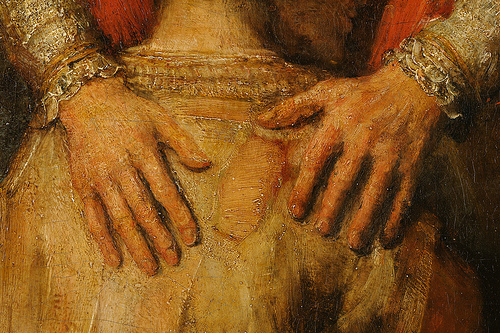
Rembrandt, “The Return of the Prodigal Son,” c. 1661

17 “But when he came to himself, he said, ‘How many of my father’s hired servants have more than enough bread, but I perish here with hunger! 18 I will arise and go to my father, and I will say to him, “Father, I have sinned against heaven and before you. 19 I am no longer worthy to be called your son. Treat me as one of your hired servants.”’ 20 And he arose and came to his father. But while he was still a long way off, his father saw him and felt compassion, and ran and embraced him and kissed him. 21 And the son said to him, ‘Father, I have sinned against heaven and before you. I am no longer worthy to be called your son.’ 22 But the father said to his servants, ‘Bring quickly the best robe, and put it on him, and put a ring on his hand, and shoes on his feet. 23 And bring the fattened calf and kill it, and let us eat and celebrate. 24 For this my son was dead, and is alive again; he was lost, and is found.’ And they began to celebrate.

Luke 15:17-24, ESV

Two hundred and eighty-nine words– these describe the life of every man, woman, and child who has ever lived. These 289 words reveal to us a God who loves far too much, way too easy. Perhaps we sort of expect that he will ‘appropriately’ punish his son– at least put him on probation at least. It only makes sense. But we find that is legalism talking.

“Every saint has a past, and every sinner has a future.” 

Many of us have lived as prodigals, and we have spent our inheritance like ‘drunken sailors.’ We really have nothing at all to show for it. The prodigal, completely destitute, takes the only work he can find. (Imagine a good Jewish boy feeding hogs.)

He is so far gone that he starts inspecting the filthy slop buckets for something to eat.

Many of us will understand his despair. Often there comes to us a crystalline moment of simple awareness. The prodigal, sin-crusted and impoverished, still has a lingering memory of the Father’s house.

The servants there had far more than him right now. Sometimes I wonder if in our captivity, we instinctively want to go home, if only in our minds, to be a servant there.

The Father has dreamed of this precise moment.

The parable says, “He saw him–felt compassion–ran out to him–embraced him–and kissed him.” The Father is a whirlwind of agape love. I’ve read the Parable of the Prodigal Son a hundred times or more. It never loses its punch. I simply want to bring some observations: 

  • We see that his father receives him with a tender gesture. His hands seem to suggest mothering and fathering at once; the left appears larger and more masculine, set on the son’s shoulder, while the right is softer and more receptive in gesture.
  • The son’s head is downy, almost like a newborn’s. We must enter the kingdom like little children. 
  • The Prodigal Son seems to be protected by his father. He snuggles near the Father’s breast. It’s love that holds him there.
  • Consider his sandals. It has taken a long time for him to come home. 
  • Standing at the right is the prodigal son’s older brother, who crosses his hands in stoic judgment; we read in the parable that he objects to the father’s compassion for his brother.
  • We see his mother in the background in the painting, and a seated steward or counselor. One stands in profound joy, the other in sits in stunned perplexity.

But Rembrandt had painted the Prodigal once before, when he was considerably younger. And it is a very good painting. The prodigal is happy and gay; there is absolutely no indication of the consequences of sin.

The Prodigal Son in the Brothel, 1635

He’s a charming young man at the height of his popularity, and we see him at a happy party. He is spending the inheritance of his father.

But Rembrandt chooses at the very end of his life to re-paint it to reflect reality.

This is one of the last paintings he will do, and it is the Prodigal Son–destitute and repenting. I can only imagine; the years have taken a toll and he doesn’t really feel his first painting is enough. He wants to paint what is true.

He now is painting our spiritual condition.

We are given a work that some critics call as the greatest painting ever completed. The painting is now in St. Petersburg, Russia. It is seldom seen by visitors. It is a clear echo of the grace of God for fallen men and women. Like the father in the painting, He’s ready to forgive every sin saturated son and daughter.

The Father’s Prodigal

bry-signat (1)


Repeated Sin

I must tell you this right from the start! You must believe it before we can go any further.

(I want to apologize for my brother pastors who may have told you otherwise.)

1 John 3:6-9 

Over and over, we sin the same sin until it has become habitual. It is exactly the opposite of godliness (that’s why we call it ungodliness.) It’s truly the other side of the proverbial coin. It haunts everyone who sincerely wants to follow Jesus.

Let’s understand these things. I’ve listed seven consequences of repeated sin.

  1. It creates hypocrisy and self-hatred.
  2. It nullifies witness, and the work of missions.
  3. It cancels out real praise, worship, and Bible reading.
  4. It destroys real fellowship between other believers.
  5. Any personal ministry is degraded and turned upside down.
  6. It blinds others, and deceives them to who we really are inside.
  7. It always engenders guilt and unworthiness, especially toward God.

I once lived in a house that had a severe mold problem. The previous owner, in an attempt to make things liveable, painted over the offending walls. He meant well, of that I am sure, but the problem of the mold was never dealt with properly. No matter how much you slathered on the paint, the mold was still alive and well. It simply worked its way to the surface. Sin is like this.

Paul’s letter to the Romans, chapter 7, gets to the root of our “mold.” If we read it carefully (as we should) we’ll start to grasp what it means to walk biblically.

Paul floats different concepts our way. Law, sin, nature. Each word must be processed.

“Law” is something that is always true. (Think of the Law of gravity.) “Sin” or falling short. The Greek word is pretty descriptive–it means “an arrow that misses the target.” “Nature,” or the intrinsic character of something.

We use these words so seldom that they seem archaic and outdated; but not so. Understanding these three opens up the entire realm of spiritual holiness. When we realize that the Word explains our situation so clearly we become convinced that holiness is possible. We begin to hope again.

Tolerating repeated sin is a terrible form of “spiritual suicide.” It always breaks fellowship with the living God. But as a believer, God doesn’t break fellowship with us, rather He comes closer and patches up our self-inflicted wounds. But even then we will not understand Him.

The Father’s heart is for us to be heart-holy. This is His perfect plan for us. 

1 Peter 1:14-16

You must become convinced. You dare not continue to sin and live in terrible guilt and risk “spiritual suicide.” You must decide that the Spirit of holiness is in residence in your heart, and live willingly as true saints. 

But there is an all powerful remedy to our sickness-plague of repeated sin. Almost always we stare at this ugliness, it seems we’re fixated on it. Often there are two approaches we take regarding repeated sin. 1) We ignore and flail out a life of “holiness.” We minimize this. 2) We become hyper-aware of our sin and guilt. We maximize sin to the point where we lose all joy and peace.

“Looking at the wound of sin will never save anyone. What you must do is look at the remedy.”

D.L. Moody

I need to stop teaching now. Rereading this has made me slightly frustrated about what I’ve written. If any of this has helped, I’m glad. I’d like to close this with a Billy Sunday quote. He explains the seriousness of repeated sin. 

“I’m against sin. I’ll kick it as long as I’ve got a foot, and I’ll fight it as long as I’ve got a fist. I’ll butt it as long as I’ve got a head. I’ll bite it as long as I’ve got a tooth. And when I’m old and fistless and footless and toothless, I’ll gum it till I go home to Glory and it goes home to perdition!” 

 Billy Sunday

Toxic Shame

“My disgrace is before me all day long,
and shame has covered my face.”

Psalm 44:15

Some years ago while in prayer I saw myself, apart of God. There was a marble fountain abandoned in a gorgeous courtyard. It was beautiful. As I looked I realized that it didn’t have clean fresh water like you might think, but it spewed feces and urine. It was gross, it was awful, and I immediately understood.

I suddenly realized that I was that marble fountain, and I was spouting out only filth.

Being ashamed is cruelty that can only destroy a person. We think we must have defense mechanisms to survive. We drink, use drugs, and get involved with sex. Some might put on a tie and raise their hands during our church worship time. Whatever works I suppose. Almost always shame drives us to look for ways to escape.

People who live with shame often feel worthless, depressed, and anxious.

Shame can be a contributing factor to depression, anxiety, and low self-esteem. People who are constantly ashamed live out a difficult emotional and mental battle each and every day.

The Hebrew word for “shame” is disgrace, confusion, or dishonor.

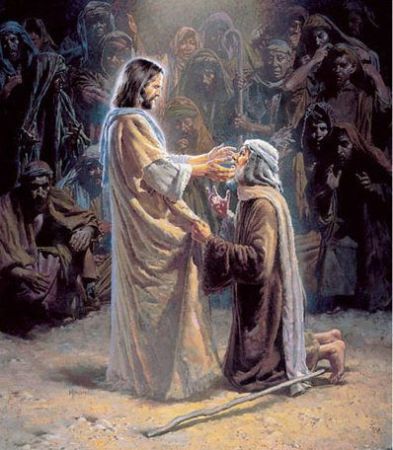
I believe only the power and blood of Jesus can purify me. Only He has the ability to clean my spirit. In the New Testament, we see Jesus healing the leper with just a touch. Shame will be removed from your heart when He touches your own “leprosy” of sin.

Here are things you must consider.

  • Shame separates me from God.
  • Shame is a sign of self-hatred.
  • Shame makes me feel like giving up.
  • Shame leads me to go out and sin more.
  • Shame destroys the gifts that He is waiting for me to serve others.
  • Shame makes me judgemental and critical of others.
  • Shame weakens the Church in ways I can’t comprehend.

God intends to move you out of shame and guilt. You must have faith to put His Word into practice before you can be really free. It will probably be a battle–every day. Faith is the only way to freedom. The following promise is crucial.

“But if we confess our sins to him, he can be depended on to forgive us and to cleanse us from every wrong. And it is perfectly proper for God to do this for us because Christ died to wash away our sins.”

1 John 1:9, LB

I must reiterate this, and use the authority God has given to me as a teacher of the Word, please shake off the humiliation you live in. You must do this.

Unless you step completely away from the shame of your life you’ll be destroyed by the enemy. I dare not pull any punches with you. I don’t mean to be hard, I really don’t. But I do understand. I really do.

“Once again you will have compassion on us. You will tread our sins beneath your feet; you will throw them into the depths of the ocean!”

Micah 7:19

You can be free from sin and shame. God has a way.

It is the cross of Jesus, and by His blood–that is the only way sin and shame can be cleansed from our lives. There is nothing else in the whole universe that will do this. Only the red blood can turn the black into white.

I strongly suggest you share your battle with another believer who will understand and be discreet. (Sharing this maybe is the step you’re missing?)

Shame is the ugly fountain that only produces deadly things. It’s that shame that keeps me from understanding that I’m the beloved of God and His precious child.


Don’t Waste Your Sorrows

“You have given me many troubles and bad times, but you will give me life again. When I am almost dead, You will keep me alive.”

Psalm 71:20, NCV

“He was despised and rejected by men,
    a man of sorrows and acquainted with grief;”

Isaiah 53:3, ESV

Everyone hurts sometimes. We all will face our special sorrows. But there are times when our pain pounds us intensely, and it can get really bad. The darkness rolls in on our souls like a caustic fog. We might devastatingly discover that there are things that are worse than terrible.

I have never spoken out like this, but my wife and I had a daughter who died— she was stillborn. She was doing great, up to a week before her due date. We knew that in seven days, we would be able to see her– face-to-face.

Elizabeth Grace Lowe died shortly after birth from strangulation. It was a sudden and unexpected tragedy that left us devastated.

We were completely undone. 

“For the Lord will not reject forever,
For if He causes grief,
Then He will have compassion
According to His abundant lovingkindness.
For He does not afflict willingly
Or grieve the sons of men.”

Lamentations 3:32-33, NASB

There is pain, but there are also promises.

There can be brutal sadness, but there are also Psalms. There is a blessing for all those who grieve. This topic deserves far more attention than this simple post. (If you’re in the thick of things, I’m trusting the Holy Spirit will help you to your next step.)

There can be such sorrow in this life.

Much more than the human heart can possibly contain. But our Savior has a title (one of many.) He is the “Man of Sorrows.” He is the one who is “on point.” He leads us through such intense hostility. He is there when the switch is flipped and it becomes instantly dark. We can’t, won’t, and will not leave you to face your pain alone.

There are a few things that I want to communicate to you.

These have come out of great darkness. I have tried awfully hard to be a disciple, even through the worst of it. They may be right, wrong or just okay, I don’t really know…

  1. God takes the full blame for our pain and sorrow. He doesn’t shift the blame or deny His presence in our sufferings. Sometimes you need to adjust your theology. Maybe it’s hard to trust Him right now–that’s more than understandable. In eternity, I believe, it’ll make perfect sense.
  2. Jesus has fully shared our sorrow. All that you are feeling right now, He feels. If you feel you are at a minus 10, then He does as well. As you suffer, He is your shadow. He knows.
  3. Nothing is ever wasted. We really shouldn’t treat these moments of sorrow as a waste. Have you ever wondered at Jesus’ ‘economy’ after the 5000 were fed?  He assigns value to the leftovers. The disciples pick up their baskets and collect everything again. Nothing will go to waste. Nothing.
  4. This pain, this sorrow is the intensive crash course in becoming a person of mercy. You now will always walk with a limp. At times the scars will be quite visible to those who can really see. This will become forever a healed wound (but a wound nevertheless.) It helps to seek out others who have walked this same path. I don’t think I will ever fully trust a person who doesn’t walk with some kind of limp.
  5. You will need (but maybe not accept) the transformation of your suffering into glory. This will take some time, and it almost feels like your not progressing at all. I encourage you to re-think each of these simple points. The Holy Spirit may be working, perhaps behind the scenes.
  6. Finally remember this: God is not a monster, stomping on us like a boy crushes ants. He has carried all of our pain and illness. He clearly comes alongside every suffering believer.

It is Satan who would suggest to you that God is a Celestial Menace, not worthy of our love. I will be very blunt with you, that idea has to be implicitly rejected. Its origins are satanic.

“The moment an ill can be patiently handled, it is disarmed of its poison, though not of its pain.”

    Henry Ward Beecher

“The LORD is close to the brokenhearted; he rescues those whose spirits are crushed.”

Psalm 147:3, NLT