The Glory of Gripping Things

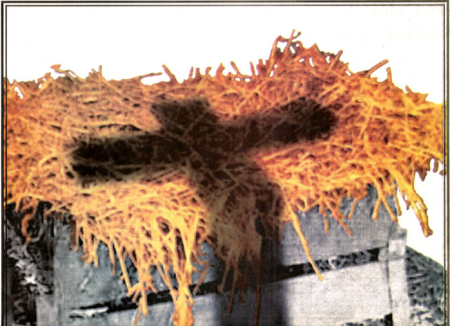
Acts 17:33 Artwork | Bible Art

I never had an opportunity to attend a seminary, and only have a three year diploma from a Bible Institute. But I’ve had to rely on the Holy Spirit in ways that a seminary trained pastor will never really understand. I’ve come to see the wisdom in the way God has led me.

“It is the glory of God to conceal things, but the glory of kings is to search things out.”

Proverbs 25:2

Concealing things and searching for things are contrasting actions. God hides things purposefully–they are sort of like a spiritual version of “Where’s Waldo.” Certain things are hidden, but always in plain sight.

Searching for things should definitely be our own response. The word used in Hebrew means to investigate, but with a planned purpose. It’s more than curiosity, rather it’s a passionate curiosity. And the Holy Spirit is always pleased with that.

In the New Testament book of Acts (17:11) we can see this attitude of the Bereans. They were the only ones in Scripture to be called “noble minded” for their serious study and thought. When they heard Paul’s teaching they sat down, opened their Bibles and began to investigate for themselves.

But it will always take humility. Always.

Intellect is important but it’s not enough. The list seen below is something to work through, and the issue is one that has been a challenge for me through 40+ years of following Jesus.

Here’s a study that I’m confident will bless you.

Justification & Sanctification– Gripping the Two
  •  Justification is free (John 4:1)
  • Sanctification is costly (Lk. 14:25-33)
  • Justification is instantaneous (Jn. 3:8)
  • Sanctification is a lifelong process (Jn. 8:31)
  • Justification is by faith (Eph. 2:8)
  • Sanctification is by faithfulness (1 Cor. 4:2)
  • Justification is not of works (Eph. 2:9)
  • Sanctification is of works (Eph. 2:10)
  • Justification involves Christ’s love for me (Jn. 3:16)
  • Sanctification involves my love for Christ (1 Jn. 4:19)
  • Justification concerns Christ’s righteousness (2 Cor. 5:21)
  • Sanctification concerns my righteousness (Lk. 14:25-33)
  • Justification involves my position in Christ (Col. 2:11-14)
  • Sanctification involves my practice (Col. 3:1-11)
  • Justification considers what God has done (1 Cor. 15:3-4)
  • Sanctification considers what I am doing (Lk. 14:25-33)
  • Justification is God’s commitment to me (1 Jn. 5:9-13)
  • Sanctification is my commitment to God (Jn. 14:15)
  • Justification requires obedience to one command: to believe the Gospel (Ac. 6:7)
  • Sanctification requires obedience to all of Christ’s commands (Matt. 28:19-20)
  • Justification focuses on the cross which Jesus took up once and for all (1 Cor. 1:18)
  • Sanctification focuses on the cross which I am to take up daily (Lk. 9:53)
  • Justification is finished at the moment of faith (Jn. 5:24)
  • Sanctification is not finished until I go to be with the Lord (1 Cor. 9:24-27)

Discerning between the two should only be a blessing. In some sense working through the differences between justification and sanctification should energize you, and bring truth to your walk. Now you might disagree, but let it be after you’ve worked through this list.

“I have more understanding than all my teachers, for your testimonies are my meditation.”

Psalm 119:99

The author of the above ‘list’ is unknown. May they be blessed by this if they should read this post.
 
 
cropped-christiangraffiti1 (3)
 

Sifted Wheat, [Trial]


Threshing Wheat
“Simon, Simon, Satan has asked to sift each of you like wheat.  But I have pleaded in prayer for you, Simon, that your faith should not fail.”
“So when you have repented and turned to me again, strengthen your brothers.”

Luke 22:31-32

I’ve been thinking about failure;  it is something that I am really, really good at.  In my over 40 years of walking with Jesus, I realized that I’ve experienced more weak moments then strong.  I have easily failed more than I have succeeded. I am embarrassed by this.  I’ve sinned, and failed more as a Christian, than I ever did as a pagan sinner. And things sometimes show little sign of improving. 

Simon Peter is about to undergo a trial so intense and difficult, that unless Jesus intervenes it will probably destroy Peter.

(The only other blatant attack where Satan seeks permission is in the life of Job. It is reasonable to believe that the forces of hell are concentrated on Peter.)

You and I undergo some of this onslaught ourselves.  We go through periods of intense trial.  Everything just falls apart, and we lose hope.  I’ve had several periods like that, it’s like a tornado from hell bears down upon my life.

But there is something remarkably good in all of this.

  • First, Jesus is praying for me to endure.  He is the faithful intercessor for my soul.
  • Second, He gives us a modicum of understanding by warning us of the approaching storm.  Peter is told ahead of time of what was going to happen.
  • Third, the wheat will be sifted.  Sifting or winnowing of the grain is necessary, it’s a good and godly work of the Holy Spirit. It is a good thing, as it builds your faith.
  • Four, you will survive to strengthen your brothers and sisters.

All pain and failure gives us a mandate to serve others. Our weakness gives us a spiritual license to become a shepherd of mercy and hope.  (You could say that you are now a licensed minister.)

We can ask for nothing more; it is a good and profound work to serve others.

In love’s work, only sifted people can truly serve.


Pushing Through

“Snuggle in God’s arms. When you are hurting, when you feel lonely, left out. let Him cradle you, comfort you, reassure you of His all-sufficient power and love.”

     Kay Arthur

There is a lifeline if you are:

  • A weary leader, caregiver, or simply a burned-out believer.
  • Navigating the heavy fog of grief, anxiety, or emotional numbness.
  • Quietly asking yourself, “Why do I still feel so empty?”
  • Aching to feel close to Jesus again.

You don’t have to fix yourself to be found. You’re not too broken—you are already being held.