My Psalm for My Savior

Psalm 116:7 – painted canvas, melodyjoy1983, http://www.etsy.com

This poem is written in the pantoum form and is based on Psalm 116, which is my favorite Psalm. I find that the repetition of lines in this form lends itself well to Christian poetry of lament and praise. I hope you are blessed by this offering.

My Psalm for My Savior

For you, O Lord, have delivered my soul from death
The anguish of death and darkness entangled me
I called on the name of the Lord: “O Lord, save me!”
Praise my God, my Savior who came to my rescue

The anguish of death and darkness entangled me
My eyes filled with tears, my feet stumbled under me
Praise my God, my Savior who came to my rescue
Rescued me from my trouble, sorrow, and darkness deep

My eyes filled with tears, my feet stumbled under me
The Lord, my God, heard my cry for love and mercy
Rescued me from my trouble, sorrow, and darkness deep
Now I know His grace and mercy are mine to keep

The Lord, my God, heard my cry for love and mercy
He saw the anguished turmoil of my broken soul
Now I know His grace and mercy are mine to keep
I will forever praise His glorious name, Jesus

He saw the anguished turmoil of my broken soul
I called on the name of the Lord: “O Lord, save me!”
I will forever praise His glorious name, Jesus
For you, O Lord, have delivered my soul from death

    John Newton

Please check Linda’s site. It’s always a blessing!

The Extraordinary Breath of Jesus

“Jesus said to them again, “Peace be with you. As the Father has sent me, I also send you.” 22 After saying this, he breathed on them and said, “Receive the Holy Spirit. 23 If you forgive the sins of any, they are forgiven them; if you retain the sins of any, they are retained.”

John 20:21-23 (19-23)

This is the second “peace be with you” in this passage. So why the duplication of this peace proclamation? The disciples are sequestered and scared in the upper room (v. 19; and Luke 24:36. Having peace is being emphasized–the disciples were afraid of the Pharisees, but they also were undone by Jesus’ surprise visit.

Peace was definitely a precious commodity for them.

Jesus gives his disciples a mission to do, and they must be as ‘familiar’ with Jesus just as Jesus is with God. The disciples had followed him for three years–seeing incredible miracles, and hearing profound teaching, they’re ready, they just need power.

In track and field, there’s a relay race where a baton is passed from runner to runner, and maybe that’s how it’s working here? We see the same idea in John 17:18.

The baton has now been passed to the disciples.

The breath of the risen Jesus is necessary (and yes, he’s breathing.) What went down here, I don’t know exactly. But Jesus recognizes that his 12 followers will need this to do his work. Also, we might consider Adam in Genesis 2:7 where God’s breath brought him to life, which is pretty awesome when you think of the parallels.

The Holy Spirit energizes these men to do this new work.

The disciples were pretty much observers, but now they are to take up the ‘mantle’ of Jesus’ work. This is a definite duplication, which connects with the idea of one seed producing many others (John 12:24.) That’s how the Kingdom will come to people.

Verse 23 intrigues me. It seems that our life comes from the breath of Jesus. And it’s the Holy Spirit that gives both power and the authority that’s needed to function like Jesus. We now have the ability to pronounce forgiveness to the new believer, and yet that doesn’t seem a function of the Church today.

I wonder why this is so?

This entire passage as a doozy. It clearly declares the Churches new role as we follow in his footsteps. Disciples are to do exactly what Jesus does–with his breath and authority–filled with the Holy Spirit.

If we neglect these things (it seems anyway) we’re going to fall flat on our face.

“The work of Jesus for His disciples on resurrection Sunday gives an ongoing pattern for His work among His people. Jesus wants to continue this fourfold ministry of assurancemission, the Holy Spirit and authority to His people today.”

From David Guzik’s website

There is Death in the Camp

Numbers 21:6-9, ESV

The children of Israel were under attack by thousands of snakes. I remember hearing of Jonestown, where on November 18, 1978 when 918 people drank ‘kool-aid’ mixed with cyanide. The whole thing was based on Jim Jones‘ delusion and rampant paranoia.

Death like this is never easy to deal with. It’s frightening. It boggles our mind.

It’s hear we read of poisonous snakes attacking people in the camp of Israel.  The people had taken umbrage with God and Moses because the way was too hard. They accused God of leading them out of Egypt, just so He could whole-scale destroy them.

I venture to say that the effects of sin have a terrible tendency (and a purpose) to kill people.  Its infection will work through our “blood stream” and be a certain poison that will eventually destroy us.

If we could actually see the snakes we might just take our sin a bit more seriously.  

But our particular viperous horde comes to us on a spiritual level.  We aren’t suddenly falling down, and our sin doesn’t bring us immediate death. (A slow death, which is, maybe harder.) We see it sometimes, but we can’t do anything about it.

Like it or not, there is a savage battle going on in our hearts and minds.  

The cross of Jesus is the only antidote, and through faith the poison is being rendered inert.  But personally I must admit, there are good days, and not-so-good ones. I know it’s the poison that works inside of me. Others may see it sometimes, but it’s pretty obvious to me.

John 3:14-15, ESV

I read the following story somewhere, and it seems to explain exactly what i want to say.  I think it is more than a cute story.  If we should take the time and unzip it, the truth will spill out.

Look  to Jesus, who was lifted up to destroy our sin, and heal our lives.  Fix your eyes on Him, and He will save.

My other teaching site is at alaskabibleteacher.com

For a deeper study in Numbers 21 can be found at: A Place for Truth.

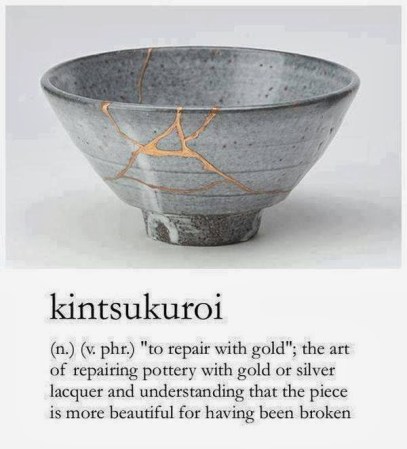
Deeply Flawed–A Jar of Clay

Elijah was suicidal. Job wished he had never been born. David understood deep depression. Moses was anxious. Hannah was barren. Jonah was angry. Paul was all alone in a prison cell.

And actually, this is only a brief list. The Bible is loaded with flawed people who stumbled trying to be faithful. God uses imperfect people, because there really isn’t any other kind to be found.

Noah got spectacularly drunk. Abraham lied. Jacob repeatedly deceived others. Rahab was a whore. Samson lusted. David committed adultery and was a murderer. Peter denied Christ.

And there were others.

Why does God favor and love people who are so disturbed? Honestly, none of us measure up. It seems He uses the weak to carry out a plan and a purpose of redeeming others, and establishing a Kingdom. He takes messes and gives them His message.

He is Love– 100% of the time, and He loves you, and He loves me, He loves the world. (John 3:16.)

Messed up people of faith become instruments and vessels of grace to other messed up people. We carry a treasure that is not ours. Sometimes it takes years to see this. I hope you can.

And nothing is ever really wasted. Our mistakes (sins) become useful things to Him. For example, David’s sin would be transformed into Psalm 51 and 32. Yes, his disobedience had consequences, I won’t dispute that, but something wonderful also came when he repented.

Yes, you need to repent. But when sin is destroying you, it does seem logical.

The first two verses of Psalm 51 can bring tears when we finally understand their profound beauty, for they came out of David’s darkness:

Psalm 53:1-2, ESV

For thousands of years people of real faith have come and drawn beauty and grace from this song. David knew his sin was real, and incredible pain emerged from that, but the Psalm did also.

Please do not try to hide or excuse your sin, it always has the most awful consequences.

Broken people can be forgiven, redeemed and used. Sometimes I think God gets special enjoyment out of picking the worst and patiently loving us to wholeness. If you really know Him, and know your flaws, you’re well on your way of usefulness in His kingdom.

2 Corinthians 4:7