Worshiping With a Knife

 by the Forward

In Genesis 22, we have the story of Abraham and Isaac on Mt. Moriah.

Abraham has tied up his son on an altar to offer him as a sacrifice in obedience to God’s direction (v. 2). This is faith being tested to the ultimate extreme. And Abraham shows us how faith really works.

“Then on the third day Abraham lifted his eyes and saw the place afar off. And Abraham said to his young men, “Stay here with the donkey; the lad and I will go yonder and worship, and we will come back to you.”

Genesis 22:4-5

This is the first time that  the word “worship” is used in the Bible.

It sets the singular tone for all the scriptures on this subject. I guess what is interesting is there were no musical instruments involved. There was just these needful things:

  • stones,
  • wood,
  • rope,
  • fire,
  • a knife,
  • and Isaac, (the would-be ‘lamb.’)

There was just a handmade altar, and a sharp knife.

In the end, Abraham raises his knife, and then suddenly, (to the relief of us all) he is stopped. His faith has withstood the test, and he has truly ‘worshiped.’

But the Angel of the Lord called to him from heaven and said, “Abraham, Abraham!” So he said, “Here I am.” And He said, “Do not lay your hand on the lad, or do anything to him; for now I know that you fear God, since you have not withheld your son, your only son, from Me.”

Gen. 22:11-12

Principle One: There really can’t be worship without sacrifice.

Recovering this truth concerning worship is critical. It seems we delegate ‘worship’ to a select few who are talented and gifted. We probably don’t do this deliberately, but sometimes we feel it makes a better presentation. We all want to look good, even as Christians.

Principle Two: The first worshiper didn’t use a guitar, but a knife.

This difference keeps the idea of sacrifice in its definition. There isn’t worship without sacrifice. The knife thrust that he was ready to wield wasn’t backed up by drums or piano. Yet Abraham understood worship every step to Moriah with the knife in his belt.

So, brothers and sisters, because of God’s mercies, I encourage you to present your bodies as a living sacrifice that is holy and pleasing to God. This is your appropriate priestly service.”

Romans 12:1

Ultimately, we must realize our sacrifice is the Lamb of God. It’s His blood on God’s altar for our sins. As believers, our faith firmly rests in this spiritual fact.

We of all people have cause to really worship.

And no sacrifice should be too great for Him who gave Himself for us.

Nothing But the Blood


1 John 1:7, ESV

At first glance it seems that the Old Testament is a collection of extremely bloody books. So many sacrifices were made that the levitical priesthood had to sacrifice lambs 24 hours a day. People had this desperate need to cover their sins with an offering. This was instilled in them by the Law and their conscience. The guilt emanating from their sins must be covered by a lamb’s blood.

As our sins mount up (and they will) we have an innate need to cover them up.

Sin is almost never hidden, and never, ever exalted as a virtue. And yet we try to skate though our accumulation of many sins. We forget many, and try to excuse the more heinous. Our guilt condemns us, and we have no choice but to hide it, from ourselves, others, and from God. We can no longer pretend we’re without sin.

“Human beings, all over the earth, have this curious idea that they ought to behave in a certain way, and can’t really get rid of it.”

-C.S. Lewis

The Jewish people no longer sacrifice lambs, and it seems the Gentiles have never caught on. But sin has never gone out-of-style. But yet there is still a way for God to forgive our sin. The New Testament teaches clearly that Jesus has offered His blood as the payment of every sin ever committed. His death wiped our slates clean, forever.

The New Testament is crystal clear on this. I’m not making this up.

The crucifixion of Jesus Christ had enough sufficiency to cover everyone, once, and for all. It seems astonishing, beyond belief and possibility. The blood it seems, has never lost its power. This may be why Christians can’t seem to ‘shut-up’ about their faith.

They ‘see’ something!

“Therefore, brothers and sisters, since we have confidence to enter the Most Holy Place by the blood of Jesus.”

Hebrews 10:19

We are given a ‘backstage pass.’

Simply put, you now have the confidence–sort of like ‘backstage passes,’ into God’s presence, all because of His death. The cross is far, far beyond a gold religious medallion worn around the neck. The cross of Christ, and more precisely His blood, is now regarded as complete righteousness for anyone (who by faith) receives it as his/her own. A brand-new confidence takes hold. “God loves me, and He really has forgiven me.” 

2 Corinthians 5:17

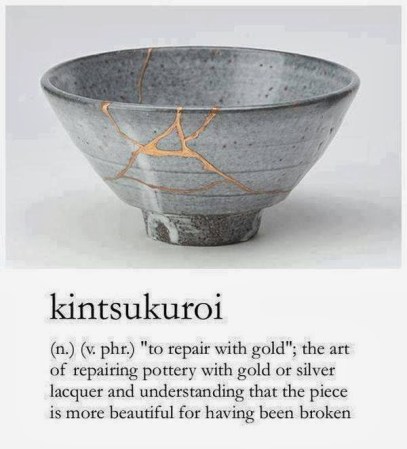
Our sins, from our fallenness, are now smothered in the blood of Jesus. That red blood makes us ‘white as snow’ in God’s analysis. At long last, the tremendous guilt is lifted from the believer, and they want others to know about it. Brokenbelievers’ everywhere are cheering.

We know we aren’t quite right, and we understand our sin, but we have become fans of Jesus Christ. After all, His death has brought us eternal life.

Becoming a Steward of Your Pain

Some time ago I read a story that connected. A visiting speaker stood in front of a congregation and shared a painful incident from his childhood. He wanted to bring healing. After he spoke, an elder came up and spoke to him–

“You have learned how to become a proper steward of your pain.”

The visiting speaker was profoundly touched by this. Something came together in his heart and soul. Yes, he did learn how to deal with those ugly things from his past. And yes, he was starting to become a proper steward of his pain.

The word for steward in the original Greek is oikonomos. It literally means “a keeper of a home.” It describes a manager, or a superintendent to whom the head of the house or proprietor has entrusted the management of his affairs.

Managing these awful things for the Kingdom of God is now our ministry.

No question about it, we live in a world of darkness. Each of us has been touched by hard things. Scars are part of our lives. When we come to Christ they come with us. All of these grim things are a real piece of us; we have been hurt, or we’ve wounded others by our sinfulness.

Are you a good steward of who you are? Maybe it’s a trauma, a physical, sexual, or perhaps a mental illness. It’s a scar you carry from your past, and no one is immune from them it seems.

I believe that you’ll find freedom if you can use these things for Him and his Kingdom.

We must see and understand that Jesus has taken everything and fully redeems it all for His glory.

He understands us fully–our past, present, and future. He ‘knows’ us–the real and hidden us. The challenge is to take these sad events to the throne. He alone can heal and then use that which has devastated us. He uses our pain to touch others deeply.

But Jesus intervenes to save. As we grow to accept this, the Holy Spirit comes as our comforter and guide. He starts to teach us true redemption, and the incredible healing that takes place inside us.

It really is his work, not ours. It’s then we finally understand. It’s then we become the broken healers that God can finally use.

And it’s then we can finally say: “The light has truly overcome the dark.

Becoming a steward of our pain is His doing. We’re able to touch others with these things that cripple and destroy. He has made us “managers” of these things, and we are taught to teach others, declaring that God has completely saved us. He works miracles!

“Therefore, if anyone is in Christ, he is a new creation; the old has passed away, and see, the new has come!”

2 Corinthians 5:17

We’ll meet those who are waiting to hear our story. They’re walking through terrible pain and they don’t know what to do.

We’re being transformed into authentic witnesses. Yes, at times these awful things still hurt, and I suppose that’s to be expected. But we’re learning to manage them. We’ve become real-life stewards of our pain.

To every believer still struggling about the sin of the past or sickness of the present–keep turning it over to Him. He will make it into something quite wonderful.

Deeply Flawed–A Jar of Clay

Elijah was suicidal. Job wished he had never been born. David understood deep depression. Moses was anxious. Hannah was barren. Jonah was angry. Paul was all alone in a prison cell.

And actually, this is only a brief list. The Bible is loaded with flawed people who stumbled trying to be faithful. God uses imperfect people, because there really isn’t any other kind to be found.

Noah got spectacularly drunk. Abraham lied. Jacob repeatedly deceived others. Rahab was a whore. Samson lusted. David committed adultery and was a murderer. Peter denied Christ.

And there were others.

Why does God favor and love people who are so disturbed? Honestly, none of us measure up. It seems He uses the weak to carry out a plan and a purpose of redeeming others, and establishing a Kingdom. He takes messes and gives them His message.

He is Love– 100% of the time, and He loves you, and He loves me, He loves the world. (John 3:16.)

Messed up people of faith become instruments and vessels of grace to other messed up people. We carry a treasure that is not ours. Sometimes it takes years to see this. I hope you can.

And nothing is ever really wasted. Our mistakes (sins) become useful things to Him. For example, David’s sin would be transformed into Psalm 51 and 32. Yes, his disobedience had consequences, I won’t dispute that, but something wonderful also came when he repented.

Yes, you need to repent. But when sin is destroying you, it does seem logical.

The first two verses of Psalm 51 can bring tears when we finally understand their profound beauty, for they came out of David’s darkness:

Psalm 53:1-2, ESV

For thousands of years people of real faith have come and drawn beauty and grace from this song. David knew his sin was real, and incredible pain emerged from that, but the Psalm did also.

Please do not try to hide or excuse your sin, it always has the most awful consequences.

Broken people can be forgiven, redeemed and used. Sometimes I think God gets special enjoyment out of picking the worst and patiently loving us to wholeness. If you really know Him, and know your flaws, you’re well on your way of usefulness in His kingdom.

2 Corinthians 4:7