Grabbing On to Psalm 27!

This is a perfect Psalm for broken believers–those who sometimes struggle to believe. We can understand because we each have encountered difficult things–hard things. So buckle up, here are my comments on Psalm 27. I really hope that they might help you through your personal mess.

I sometimes use the Message Bible:

Light, space, zest—
    that’s God!
So, with him on my side I’m fearless,
    afraid of no one and nothing.

When vandal hordes ride down
    ready to eat me alive,
Those bullies and toughs
    fall flat on their faces.

Man alive, we tolerate so much darkness. But the believer understands that God not only chooses him/her, but protects them. There is going to be difficulty, that much I understand. I can’t and won’t sugarcoat this. I’m not naive.

“Vandal hordes;” and “bullies and toughs” are motivated by darkness–Satan’s kingdom. The psalmist David sees trouble up ahead, he’s very real here and definitely not a ‘pie-in-the-sky’ optimist. But he’s very much convinced of their defeat.

When besieged,
    I’m calm as a baby.
When all hell breaks loose,
    I’m collected and cool.

I’m asking God for one thing,
    only one thing:
To live with him in his house
    my whole life long.
I’ll contemplate his beauty;
    I’ll study at his feet.

There’s a place of safety for David. He’s being blasted right and left by the enemy, but in that place, he finds “calmness.” He’s protected and you could say he wears spiritual body armor. Wearing that David discovers that he’s bullet-proof, for he wears a vest of spiritual steel.

The house of God is crucial, and he wants to live in it, to “contemplate” the wonder of the Spirit of God. David sees it as his castle that stands in resistance against all those who want to destroy him. And believe me, it is his complete focus.

He injects the word “study” which tells us that he’s found Someone that teaches him the things he needs.

That’s the only quiet, secure place
    in a noisy world,
The perfect getaway,
    far from the buzz of traffic.

God holds me head and shoulders
    above all who try to pull me down.
I’m headed for his place to offer anthems
    that will raise the roof!
Already I’m singing God-songs;
    I’m making music to God.

David is aware that the world is a noisy place (v. 5). But he knows that the very presence of God is a place of quiet and security, it’s “the perfect getaway,” that exists for everyone who believes.

Worship is critical here.

I think it not only exalts and glorifies God but it also is the best way of protecting himself. David is exuberant here, he can hardly contain himself! Perhaps we really don’t understand–it seems rather excessive–may be too zealous for us.

In v. 6 we see the spiritual effort of God holding David in place. He understands that there are many who are trying their best “to pull” him away from the security of God.

7-9 Listen, God, I’m calling at the top of my lungs:
    “Be good to me! Answer me!”
When my heart whispered, “Seek God,”
    my whole being replied,
“I’m seeking him!”
    Don’t hide from me now!

9-10 You’ve always been right there for me;
    don’t turn your back on me now.
Don’t throw me out, don’t abandon me;
    you’ve always kept the door open.
My father and mother walked out and left me,
    but God took me in.

Wow! “the top of my lungs” is pretty intense. The passage speaks of seeking–that’s the key of this whole thing. To be an authentic seeker has to be a “heart” issue, and never a brain thing. Heart followers certainly understand the difference.

Note that the presence of God is David’s entire focus. One of his petitions here is “don’t hide from me now.” As a New Testament guy, I know that it isn’t really possible. Jesus promised me He would dtay with me. See John 14:15-17.

If you’re struggling, like David did, you’re in good hands. Even though it seems like God is distant, He’s not. “God took me in” is a statement of real faith. David knows that the Father’s love is beyond the love of a father or mother.

And now the comes the finale!

11-12 Point me down your highway, God;
    direct me along a well-lighted street;
    show my enemies whose side you’re on.
Don’t throw me to the dogs,
    those liars who are out to get me,
    filling the air with their threats.

13-14 I’m sure now I’ll see God’s goodness
    in the exuberant earth.
Stay with God!
    Take heart. Don’t quit.
I’ll say it again:
    Stay with God.

“Point me” and “direct me” is David’s discipleship to his Father’s ways. He speaks of enemies (“dogs” and “liars”) who are trying very hard to destroy him. “Out to get me” is David’s assessment of the hard things that come.

David is convinced that God is always very good to him, he understands this. It’s the same for the NT believer, although Satan nips at our heels, God protects us–He’s on our side.

He exhorts us twice to “stay with God.”

Maybe that’s where a lot of issues come. “Don’t quit” is David’s plea. This is stated throughout Paul’s epistles written for us.

What a wonderful Psalm. So much security here (as well as the opposition). Psalm 27 is written to us rascals and inconsistent believers in Jesus. I exhort you to spiritually digest this passage. It’s yours!

Illustration: Solomon’s Temple. I’m using “The Message,” a translation by Eugene Peterson.

Cities Without Walls

“A man without self-control
    is like a city broken into and left without walls.”

Proverbs 25:28

The writer of Proverbs can be blunt. He makes the cold observation that people can often be like a city that has no walls.

The city he alluded to was completely defenseless, vulnerable and wide open to a marauding enemy. It no longer is protected. It can be assaulted from outside and is no longer safe. It can be easily defeated by its foes.

The description is used to describe a spiritual condition of danger and defeat. A real potentiality exists of a helpless invasion by evil forces. It has no protection to speak of.

Proverbs uses this imagery to state a fundamental truth about some people.

We live in an age when everything is “open.” Seldom do we see protecting walls around the perimeter of our lives. We are open to the demonic forces of darkness. We move from crisis to crisis because we are not protected.

Nehemiah faced the stark reality of Jerusalem without walls of protection. His first order of business (before anything else) was to rebuild them. He mobilized work crews that immediately went to work restoring the cities safety.

“I went out by night by the Valley Gate to the Dragon Spring and to the Dung Gate, and I inspected the walls of Jerusalem that were broken down and its gates that had been destroyed by fire.”

Nehemiah 2:13

He knew what he was up against; a discouraged people who were extremely vulnerable. It’s also interesting that the cities enemies resisted at this crucial time. They wanted the people to fail so  they would continue to defeat them.

Our culture today is no longer protected by the evil of the day. We’re victims for the most part by Satan’s tactical assaults. A generation has come and gone that has not known the defense of personal walls.

We are desperate of the ministry of Nehemiah. He is a type of Christ. Protection can only come from faith and blood of Jesus. He alone is our safe place. He alone can defend us from this present darkness.

If your life is characterized by oppression I urge you to erect a safe place for yourself and for your family. Being specific in prayer is very often your sheltered place. Take a stand and drive the enemy away. Resist him and he will flee from you.

“The world’s battlefields have been in the heart chiefly; more heroism has been displayed in the household and the closet, than on the most memorable battlefields in history.”

–Henry Ward Beecher


Hiding Our Wounds

Brennan Manning Quote
“You are the light of the world. A city set on a hill cannot be hidden. 15 Nor do people light a lamp and put it under a basket, but on a stand, and it gives light to all in the house.”

Matthew 5:14-15, ESV

Overall, I think this Manning quote is a great observation. We, the torn and wounded, often try to hide, secluding ourselves in the “Island of Misfit Toys.” (Got to love those 60s Christmas cartoons.) We pretty much accept our lot as damaged merchandise.

Maybe we choose to isolate ourselves more than we want to admit. Could that be what we do? Are we still embarrassed and ashamed by all that we’ve done? That’s quite possible.

This may come as a shock, but the Church doesn’t need any more gifted people.

But it does need broken people who understand ‘the giftedness of the flawed.” When we conceal, we diminish the Church by our absence. We can ostracize ourselves, through a self imposed shame— but the Church will suffer. We need to show them that everyone can be healed, even screwy ‘fruit-cakes’ like us.

I recently had the privilege of speaking to a class of young Bible college students.

My subject was decidedly not on being successful, but on being a failure. Whole courses are geared toward ministerial success– but where are the ones for failure? I think that it just might be even more important, in the long run.

No human effort is going to erase your past.

I have tried and it can’t be done. I have blitzed my brains on drugs and booze, but I still remember the people I’ve hurt. (And I pray for them.) There really isn’t a cure for the evil we have done. I believe in forgiveness. And I hold to the idea that are sins are never to be a subject of  guilty accusation–

“He will again have compassion on us;
    he will tread our iniquities underfoot.
You will cast all our sins
    into the depths of the sea.”

Micah 7:19

Our dark iniquity is put in a very deep place. But there are the memories of an unkind word, or a sad and dark foolishness that we must learn to live with. There will be many regrets, and we face the terrible consequences of our sins, but it’s enough to know that all is under the blood of Jesus.

We are indeed forgiven. Completely.

We are now to live as forgiven sinners, yet precious in God’s eyes. We discover that although the Father has no favorites among His children, but He does have intimates. We are to live the rest of our lives for His glory, exploring that intimacy.

“Leave the broken, irreversible past in God’s hands, and step out into the invincible future with Him.”

  Oswald Chambers

Go Lower Yet

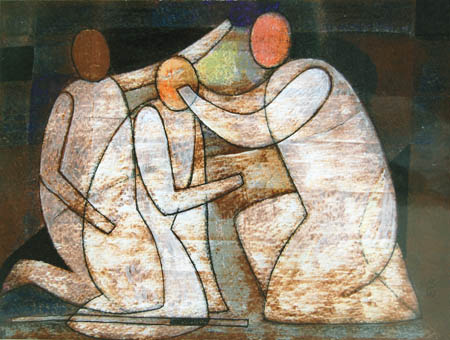
footwashing

“Now that I, your Lord and Teacher, have washed your feet, you also should wash one another’s feet.”

John 13:14

Some Christians reading this part of scripture, have concluded that foot washing should be part of the Churches customary routine.  Their case is compelling, and they may be right in their interpretation.  There is as much support for this as with other things, and Lord knows we could use the humility by getting on your knees with a basin and towel before a brother. 

It probably would relieve issues between saints. It may even heal Church splits. (Oh my!)

Jesus pronounced that His act of service was to be imitated by everyone who would follow.  He further would assert that His example would be emulated by every believer that followed after Him.  Our service to our brother, or sister is to help them become clean Christians. 

We have this ministry of the basin and towel to remove the dirt and filth that comes from walking in this world.  Of course, we cannot remove sins.  But we can serve as Jesus would and intervene with His power.

Cleansing people that we meet will be a challenge. 

It will call us to strip our lives down to a minimum, and to get lower.  We need to get so low that we’re on the floor.  This requires much grace and discipline.  We must weed out every pretense and pride–especially the kind that says, “Look at me serving; am I not wonderful?  I am a true disciple now.”  We are to shake off thoughts like that. 

We are to love others, and perhaps be honestly brutal on ourselves. (Not in a morbid way, just less of ‘yourself.’)

While in my first year of Bible college, I developed a bitter dislike for a classmate.  He had been a lead guitarist; he was handsome and popular, and he oozed pride from every pore (at least I could see it).  I actually took it on myself to be God’s hand in humbling him.  I became antagonistic and scorned him every chance I could.

Within days, my prayer life shut down and the heavens became brass.  One day I was praying and the Holy Spirit graciously zapped me.  I became aware of my sin toward my brother, and I repented. There was a real definite leading, to find a basin and a towel, and then to wash his feet.

God reconciled us, as I knelt at his feet in that dorm room.  From that point on we became very good friends.

We must go lower still.   Water always finds the lowest point, were it pools and gathers into the place of healing others. Perhaps the Holy Spirit will not lead us ‘deeper’ until we start practicing true humility.

When we lower ourselves even deeper we find His presence waiting for us.  But we must cleanse our own hands first, and His blood must work its ministry on me. It’s then I can proceed to clean the filth off of their feet.  If I am not clean myself I will only perpetuate the dirt on to my brother with my dirty hands.

We must scrub our way into the heart of our sister or brother with a basin, some soap and a towel. 

The challenge for us will be a super-challenge.  Christlikeness will always demand this humble grace.  When we think about being like Jesus we must make sure we are following the Jesus in the Bible.  The Jesus who washed dirty feet as a slave.

But let’s not have any foolish nonsense of a discipleship that doesn’t kneel before our brothers in humility.