The Ugly Ducklings

Duckling_03
Illustration by Vilhelm Pedersen, Andersen‘s first illustrator

An old fairy tale came crashing through my study this morning. Perhaps you can remember it, “The Ugly Duckling”  by Hans Christian Andersen.

Now I don’t think about children’s stories very often. I regard my thinking about them to be a bit of an anomaly, and certainly not everyday fare. Maybe it should be a more regular occurance. CS Lewis once wrote,Some day you will be old enough to start reading fairy tales again.” I think he might be right.

“The Ugly Duckling” is a story about an homely little bird raised by a flock of ducks in a barnyard. He doesn’t really fit in and can’t ever seem to master being a duck. He is clumsy and ungainly and rather strange looking.  He is abused or ignored by his companions. He doesn’t fit.

You see, he is a swan. He can’t seem to fit in with the other ducklings. He really doesn’t belong. He tries hard to make it work, but his best efforts at being a duck are doomed to failure. It isn’t who he is. He isn’t a duckling, he is cynget.

“For those whom he foreknew he also predestined to be conformed to the image of his Son, in order that he might be the firstborn among many brothers.”

Romans 8:29, ESV

You see, you are different. And you can’t fit in. We have a different destiny than those who surround us. We are “swans” and we can’t change who we really are. (Some try, but to no avail).

“And do not be conformed to this world, but be transformed by the renewing of your mind, so that you may prove what the will of God is, that which is good and acceptable and perfect.”

Romans 12:2

We are the ugly duckling who will never fit in. The transformation takes time, but to the amazement of his “friends, he becomes what he was meant to be all along.

Brokenbeliever, try to understand– once you accepted Christ as your Savior, you began to be transformed. You are now a “new creation.” You will never fit in.

“This means that anyone who belongs to Christ has become a new person. The old life is gone; a new life has begun!”

2 Corinthians 5:17, NLT

This is a miracle that the world can’t grasp. It is the spiritual makeover that defies any explanation or reasoning. You have become a swan, the most “graceful” of all creatures.

ybic, Bryan

 

cropped-christiangraffiti1-2

Meeting Samson

samson-and-delilah

The story of Samson (Judges 13-16) is painful. It ranks as one of the saddest tales in Biblical history, and reading it through again only frustrates me. Have you ever seen a piece of fraying cloth. Threads have worked loose and the edges no longer hold together. The mid section maybe fine, but hem is coming apart. The issue is one of integrity.

That is what I think the judge Samson was like. Incredibly gifted, but irrevocably flawed, he was ordained to be a deliverer. Think of him as a “freedom fighter,” called and equipped to set his people free. He was a man of intense contrasts:

  1. uncommonly gifted, yet strangely unconsecrated,
  2. incredibly strong, yet spiritually weak,
  3. called to deliver, but yet died as a captive

You might say he could never conquer himself. Forbidden things became permissible. He never could really say the most important word– No! Lust drove him as often as the Spirit of God did. Samson became a tragic figure in the history of Israel, known more for his failures than his victories.

“Then she called, “Samson, the Philistines are upon you!” He awoke from his sleep and thought, “I’ll go out as before and shake myself free.” But he did not know that the Lord had left him” (Judges 16:20, NIV).

This is perhaps the most tragic verse in Scripture. Samson had compromised to the point of being released from his gift. His attitude was that it would always be there for him, but that wasn’t the case anymore. They would gouge out his eyes, and chain him to a millstone to grind out grain.

Interestingly, in Hebrews 11:32 Samson is mentioned as an example of faith. But how much pain was afflicted on him, and how more brightly would’ve been if he would’ve learned to resist his appetites.

I have a tendency to fray at the edges myself, leaving me with an unsettled feeling. The hems don’t always hold. They come apart. The story of Samson reminds me of my need to watch myself closely. The lesson is loud and clear. Perhaps there is a Samson in everyone of us.

aabryscript

cropped-christiangraffiti1-2

Working God’s Night Shift

temple-etching
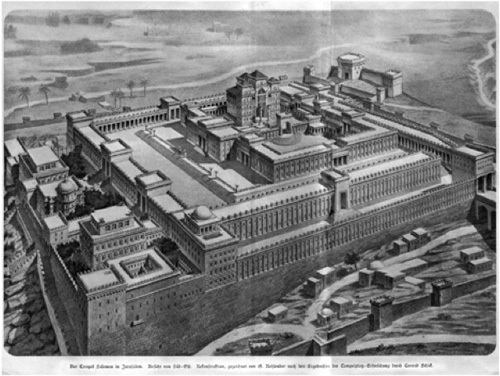
Solomon’s Temple in Jerusalem
A song for going up to worship.

134 “Praise the Lord, all you servants of the Lord,
    you who serve at night in the Temple of the Lord.
Raise your hands in the Temple
    and praise the Lord.

May the Lord bless you from Mount Zion,
    he who made heaven and earth.”

Psalm 134, NCV

This remarkable Psalm is part of an elite group known as “the Psalms of Ascent.” These 15 were sung as the congregation of Israel went up the steps of the temple in Jerusalem. They would sing each in “rounds” with each other. As you can well imagine, this made the ascent slow, but meaningful.

As you read the three verses, I get a picture of worshipers turning back and blessing the Levites. This takes place at the very end of the day. The Levites, and other godly ones who lived in the Temple, (remember Anna and Simeon, in Luke 2?) They were the support staff for the priests.

Commentary

V. 1, “Praise the Lord, all you servants of the Lord,
you who serve at night in the Temple of the Lord.”

The first significant thought is “Lord” mentioned three times. The word is the recognition of someone’s status and standing. We call Him Lord, because He is that (and more).

The second has to deal with the Levitical “night shift.” They served and guarded the Temple during the wee hours of the night. They probably cleaned, stacked wood, sharpened knives and maintained the Holy Place with its needs.

There was no real glory working the night shift. There were no people to serve. The crowds were for the day shift. (Here’s a weird thought– think “Disneyland at 2:00 a.m.”) There was also a contingent of non-Levite people ministering to the Lord as well. They had no duties, and only the priests could serve through their work.

The Levites working at night were not ‘second best.’ At least, not in the eyes of the Holy Spirit. They were integral in both presence and service to the Lord. To despise them is to reveal one’s ignorance. They definitely mattered.

V. 2 “Raise your hands in the Temple
and praise the Lord.”

I’ve worked nights before. It’s a real adjustment. You never feel like you’ve had enough sleep, and it is really hard to be positive and cheerful.  I could get pretty grouchy at times.

But an exhortation is given, a shout and a blessing as the crowds leave. “Raise up your hands– and praise Him!” It is as the work, although necessary, would be secondary. The worship however, was primary. We need to hear that.

V. 3, “May the Lord bless you from Mount Zion,
he who made heaven and earth.”

To be blessed (literally, made “lucky”) by our Creator and Lord is pretty profound. As a kid who read a lot, I think of ‘fairy dust.’ I know better now, but to be blessed by God is deeply significant.

To summarize, I believe this Psalm is speaking of those in the church who are doing “hidden service.” No one sees them really. They go about there duties quietly, and purposefully. The only recognition is from God– who sees all.

I must encourage you to keep on. There are many more than you think who see your hidden ministry to the Father. You are His ‘night shift.’ You’re seen by few, but Him. He knows what you do.

aabryscript

cropped-christiangraffiti1-2

Pressed Roses

“I have said these things to you, that in me you may have peace. In the world you will have tribulation. But take heart; I have overcome the world.”

John 16:33, ESV

This world is not our friend. And then we often face issues that create ugly things–  a fight with a spouse, poor choices, money problems– a lengthy list that seems that we’re always adding new entries. And as we each of us work through our tears, as we face sickness, loneliness, fear and misunderstanding.

In this world of woe and trouble, we discover that life is itself often brutal. Myself, I must deal with clinical depression, paranoia and physical pain. It is constant, a barrage of challenging things. Sometimes they swallow me up, and I lose my way.

I was thinking this morning, of a recent find in the pages of an old book– pressed rose petals! The book had been many years on the shelf. When I opened the book they I found them.  Typically, they are fairly well preserved. They still have color and shape. And most of all, they still have a fragrance.

I really don’t know what I’m supposed to do when this happens. Do I just “read” around them, or do I physically remove them? I almost feel that they are sacred or something. Do I find an old jar and store them? But no matter what I do, I always pause and think. Sometimes though, I can even remember the incident that they were given. An anniversary or a birthday maybe? Or sometimes they are given, “just because.”

Two distinct thoughts work in me. I look at the hard, hard things that I have had to process through my past, and present, and most likely, my future. I have to believe, from all that I have read and the preaching I have heard over the years that my pain gets turned into gold (or into roses!) This is exclusively a work of God. The second thought is a little bit harder to think through. But Jesus is the rose. He is the beauty and the fragrance of heaven come to earth.

There is an old fable kept by the believers of the first century; it was said that wherever Jesus stepped while on earth, roses would spring up in His footprints. This is only a legend of course, but that doesn’t mean that it is all false. Some of these stories have more truth in them than we think.


Coming to Him is such pleasant thing. It shouldn’t be an agonizing ordeal. It is not a painful or real sacrifice. After all, He is the rose. Roses are beautiful, they have a definite fragrance. There is a symmetry to them, and they are special, people will cultivate them for their beauty. Roses are never a hassle, for some reason we can never send or get too many.

“I am the rose of Sharon, a lily of the valleys.”

Songs 2:1, ESV

“A discipleship without flowers, probably isn’t worth having.”

cropped-christiangraffiti1 (2)