Depression Metaphors, [Rust]

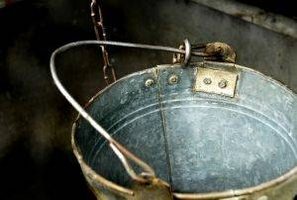
rusty1

Trying to explain depression takes a great deal of effort. The explanations are seldom satisfactory and sadly inaccurate. Complicating the definitions are the two types of depression, which are quite different:

  • Mild (dysthymia)
  • Large (clinical)

Both of these are radically different and present a completely set of symptoms. Psychiatrists have diagnostic criteria they use to help them make a diagnosis that will be helpful to the patient. It is kind of a hit or miss judgement call, but there is some validity to their efforts. One of their main resources is the DSM-5 that standardizes treatment of mental disorders and provides a continuity of care.

Mild depression:

Imagine an abandoned factory. You walk inside and at once crunch over the broken glass. Dust covers everything and the once ‘well maintained’ machinery is now covered with rust. It’s damp and musty. You notice graffiti and an old clock frozen in time to 7:53.

Overall, it seems a bit grim and sad. The factory is in complete disarray, but a crew could come and restore it to a functional state. It might take some serious rehabilitation, nevertheless it could happen.

Large depression:

You enter the abandoned factory and are glad you’re wearing a hard hat they gave you at the office. The floor is pretty much impassable, looking up you see that part of the roof has caved in. The machines stand in place, but are hardly recognizable; the are misshapen blobs of rust. There doesn’t seem much of anything to salvage anymore. Things couldn’t get any worse.

Depression has many facets; but it’s always destructive. I find the idea of rust the most compelling. The rust is just oxidation; not even noticeable at first. A steel girder seems strong, but left to its own the rust slowly eats away at the metal. There are molecular changes happening. The integrity of the steel will soon be compromised. It can happen quickly.

I want to encourage to get your depression treated soon. If you have a loved one who struggles get help soon. There is a fallacy about depression that it is relatively  harmless— that one can deal with the ‘blackness’ without long term consequences.

If you are a Christian, you need to find help. You can’t ignore your depressive symptoms.

bry-signat (1)

cropped-christiangraffiti1.jpg


Condemnation Can’t Stay [Guilt]

make-faucet-bucket-fountain-800x800

“Lord, I crawled across the barrenness to you with my empty cup uncertain in asking any small drop of refreshment. If only I had known you better I’d have come running with a bucket.”

-Nancy Spiegelberg

There can be no freedom from condemnation without submission to the saving life of Christ.  This is a definite and critical point.

Without a faith in Him, we are left with the option of carrying our own guilt.  This is a staggering possibility, and our lives turn to drinking and “drugging” and other things.  We must escape from all this pain and sin.  We are walking out condemnation, and the weight of this is immense.

Much of our life can be distilled from this viciousness.  We absorb it, adapt to it, thinking it will ease up some.  But it doesn’t, and it won’t.  We turn to all kinds of ‘pain absorbers’ looking to cope with this mindset.  There are escapes, and we try them all.  But ultimately we end up with one that is quite imperfect, and we ‘sort of’ become a little numb. Our hearts become numb and hard.

Condemnation twists us and who are in Christ. 

It deforms our spirit and destroys our confidence before our Father in Heaven.  His love is still being poured out, but we have placed a cover on our vessel.  We are blocking His mercy by our unwillingness to be forgiven.  All of our guilt seems a reasonable reaction to the heaviness of our sin.

Humans were not designed to handle guilt, and its “cousin” fear.  When we do try, we short-circuit.  Pain is always avoided, and that ends up corralling us into bondage.  From here, we can still mentally assent to the Bible; we can still have a sense of spirituality.  But it will always be filtered through our sense of condemnation.

Faith in the complete action of Jesus is enough.  Because I believe He carried the full weight of my sin, past—-present—future, I can walk out a free man.  Yes, sin does require justice, it is to be condemned.  But my faith, trust or confidence enables me to separate from the sin that would take me, straight to the bottom.

In this release, we are supposed to live. Freed from every condemnation. You must displace condemnation with grace.

We have the joy of the forgiven sinner, and that really makes no sense at all. 

It isn’t at all rational.  But it is legal, and it is binding.  And permanent.  There have been too many lies, for too long.  Grace is meant to be the most radical concept we have ever confronted.  And truly it is.

“Therefore there is now no condemnation for those who are in Christ Jesus.”

Romans 8:1


bry-signat (1)

cropped-christiangraffiti1.jpg

A Jubilate Discipleship: Psalm 95

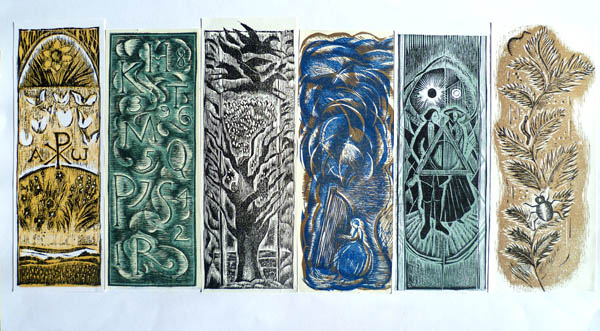
Montage-Jubilate

A Psalms Study

“Come, let’s sing for joy to the Lord.
    Let’s shout praises to the Rock who saves us.
Let’s come to him with thanksgiving.
    Let’s sing songs to him,
because the Lord is the great God,
    the great King over all gods.
The deepest places on earth are his,
    and the highest mountains belong to him.
The sea is his because he made it,
    and he created the land with his own hands.

Come, let’s worship him and bow down.
    Let’s kneel before the Lord who made us,
because he is our God
    and we are the people he takes care of,
    the sheep that he tends.

Today listen to what he says:

Psalm 95:1-7, NCV

Such joy: it just bubbles through the words. This is a psalm saturated with excitement. These first seven verses are ‘carbonated joy.’ They pronounce an excitement of a living God that excels in every way. These are simple words made to escort us into a true worship, unlike any other. We might use the word, “jubilant” when hearing this psalm. And we wouldn’t be far off.

“The Lord is the great God,” and He is the King of any ‘so-called’ gods. Everything concerning the earth is His doing– for He created it, with His own hands! And our creating God is also our Shepherd, tending and caring for us as His very own flock.

These verses extol our God, to the point of exuberance. It channels us to the point of worship upon our knees, with the realization of the greatness of God. But this Psalm continues for four more verses.

Today listen to what he says:
“Do not be stubborn, as your ancestors were at Meribah,
    as they were that day at Massah in the desert.
There your ancestors tested me
    and tried me even though they saw what I did.
10 I was angry with those people for forty years.
    I said, ‘They are not loyal to me
    and have not understood my ways.’
11 I was angry and made a promise,
    ‘They will never enter my rest.’”

Psalm 95:7-11

There are two parts to Psalm 95. The first is of jubilant worship. But the second part emphasizes a solid obedience. The phrase, “Today listen to what he says:’ welds these two sections together.

Worship must always lead to obedience. You can do ‘cartwheels’ on Sunday morning, as long as you follow Him on Monday.

The issue is an history lesson that goes back to Israel’s days of Moses and the days following the Exodus. Because they were so hard and stubborn, they would wander for forty years in the desert. Their continued ‘stubbornness’ not only closed off the Promised Land, but also closed off their relationship with God— a relationship that would’ve been ‘jubilant’ and  profound (at the same time). They missed out on verses 1-6 and settled on verses 8-11. How tragically sad.

There is a thread that works through scripture called “the rest of God.” The book of Hebrews uses in 12x usually as a warning:“Now, since God has left us the promise that we may enter his rest, let us be very careful so none of you will fail to enter.” (Heb. 4:1).

 “Let us try as hard as we can to enter God’s rest so that no one will fail by following the example of those who refused to obey.”

Heb.4:11

To be in God’s rest is to be in harmony with Him. It is a mixture of confident faith mixed with a careful obedience. When you combine these two, you have the recipe for joy.

I believe this rest is the believer’s place of joy, peace and confident faith. It obeys because it really wants to. It is Psalm 95:1-7 in action. It is for the jubilant Christian.

bry-signat (1)

cropped-christiangraffiti1.jpg

Caving Into the Presence


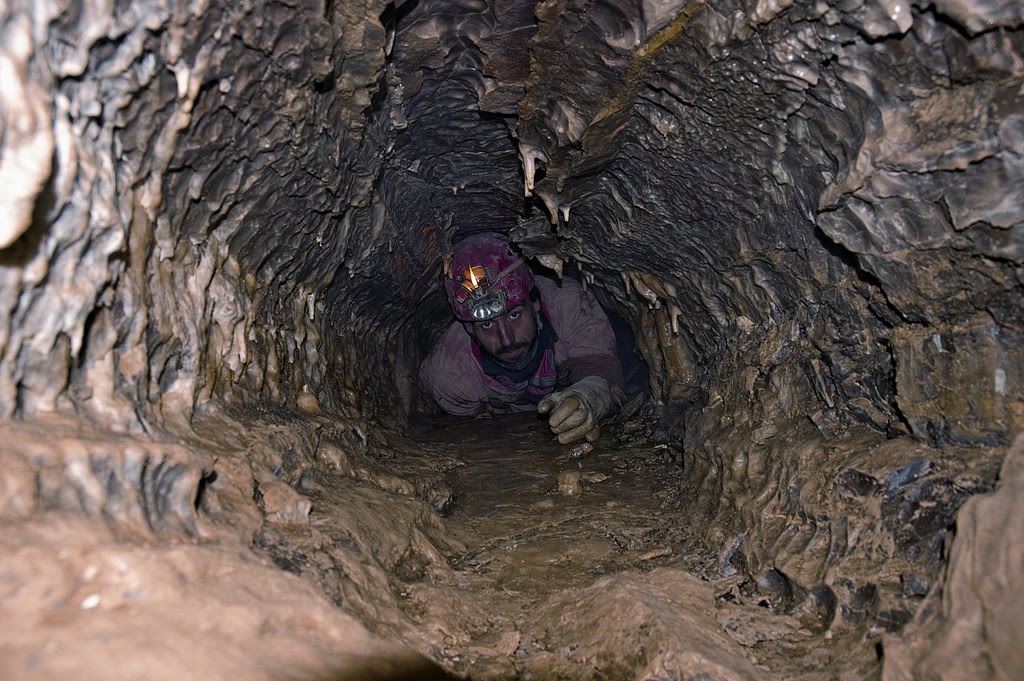
cave_claustro

“Let us go right into the presence of God with sincere hearts fully trusting him. For our guilty consciences have been sprinkled with Christ’s blood to make us clean, and our bodies have been washed with pure water.”

Hebrews 10:22

 I have never really understood “caving”.  Some consider it a sport, but I guess I really don’t see the athleticism of it.  People actually seem to derive some satisfaction and thrill from exploring muddy caves in the dark.  I guess I can try to grab the basic idea of it, but to me it’s a whole lot like “parachuting”.  Why jump out of a perfectly decent airplane, when you can sit in a Starbucks with a vanilla latte?  It doesn’t compute.

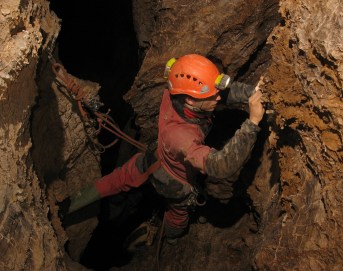
But there is a sense about caving that resonates with the hunger in a man’s or woman’s heart.  Hebrews tell us that we are to enter the presence of God.  The keys will be sincerity and trust.  In other words, a honesty, and a trust that will open up the passage.  Spiritual spelunkers in a quest for His glorOUCC-Cave-Climbingy.

Sometimes something will block a person.  Depression is a barrier for us.  Essentially it effects our passion and strength.  Our pursuit of God is nullified by the corrosive facets of depression and melancholy.  There is no longer any zip or zeal for His presence.  The fire of zeal we once had just fizzles out.  But to reach our goal, we need to squeeze beyond the blockage. There is a spiritual resistance.  Our infernal enemy is working against any progress.

So much involves patience and humility.  A person must continue to probe ahead but slowly and patiently, taking their time and monitoring their progress.  Humility is necessary.  An awareness of self and our dimensions in tight spots.  “Am I small enough to squeeze through that hole?”

Our scripture tells us that we have a key to the throne room of God.  Our guiltiness and our defiled conscience have both been cleansed or sanitized from anything that would corrupt us.  We haven’t done a thing.  And we are exhorted to be very bold.  Jesus has made us pure.  We are clean.

bry-signat (1)

cropped-christiangraffiti1.jpg