Yield to God

 I read a story about a radio exchange that took place some time ago between a U.S. Navy ship and Canadian authorities off the coast of Newfoundland. The Canadians warned the Americans and the conversation went something like this: “Please divert your course 15 degrees to the south to avoid a collision.”

The Americans responded, “Recommend you divert your course 15 degrees to the north to avoid a collision.”

The Canadians said, “Negative. You will have to divert your course 15 degrees to the south to avoid a collision.”

The Americans: “This is the captain of a U.S. Navy Ship. I say again, divert your course.”

“No. I say again, you divert your course.”

“This is the aircraft carrier USS Lincoln, the second largest ship in the United States Atlantic fleet. We are accompanied by three destroyers, three cruisers, and numerous support vessels. I demand that you change your course 15 degrees north. I say again, that is 15 degrees north or countermeasures will be undertaken to assure the safety of our ship.”

After brief moment of silence, the Canadians responded: “This is a lighthouse. It is your call.”

Sometimes we don’t like what God wants us to do, and we want Him to change course when, in reality, it is us who ought to change course.

We need to understand that God’s plans are better than ours. Having said that, it does not mean that they are always the easiest or even the most appealing at the moment. There are times when we are going through life that we might not like the plan of God. But God’s plans are always better for us in the long run.

“My thoughts are nothing like your thoughts,” says the Lord.
    “And my ways are far beyond anything you could imagine.

Isaiah 55:8, NLT

Can you say, “Yes, Lord. I am Your servant. Take me, use me, spend me. Fulfill all Your holy, eternal purposes in and through my life, whatever the cost”?

That area you have insisted on controlling, that part of you you’ve just stubbornly refused to yield, where you have insisted on things being your way – it’s time to drop your sword and raise your white flag. It’s time to surrender.

Those of us with a chronic illness can find many of their issues can be resolved by this simple act of yielding to God. There will be aspects that linger, but much peace of heart and mind will can come through a quiet release of your will to Him.

 bry-signat (2)
flourish31

Righteousness: His, Yours? (or Ours?)

“All of us are dirty with sin.
All the right things we have done are like filthy pieces of cloth.
All of us are like dead leaves,
and our sins, like the wind, have carried us away. “ 

Isaiah 64:6, NCV

________________

I have this reoccurring nightmare. I jump out of a plane.  I deploy my parachute, and it opens.  But it is completely full of holes!  Yikes!  I wake up before I splat. And then I think in a spiritual sense— what a relief it is to have a holiness that is given, or imputed.  If somehow you could turn off the spigot of the holiness he gives, and then run on your own merits; how far would you go?

Among good Christian people, there is an occupational hazard of sorts, and that is to “advance” in our thinking to that place where we are doing fine on our own.  We very much appreciated Jesus’ help– but now, at this moment, I must figure it out by myself.  This line of thinking, is called “self-righteousness.”

“Many have passed the rocks of gross sins – who have suffered shipwreck upon the sands of self-righteousness.” 

William Secker:’The Consistent Christian,’ 1660

We begin to travel in our sense of ourselves, away from a desperate, clinging to a trust in his mercy that is moving to a place of a confident, strutting awareness of having put ourselves back together again.  This is the ‘evil ones’ work– to steer you into self-righteousness.  Once you get there, he can just release you and let you ‘stew in your own juices,’ while he rules over your soul.

Becoming self-righteous should scare us to death.  It will damn our souls just as quick as adultery, or murder.  It is evil, and it sedates us to the place where it can work, unhindered and unchallenged.  I’ve read that some predators inject first an anesthetic to soothe their prey. This enables them to take their time, as they slaughter them.

I have had several bouts with self-righteousness.  (And I bet I’ll have several more.)  It is sin that will give you a wonderful back massage, just before it reaches for the knife that will cut your throat.  Somehow, we are lulled into this and my! I’m such a good person (even after such a dark and evil start.)

“Self-righteousness is the largest idol of the human heart – the idol which man loves most and God hates most. Dearly beloved, you will always be going back to this idol. You are always trying to be something in yourself, to gain God’s favour by thinking little of your sin, or by looking to your repentance, tears, prayers ; or by looking to your religious exercises, your frames, etc; or by looking to your graces, the Spirit’s work in your heart.”  

–Robert Murray McCheyne

 Jesus was, and is, and will be all my “righteousness.” 

We must cling to these hand-holds of grace.  The waves are substantial, and we most certainly would be swept out to sea.  But we grab and hold on to him.  And he holds on to us!  The fantasy of having enough of my own created righteousness to please God is simply a crock.  Jesus was, and is, and will be all my “righteousness.”  I have nothing– nothing else.

 bry-signat (1)

cropped-christiangraffiti1.jpg

All I Really Need To Know I Learned in Prayer

“Before they call I will answer;
    while they are yet speaking I will hear.” 

Isaiah 65:24

In my thinking, there has to be terribly cataclysmic going on if you see me resort to prayer.  Praying not an automatic response for me.  It seems like it is the final, last thing I will do, just before the walls crumble and the enemy threatens annihilation.  Only then I start praying.  At that moment, it will seem I am very devout.  But that is a lie, I am not.

All I Really Need To Know I Learned in Kindergartenby Robert Fulghum. (That is a great title, and the book was pretty good too.)  Making that connection at that age implies a lot of native ability.  There is so much, so very much we are expected to learn at such a young age.  But I have to tell you this, and it’s a well-guarded secret of sorts.  Christians need to learn how to pray when they are in their spiritual kindergarten.

The curriculum is basic.  There needs to be a reality and a definite sense of effectiveness in our prayer.  Prayer seems to require an awareness of something substantial, as if it were really making a difference after all.  And to make matters more intense, it’s all to be done on completely by faith.  When fighter pilots start flying for real their F-16s, the instructors will block off their vision, forcing the students to fly by instruments only–that is all they can see.  Now that seems very scary to me.

By faith we fly “…not by sight.”  And this process is quite intimidating, many wash-up and can’t continue.   It really is a trust issue, and at times it’s all we can do to muddle through it.  The basics of prayer are given at a young age, but there seems an exponential growth in our spirits over the things we accomplish through him.  It seems to me (the ultimate 98 lb. spiritual weakling, mind you) is that it is not so much as duration but in frequency.  Pray short! But pray a lot.  Pray about everything.  Ten second prayers should be a regular part of your life.

Prayer is a class we must attend to get our wings.  I don’t think that it can be done poorly.  (It is just done!)  It seems the best kind of prayer is the desperate kind.  People learn to pray when things are very, very bad.  When they fall into a deep well, or when they find out their young daughter is pregnant.  People who have terrible illnesses (physical or mental) are often the best prayer warriors. The Father has given them a precious gift.

Pray short! But pray a lot.  Pray about everything.

Learning prayer is a basic 101 course.  But if we take good notes we will keep coming back to our basic lessons.  It seems that things are received but never obtained.  We are his students, and we must truly believe he loves to teach us.  Praying seems to be a way of giving him joy.  And if I can do that, I want to.

“All the troubles of life come upon us because we refuse to sit quietly for a while each day in our rooms.”

Blaise Pascal

bry-signat (1)

cropped-christiangraffiti1.jpg

Killing My Sin, Before It Kills Me

killing-sin-act

We are for the most part anyway, eager to please God. We are Jesus’ people with the occasional brush with sin. But hey, who doesn’t? But that attitude must be questioned.

“My little children, these things I write to you, so that you may not sin.”

1 John 2:1

John hopes that his readers would make a choice— not to commit sin. After all, what soldier goes into battle with the intent of getting just a little wounded? Often we will sin just because it seems so inevitable, and we feel we can’t help ourselves. (But the reality is that we can.)

But the Holy Spirit now lives inside. Cooperation with Him is needed. Often we will work ourselves into a ‘no win scenario’ where we believe that sin rules. We can’t beat it, so we stop trying. That is common, and sad.

‘Passivity’ is defined as not participating readily or actively; inactive. When we are passive spiritually, we disengage ourselves from any effort of living holy and pure lives. Not being ‘hot’, but content to be lukewarm. At this point sin becomes, reluctantly, tolerated. “After all, I’m a sinner, what else can I do?”

Mentally ill people are often passive. We are told that we have an uncontrolled illness which dictates that we act ‘irresponsible.’ Our depression often escalates and we feel victimized by it. My experience has taught me that there are three kinds of depression:

  • organic depression, or the ‘biochemistry’ of the disease,
  • guilty depression, the kind that feels bad because of what we’ve done (or didn’t do),
  • reactionary depression, the type we feel when experiencing a loss, a loved one, or a job

Depression will almost always fall in these three categories. And passivity plays a part in all three. We  frequently feel victimized and ‘acted upon.’ When it comes to our discipleship we don’t act, we react. We are utterly convinced of the Bible— God’s truth, but we are so sporadic we can’t seem to get it to work for any length of time.

Yes, we are believers. And yes, we have issues. We’re waiting for a miracle, and hope we get a breakthrough soon.

At the base point of our lives, quite often, there is a passive attitude. Passivity aggravates our depression or mental illness. It deepens, spreading through our lives like a contagious illness. Our discipleship sputters and stalls. We no longer act on God’s Word, but we find ourselves fabricating a faith that makes allowances for our situation.

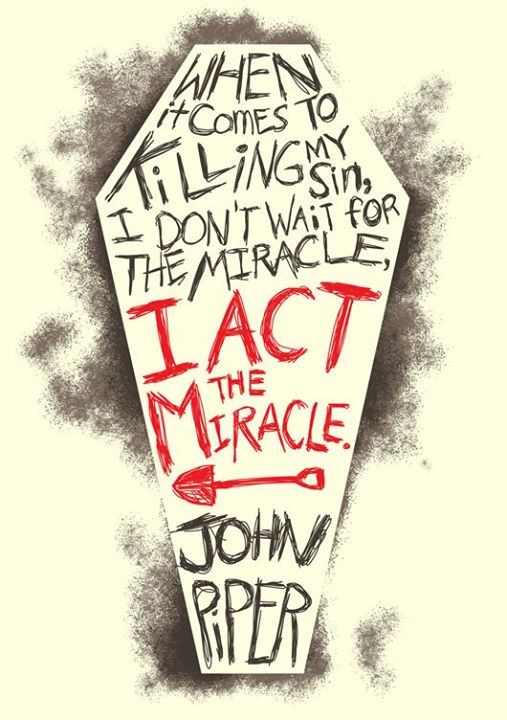
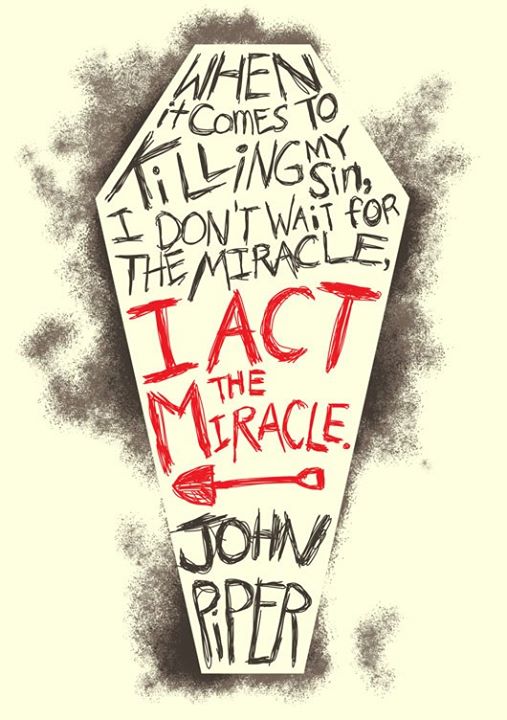
But we must ‘act the miracle.’ Everything God gives… everything… must be received by a convinced faith. We must be persuaded to give up our flawed ideas, and believe God for the real thing. I opened up this with 1 John 2:1. But there’s much more to this verse:

“My little children, these things I write to you, so that you may not sin.  And if anyone sins, we have an Advocate with the Father, Jesus Christ the righteous.”

I don’t want you to sin. Avoid sin. But even if you do— we have someone who will plead our case before God. He stands and argues our plight. He loves us that much.


bry-signat (2)

cropped-christiangraffiti1.jpg