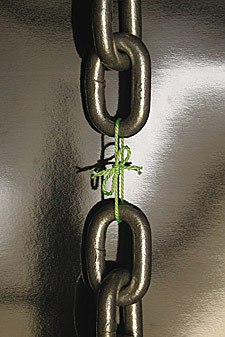

Together, for Each Other

“The Bible knows nothing of solitary religion.” 

–John Wesley

There isn’t really a place for the individual in our walk of discipleship.  This is a most exceptional truth.  You might say that our society here in the U.S. is expressed in the ‘Marlboro Man’ who rides alone.  “High Noon,” (my favorite Western) is based on a solitary man who stands when other won’t.  The message of individualism saturates this movie. Like Gary Cooper, I think I have to face the bad guys alone.

But I think we need to understand that we are connected to other believers.  In fact, I believe that the Holy Spirit works quite distinctly in ‘generations.’  Whether we like it or not, each of us is connected to our generation.  We are responsible for our own time and place. I’m a child of the Sixties, it’s what makes me tick.

Stellar individuals like Charles Spurgeon and D.L. Moody spoke directly to their generation.  They were voices in the late 1800s.  They connected to their particular milieu, but were surrounded by many praying believers.  Their ministries and sermons, were founded upon the prayers of many saints.  Their ministries were an extension of many people. They were surrounded by other believers.

We are connected with others who are also connected. We are organically related and that needs to be understood.  It’s funny about that, we are called a “body.”  This is a difficult concept for us to understand.  But we need to know that you are not so much solitary, but woven into the life of others. The Church is plural and it happens when believers join together.

We need to understand that the Christian life is not solitary.

If this makes you curious, check out the word “together” in New Testament.  We can reflect on this, and think out what that really means. Just a few scriptures:

“From whom the whole body, joined and held together by every joint with which it is equipped, when each part is working properly, makes the body grow so that it builds itself up in love.”  

Ephesians 4:16, ESV

“For, in the first place, when you come together as a church, I hear that there are divisions among you. And I believe it in part.”

1 Corinthians 11:17-19

“Not neglecting to meet together, as is the habit of some, but encouraging one another, and all the more as you see the Day drawing near.”

Hebrews 10:24-26,

And there is at least a dozen or so more.  The idea– ‘together,’ is only a start, and we need to understand that the Christian life is not solitary. The Father melts our independence, and then molds us with each other to make us into something new. 

Whether we like it or not, we are “together.”

The Weakest Link is Us

power-and-weakness

“Now when they saw the boldness of Peter and John, and perceived that they were uneducated, common men, they were astonished. And they recognized that they had been with Jesus.”

Acts 4:13

“God created the world out of nothing, and so long as we are nothing, He can make something out of us.”  

—Martin Luther

Consider this: the jawbone of a donkey, a sling shot. and barley loaves, a woman’s tears, a young boy’s lunch, a young colt, and a talking donkey, they all suggest that God touches the common and the insignificant. He uses what we consider of minor importance.

We often turn to the talented and gifted far too readily.

Peter and John are being seen by the Sanhedrin (the Jewish “Supreme Court”). They are to give account of themselves before the highest court of the land. There had been a healing, and there was the matter of preaching as well. Both Peter and John exude a confidence that these religious leaders couldn’t deny. Their perception was that they were ignorant men. Uneducated and common. But, they also knew they had been with Jesus.

However, in the minds of the leadership, they were nothing more than religious white trash.

God loves to use what we consider common. His revealed history has been to take anything at His disposal and utilize it to redeem lost souls. A staff or a sling-shot are used with an adroitness that seems extraordinary among men. The things we think are simple and common are used to further God’s work among mankind.

But the message always returns back to the preachers. The Sanhedrin knew of the disciples preaching. They had absorbed the fact of a miracle; a crippled man had just been healed. (This they couldn’t deny.) But they were troubled. And they didn’t really know what to do.

What more could this be, but a direct intervention of God? And yet, God is working through extremely “common people.” Then let’s look…

“…if we are being examined today concerning a good deed done to a crippled man, by what means this man has been healed,”

Acts 4:9

Within this preaching was woven this healing. The Holy Spirit was ‘rocking their  world.’ The people who came in contact with these disciples would never be the same. Paul tells the Corinthian church that:

“Instead, God chose things the world considers foolish in order to shame those who think they are wise. And he chose things that are powerless to shame those who are powerful.”

1 Corinthians 1:27, NLT

If God has a specialty it would be this. He desires all the glory. He goes out of the way to use the broken and weak. He shows His strength through insignificant and minor things and people. This is His heart given to nobodies.

“We are all wounded. But wounds are necessary for his healing light to enter into our beings. Without wounds and failure and frustrations and defeats, there will be no opening for his brilliance to trickle in and invade our lives.”
“Failures in life are courses with very high tuition fees, so I don’t cut classes and miss my lessons: on humility, on patience, on hope, on asking others for help, on listening to God, on trying again and again and again.”

Bo Sanchez