Being Paranoid

A person who is paranoid has fears, such as being watched, harmed or poisoned. He or she does not trust others and is suspicious that others are “out to get” him or her. These seem very real.

It’s normal to wonder if people are talking about you when you hear them whispering as you walk into a room. These thoughts are usually passed off and not dwelled upon for most people. We give them little credence. Not a problem.

A person who is paranoid, however, does dwells upon suspicious thoughts. He or she goes out of their way to prove their suspicions even though no evidence exists to confirm their thoughts. It’s very hard to reason or speak what is real.

Paranoia is usually found in small degrees in almost every mental illness.

Symptoms

  • Use and/or withdrawal of certain drugs, such as marijuana, crack cocaine and angel dust (PCP)
  • Alcohol withdrawal
  • Deafness or problems with hearing
  • Illnesses that affect the central nervous system, such as Alzheimer’s disease or other dementias, a stroke, a brain tumor
  • Mental illnesses, such as bipolar disorder or schizophrenia
  • Paranoid personality disorder, (PPD)

How to Recognize Paranoia

A person with paranoia may also:

  • Appear cold and aloof
  • Be withdrawn and anxious in social situations
  • Act stubborn and combative
  • Appear “on guard” at all times, out of fear of being controlled or harmed

A paranoid person also:

  • Complains about his or her health and often feels vulnerable and inferior to others
  • Holds grudges easily
  • Displays bitterness and resentment toward others
  • May be easily drawn into religious cults or other groups with strict beliefs
  • Is quite susceptible to conspiracy theories, religious or political
  • Can have delusions of being persecuted

Treatment

Treatment for paranoia depends on its cause. If it is a symptom of another condition, treatment for the condition will often take care of or lessen the paranoia. Paranoid personality disorder is treated with counseling, support therapy and often with medication. Treatment for this disorder is not easy, though, due to the nature of paranoia. Persons who are paranoid often do not trust others including doctors, therapists or family members trying to help them get treatment. It is likely that you will need to intervene, patiently and gently. 

Ministering to the paranoid treatment requires a huge commitment. Typically you’ll see lots of anger as they confront others of mistreating them.

What You Can Do for a Friend or Relative

The most important thing you can do is to encourage your friend or relative to get professional help. Be aware that you may need to make the initial appointment with a professional. You may also need to take them to the appointment and stay with them. Be supportive. Paranoia requires patience, understanding, love and encouragement of the person’s loved ones and friends.

Those close relationships are typically what frees a person who struggles.

Be aware of the types of medication your friend or relative takes and when they should take it. You should also alert their physician or psychiatrist to any side effects that you notice when they do or do not take their medication. 

If I may, I would suggest a movie for you, “A Beautiful Mind.”  This may give you a little insight.

Cleveland Clinic PPD Introduction Site http://my.clevelandclinic.org/disorders/personality_disorders/hic_paranoid_personality_disorder.aspx

Suite 101 PPD Site http://personalitydisorders.suite101.com/article.cfm/paranoid_personality_disorder

 cropped-cropped-christiangraffiti1.jpg

Paranoia & Delusions

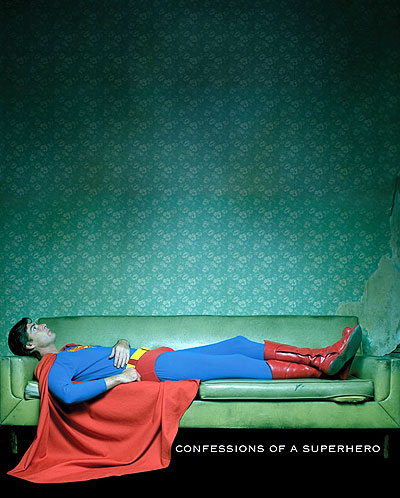
superhero_400pxDelusional disorder, (previously called paranoid disorder,) is a type of serious mental illness called a “psychosis in which a person cannot tell what is real from what is imagined. The main feature of this disorder is the presence of delusions, which are unshakable beliefs in something untrue.

People with delusional disorder experience non-bizarre delusions, which involve situations that could occur in real life, such as being followed, poisoned, deceived, conspired against, or loved from a distance. These delusions usually involve the misinterpretation of perceptions or experiences.

In reality, however, the situations are either not true at all or highly exaggerated.

People with delusional disorder often can continue to socialize and function normally, apart from the subject of their delusion, and generally do not behave in an obviously odd or in a bizarre manner. This is unlike people with other psychotic disorders, who also might have delusions as a symptom of their disorder. In some cases, however, people with delusional disorder might become so preoccupied with their delusions that their lives are disrupted.

Types of delusional disorder

There are different types of delusional disorder based on the main theme of the delusions experienced. The types of delusional disorder include:

  • Erotomanic — Someone with this type of delusional disorder believes that another person, often someone important or famous, is in love with him or her. The person might attempt to contact the object of the delusion, and stalking behavior is not uncommon.
  • Grandiose — A person with this type of delusional disorder has an over-inflated sense of worth, power, knowledge, or identity. The person might believe he or she has a great talent or has made an important discovery.
  • Jealous — A person with this type of delusional disorder believes that his or her spouse or sexual partner is unfaithful.
  • Persecutory — People with this type of delusional disorder believe that they (or someone close to them) are being mistreated, or that someone is spying on them or planning to harm them. It is not uncommon for people with this type of delusional disorder to make repeated complaints to legal authorities.
  • Somatic — A person with this type of delusional disorder believes that he or she has a physical defect or medical problem.
  • Mixed — People with this type of delusional disorder have two or more of the types of delusions listed above.

Basic Principles

There are no systematic studies on treatment approaches and results in Delusional Disorder. The patient’s distrust and suspiciousness usually prevents any contact with a therapist.

Hospitalization

Hospitalization is indicated if a potential for danger is present; otherwise outpatient management is advisable. Unfortunately, involuntary hospitalization may increase distrust and resentment and increase the patient’s persecutory delusions.

Antipsychotic Drugs

Antipsychotic medication may be useful, particularly for accompanying anxiety, agitation, and psychosis. Because patients may be suspicious of medication, depot forms may be helpful. Although antipsychotics may have a good response, they are often only marginally effective for specific forms of Delusional Disorder.Other Therapies

Other treatments have been tried (electroconvulsive therapy, insulin shock therapy, and psychosurgery), but these approaches are not recommended.


Copied materials. NO COPYRIGHT INFRINGEMENT INTENDED. All content belongs to its rightful owners. Not for monetary gain. For educational purposes only.
 

Love is On the Loose

“Cross Jesus one too many times, fail too often, sin too much, and God will decide to take his love back. It is so bizarre, because I know Christ loves me, but I’m not sure he likes me, and I continually worry that God’s love will simply wear out.

Periodically, I have to be slapped in the face with Paul’s words in Romans 8:38-39, ‘For I am convinced that neither death nor life, neither angels nor demons, neither the present nor the future, nor any powers, neither height nor depth, nor anything else in all creation, will be able to separate us from the love of God that is in Christ Jesus our Lord.’

Michael Yaconelli, “Messy Spirituality

I admit I live with a continuous fear that God’s love has limits.  That someday, I will sin myself beyond a Savior’s reach.  It nags on me and betrays me.  The fear that I will end up on some spiritual “junk heap” is real, and it is pervasive. I guess it has to do with the unbelievable richness  of God’s fantastic grace.

This doubt accentuates my depression, aggravating it and poisons my whole being.  I feel worthless and so alone.  Since my particular struggle is with paranoia, I end up bringing that with me into the throne room.  Kids who have been beaten by their fathers often visibly flinch when Dad raises his arm to scratch his head.  They cower and duck out of habit, waiting for the blows.

Our heavenly Father has gone out of his way to make the gospel truly good news.  We often have to be convinced of a love that cannot be diluted by the stuff of life.  And we who are the wounded and paranoid need that assurance.  We are loved with a love of such quality and quantity, and such magnificence that all we can scream is “GRACE!”

As broken people we must come and allow ourselves to be loved with this outrageous love.  Our depression, bipolar disorder, addictions, BPD, OCD, and schizophrenia are not insurmountable issues.  We are sick, we admit it.  We are different than other people (“the norms”).  But the Father delights in us. 

He especially loves his lambs who are weak and frightened.


The Art of Kneeling

6a00e551f9630d883301a3fd04a70e970b

“Come, let’s worship him and bow down. Let’s kneel before the Lord who made us.”  

Ps. 95:6, NCV

We come directly to Him, with so many deep and ugly flaws.  We step toward Him, having lost every confidence, but yet there is an assurance that we have arrived at something far beyond ourselves.

Mental illness destroys confidence.  In our most lucid and aware moments, we discover that we are completely disarranged.  We stumble and fumble through many things which are easy for others.  But they are intensely difficult for us.  My distinct paranoia has ruined many possible relationships.  I end up fouling many possible friendships to my loss.

We gravitate toward this place where we can only bow.  There are so many, far too many loose ends.  So much is unsure and I’m totally unready for this.  And yet, we have a nagging thought that we just might shatter these issues that hold us.  And maybe even break into a profound awareness of Light. Sometimes we can only bow without saying a word.

We must readily admit that we can only bow.

Nothing can be brought in, or considered as a provision or an enhancement to our credit. All of us are beggars and losers in His sight.  We simply can’t generate anything that just might make us acceptable in His eyes. The only thing acceptable is the blood of Jesus on the cross.

Everyone who truly kneels is brought to this place.  We are undone, completely.  In the light of His deep grace, we have been dismantled and rendered inoperative.  We must step out of our ruins, and leave them in a pile.  Sweet grace will save us, in fact, it is the only thing that can.

“We believe that we are all saved the same way, by the undeserved grace of the Lord Jesus.” Acts 15:11

bry-signat


cropped-christiangraffiti1-3-1