CT Interview with Brennan Manning

brennanmanning-1

The Dick Staub Interview: Brennan Manning on “Ruthless Trust”

http://www.brennanmanning.com/

Many Christians are still afraid to let God love them as they truly are, says the former priest, sober alcoholic, and author. This is just a small excerpt of an interview given by Mr. Manning to Christianity Today.

What is premise of this book about trust?

The basic idea is in one sentence: The splendor of a human heart that trusts and is loved unconditionally gives God more pleasure than Westminster Cathedral, the Sistine Chapel, Beethoven’s Ninth Symphony, Van Gogh’s Sunflowers, the sight of 10,000 butterflies in flight, or the scent of a million orchids in bloom. Trust is our gift back to God, and he finds it so enchanting that Jesus died for love of it.

It’s what Jesus said we need to bring into the relationship.

Yes. Childlike surrender and trust, I believe, is the defining spirit of authentic discipleship. The supreme need in most of our lives is often the most overlooked: an unfaltering trust in the love of God no matter what goes down. I think this is what Paul taught when he wrote in Philippians 4:13, “There is nothing I cannot master with the help of the one that gives me strength.”

But how do we know if we’re really trusting? Most people would say they trust God.

The dominant characteristic of an authentic spiritual life is the gratitude that flows from trust—not only for all the gifts that I receive from God, but gratitude for all the suffering. Because in that purifying experience, suffering has often been the shortest path to intimacy with God.

I’d also add that biblical trust grows out of love. My trust in God flows out of the experience of his loving me, day in and day out, whether the day is stormy or fair, whether I’m sick or in good health, whether I’m in a state of grace or disgrace. He comes to me where I live and loves me as I am.

In John 17:26, Jesus says, “Father, I have made your name known. I continue to make it known. And I pray that the same love with which you love me may be in them and I in them.” The very same love that the Abba has for Jesus is the same love he has for us when he’s in our hearts. The problem is most of us aren’t aware of it.

So part of this is an attention problem?

I believe that the real difference in the American church is not between conservatives and liberals, fundamentalists and charismatics, nor between Republicans and Democrats. The real difference is between the aware and the unaware.

When somebody is aware of that love, the same love that the Father has for Jesus, that person is just spontaneously grateful. Cries of thankfulness become the dominant characteristic of the interior life, and the byproduct of gratitude is joy. We’re not joyful and then become grateful, we’re grateful and that makes us joyful.

But there’s suffering, too. In your book, tucked away between talking about gratefulness and beholding God, you talk very personally about how, if we’re truly going to learn to trust God, we can’t avoid the personal suffering.

When I was outside an alcohol and drug rehab center in New Orleans, and I was clutching a pint of Taaka vodka, what I did not want was the lifesaving treatment of detox in a 28-day program.

I kept on drinking, a drunken child crying out, “Jesus, where are you?” How do we experience trust in the midst of pain, suffering, heartache, and throbbing despair? I mean, is it possible to endure and eventually move beyond the bleak and melancholy landscape of evil and destruction, back to the experience of God as unconditional love? That’s the problem I ask Christians. Do you trust that God loves you? Everybody says, oh yes, I’ve known that for a long time. Then just watch the way they live. There’s so much fear, so much anxiety, and so much self-hatred. The best definition of faith I ever heard was Paul Tillich when he said, “Faith is the courage to accept acceptance.”

Meaning? Faith is a code to accept that Jesus knows my whole life story, every skeleton in my closet, every moment of sin, shame, dishonesty, degradedness darkening my past. Right now he knows my shallow faith, my feeble prayer life, my inconsistent discipleship, and he comes beside me and he says, I dare you to trust. I dare you to trust that I love you, just as you are and not as you should be, because you’re never going to be as you should be.

_________________________

Source/To read more, go to:  http://www.christianitytoday.com/ct/2002/decemberweb-only/12-9-21.0.html

http://www.brennanmanning.com/

For more Broken Believer teachings:  https://brokenbelievers.com/category/brennan-manning/

 

cropped-christiangraffiti1-3-1

The Hidden Smile of God, [Discovery]


63744965_1019400944_z

Imagine for just a moment, you can actually see the face of God. Is He…?

  • angry, seething with a vindictive hostility
  • rolling His eyes, amused, maybe a bit perplexed
  • disturbed, frustrated, ready to give up on you
  • not looking at all, bored, detached, not caring
  • smiling at you, like a proud Father?

Three simple verses for the God’s ‘face-seeking’ person.

13 “If you look for me wholeheartedly, you will find me. 14 I will be found by you,” says the Lord.”

Jeremiah 29:13-14

3 “Long ago the Lord said to Israel: “I have loved you, my people, with an everlasting love. With unfailing love I have drawn you to myself.”

Jeremiah 31:3

32 “Fear not, little flock; for it is your Father’s good pleasure to give you the kingdom.”

Luke 12:32

There are many, many more like these three. (But I didn’t want to scare you.)

God’s love is not logical, or mechanical. and you can’t see His face based on your performance. You simply just can’t do enough. So we all must come to Him the same way— on our knees. God’s love is outrageously understood, it is completely undeserved and perhaps just a bit scandalous. So settle this now, you’ll never, ever be good enough, (but you can be bad enough).

I believe the face of God is smiling on us, and He ‘lights up’ when we come into His presence. He is incredibly gracious. You can thank Jesus— it was His cross and resurrection that made access to God possible. (O.K., just one more verse.)

19 “So then you are no longer strangers and aliens, but you are fellow citizens with the saints and members of the household of God.”

Ephesians 2:19

There is a freedom that comes when you quit struggling and simply believe in ‘the smiles of God,’ and when you know deep-down that you belong. Everyone who comes to Him comes by the goodness (and sacrifice) of Someone else. And that is remarkably good news.

Hallelujah,

bry-signat (1)

cropped-christiangraffiti1.jpg

Working God’s Night Shift

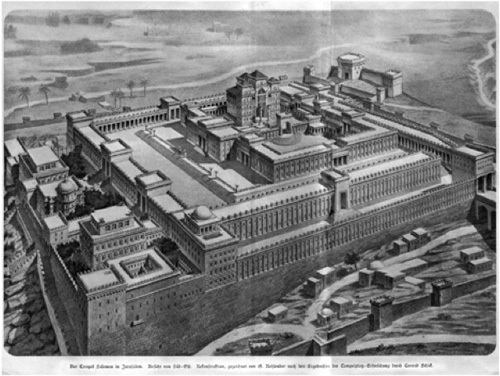
temple-etching
Solomon’s Temple in Jerusalem
A song for going up to worship.

134 “Praise the Lord, all you servants of the Lord,
    you who serve at night in the Temple of the Lord.
Raise your hands in the Temple
    and praise the Lord.

May the Lord bless you from Mount Zion,
    he who made heaven and earth.”

Psalm 134, NCV

This remarkable Psalm is part of an elite group known as “the Psalms of Ascent.” These 15 were sung as the congregation of Israel went up the steps of the temple in Jerusalem. They would sing each in “rounds” with each other. As you can well imagine, this made the ascent slow, but meaningful.

As you read the three verses, I get a picture of worshipers turning back and blessing the Levites. This takes place at the very end of the day. The Levites, and other godly ones who lived in the Temple, (remember Anna and Simeon, in Luke 2?) They were the support staff for the priests.

Commentary

V. 1, “Praise the Lord, all you servants of the Lord,
you who serve at night in the Temple of the Lord.”

The first significant thought is “Lord” mentioned three times. The word is the recognition of someone’s status and standing. We call Him Lord, because He is that (and more).

The second has to deal with the Levitical “night shift.” They served and guarded the Temple during the wee hours of the night. They probably cleaned, stacked wood, sharpened knives and maintained the Holy Place with its needs.

There was no real glory working the night shift. There were no people to serve. The crowds were for the day shift. (Here’s a weird thought– think “Disneyland at 2:00 a.m.”) There was also a contingent of non-Levite people ministering to the Lord as well. They had no duties, and only the priests could serve through their work.

The Levites working at night were not ‘second best.’ At least, not in the eyes of the Holy Spirit. They were integral in both presence and service to the Lord. To despise them is to reveal one’s ignorance. They definitely mattered.

V. 2 “Raise your hands in the Temple
and praise the Lord.”

I’ve worked nights before. It’s a real adjustment. You never feel like you’ve had enough sleep, and it is really hard to be positive and cheerful.  I could get pretty grouchy at times.

But an exhortation is given, a shout and a blessing as the crowds leave. “Raise up your hands– and praise Him!” It is as the work, although necessary, would be secondary. The worship however, was primary. We need to hear that.

V. 3, “May the Lord bless you from Mount Zion,
he who made heaven and earth.”

To be blessed (literally, made “lucky”) by our Creator and Lord is pretty profound. As a kid who read a lot, I think of ‘fairy dust.’ I know better now, but to be blessed by God is deeply significant.

To summarize, I believe this Psalm is speaking of those in the church who are doing “hidden service.” No one sees them really. They go about there duties quietly, and purposefully. The only recognition is from God– who sees all.

I must encourage you to keep on. There are many more than you think who see your hidden ministry to the Father. You are His ‘night shift.’ You’re seen by few, but Him. He knows what you do.

aabryscript

cropped-christiangraffiti1-2

The Lost & Found Department of the Universe

 istock_000011738379small


“What man among you, who has 100 sheep and loses one of them,  does not leave the 99 in the open field  and go after the lost one until he finds it?” 

Luke 15:4

I like ‘red letter’ editions of the Holy Scriptures.  I will personally pause when I read these selected verses, pausing to process the steady fact that these are Jesus’ own words.  They are different, and there is a quality to them that is not found in the thoughts of mere men.  I have no doubt of the inspiration of all of God’s Word.  I trust it implicitly.

When I make that pause, very often I reflect afresh on what I’m about to read, and my heart starts preparing to listen closer.  In Luke 15, everything is lost; a lost coin, a lost sheep, and a lost son.  All three link and give a common theme of

1) Something getting away,

2) The value of that lost thing, 

3) The diligent searching that follows,  

4) The apprehension of that which is lost,  

5)  The joy of the finder over the recovery of the thing which was lost.


These three parables strengthen each other.  Together they have the deep power of declaration.  They speak of the merciful heart of our Heavenly Father with a permanence and eloquence that defies any comparison. 

When we read Jesus’ words they reveal to us the intense searching that the Lord has for our lost souls, and that is the central theme of all history.  Jesus is looking for you– concentrating intently and focused.

It doesn’t matter how ensnared you are, or how deeply you have sunk.  God’s love for you compels Him to seek you.  He will reach into the thorns and thistles, if He has to.  Perhaps your sin has been frequent and you are stained deeply.  The declaration of Jesus’ words reveals the heart of God.  It is irrevocable and central to the way God deals with us.

What is the secret of the universe?  Why does reality exist?  What is the purpose of human history? 

I believe it is the apprehension and deliverance of human beings. 

That’s it.  What should the Church be doing?  Finding and rescuing people who are lost.  That is the purpose of everything, and that searching is to be our focus.

The question remains of what about God’s thinking?  Jesus’ words (in red) reveal the true essence of His dealings with us.  He will always act this way! He is constant and true.  He will always be this way.  Searching, finding, redeeming and celebrating.  Don’t doubt His love for you.

bry-signat (1)

cropped-christiangraffiti1.jpg

*