The Sinning Servant

St Elijah FBol

God responds to our personal falterings in an amazing way. The prophet Elijah had experienced considerable fireworks in his ministry. One could easily dismiss an incident when he failed big time.

“Ahab told Jezebel all that Elijah had done, and how he had killed all the prophets with the sword. 2 Then Jezebel sent a messenger to Elijah, saying, “So may the gods do to me and more also, if I do not make your life as the life of one of them by this time tomorrow.” 3 Then he was afraid, and he arose and ran for his life and came to Beersheba, which belongs to Judah, and left his servant there.”

1 Kings 19:1-3, ESV

Up to this time:

  1. Elijah was coming off Mt. Carmel having witnessed fire from heaven.
  2. The 450 prophets of Baal had been executed.
  3. Rain was coming through his prayer, the long drought was ending.

Things seemed right on track for a nationwide revival. Life was good for Elijah, and for the Kingdom of Israel. “Laissez les bons temps rouler.”

But Queen Jezebel wasn’t about to give up her stranglehold on the kingdom. She threatens Elijah. A messenger is dispatched to him; and Elijah is completely intimidated. He reacts by running as fast as he can to get away. The prophet known for boldness and miracles flees for his life into the wilderness.

What was it about Jezebel that caused such a frantic and irrational move? Why didn’t Elijah’s faith stand this test? He had been in stickier places.

“But he himself went a day’s journey into the wilderness and came and sat down under a broom tree. And he asked that he might die, saying, “It is enough; now, O Lord, take away my life, for I am no better than my fathers.”

1 Kings 19:4

Fear and fatigue were working on Elijah’s mind. This is a fact, if you’re acting unscripturally you will behave irrationally.

God ministers to his sinning servant with a powerful and formidable gentleness. It takes awhile for Elijah to react to this tenderness. But there is a no condemnation, no recrimination, no words of rebuke; all we hear is God’s still small voice. God doesn’t chide, but quietly asks his prophet to consider. All Elijah does is accept a certain grace. That’s it.

“And when Elijah heard it, he wrapped his face in his cloak and went out and stood at the entrance of the cave. And behold, there came a voice to him and said, “What are you doing here, Elijah?” 

1 Kings 19:13

Fear, defeat, and self-pity were real issues for Elijah (the man of God). Scripture tells us that, “Elijah was a man with a nature like ours” (James 5:17). We are not machines, but mere men who falter and trip. That is good to remember.

In 2 Corinthians 12:10 Paul comments, “For when I am weak, then I am strong.” The Gospel is predicated on human weakness and flaws. It reaches us consistently where we need it most. The God of Elijah still whispers to broken hearts.

aabryscript


cropped-christiangraffiti1 (3)

Working God’s Night Shift

temple-etching
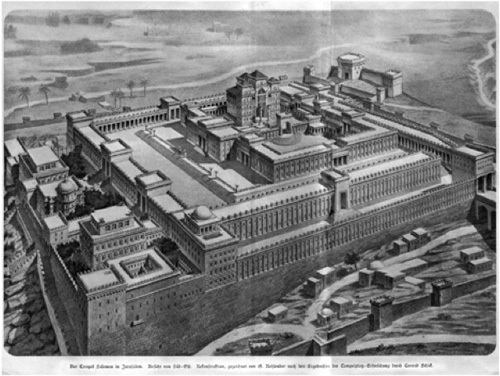
Solomon’s Temple in Jerusalem
A song for going up to worship.

134 “Praise the Lord, all you servants of the Lord,
    you who serve at night in the Temple of the Lord.
Raise your hands in the Temple
    and praise the Lord.

May the Lord bless you from Mount Zion,
    he who made heaven and earth.”

Psalm 134, NCV

This remarkable Psalm is part of an elite group known as “the Psalms of Ascent.” These 15 were sung as the congregation of Israel went up the steps of the temple in Jerusalem. They would sing each in “rounds” with each other. As you can well imagine, this made the ascent slow, but meaningful.

As you read the three verses, I get a picture of worshipers turning back and blessing the Levites. This takes place at the very end of the day. The Levites, and other godly ones who lived in the Temple, (remember Anna and Simeon, in Luke 2?) They were the support staff for the priests.

Commentary

V. 1, “Praise the Lord, all you servants of the Lord,
you who serve at night in the Temple of the Lord.”

The first significant thought is “Lord” mentioned three times. The word is the recognition of someone’s status and standing. We call Him Lord, because He is that (and more).

The second has to deal with the Levitical “night shift.” They served and guarded the Temple during the wee hours of the night. They probably cleaned, stacked wood, sharpened knives and maintained the Holy Place with its needs.

There was no real glory working the night shift. There were no people to serve. The crowds were for the day shift. (Here’s a weird thought– think “Disneyland at 2:00 a.m.”) There was also a contingent of non-Levite people ministering to the Lord as well. They had no duties, and only the priests could serve through their work.

The Levites working at night were not ‘second best.’ At least, not in the eyes of the Holy Spirit. They were integral in both presence and service to the Lord. To despise them is to reveal one’s ignorance. They definitely mattered.

V. 2 “Raise your hands in the Temple
and praise the Lord.”

I’ve worked nights before. It’s a real adjustment. You never feel like you’ve had enough sleep, and it is really hard to be positive and cheerful.  I could get pretty grouchy at times.

But an exhortation is given, a shout and a blessing as the crowds leave. “Raise up your hands– and praise Him!” It is as the work, although necessary, would be secondary. The worship however, was primary. We need to hear that.

V. 3, “May the Lord bless you from Mount Zion,
he who made heaven and earth.”

To be blessed (literally, made “lucky”) by our Creator and Lord is pretty profound. As a kid who read a lot, I think of ‘fairy dust.’ I know better now, but to be blessed by God is deeply significant.

To summarize, I believe this Psalm is speaking of those in the church who are doing “hidden service.” No one sees them really. They go about there duties quietly, and purposefully. The only recognition is from God– who sees all.

I must encourage you to keep on. There are many more than you think who see your hidden ministry to the Father. You are His ‘night shift.’ You’re seen by few, but Him. He knows what you do.

aabryscript

cropped-christiangraffiti1-2

A Message from the Playground

Old Merry-Go-Round

“I can do all this through him who gives me strength.”

Philippians 4:13, NIV

I was thinking about this today, remembering the playground as a child.  I absolutely understood “the merry-go-round.”  I believed deep-down that it had been invented for just me.  It fit me, very well.  I like pushing around and around, and when it started to get beyond me, I would fling myself on to the spinning platform.

If I made it, the battle was only half-done.  Now, I had not only had to stay on, but I also had to avoid all other kids being spun off.  Just getting to your feet was a major undertaking. As the centrifugal force began to increase, the faster it went, the greater our momentum, and the more kids were thrown off; they tumbled into the mud.  There would be kids strewn all over the place, in heaps, crying. Clothes ripped, and knees bleeding. This wasn’t for ‘the faint of heart.’ This was war!

If somehow, you could make it to the center, you were the king of the “merry-go-round!”  For me at the ripe old age of 7, it was amazing!  I would exult and crow of beating my mechanical nemesis and blowing away the laws of physics.  But there are parallels here (surprise!)

Sometimes, life is a difficult ride.  But I know this.  If I can make it to the center, everything will be ok.  The dynamics of discipleship and mental (or physical) illnesses make it different.  We are all trying to find our way.  We stumble and fall (even hurled into the mud.)  But the center is right were we need to be.  It is the center that compels and calls. We were made for this.

We must continually fight to be at the center.  If you fall off, you can get right back up, and try again.  Nothing gets easier. Everyone scrapes their knees. I think one of the reasons that “heaven” is not talked about on every page of the Bible is we all would ‘mutiny,’ and head for its glorious shores. It’s going to be that good.

We will struggle.  But, we can struggle well with our illnesses if we we know His presence.  I get so my edges are frayed, and I feel like everything around me is dissolving.  My “fight or flight instinct” kicks in, and I feel frantic trying to hold together.  Being mentally ill is like flying a plane that has engine problems.  There is no escape; all you want it to cower and hide.  But you can’t. There is no place to go, but Jesus.

But there is a certain place, and when you battle to get to the center, you will find freedom from the pull of outward things. It is good to rest in Jesus, and abide in the center with him. Spiritually, you have been infused with His presence.  And you rise up!  You now discover that you have wings.

And the ‘merry-go-round’ has served its purpose. aabryscript

cropped-christiangraffiti1-2

A Fog Like a Cage Without a Key

Walking-in-the-Fog“That’s the thing about depression: A human being can survive almost anything, as long as she sees the end in sight. But depression is so insidious, and it compounds daily, that it’s impossible to ever see the end. The fog is like a cage without a key.”

Elizabeth Wurtzel

Depression is a stealthy thief; anxiety is like an unwanted guest. Both are brutal companions to have skulking around. They carry misery wheresoever they go.

A good many people simply don’t understand you. They often chalk up feelings like this to a lack of faith. And true, there maybe these issues. We understand having faith to be healed. But what about faith to be sick? Isn’t this just as important?

I have to believe that being a broken believer, with a mental illness, is as formidable challenge. I have to believe that holding a faith in a merciful God in my depression is as critical as any miraculous healing. [It may even take more faith.]

I believe in supernatural healing. Jesus Christ is the same today as when He walked the shores of Galilee. I trust in His grace and know His power. Many are touched by His healing hand.

“Jesus Christ is the same yesterday and today and forever.” 

Hebrews 13:8

Depression comes– and it irrevocably changes me. But mixed with an ample dose of His love, it loses much of the sting. I know it is painful and seems endless. But the Lord promises to deliver me, and He is always faithful. Always faithful. Always.

Faith handles chronic depression quite handily. It has never lost a single bout. I want to encourage you today. If you’re not in the throes of deep depression now, begin to build your faith for those lean times ahead. Start to stock up provisions spiritually.

If I have throughly confused you, I apologize. Perhaps this post was meant for someone else, and that’s ok too. Oh, and that fog— there is a key.

“For I am confident of this very thing, that He who began a good work in you will perfect it until the day of Christ Jesus.”

Philippians 1:6, NASB

bry-signat-1

cropped-christiangraffiti1 (2)