
Making Wise Decisions


for-his-glory

The decision to make decisions that will please God is in itself a monumental step.  It means you have come to the place where it matters.  It’s coming to the place where I say “Yes” to all that God says yes to and “No” to everything He has forbidden.  The willingness to be guided is itself a powerful thing.

A fundamental principle to begin with: Every heart has a throne, the question is– who sits on it? 

Step 1:  Putting God First.

In part you have already done this just by your eagerness to do His will.  You  have made a deliberate decision to honor and esteem Him by letting God be completely God.  It is likely that God will withhold His direction if you have no real intention of doing it.  You will just sputter around in the dark. Your life will be painfully empty.

Step 2:  Worship Him willingly.

For me, to commence praise & worship is like firing up the nuclear power plant that I have in my backyard.  It is a source of unlimited energy that I have at my disposal, but it’s not about me at all.  When I start to worship, it must be all about Him.  It’s His character, attributes, love and grace I lift up to be examined by all.

“But the time is coming—indeed it’s here now—when true worshipers will worship the Father in spirit and in truth. The Father is looking for those who will worship him that way.”

John 4:23

Step 3:  Read the Word faithfully.

Guidance often comes when we turn to the Bible for light.  Each part or style of my “leather bound Book” is a purposeful and deliberate unveiling of truth.  After 25 years since I became a Christian, the Bible has shown itself over and over to be important.  The Life of David has been rich, and Daniel as well.  I needed to discern the difference between:

  • A moral decision that concerns things that are right & wrong, evil & good.
  • A non-moral decision that directs me in the areas of preference and direction.
  • Reading the Bible provides us with all that we need.

“Your word is a lamp to my feet
       and a light for my path.” 

Psalm 119:105

Step 4:  Seek out the counsel of elders and veteran saints.

The Church has this big ‘brain-trust’ at her disposal whenever she needs it.  There is accumulated wisdom and insight that often is ignored or not even considered.  My life has changed because of my contact with these older saints.  Most of them never really recognized the imprint they were having on me, my marriage, or my ministry.  I realize that I stand on the shoulders of giants, that I only see further because they were willing to raise me higher.  We will fail in decision making if we will not involve our elders.

“Plans fail for lack of counsel,
       but with many advisers they succeed.” 

Prov. 15:22

Step 5:  Prepare yourself to walk by faith.

The scripture is jam-packed with people who had to have faith.  They are everywhere and they are doing everything!  But, all through faith.  I got to thinking about Noah, and his faith.  Directed to construct an ark, which took him years and years.

“It was by faith that Noah built a large boat to save his family from the flood. He obeyed God, who warned him about things that had never happened before.”

  Heb. 11:7

Faith is defined as trusting God to carry out His unseen promises.

 “Faith is the confidence that what we hope for will actually happen; it gives us assurance about things we cannot see.” 

Heb. 11:1

Step 6:  Concentrate on eternal purposes.

I have heard it said, that this life is very short, and only what is done for Christ will last.  I believe this. Matthew also tells us to seek first the kingdom of God, and everything else will be given to you.

It is the kingdom that must be paramount.  The kingdom is carried around in our hearts; it is the place where the King dwells and rules.

These are not just noble and lofty thoughts to be smiled at, humored and regarded as quite quaint.  This is for real, these are concrete realities that we choose. God’s will is not some abstract, it is as specific as the believer wants or needs it to be.

Summary

I honestly believe that you and I can know deep inside us what constitutes a Godly decision.  It very often is on the path of greatest humility.  And when you meet up with humility, you will find faith– and then follows goodness.  And as you accrue these qualities it becomes much easier to make Godly decisions.

Recommended Book


“Decision Making and the Will of God,” by  Garry Friesen, J. Robin Maxson
Life Can Be Brutal

“In this you rejoice, though now for a little while, if necessary, you have been grieved by various trials,”

1 Peter 1:6, ESV

So much has been written already from the perspective of suffering Christians.  We live in a painful world; there are plenty of cuts and bruises to go around.  Yet each blow we take is disturbing.  I’ve met so many who have been unfairly brutalized and must walk through mental or physical disabilities.

Some things are just plain brutal.

We may not fully understand this, but suffering provides us with incredible advantages and blessings.  The bruises which hurt us, can also bring us wisdom. We learn many things, but only when we hurt. The challenge is not to waste our sorrows.

Suffering offers us great benefits:

  1. Suffering verifies our faith (1 Pet. 1:6-7).
  2. Suffering confirms our sonship (Heb. 12:5-8).
  3. Suffering produces endurance (James 1:2-4; 1 Pet. 5:10).
  4. Suffering teaches us to hate sin (John 11:33).
  5. Suffering promotes self-evaluation.
  6. Suffering clarifies our priorities (Dt. 6:10-13).
  7. Suffering identifies us with Christ (2 Tim. 3:12; 1 Thes. 2:14-15; Gal. 6:17; Phil. 3:10).
  8. Suffering can encourage other believers (1 Thes. 1:6-7; Phil. 1:14).
  9. Suffering can benefit unbelievers (Acts 16:16-34).
  10. Suffering enables us to help others (Heb. 4:15-16).

 -John MacArthur

If you have ever been attacked, it can change you.  Spiritually, our vision clears and we will no longer be short-sighted people.  We are now able to see things much clearer and with more discernment and wisdom.  But the choice today is yours to make.

Will you make suffering work for you?

Joni Eareckson Tada

The pain is real. No question about it. However, I honestly beg of you to make this transaction with the Holy Spirit.  Exchange your anger and fear and doubt– for peace and confidence and joy. 

God will use your pain to bless others.

bry-signat (1)


Is the Master Unfair?

Luke 17:7-10

“Which one of you having a servant tending sheep or plowing will say to him when he comes in from the field, ‘Come at once and sit down to eat’? Instead, will he not tell him, ‘Prepare something for me to eat, get ready, and serve me while I eat and drink; later you can eat and drink’?” 

“Does he thank that servant because he did what was commanded? 10 In the same way, when you have done all that you were commanded, you should say, ‘We are unworthy servants; we’ve only done our duty.’”

“The will of God for your life is simply that you submit yourself to Him each day and say, “Father, Your will for today is mine. Your pleasure for today is mine. Your work for today is mine. I trust You to be God. You lead me today and I will follow.”

    Kay Arthur

Really now. What little we give determines so much, since we owe him so much. The service that we can give to our master is just a small repayment for everything. Settle that now and God will use you.

Question: Is the master unfair? Does he lord his authority over the servant–taking advantage of him? Every time I read this passage, questions like this always comes up.

#1, the Holy Spirit really hasn’t taught me yet. That’s very possible. Until he does, the parable isn’t truly understood.

#2, I’m a product of my country, no such things like slaves, we’re a democracy. Equal rights and all that jazz.

#3, It’s purposefully constructed to create issues in my mind and heart. Something that “irritates” me–but in a good way.

And maybe they’re all true. But no matter how I “squeeze” out this parable, I always hit this spiritual speed bump. But I like it, and I love reading it, no matter what it does to me.

We owe everything to him. Plain and simple.

Jesus wants to be my master. I’m his servant (at least I really want to be). Reading this parable puts this idea into a real perspective. I do like this verse, 1 Corinthians 6:20, in the CEV:

“God paid a great price for you. So use your body to honor God.”

A transaction has been made for your soul. God has intervened, and he’s given you salvation. We have a life now that will give us life, eternally. Since he is our master, we can no longer direct our own lives. Like the “unworthy servant” in verse 10, we now walk forgiven and very much redeemed. And we owe it all to him, he’s our savior and our master.

“The question in salvation is not whether Jesus is Lord, but whether we are submissive to His lordship.”

   John MacArthur

y

r

Art by Eugène Burnand

Despair and David’s Theology

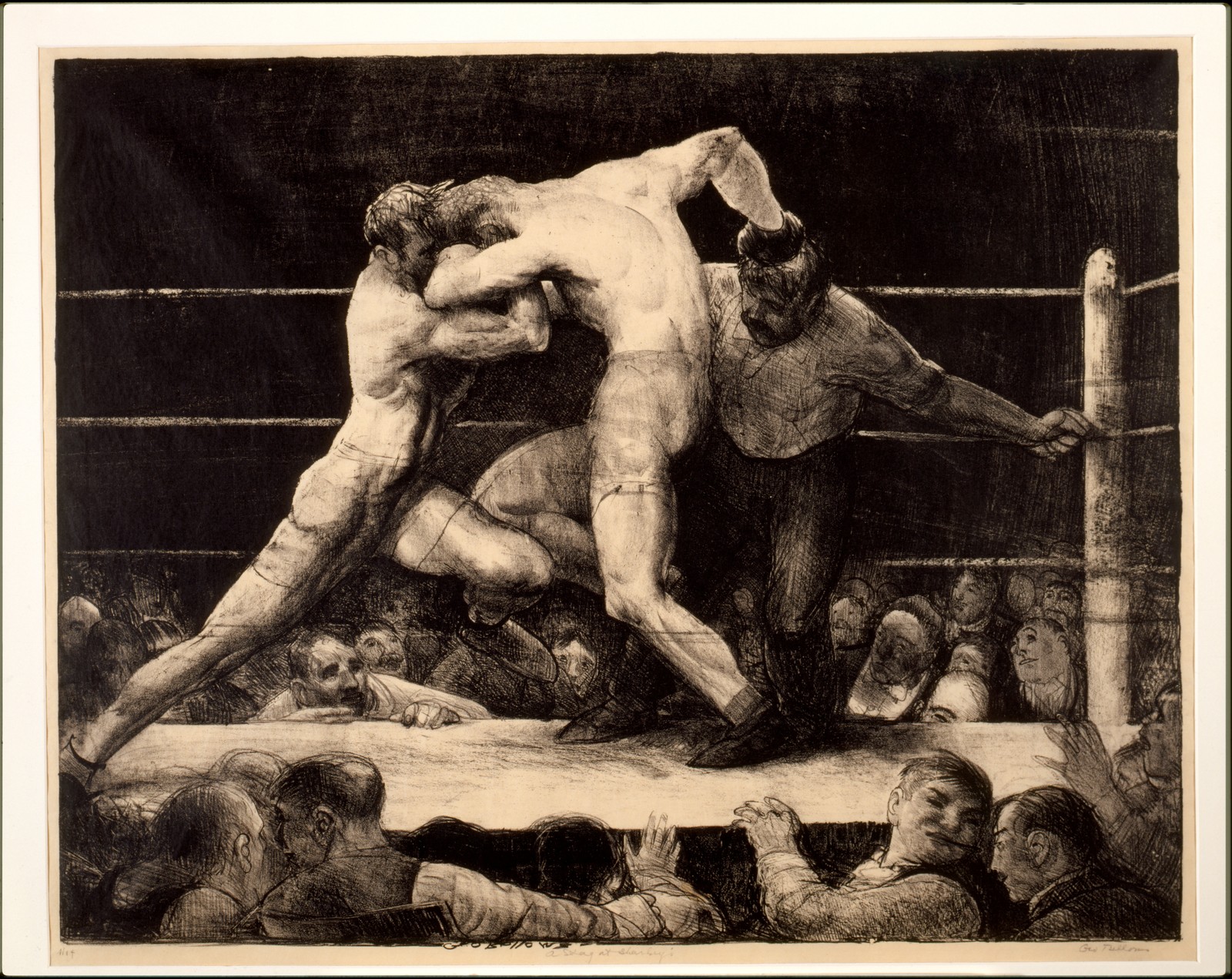
For those on the mat and wrestling, things can move very fast.  Our own adversary is strong, and he knows us too well.  He is quite aware of the sequence of moves needed to pin us to the floor, and crush us.  He is spiritually dangerous. He is lethal.

I get bewildered and rattled by his attacks.  He knows how to pressure me at just the right time, and he refuses to follow the rules. He is no gentleman, he is both a cheater and a liar.

Of course I am talking about Satan and his team of demons.  I will not dispute their reality with you.  There is almost as much scriptural support for his existence as there is for Jesus’.  His hostility is  toward God and His people, and his viciousness cannot be camouflaged.  Evil is real, and believe this–

Satan has a terrible, and ugly plan for your life.

As a mentally ill Christian, my depression quickly morphs into despondency and despair.  When I sink to that level I start to lose all hope.  It’s like I’m in a lifeboat and decide that I should abandon it and tread water on my own.  Despondency is not rational and just a little bit is deadly.

David intimately knew all about darkness and desperation.

He had been chased by his enemies, and maneuvered into the most difficult of situations.  To observe him at a distance we would say that “there is no hope for him in God.” Even God can’t save him, for he is reprobate.  We would be convinced that there is nothing for him in God’s thinking.

David fully understands how twisted he really is inside, and it’s at that point he composes Psalm 51. It shows us the way to freedom.

David was a moral failure; he was an adulterer and a brazen killer. You can debate this, but it seems that David had sinned deeper and more intensely than Saul ever had.  Join with the logic of the crowd, “There is no hope for him in God!”  No hope, none, nada, zero.

“Yet I am always with you;
you hold me by my right hand.

You guide me with your counsel,
and afterward you will take me into glory.

Whom have I in heaven but you?
And earth has nothing I desire besides you.

My flesh and my heart may fail,
but God is the strength of my heart
and my portion forever.”

–Psalm 73

David defied the theology of his day.  He embraced the Lord God with a desperate passion.  It was not orthodox or logical.  You could say it was disturbing for many who didn’t understand the infinite mercy of God.  But David would not let go of God!  He hung on, and continued to sing in faith, even though most wouldn’t agree he had the right to.

I encourage you besieged brother, and embattled sister.  Hold on to Him, even if it baffles all logic or theology. Renounce your sin, but seek His promises with a fervency, open your heart to Him with a passion.  Remember that sin can and will destroy you.  It is part of Satan’s stratagem.

Sing in your cave, and never lose hope of God’s love for you.

“The most valuable thing the Psalms do for me is to express the same delight in God which made David dance.”

C.S. Lewis


bry-signat (1)

Related articles
