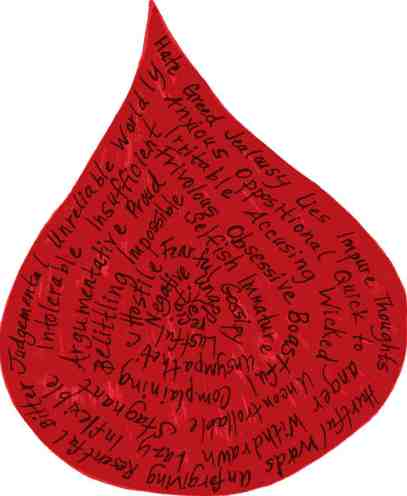
Call To All Sons

12624 For it was fitting that he, for whom and by whom all things exist, in bringing many sons to glory, should make the founder of their salvation perfect through suffering.”

Hebrews 2:10, ESV

“God is the One who made all things, and all things are for his glory. He wanted to have many children share his glory, so he made the One who leads people to salvation perfect through suffering.”

Hebrews 2:10, NCV

There is complexity embedded in this verse. But that shouldn’t stop us from understanding its scope and meaning, yet there is the compelling question.

How did Christ learn obedience through suffering when he was already perfect?

Christ was human and “tempted in all points as we are and yet perfect and without sin,” and thus Christ was sinless.  The humanity of Jesus can be seen throughout the gospels. He hungered, and he got thirsty. We see him very tired, and sleeping in the back of a boat in a storm, which reveals his humanity. However, “He committed no sin, neither was their deceit found in his mouth” (1 Peter 2:22).

Only humans need to learn obedience. And everyone of us have faltered. Yet he didn’t. He had to learn, but He didn’t fail. As a man, He met every issue and every obstacle with a solid and a profound obedience. He learned how to obey, but without any failure, or fault.

In every person’s life, we are challenged to obey. There are so many twists and turns, and each of us has stumbled. It can be quite painful. We are also learning “obedience through our suffering.” It seems our own trials and suffering are the tutors teaching us about our Father, and His kingdom.

This thought, “bringing many sons to glory” is of significant consideration. It reveals the intent and purpose of Jesus coming and doing all of this. He wanted to open the doors for all those who come to salvation. In a direct way, His intention was to become our escort, or safeguard to make a way for us into the Presence.

The words, “many sons,” shows the breadth and width of His work. It is considerable. The idea of “sons” is just as astonishing. We are not slaves, forced to labor in the quarries or mines. We are sons and daughters, His own children. Eternity is too short of time, I suppose, for us to hold and occupy this kind of glory.

“They strengthened the believers. They encouraged them to continue in the faith, reminding them that we must suffer many hardships to enter the Kingdom of God.”

Acts 14:22, NLT

Interruptions: A Litmus Test for Disciples

“May the Lord make your love increase and overflow for each other and for everyone else, just as ours does for you.”

1 Thessalonians 3:12

“Our love to God is measured by our everyday fellowship with others and the love it displays.”

Andrew Murray

There is an awesome need for Christians who can be interrupted.  They have learned that their personal plans and agendas should be set aside for the acute need of the moment.  People like that are becoming receptive people–people who have learned to submit their wills to the Lordship of Christ.

There seems to be a lot of believers who have isolated themselves in order to avoid ‘complications’ of the Spirit.  Over the years they have cultivated a life without entanglements from others (at least, greatly reduced).  The basic root of this is not sin, but it quickly slides into an isolation that is not just threatening, but dangerous.

We are built for fellowship.  We need it— like my goldfish needs its water.  

Our brothers and sisters need us, and we most definitely need them.  In the Apostle’s Creed we read, ‘I believe in the Communion of the Saints’.  This takes a supernatural faith.  This dynamic of the Body calls us to fellowship with other believers, which is our desperate need of the moment.  Deep within, we crave human contact.  We need to touch someone else.

Being interruptible establishes several things. I think these questions are a simple starting point.

  • First, I have become approachable and tractable?
  • Second, is Jesus really Lord over my life?  (Or do I have my ‘own thing’ going?)
  • Third, do I really believe ‘something’ is going to happen when I begin to fellowship?
  • Fourth, is it really worth it?
  • Fifth, what is more important: People or my schedule?

Years ago I learned that every servant who really excelled had become a man or woman that could be interrupted.  And they respond in grace and kindness to every issue that came.  You’ll never hear them get frustrated or even irritable over being disturbed.  They simply have surrounded themselves in the will of God, and are His servants.

What is more important: a schedule or people?

There are ‘skills’ we need to learn for Christian community.  We have touched on some as we have matured.  We have practiced with this holy concept, and caught glimpses, many which translate into our present spiritual lives.

“Some Christians try to go to heaven alone, in solitude. But believers are not compared to bears or lions or other animals that wander alone. Those who belong to Christ are sheep in this respect, that they love to get together. Sheep go in flocks, and so do God’s people.”

Charles Spurgeon

God’s great quest is to make those who have been redeemed into a cohesive body.  He takes a special delight in the harmony of His Church.  He is very passionate about this.  His proclivity to unity must be noted.  We must adjust and do all that is necessary to make it happen.  This dear one, is His will.

*

bry-signat (1)

cropped-christiangraffiti1.jpg

Book Review: “When the Darkness Will Not Lift”

There are Christians for whom joy seems unattainable.

What will we tell them . . . “When the Darkness Will Not Lift?”

…………………………………………………………

“It is utterly crucial that in our darkness we affirm the wise, strong hand of God to hold us, even when we have no strength to hold him.”

–John Piper

The title of this reviewed book is terribly unyielding, but with a quick glimpse into its contents, and you realize what you hold in your hands is worth its weight in gold.  When the Darkness Will Not Lift: Doing What We Can While We Wait for God—And Joy,  John Piper gives guidance and hope to suffering believers and to those whom God has given to walk beside them.  The father of Christian hedonism reminds readers that joy is a duty even as he teaches them how to fight for it. At eighty pages, this slim volume commends itself to readers who, struggling under the weight of spiritual darkness, might be daunted by an exhaustive treatment of the subject.

Because the book starts from despair, it is a uniquely accessible tool for those who hurt. In the pastoral tone for which he is beloved, Piper shows that joy begins with despair in oneself. In “When the Darkness Will Not Lift”, Piper tackles difficult issues including:

• The physical nature of depression and the role of medication

• How to wait on the Lord through darkness

• The relationship between obedience and thanksgiving

• How unconfessed sin can clog our joy

Piper also provides insight for those who love depressed Christians—showing them how to exhort without crushing, and how they can help the struggling believer to distrust the “certainties of despair.”

PiperbookWhen the Darkness Will Not Lift: Doing What We Can While We Wait for God—And Joy Publisher Crossway Books, Author John Piper, ISBN 1581348762 Price $7.99, Released, January 2007

Available through your Bookstore, or just go to www.Amazon.com, like me.

John Piper’s website, http://www.desiringgod.org/

flourish15

Praying Authentically

front-prayer

Prayer often can be just a nice religious duty, that makes us feel warm and fuzzy. But such prayer the does not suit a disciple who is tired of religion, and is seeking authenticity. There are few models who can be our guides.

That one of the reasons why we need elders in our fellowships; they have been through so much, they can anchor us to all that is real. As elderd they probably had lessons in prayer.

We often will theologically play on the periphery, and cleverly deceive others and ourselves.  My own heart gets pretty creative as I display a self-righteousness. (I should win an Academy Award as ‘best actor.’) But Jesus insists on us becoming real. You might say that real is the prayer that touches his heart.

When you talk with Jesus, do you really talk to Him? Do you have a real awareness that you are really talking with Him?

Is it the real you that fellowships with the ‘real’ God?

________________________________

The following is an excerpt from A Diary of Private Prayer, by the Scottish theologian, John Baillie, 1886-1960:

Eternal Father of my soul, let my first thought today be of You, let my first impulse be to worship You, let my first speech be Your name, let my first action be to kneel before You in prayer.

For Your perfect wisdom and perfect goodness:

For the love with which You love mankind:

For the love with which You love me:

For the great and mysterious opportunity of my life:

For the indwelling of your Spirit in my heart:

For the sevenfold gifts of your Spirit:

I praise and worship You, O Lord.

Yet let me not, when this morning prayer is said, think my worship ended and spend the day in forgetfulness of You. Rather from these moments of quietness let light go forth, and joy, and power, that will remain with me through all the hours of the day;

Keeping me chaste in thought:

Keeping me temperate and truthful in speech:

Keeping me faithful and diligent in my work:

Keeping me humble in my estimation of myself:

Keeping me honorable and generous in my dealings with others:

Keeping me loyal to every hallowed memory of the past:

Keeping me mindful of my eternal destiny as a child of Yours.

Through Jesus Christ my Lord, Amen.

(Taken from Richard Foster’s Devotional Classics, pp. 126-127.)

aabryscript