Defining Depression

There seems to be three distinct varieties of depression. 

I’ve thought about this for some time now, and I’m coming to the point where I want to share.

1)  There is a depression that comes from guilt

There’s a corrosive place that eats us up, it’s where we sin, and continue to sin.  We fully understand our guilt and our sin.  Sin, will always will stain us.  Banks will often place “dye packets” into stacks of money.  A robber grabs the money, only to find that something explodes on him.  He then, is marked indelibly.  There isn’t anything he can do; he has been stained.  The following verses explain this dynamic.

“When I kept things to myself,
       I felt weak deep inside me.
       I moaned all day long.
4 Day and night you punished me.
My strength was gone as in the summer heat. 

5 Then I confessed my sins to you
       and didn’t hide my guilt.
    I said, “I will confess my sins to the Lord,”
       and you forgave my guilt. “

Psalm 32, NCV

2)  There is a depression that is organic. 

It simply resides in us as if it were eye color, or a talent to play music.  This type of depression is hard wired in us.  It is just a natural inclination, or propensity toward melancholy.  We typically gravitate toward a negative outlook.  We are not ‘a cheery lot.’  The glass is always half empty, and that is our certain perspective.

Some have diabetes, and others are deaf.  We have been saddled with certain issues.  We did nothing to warrant such challenges.  They are just the part and parcel of the human condition.  We need to see our depression as sort of diabetes of the emotional world.  Very often we will need to take meds to restore our sense of balance and wholeness. Sometimes all we need is to rest, as fatigue can become a serious issue.

3)  There is a depression that is reactionary. 

We find ourselves responding to trials and difficulties, and they just overwhelm us.  Persecution and attacks slam into us, and our reaction is to hide, or shut down.  Paul had to endure major attacks. This ‘depression’ is found in situations and issues. It can come about by Satan or ungodly authorities.

We will respond to the death of someone close, loss of a job, bankruptcy or whatever–you can fill in the blank:_________________________. But we must remember, if there is a way in, there must be a way out. If we can only put some trust in God, we can believe he will lead us out. Eccl. 3:1-8 describes “seasons” that every person goes through. Perhaps, this is just a time?

“So we do not give up. Our physical body is becoming older and weaker, but our spirit inside us is made new every day.17 We have small troubles for a while now, but they are helping us gain an eternal glory that is much greater than the troubles.18 We set our eyes not on what we see but on what we cannot see. What we see will last only a short time, but what we cannot see will last forever.”

2 Cor. 4:16, 18, NCV

Summary

As we look at ourselves, we can determine which of the three kinds of depression that we’re facing.  It seems we can have all three working in our lives.  But it’s very helpful to find our particular variety, or our certain inclination.   Seldom will we identify with just one ‘type’, as all three can be working at once. Understanding the three will hopefully give us a definite advantage.

We can ask ourselves: Is this depression coming from sin or guilt?  Is this something organic or ‘hardwired’ in me?  Could it be that I’m reacting to the evil that is coming at me so fast?  Distinguishing between these three can be very useful, and direct us as we build our discipleship.


The Deep Pit

“I waited patiently for the Lord to help me,
    and he turned to me and heard my cry.
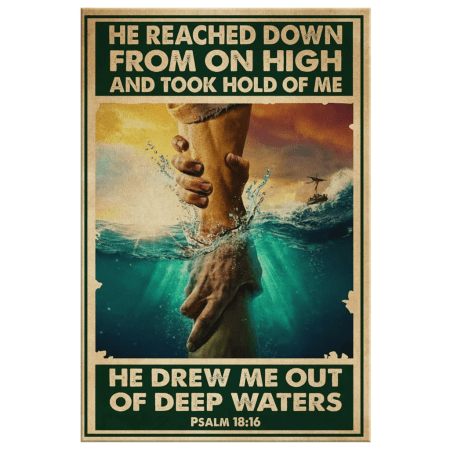
He lifted me out of the pit of despair,
    out of the mud and the mire.
He set my feet on solid ground
    and steadied me as I walked along.”

3″He has given me a new song to sing,
    a hymn of praise to our God.
Many will see what he has done and be amazed.
    They will put their trust in the Lord.”

Psalms 40:1-3, NLT

Psalm 40 is jam packed with great and wonderful truth. It contains freedom for the Christian– a way out for the broken believer. We do well when we use it, and that’s what it’s there for. The deep pit has been used over many centuries as the way God teaches us to sing certain songs. But that doesn’t make it easier, does it?

Verse 1

I waited patiently for the Lord to help me, and he turned to me and heard my cry.

Waiting is a critical word, it should not be regarded as trivial. In our daily walk we must be patiently seeking the Lord, that comes first. Admitting you need help is the first step. And guess what? You need help. 😁

The word ‘wait’ is special, it’s kawvah in Hebrew. It can mean ‘to bind together by twisting.‘ It can be used with the idea of braiding strands of rope together. It is never a passive act that just happens. Waiting on God is to be done with intentional purpose.

Remember that the Lord is not some distant deity on a hill far away.

He’s not hiding from you. It’s really quite the opposite.

He is closer to you than you think. He is responsive and aware. He hears your cries and wants to act; He is not deaf, but our patience is critical. Waiting on Him is crucial to being free. We must bind and twist our hearts and live our life to His desires.

Verse 2

He lifted me out of the pit of despair, out of the mud and the mire. He set my feet on solid ground and steadied me as I walked along.

The seeable terrain can be awful, with muddy paths and mucky pits. Things that pull you down and suck you in. They’ll trap the traveler. But the Holy Spirit is quite able to lift us out. He picks us up and secures us. He uses the rope of God’s Word.

He is way more willing to save us, than we are to being saved.

Solid ground is where we are meant to be. It’s become a place of firm standing and secure footing. He makes us steady and He keeps us safe. The Holy Spirit now has intimate care over your soul.

Verse 3-4

“He has given me a new song to sing, a hymn of praise to our God.

Many will see what he has done and be amazed. They will put their trust in the Lord.

Some of the greatest songs are the ones that come from those just delivered from the pit.

These are ‘pit songs,’ offered to God from sincere and true hearts that have once been trapped. There’s something solid heard from the hearts of those redeemed from disaster.

These songs no longer sound religious or contrived.

“YOU CAN SEE GOD FROM ANYWHERE IF YOUR MIND IS SET TO LOVE AND OBEY HIM.”

A.W. Tozer

From our deepest pits come our greatest praises.

There is a passionate quality that saturates these ‘pit praises’ that is highly treasured by God, and esteemed and valued by the Church– a sense of authenticity starts to be finally heard. We can finally start to see that our pits become ‘launching pads’ of true songs of deliverance.

Good Shepherd, Please Be Patient With Me

sheep-with-shepherd

I am the good shepherd. I know my own and my own know me.” 

John 10:14

Who can understand this tremendous scriptural truth? To be shepherded by him is the ultimate evidence that we are truly loved. To say that he cares for me is a mystery and an astonishment.


Good Shepherd, be patient
And I know you will
There is much confusion
And honestly, there is no peace
 W
Bear me up, hold me close
I’m your wandering lamb
And an obstinate sheep
Good Shepherd, be patient
 W
There are intricacies in my heart
Which never cease to surprise me
As I twist myself to the light
Good Shepherd, be patient
 w
Encountering a resistance, a well
That bubbles up within
Ashamed, and yet brazen
Good Shepherd, be patient with me
 w
An immense glory is waiting
Given freely by one who knows (me)
Golden is my name, secure and safe
Good Shepherd, you are patient


Let him shepherd you. Jesus earnestly wishes that you embrace his care, he stays available 24/7, 365 days a year. When things get really hard, he will come and carry you to green pastures.

Ask him to shepherd you today.


Life with Thorns

From desiringgod.org

Finding Strength in Physical Weakness

It’s easy to romanticize physical suffering — especially when you’re not the one experiencing it.

Saints like Amy Carmichael, who spent over twenty years bedridden, and Joni Eareckson Tada, a quadriplegic who lives in constant pain, can evoke peaceful images of unbroken communion with God. We may imagine that it’s easier for them to endure pain and weakness than it is for the rest of us.

Yet the reality of physical suffering is that it’s insistent and intrusive. No one gets used to it. Pain demands our attention. Time slows to a crawl, particularly in the middle of the night, when we’re begging God for the relief of sleep. We feel alone and isolated. No one else can enter the prison that our bodies have become.

Pain Accumulates

If that weren’t enough, physical pain rarely exists in isolation — it’s usually accompanied by loss, weakness, and dependence. Often, we require help with basic daily needs, and we worry about the burden we’re putting on others. We second-guess every request, not wanting to bother someone one more time. Will people get tired and think we’re “too much”? Do they resent their lack of freedom?

We longingly remember the carefree days before our physical struggles altered our lives, when we could do what we wanted. Now we measure our energy in teaspoons rather than buckets. We weigh every decision, every action. Saying yes to one activity means saying no to many others. It is hard not to envy those with fit bodies, who seem to have no cares.

Pain, loneliness, and longing can give way to depression and despair. We cry out to the Lord for relief, but relief doesn’t come. The cancer spreads. Sleep eludes us. The pain intensifies. The medicine stops working. The side effects multiply. Our caregivers grow weary. Our friends stop checking in. Our resources run dry.

Doubt Advances

The vibrant faith we once had begins to fade — which is exactly what Satan wants to happen as we suffer. He wants us to doubt and fall away from God, convinced that he is indifferent to our cries. Satan knows that we’re susceptible to discouragement when we’re physically depleted, so that’s when he attacks. As physical needs scream for attention, Satan whispers to us, “Does God even hear you, let alone really care for you? If he does, why isn’t he delivering you?”

Insidious doubts slip in, making us question beliefs we once held rock-solid: Are we deeply loved by an all-powerful Father? As soon as we recognize the mental shift, we need to stop and cry out to God, asking him to meet us in our sorrow, to deliver us from our pain, and to show us evidence of his goodness and love. Are we fixating on all that we’ve lost, on how God hasn’t delivered us, on how hopeless we feel? Or do we recognize that God is with us, working for our good, and caring for us each moment?

What we think about in the moments of our deepest pain is critical. Our mindset will determine how we approach the questions that bombard us. Here are three common questions I’ve asked:

  1. How can God be “for me” if I’m still suffering?
  2. How can God use my weakness for good?
  3. What good can come in moments of overwhelming pain?

How can God be ‘for me’ if I’m still suffering?

Sometimes God miraculously delivers us when we plead for relief, like at the parting of the Red Sea. Other times he sustains us, as he did with manna in the wilderness. The Red Sea deliverance freed the Israelites, but their need for manna kept them dependent on God. In gathering manna, they had a harder time forgetting their reliance on God. And if God’s greatest blessing is himself, then perhaps sustenance is a more precious gift than deliverance, since it can keep us in constant communion with him.

Take the apostle Paul. He begged God for deliverance from his thorn in the flesh, but instead he received grace — grace to bear the thorn, grace to be content with weakness, grace that would carry him through other trials as well (2 Corinthians 12:7–10).

When we realize that we can depend on God in our weakness, we learn to trust him in everything. Anyone can thank God for quick deliverance from physical suffering, but we often forget him until the next crisis. Yet when he sustains us in our pain, we’re confident that he is with us always.

How can God use my physical weakness for good?

We may think our physical weakness is keeping us from maximum fruitfulness, but that’s impossible. Our weaknesses are a part of God’s plan for our lives; they are intertwined with our calling. Paul thought his thorn was hampering his ministry, but God knew that it was the key to his strength: it forced Paul to be wholly dependent on God. When we are depleted and exhausted, lacking any resources of our own — it is then that we fully rely on God.

And in that reliance, we discover the power of God flowing through us — the same power that raised Jesus from the dead (Ephesians 1:19–20). This power keeps us enduring when we want to give up; it showcases God’s glory and brings lasting change. Because Paul relied on God’s provision, he accomplished more for the kingdom with his thorn than he could have without it. His greatest strength lay in his submission to Christ.

Even Jesus’s greatest strength appeared in his greatest physical weakness.

Throughout his ministry, Jesus impacted others by his actions. He calmed the storm with a word. He fed five thousand with a few loaves and fish. He cast out demons, healed the sick, and raised the dead. He turned the world upside down.

But at the end of his ministry, from the Last Supper on, Jesus allowed others to act upon him: he was led away, he was whipped and mocked, he was beaten and crucified. When he submitted to his captors, the crowds saw weakness rather than what was really there: Jesus’s strength and power.

Just before these horrific events, Jesus begged God to take the cup of suffering from him. But it was through Christ’s submission to the will of the Father — to torture and humiliation, to physical abuse and carrying his own cross — that God brought about the most astonishing display of his power and grace.

Article by Vaneetha Rendall Risner