The Plow and Jesus

57 As they were walking along the road, a man said to him, “I will follow you wherever you go.”

58 Jesus replied, “Foxes have dens and birds have nests, but the Son of Man has no place to lay his head.”

59 He said to another man, “Follow me.”

But he replied, “Lord, first let me go and bury my father.”

60 Jesus said to him, “Let the dead bury their own dead, but you go and proclaim the kingdom of God.”

61 Still another said, “I will follow you, Lord; but first let me go back and say goodbye to my family.”

62 Jesus replied, 

“No one who puts a hand to the plow and looks back is fit for service in the kingdom of God.”

Luke 9:57-62, NIV

There’s to be no whitewashing the way of discipleship–there’s no glamour, no special recognition–no acclaim in it to speak of it openly. I guess this is the “real” way of being His follower. The path Jesus has for me demands I give Him my whole heart. Heart enough to turn it all to Him. Heart enough to give Him total commitment.

Jesus seems to make it hard to follow Him. But is it really?

We can see this in His responses to each prospective disciple. His statements to each possible follower seem harsh, difficult, and a bit “unreasonable,” but He doesn’t receive these men unless they do what He says.

Discipleship demands that we give up what we hold dearest.

What happened to these three “would-be” followers? Did they return home dejected and frustrated? To follow in Jesus’ footprints means we give up our personal agendas, and turn our backs on what is closest and dearest. We must renounce everything, and give Him preeminence over all.

These are hard verses with profound implications.

But this passage is given to us for a reason. We dare not minimize what it means to be a disciple. We must grasp the plow with both hands, and we can’t look back. All that we do is a fair response to His mercy, and His kindness. There is incredible joy in all of this.

“Christianity without discipleship is always Christianity without Christ. Unless he obeys, a man cannot believe.”

    Dietrich Bonhoeffer

brokenbelievers.com

Front and Center

John 8:3-11

Then the scribes and the Pharisees brought a woman caught in adultery, making her stand in the center. “Teacher,” they said to him, “this woman was caught in the act of committing adultery. In the law Moses commanded us to stone such women. So what do you say?” They asked this to trap him, in order that they might have evidence to accuse him.

Jesus stooped down and started writing on the ground with his finger. When they persisted in questioning him, he stood up and said to them, “The one without sin among you should be the first to throw a stone at her.” Then he stooped down again and continued writing on the ground. When they heard this, they left one by one, starting with the older men. Only he was left, with the woman in the center. 10 When Jesus stood up, he said to her, “Woman, where are they? Has no one condemned you?”

11 “No one, Lord,” she answered.

John 8:3-11

I remember how Jesus defended me. I had been led through the crowds. The temple was filled with people who were there for the festival. It was a time of joy and feasting, but not for me.

Especially not for me.

The temple police escorted me to Jesus. I was now the focus of everyone’s attention. I felt dirty and ashamed. Standing there I could feel the lustful looks from the Pharisees; but there was something else as well, a look from Jesus that I had never seen before. There was compassion there, something quite extraordinary.

I’m ashamed, I committed adultery, I had slept with another man who wasn’t my husband.

I was to be stoned, to have hard rocks thrown at me by “holy” men. The Law had pronounced my guilt, and I knew how I was to be punished. And I deserved it. Yet the man who I slept with was never charged, he escaped and it was I that would be put to death. I didn’t blame him.

My shame was now public knowledge–everyone knew, the Pharisees made sure of that.

They put me front and center. They were going to test Him. They were going to destroy me.

These men who brought me had ulterior motives, they desperately hoped Jesus would stumble. I think they wanted to prove once and all to the crowds that were watching that Jesus really wasn’t the Messiah. They wanted to trap him.

Jesus seemed to understand the implications of this satanic effort.

Only Rome had the power of execution, and yet the Mosaic Law declared that I was to die. I stood waiting, expecting the worst. What else could I do?

It’s funny, but Jesus understood all of this. He seemed to look right through this theological trick, and He responded in a way that really shocked everyone. He never spoke, but bowed low and began to write in the dirt with his finger. Amidst their vicious accusations, they pressed their case.

Jesus bent down again, and he wrote some more.

I never knew what he wrote–but I had to believe it must have been something that revealed the sin in the hidden hearts of the men who were accusing me. In that moment, they quickly dropped the case against me. They all filed out, one by one, in dramatic fashion. I now stood alone with Jesus.

And it was then that Jesus looked directly at me.

I was still afraid, but it was strange, I felt a wave of peace as well. I quietly waited, not knowing what He was going to say to me. I suppose I half expected the worst.

Yes, he did confront me. But He wanted me to acknowledge that those accusing men had left. I saw it and understood. Jesus was asking me to believe that I was now really free. But then he wanted me to understand something that seemed quite crucial.

“Neither do I condemn you,” said Jesus. “Go, and from now on do not sin anymore.”

That dear one was a powerful moment. He set me free with the understanding that He did not condemn me. But my freedom from judgement came with a catch–sort of. I knew then that my sin must be renounced. My freedom came with a price. But knowing I was completely released, meant I was now a free woman.

At that moment I understood completely.

“God pardons like a mother, who kisses the offense into everlasting forgiveness.”

    Henry Ward Beecher

My Facebook page: https://www.facebook.com/bryan.lowe

Christians in Cages

Psalm 124

We can play “the what if game.” We can think backwards, and hit replay, and pretend alternate realities. What if, I didn’t join the army? What if I died on that last drunken binge, choking on my own vomit? What if I would’ve died on that last suicide attempt?

David asks an enormous “what if” in Psalm 124:1-2

He poses this question. He wants Israel to understand what he is saying. He asks the people to repeat after him. He then re-frames the question in verse 2. “What if God had not stepped into the situation?

David insists that his listeners think this through.

And this trip down ‘memory lane’ examines what would of (or could have) happened if God would have simply taken His hand off Israel as a nation.

I truly believe that we should do the very same today. Just pause to reflect on His grace and care. Simply try to understand that it was God’s hand holding you in place all along. All that He does for us is very good.

There is also can be a sense of being overwhelmed by your enemies.

The malevolent forces of the enemy have a ministry. And that ministry is to ‘steamroll’ and crush out the light. Satan hates the truth and he hates you.

David is a very vivid writer, he had a fantastic gift–a great flair of choosing the best words and images. He weaves a song and we see God intervening, protecting, and preventing Israel from becoming a Satan’s snack.

Psalm 124:6-7

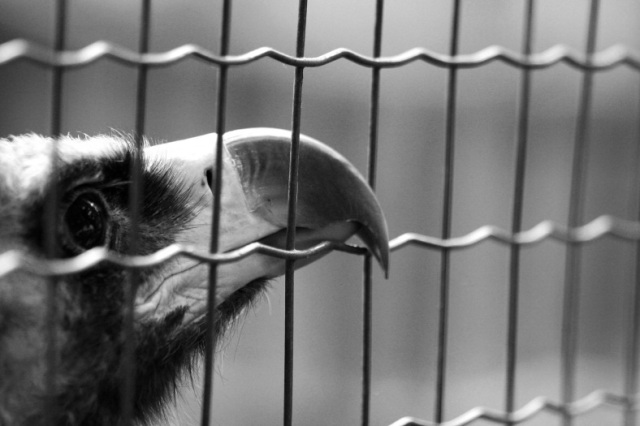
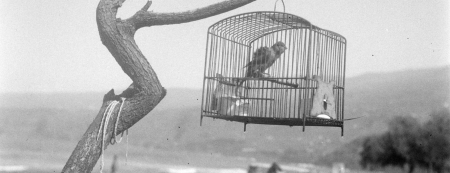
I love these 2 verses. “Escaped” is emphasized twice–the bird catchers have collected many small birds, snared by a little food and a strong net. They keep them in a cage. But wait! Something has just happened, and the birds have somehow escaped!

Have you been wounded inside? Do you struggle hard with depression and loneliness?

There is so much ugliness. The enemy can throw so much at us. Many of us lack the strength to resist him. We can fight and flap and throw ourselves at the bars, but we are trapped. But then Jesus comes, He smashes cages, and frees birds like us.

Verse 8 is the final thought of this psalm.

It sums up everything so wonderfully. There is help. Our Creator deeply cares for us. He has ultimate strength. Put your heart in His hands. We read the last verse…

“Our help is in the name of the Lord,
Who made heaven and earth.”

Psalm 124:8

brokenbelievers.com


Becoming a Steward of Your Pain

Some time ago I read a story that connected. A visiting speaker stood in front of a congregation and shared a painful incident from his childhood. He wanted to bring healing. After he spoke, an elder came up and spoke to him–

“You have learned how to become a proper steward of your pain.”

The visiting speaker was profoundly touched by this. Something came together in his heart and soul. Yes, he did learn how to deal with those ugly things from his past. And yes, he was starting to become a proper steward of his pain.

The word for steward in the original Greek is oikonomos. It literally means “a keeper of a home.” It describes a manager, or a superintendent to whom the head of the house or proprietor has entrusted the management of his affairs.

Managing these awful things for the Kingdom of God is now our ministry.

No question about it, we live in a world of darkness. Each of us has been touched by hard things. Scars are part of our lives. When we come to Christ they come with us. All of these grim things are a real piece of us; we have been hurt, or we’ve wounded others by our sinfulness.

Are you a good steward of who you are? Maybe it’s a trauma, a physical, sexual, or perhaps a mental illness. It’s a scar you carry from your past, and no one is immune from them it seems.

I believe that you’ll find freedom if you can use these things for Him and his Kingdom.

We must see and understand that Jesus has taken everything and fully redeems it all for His glory.

He understands us fully–our past, present, and future. He ‘knows’ us–the real and hidden us. The challenge is to take these sad events to the throne. He alone can heal and then use that which has devastated us. He uses our pain to touch others deeply.

But Jesus intervenes to save. As we grow to accept this, the Holy Spirit comes as our comforter and guide. He starts to teach us true redemption, and the incredible healing that takes place inside us.

It really is his work, not ours. It’s then we finally understand. It’s then we become the broken healers that God can finally use.

And it’s then we can finally say: “The light has truly overcome the dark.

Becoming a steward of our pain is His doing. We’re able to touch others with these things that cripple and destroy. He has made us “managers” of these things, and we are taught to teach others, declaring that God has completely saved us. He works miracles!

“Therefore, if anyone is in Christ, he is a new creation; the old has passed away, and see, the new has come!”

2 Corinthians 5:17

We’ll meet those who are waiting to hear our story. They’re walking through terrible pain and they don’t know what to do.

We’re being transformed into authentic witnesses. Yes, at times these awful things still hurt, and I suppose that’s to be expected. But we’re learning to manage them. We’ve become real-life stewards of our pain.

To every believer still struggling about the sin of the past or sickness of the present–keep turning it over to Him. He will make it into something quite wonderful.