The Gospel According to Job

Today, I want to bring out this book, out into the spotlight.  It is a tremendous devotional that makes its way through the book of Job.  I have leaned on it, and it has held me nicely.  I challlenge you to get a copy of this, and to let it work in the confines of your spirit and mind. ––Bryan

A

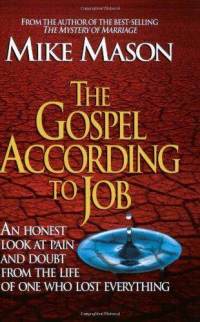
Excerpt from “The Gospel According to Job,” by Mike Mason


“An Honest Look at Pain and Doubt from the Life of One who Lost Everything”

_______________________

A“Once I met a man who, like Abraham, had moved his entire household halfway around the world on the strength of a vision from God. When I asked him to tell me the story, he answered that there were three versions of that story, and which one did I want to hear? First, there was the version of the story that he told to Christians. Then there was the version he told to non-Christians. Finally, there was the truth. Job is a book that tells things from the third point of view. Probably, along with Ecclesiastes, it does this better than any other book in the Bible.

Not that the other Scriptures do not tell the truth. But Job tells the truth in a way that makes it almost impossible to pervert the truth into pious pabulum. A few years ago I went through a difficult time. Never mind what the problem was. It was nothing compared to the trials of Job. In fact, it was nothing at all compared to the sufferings of many of my neighbors right there on the quiet street where I lived.

But pain is pain, and suffice it to say that my pain was enough to drive me to my knees, totally defeated, half-crazy at times, and crying out for relief. Month after month the battles raged on, thick, dark, agonizing. I prayed, but somehow prayer did not ‘work.’ Usually nothing at all worked, except lying low and gritting my teeth until, for reasons entirely obscure to me, the straightjacket of oppression began to loosen a little––at least enough for me to get on with my life for another day or so before the screws tightened again. What else could I do? How was I to fight this?

In retrospect I can see that a large part of my anguish was rooted in the fact that there really was nothing I could do to control what was happening to me. I was absolutely helpless, and it is this, perhaps, that is the soul of suffering, this terrifying impotence. It is a little taste of the final and most terrifying impotence of all, which is death.

We Christians do not like to think about being absolutely helpless in the hands of our God. With all of our faith, and with all of His grace, we still prefer to maintain some semblance of control over our lives. When difficulties arise, we like to think that there are certain steps we can take, or attitudes we can adopt, to alleviate our anguish and be happy. Sometimes there are. But anyone who has truly suffered will know that when it comes to the real thing there is no help for it, no human help whatsoever.

Simply put, when we are in a deep dark hole we cannot think our way out; neither can we hope, sing, pray, or even love our way out. In fact there is absolutely nothing either we or anyone else can do to better our situation. We can have faith, yes; but in itself faith will not change anything. Neither faith, nor any other good thing that a person might have or do, can actually lift the cloud, move the mountain, or bring about an end to the problem.

Only the Lord Himself can do that, and when He does, as Exodus 6:6 puts it, “Then you will know that I am the Lord your God, who brought you out from under the yoke.” How will we know? Simply because nothing and no one else could possibly have done it. In this kind of crucible, therefore, we come to a new understanding of what it means to be saved, what it means to be snatched away from the brink of destruction.

Here we get down to the bedrock of the gospel. During my night of anguish, I turned to the book of Job, and there I began to make contact with the gospel in a way that somehow I never had in studying the New Testament. Reading Job, I found myself experiencing in new and astonishing depth the reality of Jesus’ promise in John 8:32,

 “You will know the truth, and the truth will set you free.”


cropped-christiangraffiti1.jpg

“Without Your Wound, Where Would Your Power Be?”

The subject of “the pool at Bethesda” alludes to the following excerpt from the Thorton Wilder play “The Angel that Troubled the Waters”. The play is based on the biblical verses of John 5:1-4, but it changes the end of the parable.

I first encountered this excerpt within the book “Abba’s Child: The Cry of the Heart for Intimate Belonging“, by Brennan Manning.

The play tells of a physician who comes periodically to the pool of Bethesda, hoping to be the first in the water and healed of his melancholy when the angel appears and troubles the water. Everybody at the pool also hopes to be the first in the water and thereby healed of his malady. The angel appears but blocks the physician at the moment he is ready to step into the pool and be healed.

Angel: “Draw back, physician, this moment is not for you.”

Physician: “Angelic visitor, I pray thee, listen to my prayer.

Angel: “Healing is not for you.”

Physician: “Surely, surely, the angels are wise. Surely, O Prince, you are not deceived by my apparent wholeness. Your eyes can see the nets in which my wings are caught; the sin into which all my endeavors sink half-performed cannot be concealed from you.”

Angel: “I know.”

……………… A long pause

Physician: “Oh, in such an hour was I born, and doubly fearful to me is the flaw in my heart. Must I drag my shame, Prince and Singer, all my days more bowed than my neighbor?”

Angel: “Without your wound where would your power be? It is your very sadness that makes your low voice tremble into the hearts of men. The very angels themselves cannot persuade the wretched and blundering children on earth as can one human being broken on the wheels of living. In Love’s service only the wounded soldiers can serve. Draw back.”

Later, the person who enters the pool first and was healed rejoices in his good fortune then turns to the physician before leaving and said:

“But come with me first, an hour only, to my home. My son is lost in dark thoughts. I — I do not understand him, and only you have ever lifted his mood. Only an hour . . . my daughter, since her child has died, sits in the shadow. She will not listen to us but she will listen to you.”

………………………………………

For me, this story is quite exceptional, probably because the message of this excerpt—“Without your wound where would your power be?“—carries so much meaning for me, as this has taught me that through my weakness I can see others.  I believe that for us,  it should be our whole philosophy of ministry.

The depressed physician ministered out of his brokenness.  He parallels the way the Apostle Paul did his work “out of much suffering.”  Just something to think about.

This is a Broken Believers classic post.  It is shared again with the steady hope that it will encourage you and strengthen you in your walk with Him.

*******

ybic, Bryan

cropped-christiangraffiti1 (1)


When is Suicide the Solution?

The Contemplative Suicidal

There are times, difficult times when we are maneuvered into a place where we start to think that suicide is an answer.  There is a certain mechanism to it, almost an art, which has a limited “air-time.”.  But I have several suicide attempts to my credit.  Once in a psych ward (and being watched 24/7) I cut my wrists on the broken shards of the clock over my bed.  (Looking back, it was pretty innovative the way I did it.)

I’ve intentionally overdosed a couple of times.  My last effort was to duct tape heavy training weights to drown myself in Kachemak Bay, off a pier.  Numerous times I have slashed my wrists trying very hard to die.

I suppose that for these many attempts there was a distinct and desperate cry for help.  When I went into the cycle of wrist cutting, I did not have a full and an aware understanding of what I was trying to do.  But when I attempt to drown myself, I most definitely did.  Perhaps there is an understanding of the two different concepts of suicidal depression. (But I’ve chosen not to ‘research’ this out.)

Although there is room to be alarmed by the first kind.  There is reason to be mega-concerned with the second approach.  I guess there is kind of a morbid graduation from one phase to the next. (I may speak brazenly, but I know it is a dark thing we talk about.)

To commit suicide is perhaps the ultimate act of vengeance that we can do.

It is final and yet speaks to everyone we’ve ever met  It also is a hard statement to all we used to love.  Family, and friends;  I guess we often can’t inventory or enumerate those we touch.  So many people will be affected by my suicide. I can’t overstate this. There are literally thousands of people who will be rocked by what I have done. I will destroy many when I try to destroy myself.

The pain of the mind of the suicidal depressive is awful.  It saturates all that I think and everything I do.  The suicide person is in a difficult agony.  It’s like being soaked in gasoline and looking around for a match.  There is a fearfulness about it all.  If we were not so enamored by ‘self-murder’ it would shake us to our core.

So very many are on the edge.  It really wouldn’t take much to nudge us over. There must be an understanding that there is a spiritual element to all of this. The enemy of our souls would delight in our destruction.  He salivates over our confusion and lostness.  He is a dark cheerleader in support of our self-destruction.

We must work things out, even with our darkest issues.  We really need to “regrip” and refocus.  Often a good nights sleep and a good meal will incrementally move us through this moment.  This may be trite, but resisting suicidal thinking will often turn on small things like this.

To be honest, patience seems to be the main factor to recovery.  It seldom is a dramatic leap forward.  It seems that certain nuances will push themselves against dark thinking.  As you are led by the Holy Spirit, you will discover exactly how to drive against this strong momentum of the Flesh.  Know this though– the Lord is actively at work on behalf of your loved one.  This should give you a honest peace and assurance.  You will survive, and you will bring Him glory.

For immediate help, call 911. For guidance, call 1-888-NEEDHIM.

bry-signat (1)

cropped-christiangraffiti1.jpg

Related articles

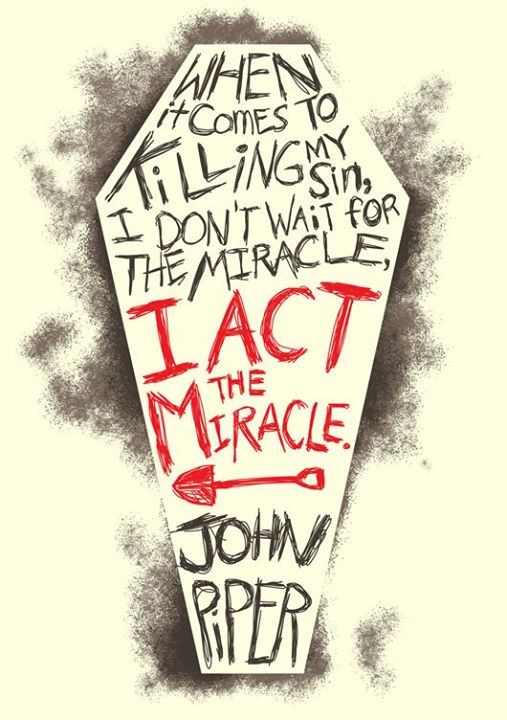
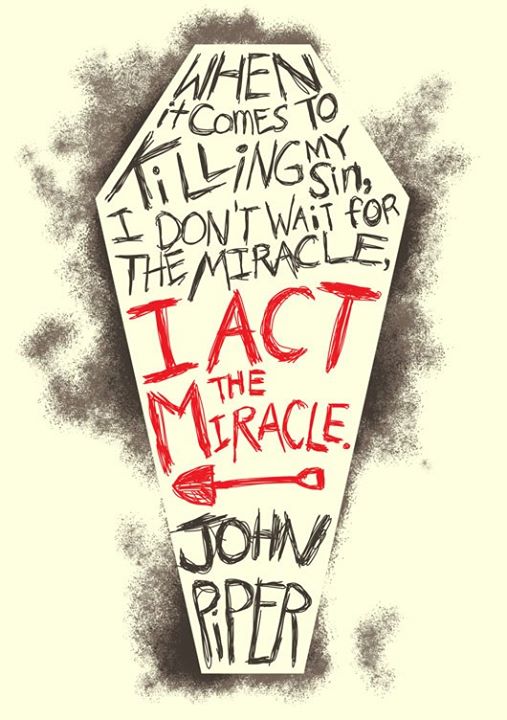
Killing My Sin, Before It Kills Me

killing-sin-act

We are for the most part anyway, eager to please God. We are Jesus’ people with the occasional brush with sin. But hey, who doesn’t? But that attitude must be questioned.

“My little children, these things I write to you, so that you may not sin.”

1 John 2:1

John hopes that his readers would make a choice— not to commit sin. After all, what soldier goes into battle with the intent of getting just a little wounded? Often we will sin just because it seems so inevitable, and we feel we can’t help ourselves. (But the reality is that we can.)

But the Holy Spirit now lives inside. Cooperation with Him is needed. Often we will work ourselves into a ‘no win scenario’ where we believe that sin rules. We can’t beat it, so we stop trying. That is common, and sad.

‘Passivity’ is defined as not participating readily or actively; inactive. When we are passive spiritually, we disengage ourselves from any effort of living holy and pure lives. Not being ‘hot’, but content to be lukewarm. At this point sin becomes, reluctantly, tolerated. “After all, I’m a sinner, what else can I do?”

Mentally ill people are often passive. We are told that we have an uncontrolled illness which dictates that we act ‘irresponsible.’ Our depression often escalates and we feel victimized by it. My experience has taught me that there are three kinds of depression:

  • organic depression, or the ‘biochemistry’ of the disease,
  • guilty depression, the kind that feels bad because of what we’ve done (or didn’t do),
  • reactionary depression, the type we feel when experiencing a loss, a loved one, or a job

Depression will almost always fall in these three categories. And passivity plays a part in all three. We  frequently feel victimized and ‘acted upon.’ When it comes to our discipleship we don’t act, we react. We are utterly convinced of the Bible— God’s truth, but we are so sporadic we can’t seem to get it to work for any length of time.

Yes, we are believers. And yes, we have issues. We’re waiting for a miracle, and hope we get a breakthrough soon.

At the base point of our lives, quite often, there is a passive attitude. Passivity aggravates our depression or mental illness. It deepens, spreading through our lives like a contagious illness. Our discipleship sputters and stalls. We no longer act on God’s Word, but we find ourselves fabricating a faith that makes allowances for our situation.

But we must ‘act the miracle.’ Everything God gives… everything… must be received by a convinced faith. We must be persuaded to give up our flawed ideas, and believe God for the real thing. I opened up this with 1 John 2:1. But there’s much more to this verse:

“My little children, these things I write to you, so that you may not sin.  And if anyone sins, we have an Advocate with the Father, Jesus Christ the righteous.”

I don’t want you to sin. Avoid sin. But even if you do— we have someone who will plead our case before God. He stands and argues our plight. He loves us that much.


bry-signat (2)

cropped-christiangraffiti1.jpg