“Yet those who wait for the Lord Will gain new strength; They will mount up with wings like eagles, They will run and not get tired, They will walk and not become weary.”
Isaiah 40:31, NASB
The particular word “wait” is a vital force that must be reckoned with. It’s not used passively in the Scriptures. It does not mean to be apathetic or lazy. Sometimes we wait in line at the grocery store, or maybe we’re waiting for a phone call. We regularly wait all the time, and usually, we don’t even realize it.
The Hebrew word for ‘wait’ is special. It’s qāvâ. It means, ‘to bind together by twisting.’
It will sometimes mean to work like a fisherman who repairs his nets to get them ready for tomorrow’s task.
(There are always holes to mend after a long night’s efforts.)
When I truly wait on God, I realize that I’m actually repairing myself for His heart and for His work.
Seeing His face
Hearing His voice
Keeping pace with Him, whether He moves or doesn’t
It’s a fascinating way of describing something, isn’t it? Sometimes, when we think of waiting only in the context of the English language, it can become a frustrating delay. This often causes us to miss out on the true meaning of ‘wait’. I strongly believe that the Holy Spirit wants us to understand the concept of being closely connected to God. Sadly, we are often held back by our own definitions, rather than embracing the definitions found in God’s Word.
“The LORD is good to those who WAIT for him, to the soul who seeks him.”
Psalm 27:14
For those of us who are sick – in body or mind – being told to “wait on the Lord” can be difficult to understand and accept. It is common for us to feel frustrated with this advice and the person giving it, mainly because we don’t fully grasp the true meaning of ‘waiting.’ We get close to understanding it, but we never quite reach that understanding of that word.
“WAIT for the LORD; be strong, and let your heart take courage; WAIT for the LORD!”
Psalm 27:14
He becomes my strength; He is now the strong cord I am braided into. (Perhaps this is how He imparts strength and might to His people?) We need this, and the Lord is quite eager to lead us into this new kind of intimacy.
“The LORD is good to those who WAIT for him, to the soul who seeks him.”
Lamentations 3:25
The promise in Isaiah 40:31 talks about getting new strength, like an eagle’s wings, a holy energy. This verse is important for us, especially today; we need this kind of strength right now. I just want to inspire you during your prayer time to become consciously and purposefully connected to the Lord.
It’s only then can we can put our nets back together again?
“Waiting for God is not laziness. Waiting for God is not going to sleep. Waiting for God is not the abandonment of effort. Waiting for God means, first, activity under command; second, readiness for any new command that may come; third, the ability to do nothing until the command is given.”
Difficulty and pain sometimes come from others, and challenges to the Lordship of Jesus often come from our unique circumstances.
But what if it was something we’ve done?
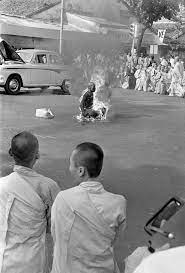
I remember the classic picture of a Buddhist monk who sat in the middle of a street. He was serene as he soaked himself with gasoline, and lit himself on fire as a protest against a war he believed was wrong and evil. He burned himself in front of the cameras.
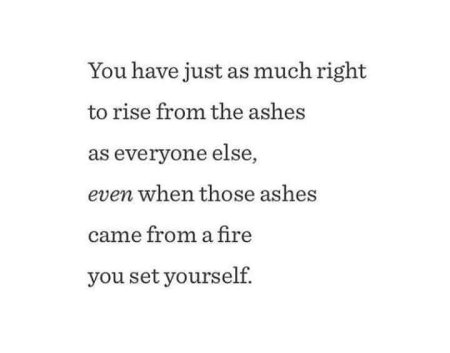
All too often we’re pretty much responsible for our own self-immolation. It is we (and we alone) that set ourselves ablaze. Sin affects our minds and hearts. We set ourselves on fire.
When we sin– when we walk in ‘known’ disobedience we always put ourselves in an awful place. We love it but learn to hate it too. But we continue to do it regardless of the awful death that ensues.
God promises to forgive us. Out of our ashes, He keeps bringing us life and hope.
You can be forgiven. You can find life again, even if you’re fully responsible for the evil we’ve done to yourself. Yes, we all sin, and yes we walk in our own personal rebellion. But Jesus knows it all. These awful things we’ve all done can be forgiven.
As a man and a preacher of the Gospel, I realize that I often choose to sin. In spite of all I know and teach I realize that I can live in the ashes of my own making. As one who also struggles with bipolar, I understand that I’m even more susceptible to doing awful things. I understand that I choose darkness even though others will call me “a man of God.”
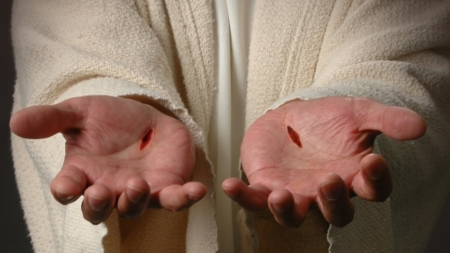
As you read this I’m praying that you find His forgiveness and mercy. You’ve come a long way it seems, but you must see His blood that was ‘released’ from His veins and arteries for you.
He desperately loves you–even if you’ve set yourself on fire, and sit in the ashes of your doing.
“To appoint unto them that mourn in Zion, to give unto them beauty for ashes, the oil of joy for mourning, the garment of praise for the spirit of heaviness; that they might be called trees of righteousness, the planting of the Lord, that he might be glorified.“
In Exodus 15 there’s an incident that carries weight for today. Israel has come to the springs of Marah. The water is bitter. The people turn to Moses. They challenge him and the complaint voraciously. “Why have you brought us here?” They press Moses to the point of mutiny. They are furious.
Some commentators believe this bitter water was a laxative, and anyone who drank this “bitter” water made many trips to the outhouse!
Moses is shown a branch of a common tree. The Lord speaks a word of ďirection he’s to throw the branchaďirectly into the spring. It’ll cure the water, and make it sweet.
It seems to me that Jesus’ awful cross cures the bitterness we absorb as we make our way through life.








 Broken Believers