Grief Sucks but God Restores Hope

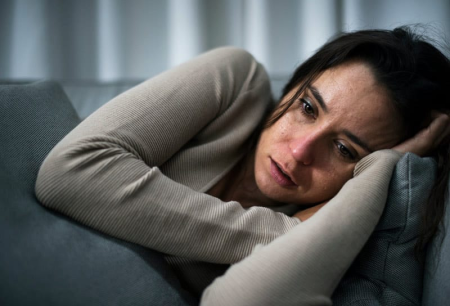
It’s been 15 days since I got the news. My sister Suz passed away at 4:00 a.m. on a Thursday morning.

I hate that phrase, “passed away.” It makes it sound like she floated off in a gondola across the sea.

She died. Why do we shroud death in such wishy-washy language?

I never went to visit her before she died. I had plans to visit Memorial Day weekend. But that was a week too late. I really need to stop planning to visit loved ones who are sick and just do it.

The cards and condolences all give me permission to grieve this terrible loss. But I’m scared to let myself grieve. I can’t think about this loss of my oldest sister without remembering the loss of our sister Peggy (who also died on a Thursday), and Daddy before her, and Mom before him. The grief seems too much to bear.

Grieving is doubly difficult when every impulse to let tears fall feels like teetering on the rim of the pit of depression. What if I let the grief run free and it drags me into that hell I haven’t really known in over 20 years? I remember that place of desperation all too well and I refuse to go back there.

It’s not that I haven’t cried about her being gone. I definitely have, but it terrifies me when I do. And why do the tears keep coming back once they’ve been cried? How do I grieve but continue to live? 

I know this deep sadness is different from major clinical depression. I know the reason for these tears. When my depression was at its worst I had no idea why I couldn’t stop crying. The incessant tears served no discernible purpose. But the head knowledge that my tears of late do have a purpose—the loss of someone I dearly love—doesn’t alleviate the fear that they may drag me into another bout of depression.

The other day I queued up a few Chris Stapleton songs on YouTube while I worked on a relatively mindless project. I fondly reminisced about when she bought us tickets to see him at a small venue in Portland. Then a song came on that I hadn’t heard him sing before called “Drink a Beer.” The next thing I know I’m bawling and my heart feels like it’s breaking into a million little pieces and being compressed in a vise all at once.

Today, as every day for the last two weeks, the hard cider in the fridge calls to me. I usually wait until after work to have one. But I’m on vacation this week and today 3:00 p.m. seemed like a good time to have one. It’s 5:00 p.m. somewhere, right? And at least I’m not drinking tequila in her honor.

Maybe it’s the compound grief that is making it harder for me to cope with this loss. I don’t remember it being quite so unbearable when Peggy died, but then Suz was there with me for that loss. We began the grieving together. Now all my family support it on the other end of a telephone line.

When Mom and then Dad died, I was already depressed. My grief was fused with the vague despair of my mental illness. I suppose it could be that fusion that makes grieving so difficult now. I can’t seem to separate the two states of sorrow.

And yet this spiritual discipline of writing my thoughts and fears on paper helps me to gain a clearer perspective. I’m reminded as I write of a favorite Bible verse. John 11:35 says, “Jesus wept.” The occasion was the death of his dear friend Lazarus. Even though Jesus knew he was about to raise Lazarus to life again, Jesus modeled grief over the loss of a loved one. He declared in that shortest verse that tears are a normal part of this broken life we live in a world of sorrow upon sorrow.

The same apostle who recorded this verse penned the book of Revelation where we are told God “will wipe every tear from their eyes. There will be no more death or mourning or crying or pain, for the old order of things has passed away.” Revelation 21:4 NIV.

These tears I cry for my sister are normal. This grief is okay. Today won’t be the last time I grieve this loss. This will likely not be the last loss I will know in this broken world.

“We will never be the same as we were before this loss, but are ever so much the better for having had someone so great to lose.”

Panic Attacks Understood

tired

Anxiety (panic) attack symptoms can feel awful, intense, and frightening.  The good news is that while they can seem serious, anxiety attack symptoms aren’t harmful in and of themselves. That is something to remember.

Because there are many medical conditions that can cause ‘anxiety-like’ symptoms, it’s wise to discuss your symptoms with your doctor. If your doctor has attributed your symptoms to stress and anxiety, you can feel confident that your doctor’s diagnosis is correct. Anxiety attack disorder is relatively easy to diagnose and isn’t easily confused with more serious medical conditions.

Anxiety attack symptoms are NOT always indications of a serious medical condition. They are simply dramatic responses to being afraid. Being afraid causes the body to stimulate stress hormones. Since stress hormones are designed to prepare the body for action, the changes stress hormones bring about can cause the body to exhibit “symptoms” of this biochemical change. Anxiety attack symptoms are simply “sensory sensations” of this biological change. Again, they aren’t harmful, but they are letting you know that your body’s stress hormone levels are elevated.

Common anxiety attack symptoms include:

  • A feeling of impending doom, that something horrible is about to happen, that you are in grave danger
  • A strong feeling of fear, foreboding, panic
  • An urge to escape, to get out, to run away from danger
  • Blanching, turning white, looking pale
  • Blushing, skin blotches, turning red
  • Burning skin
  • Choking sensation, tightening throat, it feels like your throat is closing
  • Confusion
  • Depersonalization (feeling detached from reality, separate from oneself, separate from normal emotions)
  • Derealization (feeling unreal, in a dream-like state)
  • Dizziness, lightheadedness, unsteadiness
  • Emotional distress
  • Emotional upset
  • Fear of going crazy
  • Fear of losing control, freaking out
  • Fearful thoughts that seem incessant
  • Feels like there is a tight band around your head
  • Hot or cold chills
  • Inability to calm yourself down
  • A knot in the stomach, tight stomach
  • Nausea
  • Numbness, tingling sensations in any part of the body
  • Pins and needles feeling
  • Plugged ear(s), stuffed ear(s)
  • Pounding heart
  • Racing heart
  • Shooting pains in the chest, neck, shoulder, head, or face
  • Shortness of breath, difficulty breathing
  • Sweating
  • Tightness in the chest
  • Trembling, shaking (visibly shaking or just trembling on the inside)
  • Upset stomach
  • Urgent desire to go to the bathroom (urinate, defecate)
  • Vomiting

There is a long list of anxiety symptoms. But because each body is somewhat chemically unique, anxiety affects each person differently. Consequently, anxiety symptoms vary from person to person in type or kind, number, intensity, and frequency. If your symptoms don’t exactly match this list, that does not mean you don’t have anxiety. It simply means that your body is responding to anxiety slightly differently.

For example, one person may experience only a few minor symptoms, while another person may experience the majority of symptoms to great intensities. All combinations are possible and common.

Anxiety attack symptoms can range from mild to severe, from only one symptom to all of them, and can be sporadic, frequent, and persistent. Again, all combinations are possible and common. My own attacks are intense, but I know they’ll go away in time.

Sometimes all we can do is accept the issues that anxiety brings.  We must understand that the Holy Spirit knows us fully and that He will bring us through.  Be confident in His grace and receive His mercy.

 “I’m sure about this: the one who started a good work in you will stay with you to complete the job by the day of Christ Jesus.”

Philippians 1:6, CEB

I am certain that Jesus will carry you the distance.

If your anxiety gets really bad a good number to call is 1-800—NEED-HIM. I believe they’re up 24/7. It’s a good number to remember.

bry-signat (1)

cropped-christiangraffiti1.jpg

Much of this particular post came from the internet and I can’t remember the address. 


To Be Brave and Full of Faith

Related image

In the book Voyage of the Dawn Treader, C.S. Lewis writes of Reepicheep. He is a mouse of exceptional courage and with a strong faith. People seem to always misunderstand a talking mouse, especially one who dresses like a swashbuckler.

He is determined to reach the utter east and join the Lion, Aslan (a type of Christ), Reepicheep is heard to say,

“While I may, I will sail in the Dawn Treader. When she fails me, I will row in my coracle. When that sinks, I shall paddle east with my four paws. Then, when I can swim no longer, if I have not reached Aslan’s country, there I shall sink with my nose to the sunrise.”

Compare this to the Apostle Paul’s testimony:

“Brothers, I do not consider that I have made it my own. But one thing I do: forgetting what lies behind and straining forward to what is ahead, 14 I press on toward the goal for the prize of the upward call of God in Christ Jesus.”

Philippians 3:13-14

Paul transmitted an example to his generation of Christians. He put himself as a model of what is to motivate a believer. The apostle Paul pressed into what the Holy Spirit had for him. Both Paul, and Reepicheep are great examples, they would rather die than to miss their calling.

Everything depends on what God allows of course. But I believe He makes a special place at His side to those who mix their faith with authentic desire like Reepicheep of Narnia and Paul of Tarsus.

God may be making you brave and full of faith. Deep down, this is exactly what your soul is really wanting. Give Him permission to do this work in your heart. Then stand back and see what happens.

1brobry-sig4 (2)


cropped-christiangraffiti1-3-1

Mental Illness in Children & Teens

Does your child go through intense mood changes?

Does your child have extreme behavior changes too? Does your child get too excited or silly sometimes? Do you notice he or she is very sad at other times? Do these changes affect how your child acts at school or at home?

Some children and teens with these symptoms may have bipolar disorder, a serious mental illness. Read on to understand more.

What is bipolar disorder?

Bipolar disorder is a serious brain illness. It is also called manic-depressive illness. Children with bipolar disorder go through unusual mood changes. Sometimes they feel very happy or “up,” and are much more active than usual. This is called mania. And sometimes children with bipolar disorder feel very sad and “down,” and are much less active than usual. This is called depression.

Bipolar disorder is not the same as the normal ups and downs every kid goes through. Bipolar symptoms are more powerful than that. The illness can make it hard for a child to do well in school or get along with friends and family members. The illness can also be dangerous. Some young people with bipolar disorder try to hurt themselves or attempt suicide.

Children and teens with bipolar disorder should get treatment. With help, they can manage their symptoms and lead successful lives.

Who develops bipolar disorder?

Anyone can develop bipolar disorder, including children and teens. However, most people with bipolar disorder develop it in their late teen or early adult years. The illness usually lasts a lifetime.

How is bipolar disorder different in children and teens than it is in adults?

When children develop the illness, it is called early-onset bipolar disorder. This type can be more severe than bipolar disorder in older teens and adults. Also, young people with bipolar disorder may have symptoms more often and switch moods more frequently than adults with the illness.

What causes bipolar disorder?

Several factors may contribute to bipolar disorder, including:

  • Genes, because the illness runs in families. Children with a parent or sibling with bipolar disorder are more likely to get the illness than other children.
  • Abnormal brain structure and brain function.
  • Anxiety disorders. Children with anxiety disorders are more likely to develop bipolar disorder.

The causes of bipolar disorder aren’t always clear. Scientists are studying it to find out more about possible causes and risk factors. This research may help doctors predict whether a person will get bipolar disorder. One day, it may also help doctors prevent the illness in some people.

What are the symptoms of bipolar disorder?

Bipolar mood changes are called “mood episodes.” Your child may have manic episodes, depressive episodes, or “mixed” episodes. A mixed episode has both manic and depressive symptoms. Children and teens with bipolar disorder may have more mixed episodes than adults with the illness.

Mood episodes last a week or two—sometimes longer. During an episode, the symptoms last every day for most of the day.

Mood episodes are intense. The feelings are strong and happen along with extreme changes in behavior and energy levels.

Children and teens having a manic episode may:

  • Feel very happy or act silly in a way that’s unusual
  • Have a very short temper
  • Talk really fast about a lot of different things
  • Have trouble sleeping but not feel tired
  • Have trouble staying focused
  • Talk and think about sex more often
  • Do risky things.

Children and teens having a depressive episode may:

  • Feel very sad
  • Complain about pain a lot, like stomachaches and headaches
  • Sleep too little or too much
  • Feel guilty and worthless
  • Eat too little or too much
  • Have little energy and no interest in fun activities
  • Think about death or suicide.

Do children and teens with bipolar disorder have other problems?

Bipolar disorder in young people can co-exist with several problems.

  • Substance abuse. Both adults and kids with bipolar disorder are at risk of drinking or taking drugs.
  • Attention deficit/hyperactivity disorder, or ADHD. Children with bipolar disorder and ADHD may have trouble staying focused.
  • Anxiety disorders, like separation anxiety. Children with both types of disorders may need to go to the hospital more often than other people with bipolar disorder.
  • Other mental illnesses, like depression. Some mental illnesses cause symptoms that look like bipolar disorder. Tell a doctor about any manic or depressive symptoms your child has had.

Sometimes behavior problems go along with mood episodes. Young people may take a lot of risks, like drive too fast or spend too much money. Some young people with bipolar disorder think about suicide. Watch out for any sign of suicidal thinking. Take these signs seriously and call your child’s doctor.

How is bipolar disorder diagnosed?

An experienced doctor will carefully examine your child. There are no blood tests or brain scans that can diagnose bipolar disorder. Instead, the doctor will ask questions about your child’s mood and sleeping patterns. The doctor will also ask about your child’s energy and behavior. Sometimes doctors need to know about medical problems in your family, such as depression or alcoholism. The doctor may use tests to see if an illness other than bipolar disorder is causing your child’s symptoms.

How is bipolar disorder treated?

Right now, there is no cure for bipolar disorder. Doctors often treat children who have the illness in a similar way they treat adults. Treatment can help control symptoms. Treatment works best when it is ongoing, instead of on and off.

1. Medication. Different types of medication can help. Children respond to medications in different ways, so the type of medication depends on the child. Some children may need more than one type of medication because their symptoms are so complex. Sometimes they need to try different types of medicine to see which are best for them.

Children should take the fewest number and smallest amounts of medications as possible to help their symptoms. A good way to remember this is “start low, go slow”. Always tell your child’s doctor about any problems with side effects. Do not stop giving your child medication without a doctor’s help. Stopping medication suddenly can be dangerous, and it can make bipolar symptoms worse.

2. Therapy. Different kinds of psychotherapy, or “talk” therapy, can help children with bipolar disorder. Therapy can help children change their behavior and manage their routines. It can also help young people get along better with family and friends. Sometimes therapy includes family members.

What can children and teens expect from treatment?

With treatment, children and teens with bipolar disorder can get better over time. It helps when doctors, parents, and young people work together.

Sometimes a child’s bipolar disorder changes. When this happens, treatment needs to change too. For example, your child may need to try a different medication. The doctor may also recommend other treatment changes. Symptoms may come back after a while, and more adjustments may be needed. Treatment can take time, but sticking with it helps many children and teens have fewer bipolar symptoms.

You can help treatment be more effective. Try keeping a chart of your child’s moods, behaviors, and sleep patterns. This is called a “daily life chart” or “mood chart.” It can help you and your child understand and track the illness. A chart can also help the doctor see whether treatment is working.

How can I help my child or teen?

Help your child or teen get the right diagnosis and treatment. If you think he or she may have bipolar disorder, make an appointment with your family doctor to talk about the symptoms you notice.

If your child has bipolar disorder, here are some basic things you can do:

  • Be patient
  • Encourage your child to talk, and listen to him or her carefully
  • Be understanding about mood episodes
  • Help your child have fun
  • Help your child understand that treatment can help him or her get better.

How does bipolar disorder affect parents and family?

Taking care of a child or teenager with bipolar disorder can be stressful for you too. You have to cope with the mood swings and other problems, such as short tempers and risky activities. This can challenge any parent. Sometimes the stress can strain your relationships with other people, and you may miss work or lose free time.

If you are taking care of a child with bipolar disorder, take care of yourself too. If you keep your stress level down you will do a better job. It might help your child get better too.

Where do I go for help?

If you’re not sure where to get help, call your family doctor. You can also check the phone book for mental health professionals. Hospital doctors can help in an emergency.

I know a child or teen who is in crisis. What do I do?

If you’re thinking about hurting yourself, or if you know someone who might, get help quickly.

  • Do not leave the person alone
  • Call your doctor
  • Call 911 or go to the emergency room
  • Call a toll-free suicide hotline: 1-800-273-TALK (8255) for the National Suicide Prevention Lifeline.

Contact NIMH to find out more about bipolar disorder.

National Institute of Mental Health
Science Writing, Press & Dissemination Branch
6001 Executive Boulevard
Room 8184, MSC 9663
Bethesda, MD 20892-9663

Phone: 301-443-4513 or
Toll-free: 1-866-615-NIMH (6464)
TTY Toll-free: 1-866-415-8051
Fax: 301-443-4279
E-mail: nimhinfo@nih.gov
Web site: www.nimh.nih.gov

cropped-christiangraffiti1.jpg