Working in the Time of Grace

ii9508101a

 “These men who were hired last worked only one hour,’ they said, ‘and you have made them equal to us who have borne the burden of the work and the heat of the day.”

Matt. 20:12, NIV

Matthew 20 irritates me.  People are working the entire day, and along comes people who have only worked for one hour.  This discrepancy drives the believer nuts.  How in the world could such a thing take place?  It is foolishness to us who insist on a ‘grace of appropriateness.’  We want grace to be fair, recognizing the person who has worked very hard.

The problem is that God is outrageous with His grace and love.  He completely expands us to a point where we must embrace a grace that is completely beyond us.  We have to break down and accept what is available to us.  Grace completely dumps us upside down.

We can only proceed if we accept His definition of Grace.

Those who have labored the least are made equal to those who work the hardest.  This seems incredibly unfair and we revolt against such extravagance.  It strikes us as outrageously unfair.  How can those who worked only an hour receive the exact same amount as those who have labored a full eight?

The miracle of  this shockingly outrageous grace is that we are confronted by a profound freedom.  We basically get brought to the point where we get stripped of these illusions and need to walk out the scripture.  It has the tendency to eliminate the issues that could block us and bring us to a most receptive position.

“But he replied to one of them, ‘My friend, I’m not being unjust to you. Wasn’t our agreement for a silver coin a day? Take your money and go home. It is my wish to give the latecomers as much as I give you. May I not do what I like with what belongs to me? Must you be jealous because I am generous?’

16 “So, many who are the last now will be the first then and the first last.”

Matthew 20:13-16

We must admit that God’s grace reaches out to everyone. 

That He has the deep, deep desire to see that each of us connect with His love.  This is indeed the radicalness of the gospel.  It is outrageous and astonishing.  That He would love us who have hated Him.  Our sense of equity is completely undone.  His grace completely turns us upside down. I think that is a good thing.

bry-signat (1)

cropped-christiangraffiti1.jpg


Interruptions: A Litmus Test for Disciples

“May the Lord make your love increase and overflow for each other and for everyone else, just as ours does for you.”

1 Thessalonians 3:12

“Our love to God is measured by our everyday fellowship with others and the love it displays.”

Andrew Murray

There is an awesome need for Christians who can be interrupted.  They have learned that their personal plans and agendas should be set aside for the acute need of the moment.  People like that are becoming receptive people–people who have learned to submit their wills to the Lordship of Christ.

There seems to be a lot of believers who have isolated themselves in order to avoid ‘complications’ of the Spirit.  Over the years they have cultivated a life without entanglements from others (at least, greatly reduced).  The basic root of this is not sin, but it quickly slides into an isolation that is not just threatening, but dangerous.

We are built for fellowship.  We need it— like my goldfish needs its water.  

Our brothers and sisters need us, and we most definitely need them.  In the Apostle’s Creed we read, ‘I believe in the Communion of the Saints’.  This takes a supernatural faith.  This dynamic of the Body calls us to fellowship with other believers, which is our desperate need of the moment.  Deep within, we crave human contact.  We need to touch someone else.

Being interruptible establishes several things. I think these questions are a simple starting point.

  • First, I have become approachable and tractable?
  • Second, is Jesus really Lord over my life?  (Or do I have my ‘own thing’ going?)
  • Third, do I really believe ‘something’ is going to happen when I begin to fellowship?
  • Fourth, is it really worth it?
  • Fifth, what is more important: People or my schedule?

Years ago I learned that every servant who really excelled had become a man or woman that could be interrupted.  And they respond in grace and kindness to every issue that came.  You’ll never hear them get frustrated or even irritable over being disturbed.  They simply have surrounded themselves in the will of God, and are His servants.

What is more important: a schedule or people?

There are ‘skills’ we need to learn for Christian community.  We have touched on some as we have matured.  We have practiced with this holy concept, and caught glimpses, many which translate into our present spiritual lives.

“Some Christians try to go to heaven alone, in solitude. But believers are not compared to bears or lions or other animals that wander alone. Those who belong to Christ are sheep in this respect, that they love to get together. Sheep go in flocks, and so do God’s people.”

Charles Spurgeon

God’s great quest is to make those who have been redeemed into a cohesive body.  He takes a special delight in the harmony of His Church.  He is very passionate about this.  His proclivity to unity must be noted.  We must adjust and do all that is necessary to make it happen.  This dear one, is His will.

*

bry-signat (1)

cropped-christiangraffiti1.jpg

Walking With the Lord Jesus, [Humility]

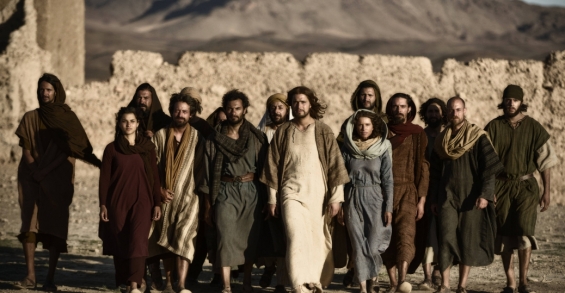
jesuschrist_mary_marymagaleneandthedisciples_20130319

The subject and emphasis on is becoming obscure— “just like Jesus.” I suppose my main contention is this– our understanding of discipleship has too much “me, and not enough Him.” This can be a gentle error of a young believer.

When Jesus who was the fullness of God in bodily form came, He came as a lowly slave. We see Him stripping down, filling a basin, and scrubbing dirty feet. He actively made Himself a broken and humble servant. It was deliberate and conscious.

Read Philippians 2. It will blow you away!

I think we learn this from Him. The disciple never exceeds his master. He made it very clear that we were to follow Him in this. It’s processed by us when we are very firmly aware that the One who knows us. To be loved by Him is enough (or is it?)

Exceptional effort is made by the Holy Spirit to help us understand. There is a repeated thought given to us in various permutations. In one of my favorite verses King David, standing in front of God, and his people, declared,

“But who am I, and who are my people, that we could give anything to you? Everything we have has come from you, and we give you only what you first gave us! 15 We are here for only a moment, visitors and strangers in the land as our ancestors were before us. Our days on earth are like a passing shadow, gone so soon without a trace.”

1 Chronicles 29:14-15, NLT

“We don’t remember what happened in the past, and in future generations, no one will remember what we are doing now.” This is the cheery assessment found in Ecclesiastes 1. This view irks us big time. Especially if we have invested so much in our wealth, gifts, experiences and accomplishments.

“Our days on earth are like grass;  like wildflowers, we bloom and die.  The wind blows, and we are gone— as though we had never been here.”

Psalm 103:15-16, NLT

In the New Testament, the emphasis is only stronger. Remember when James and John tried to get the corner on the authority and honor of being on “the right and left?” (My, but they were ambitious lads!)

“When the ten other disciples heard what James and John had asked, they were indignant. 42 So Jesus called them together and said, “You know that the rulers in this world lord it over their people, and officials flaunt their authority over those under them. 43 But among you it will be different. Whoever wants to be a leader among you must be your servant, 44 and whoever wants to be first among you must be the slave of everyone else. 45 For even the Son of Man came not to be served but to serve others and to give his life as a ransom for many.”

Mark 10:41-45, NLT

There are two certain issues here:

  • The first is authentic discipleship.
  • The second is a decided and eager servanthood.

Both ideas are often missing in our churches, and in our teaching. Somehow we are not communicating the real transferable concepts. Their simplicity evades us.

I intend to return to this fairly soon. Again, I appreciate any constructive criticism, your own thinking on this, and your prayers.

*

1brobry-sig4


cropped-christiangraffiti1 (1)


We Want to See Jesus

Seeing Jesus
Wanting Jesus.

20 “Now among those who went up to worship at the feast were some Greeks. 21 So these came to Philip, who was from Bethsaida in Galilee, and asked him, “Sir, we wish to see Jesus.” 22 Philip went and told Andrew; Andrew and Philip went and told Jesus.”

John 12:20-22, ESV

Chapter 12 is a critical point in the ministry of Jesus. Sometimes great doors turn on small hinges. So much is said and done here, and we can speculate on these significant moments. The Bible invites this curiosity.

The Greek’s arrival cues up a turning point for Jesus. His growing reputation and full ministry have become well-known. There is a “rock star” presence that draws in even the Greeks. Jesus has now become renown; a celebrity of some stature in their minds. Jesus doesn’t really respond directly to them; but He is alerted by their remarkable request.

Things have changed now. The Greeks have signaled to Him that time is running out. Jesus is now looking directly at the cross. Crucifixion is now ‘center stage.’ He is now energized as He must prepare for His death and resurrection. This is not a defeat, rather a glorious victory over our awful darkness. Knowing what season you are in is a tremendous blessing. Jesus knew.

But the Greeks still want to “see Jesus.” They have made a long journey. To see Him would be the pinnacle of this trip. Their combined passion, deflected as it was by Philip and Andrew, was quite real. Curious commentaries have wondered whether these Greeks ever connected with Jesus. None of us really know.

“Sir, we wish to see Jesus.”  This hunger, and thirst is a deep emotion. I believe that there exists a profound passion that we could emulate. There is a real appetite that will only be staved by His presence. The Greeks had a vibrant spiritual inventory full of gods and philosophy galore. They could have tapped into any of them. But they didn’t and won’t. They travelled far to meet Jesus.

“Sir, we wish to see Jesus.” Nothing can satisfy, or move a man or a woman like Jesus. He is to be our passion and focus. The Greeks didn’t ask for teachings, miracles or rituals. They would not be appeased with a surrogate or a second-in-command. Nothing but Jesus will really satisfy a truly seeking soul.

1brobry-sig4


cropped-christiangraffiti1 (1)

*

kyrie elesion.