I’m Disappointed in Myself

We read of the “Romans 7” man.

  • For I know that nothing good dwells in me, that is, in my flesh.
  • For I have the desire to do what is right, but not the ability to carry it out. 
  • For I do not do the good I want, but the evil I do not want is what I keep on doing. 

Romans 7:18-19, ESV

When we struggle like this we can safely assume that we’re trying to be holy and accepted by God apart from the grace of God. Our efforts to please Him fall woefully short. This frustration is when we try to keep the Law and neglect to walk in the Spirit.

To be disappointed in your behavior is not grace. To continue living like this becomes deception and hypocrisy. Most of all it creates a vicious wall between your walk and God’s love. A barrier between you and others.

The tension of Romans 7 is real. Every believer will encounters it.

The Scriptures teach us the depravity of man. All we do, even our best efforts and noblest actions are selfish and corrupt. As we understand this we end up realizing that there is a vast gulf between our aspirations and our actions.

“We are all infected and impure with sin.
    When we display our righteous deeds,
    they are nothing but filthy rags.”

Isaiah 64:6

We have a problem when our heart doesn’t match our actions. I’ve worked through the obvious. And yet it gets a little hairy when our ‘little’ sins are visible to others. We feel like hypocrites and we know that our testimony is officially ‘toast.’

“Many have passed the rocks of gross sins – who have suffered shipwreck upon the sands of self-righteousness.”

    William Secker

Romans 7 describes what is wrong with us, it seems we are attempting to please God by our own efforts.

In Romans 7 we read of a man who is constantly disappointed in himself. It can be wrenching to read– partly because it is so real. It describes us too well. At times the Word is like looking into a mirror.

This is what a dear friend said to me recently. I was flabbergasted. I didn’t know how to answer. It was a bit embarrassing, but I couldn’t respond. Later, the Spirit ministered to me while praying about it.

The Lord spoke, “He has no idea how bad you really are. Don’t you dare defend yourself!’

I now realize I should have said this to my friend. You’re absolutely right, I am a bit of a flake. But you only see the veneer, deep down  I’m much worse than you will ever know. I can’t defend my actions, and I desperately need a Savior. Would you pray for me to work this out? I need Jesus”

The daily struggle with sin and personal failure is sometimes more visible than we would like. Even as a believer I can and do sin. That should surprise no one, and yet, it seems I’m the most amazed when sin inevitably breaks out. At times I feel like I specialize in inconsistency.

I wonder when we boldly ‘strut’ into His presence if the angels don’t ‘roll their eyes?’

Whenever we come before God, we should never show up with our list of great things we have recently done for Him. It won’t be accepted. They are at best, filthy rags. They’re not fit for a King’s court. But yet we keep coming, parading our dirty, grimy rags.

We keep forgetting that only Christ’s righteousness is accepted in God’s eyes.

“The greatest enemy to human souls is the self-righteous spirit which makes men look to themselves for salvation.”

Charles Spurgeon


1brobry-sig4

Nothing But Leaves

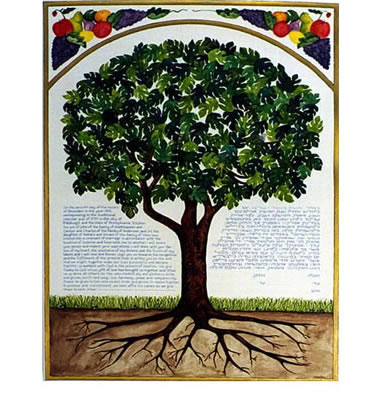
“Seeing at a distance a fig tree in leaf, He went to see if perhaps He would find anything on it; and when He came to it, He found nothing but leaves, for it was not the season for figs.”

Mark 11:13, NASB

Perplexing isn’t it?  I personally have had a certain amount of ambiguity with this passage.  I have questions that I’ve swept under the rug.  Why did that poor tree get cursed?  It wasn’t the trees fault, after all.  And didn’t Jesus realize this?  So why go through the theatrics?

I don’t know if this is the case with anyone else. 

I hesitate to ask around.  But recently have come to a better place about this entire event.  The traditional view is that it comes immediately after “the cleansing of the temple” and that explains a lot.  The fig tree is always emblematic of Israel.  (The Old Testament is well populated with these references.) The disciple Mark adroitly organized his Gospel in order to connect both events.

I assure you, Jesus has no issues or vendettas against trees.  😁

But He does take an issue with things that claim fruit, but really have nothing.  There’s nothing but leaves. I’ve been told that the figs do grow, almost as fast as leaves.  The lush greenness is the prime indicator of the succulent fruit. At least, in theory, it has the potential.

Luke 12:7-9,

Look, for three years now I have come seeking fruit on this fig tree, and I find none. Cut it down. Why should it use up the ground?’ And he answered him, ‘Sir, let it alone this year also, until I dig around it and put on manure. Then if it should bear fruit next year, well and good; but if not, you can cut it down.’”


The beautiful leaves declare its fruitfulness.  This tree was loaded, but had nothing to show but leaves.  Within God’s plan for Israel was for fruit.  Enough to feed the nations that would stream to Jerusalem.  Instead, it was worthless.  There was nothing to be had.  Loads of leaves, and the promise of an incredible harvest, but zilch, zero, nothing.

Hypocrisy is a deadening experience, with a definite sterility.

Israel was finding this out, and Jesus is now declaring it to the nation.  A corrupt temple, and a fruitless tree; this were all indicators of hypocrisy and showiness.  The luxuriant leaves loaded the tree, but ‘where’s the fruit?!’

Sometimes we declare that we are fruitful, on the mere basis of our lovely leaves. 

At times maybe even green?  Leaves are pretty much all we can do.  And we do it quite well. But the fruit is from the Holy Spirit, (Galatians 5:22.)

Israel failed God.  They became religious and neglected mercy, and justice.  Humility and graciousness.  The widow and the orphan were not part of their personal equation.  They produced leaves by the wheelbarrow load, but were missing out on the authenticity to what was true, and what really mattered.

Pharisees will do this all the time.

They turn into hypocrites who do not possess what they profess. A hypocrite values true godliness, but he personally falls short of all those things he admires. But he will never, ever admit it to anyone.  And even we who struggle so, must continually admit that we stumble and falter as we try to follow.

The terrible temptation of this time is to look good without being good.

It’s the awful curse of legalistic religion, and it runs rampant in our nation today, even in our government. The Lord absolutely detests it. God help us understand, and repent from what He shows us.

Personally, I may be a ‘screwy’ excuse of being a disciple, but I have decided I don’t want to deceive people anymore. 

God, help me.

“This year, or this month, or, more likely, this very day, we have failed to practice ourselves the kind of behavior we expect from other people.”  

C.S. Lewis


1brobry-sig4

cropped-christiangraffiti1 (1)

He Despises Our Hypocrisy


“This people honors me with their lips, but their heart is far from me.”

Matthew 15:8, NASB

“Of all bad men, religious bad men are the worst.”  C.S. Lewis

This singular verse is set in a series of other verses– it certainly does not stand alone.  When these come together, we realize how much the Holy Spirit despises hypocrisy. He hates it, I suppose, because of the destructiveness wreaked on our spirits.

A father or mother may feel a hatred at the dealers who sell the drugs to their child. It’s not that they have any special animosity toward the pusher, but rather, they love their son so much. They will do whatever it takes to protect him.

I really think this is what Jesus feels when it comes to the purveyors of religious legalism, or hypocrisy. He burns with a holy hatred against this particular form of darkness. His vehemence seems reserved, not for sin so much as these lies of “religious pretending”. His repeated “roughness” has to be considered– why?

This should jar us into what is real, and all that is not. The word for hypocrite is “two-faced”. It was used in the Greek theaters for the masks worn by the actors. They would wear whatever the script called for. The audience never knew what was real, and what was only theatrical props.

With our lips (speech) we will honor God. We’ll only speak good things, and words (and actions) become an issue of being appropriate. We put on the particular mask of the moment, and enter the theater. Our hearts are hardly touched, and the deepest part of us becomes inoculated to the real presence of God.

The deep hatred Jesus has is due to the enormity of this sin. It is spirituality gone bad. Twisted and confused, with the shallow veneer of “respectability”. It seems to work for many of us. When our discipleship gets used to wearing masks, things can get very religious.

“Beware of no man more than of yourself; we carry our worst enemies within us.”

Charles Spurgeon


Front and Center

John 8:3-11

Then the scribes and the Pharisees brought a woman caught in adultery, making her stand in the center. “Teacher,” they said to him, “this woman was caught in the act of committing adultery. In the law Moses commanded us to stone such women. So what do you say?” They asked this to trap him, in order that they might have evidence to accuse him.

Jesus stooped down and started writing on the ground with his finger. When they persisted in questioning him, he stood up and said to them, “The one without sin among you should be the first to throw a stone at her.” Then he stooped down again and continued writing on the ground. When they heard this, they left one by one, starting with the older men. Only he was left, with the woman in the center. 10 When Jesus stood up, he said to her, “Woman, where are they? Has no one condemned you?”

11 “No one, Lord,” she answered.

John 8:3-11

I remember how Jesus defended me. I had been led through the crowds. The temple was filled with people who were there for the festival. It was a time of joy and feasting, but not for me.

Especially not for me.

The temple police escorted me to Jesus. I was now the focus of everyone’s attention. I felt dirty and ashamed. Standing there I could feel the lustful looks from the Pharisees; but there was something else as well, a look from Jesus that I had never seen before. There was compassion there, something quite extraordinary.

I’m ashamed, I committed adultery, I had slept with another man who wasn’t my husband.

I was to be stoned, to have hard rocks thrown at me by “holy” men. The Law had pronounced my guilt, and I knew how I was to be punished. And I deserved it. Yet the man who I slept with was never charged, he escaped and it was I that would be put to death. I didn’t blame him.

My shame was now public knowledge–everyone knew, the Pharisees made sure of that.

They put me front and center. They were going to test Him. They were going to destroy me.

These men who brought me had ulterior motives, they desperately hoped Jesus would stumble. I think they wanted to prove once and all to the crowds that were watching that Jesus really wasn’t the Messiah. They wanted to trap him.

Jesus seemed to understand the implications of this satanic effort.

Only Rome had the power of execution, and yet the Mosaic Law declared that I was to die. I stood waiting, expecting the worst. What else could I do?

It’s funny, but Jesus understood all of this. He seemed to look right through this theological trick, and He responded in a way that really shocked everyone. He never spoke, but bowed low and began to write in the dirt with his finger. Amidst their vicious accusations, they pressed their case.

Jesus bent down again, and he wrote some more.

I never knew what he wrote–but I had to believe it must have been something that revealed the sin in the hidden hearts of the men who were accusing me. In that moment, they quickly dropped the case against me. They all filed out, one by one, in dramatic fashion. I now stood alone with Jesus.

And it was then that Jesus looked directly at me.

I was still afraid, but it was strange, I felt a wave of peace as well. I quietly waited, not knowing what He was going to say to me. I suppose I half expected the worst.

Yes, he did confront me. But He wanted me to acknowledge that those accusing men had left. I saw it and understood. Jesus was asking me to believe that I was now really free. But then he wanted me to understand something that seemed quite crucial.

“Neither do I condemn you,” said Jesus. “Go, and from now on do not sin anymore.”

That dear one was a powerful moment. He set me free with the understanding that He did not condemn me. But my freedom from judgement came with a catch–sort of. I knew then that my sin must be renounced. My freedom came with a price. But knowing I was completely released, meant I was now a free woman.

At that moment I understood completely.

“God pardons like a mother, who kisses the offense into everlasting forgiveness.”

    Henry Ward Beecher

My Facebook page: https://www.facebook.com/bryan.lowe