Under Quarantine

quarantine

Quarantines are a real possibility, even to this day. A quarantine is imposed when a disease is contagious enough that it would harm a society: Measles, Smallpox, and the recent COVID-19 are just a few physical diseases where isolation must be imposed.

It can be severe— an epidemic, with desperate consequences if not adhered to; in some rare cases, the use of deadly force has been authorized to maintain a quarantine until the disease is no longer communicable.

This may surprise you, but there are examples of ‘quarantines’ in the Bible.

The term ‘unclean’ was used for ‘leprosy.’ Those afflicted had to isolate themselves; they had to ‘announce’ their presence when in contact with society. Lepers lived in groups away from the general populace, as a result of their disease.

In Paul’s epistle to the Corinthians, he addresses another kind of ‘quarantine.’ The situation was dire; the church had advocated a Christian living with his father’s wife.

“I have already passed judgment on this man in the name of the Lord Jesus. You must call a meeting of the church. I will be present with you in spirit, and so will the power of our Lord Jesus. Then you must throw this man out and hand him over to Satan so that his sinful nature will be destroyed and he himself will be saved on the day the Lord returns.”

1 Corinthians 5:3-5, NLT

Understanding the Principle of Usefulness

Now in a large house, there are not only gold and silver vessels, but also vessels of wood and of earthenware, and some to honor and some to dishonor.”

2 Timothy 2:20, NASB

Found in God’s pantry are lots of pots and pans of various uses.  Paul writes Timothy about the ‘large house’ which is the Church inclusive. Look around Timothy, there are gold ones, and there are silver ones. They have a noble purpose fitting for such a great house. These are the ones the guests will use; they befit the significance of the Lord himself. These vessels have great value for they are made of precious metals.

There are vessels of different categories. These are the ones made of wood, and of clay. These are part of the household, make no mistake about it. But their use is one of function, they’re utilized in common and ignoble ways. (A clay ‘bed-pan’ perhaps?!)

21 “Therefore, if anyone cleanses himself from these things, he will be a vessel for honor, sanctified, useful to the Master, prepared for every good work.”

2 Timothy 2:21

Paul, the author of the New Testament doctrine of grace emphasizes the place of personal holiness. We are to ‘cleanse’ ourselves to become a vessel of honor. There is good news here:

  • All are vessels in the Father’s house. Each of us belongs to Him. He alone determines their use.
  • Things are not yet in their final state. Changes in status can be experienced. In God’s economy, clay pots can become ‘golden.’ Silver can become ‘wood.’

Some sin is contagious.

It affects believers, and the Church becomes compromised by what we’ve done. And then sometimes we are quarantined by the Holy Spirit–until the contagion passes. This spiritual disease must not be permitted.

I have experienced this several times in my own discipleship. These are not pleasant times, but there is no condemnation. I’m still His servant, His love for me stays outrageously constant. He has never turned away a sinning child who repents of their sin.

“Yes, I am His servant, but I must wait out in the hall. I haven’t been faithful. So I sit in His waiting room, waiting for His call. This is for my good. And my Father knows what is best.” 

When God Doesn’t Heal You

Mike Mason

God heals. Of that I have no doubt. We have many promises and see so much actual healing in Scripture. Jesus’ ministry would connect with hundreds of people who would be physically touched. The Lord would pass the baton on to His Church. We’re called to “lay hands on the sick,” (James 5:14-15).

But not everyone who is sick will receive physical healing. Even those who were active in ministry knew sickness.

In the second episode of season 3 of “The Chosen,” Little James, who we’ve seen walks with a limp, comes to Jesus after He commissions the Apostles. He tells him he finds it hard to believe that he will be healing people, given that Jesus hasn’t healed him.

“Do you want to be healed?” asks Jesus.

“Yes, of course,” James says, “if that’s possible. Why haven’t you?” he asks Jesus—again, a question some of us would’ve asked.

“Because I trust you,” Jesus says. “Little James. Precious Little James. I need you to listen to me very carefully, because what I am going to say defines your whole life to this point and will define the rest of your life. Do you understand?”

Jesus tells James that he will heal many people, and they will have a good story to tell.

“To know how to proclaim that you still praise God in spite of this—to know how to focus on all that matters, so much more than the body—to show people that you can be patient with your suffering here on Earth, because you know you’ll spend eternity with no suffering—not everyone can understand that. How many people do you think the Father and I trust this with? Not many.”

“But the others,” James says, “they are so much more … stronger, better at this.”

“James, I love you,” Jesus says, “but I don’t want to hear that ever again.”

“I know how easy it is to say the Psalm of David, that I am beautifully and wonderfully made, but it doesn’t make this any easier,” says James, begins to weep. “It doesn’t make me feel like any less of a burden.”

“When you pass from this earth,” Jesus says to James, “and you meet your Father in Heaven, where Isaiah promises you will leap like a deer, your reward will be great. So hold on a little longer. And when you discover yourself finding true strength because of your weakness, when you do great things in my Name in spite of this, the impact will last for generations. Do you understand?”

James cries, and says, “Yes. Thank you, Master.”

I believe that there are two truths that every Christian can count on. These are solid, and completely trustworthy. They are forever fixed and will never change.

“Fear not, for I am with you; be not dismayed, for I am your God; I will strengthen you, I will help you, I will uphold you with my righteous right hand.” Isaiah 41:10

“He will wipe away every tear from their eyes, and death shall be no more, neither shall there be mourning, nor crying, nor pain anymore, for the former things have passed away.” Revelation 21:4

     John Henry Newman  

Cutting a Rose (Death)

There’s been a death in my family. A young man just 24 years old passed a week ago. He was the only child of my aunt and uncle, and they are rightfully devastated. The whole thing is pain on steroids–as awful as it gets. Shock and grief is saturating our family.

We’re all asking why.

A young man who’s just learning how to live is gone. He was in the springtime of his life. His faith in Jesus was just beginning, and he was starting to sort things out, just like we all do. He is gone, but we’ll meet him again.

I wonder if the shock will ever wear off. I suppose it will, but it will come little by little. Jesus must have time to heal and hold in the meantime. He promised us.

I find my words to his mom and dad are nothing more than Teflon. They don’t stick, and maybe they even hurt.

Grief on this level defies words of human comfort and consolation. I am frustrated to counsel pain on this level. I’m ashamed when I do. I keep my mouth shut and that’s not easy for me.

There’s terrible guilt, anger and isolation.

The Holy Spirit is strongly emphasizing prayer now. I realize that only He can heal, guiding their suffering and healing to an outcome they can’t see. I know, I am certain that Jesus will come and touch his parents, but perhaps our intercession is what it will take to make this happen.

We must stand against Satan and push him away.

In the olden days, medicine was dispensed in powder form, not pills. The pharmacist would measure out a powder to give to the sick. In a sense, this is what God does. He carefully gives what is needed and not a grain more than necessary. I believe this.

Please don’t condemn yourself for speaking trite and inadequate words. You must rest in God’s work now, and realize that only He can heal and comfort pain and anger on this level. Job’s friends were at their best when they said nothing.

Sometimes all you can do is pray fervently. And that is enough.

“He will wipe away every tear from their eyes, and death shall be no more, neither shall there be mourning, nor crying, nor pain anymore, for the former things have passed away.”

Revelation 21:7

How Well Do You Suffer?

John Newton, Exodus 3:2

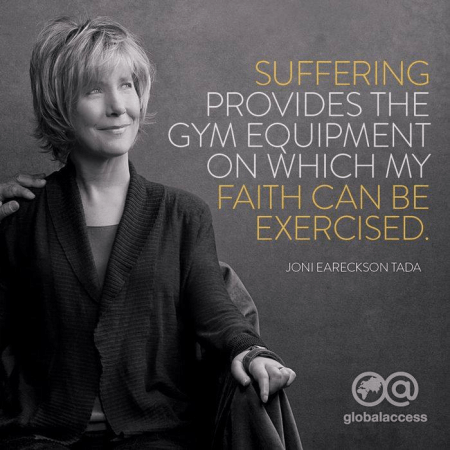
It seems that pain is the best teacher. We learn the hard way to come under God’s direction, and we finally learn to love others. Maybe it’s our pain that communicates His grace–is this how God changes us?

After all, the crushed grapes make the wine.

C.S. Lewis once made the comment, (and it’s worth thinking about), that “experience is the most brutal of teachers. But you learn, my God do you learn.” We face many obstacles, run into quite a few dead ends, and along the way we learn that when we really hurt, we start to teach something that the Church desperately needs.

My discipleship has been chock full of challenges. I’ve lost the use of my right arm, I have struggled with depression. I had a brain tumor removed, and must walk with a cane. I struggle with intense fatigue. I now have severe issues with pain. (I no longer pastor a church or teach in a Bible college.)

In November 1999, my wife and I lost a child.

I have prayed earnestly for a complete healing and had others pray for me. It’s funny, but all of this has happened after I became a Christian disciple! I often ask myself why? Why did God allow this to happen?

What did I do to deserve all of this?

Paul and Barnabas came into an interesting place (we can read about it in Acts 14.)

“Strengthening the souls of the disciples, encouraging them to continue in the faith, and saying that through many tribulations we must enter the kingdom of God.”

Acts 14:22, ESV

Some Bible teachers we listen to on the internet choose to minimize suffering, and of course we adopt a lot of our own theology to factor out pain and difficulty. But is this what the Bible teaches? If we read Hebrews 11, we find that life could be pretty grim for those with faith in God.

“Women received back their dead, raised to life again. There were others who were tortured, refusing to be released so that they might gain an even better resurrection. 36 Some faced jeers and flogging, and even chains and imprisonment. 

37 They were put to death by stoning; they were sawed in two; they were killed by the sword. They went about in sheepskins and goatskins, destitute, persecuted and mistreated— 38 the world was not worthy of them. They wandered in deserts and mountains, living in caves and in holes in the ground.”

Why does it have to be so hard for us as believers in Jesus?

Common sense suggests that things should get easier for those who believe. We somehow think that God rewards faith with instant glory. But I painfully discovered that my discipleship, my faith, doesn’t mean some wonderful existence on this planet. It seems that pain becomes the way we grow up and mature in Him.

I honestly believe, after over 40 years of following Jesus, that suffering is part of God’s plan for me.

It has never been easy. It never was. And I wish it was different.

My God, I wish it was different.

No matter what you are going through, remember that God always loves you. He has chosen us to navigate us through much difficulty. We must however, convert these painful things by our faith in Him. And only our faith does this.

And we know that in all things God works for the good of those who love him, who have been called according to his purpose.”

Romans 8:28

We must learn to regard people less in light of what they do or omit to do, and more in the light of what they suffer.

Dietrich Bonhoeffer