“We all carry about in our pockets His very nails.” –Luther
“I am proud of the good news! It is God’s powerful way of saving all people who have faith, whether they are Jews or Gentiles.”
Romans 1:16, CEV
“For I am not ashamed of the gospel, for it is the power of God for salvation to everyone who believes, to the Jew first and also to the Greek.”
Romans 1:16, ESV
What is it that holds you back?
Is there a significant issue–a new boat or your next vacation to Disneyland? Would that keep you from following Him? Would you trade Him, for that?
So many of us are “chicken” when it comes to witnessing Jesus Christ. We ‘cluck and duck’ when the subject of God or religion is raised. We hope no one is looking when we ask God to bless our food in a public place. Honestly, most of the time the issue for us is the fear of rejection. (It’s funny but some have never really gotten past the intimidation we experienced in High School.)
The saints who watch us from heaven, have got to be astonished at our embarrassment of Jesus, (Heb. 12: 1). They look and wonder at the way we act, when so many of them have suffered deeply. They have been repeatedly, and deliberately hurt for Jesus. But yet we’re arguing about padded pews and the color of the carpeting in our sanctuary.
“For whoever is ashamed of me and of my words in this adulterous and sinful generation, of him will the Son of Man also be ashamed when he comes in the glory of his Father with the holy angels.”
Mark 8:32, ESV
I suppose we must learn again the spirit of the saints who are suffering for the sake of the Gospel. This very minute they are in prisons, in torture, in abuse all because they profess a love for Jesus Christ.
Could it be possible that God is calling you to leave your comfortable Christianity behind and tell someone that Jesus loves them and wants to save them. Will you do it, or will you be too ashamed? Let this be the present now that you bring the light of Christ to your dorm, your neighborhood, your apartment building, your baseball team, or wherever God has placed you. Let Him use you for His glory!
I suggest that our faith will activate God– your fear switches on the influence of Satan.
“Fearing people is a dangerous trap, but trusting the Lord means safety.”
Jesus went into the synagogue again and noticed a man with a deformed hand. 2 Since it was the Sabbath, Jesus’ enemies watched him closely. If he healed the man’s hand, they planned to accuse him of working on the Sabbath.
3 Jesus said to the man with the deformed hand, “Come and stand in front of everyone.” 4 Then he turned to his critics and asked, “Does the law permit good deeds on the Sabbath, or is it a day for doing evil? Is this a day to save life or to destroy it?” But they wouldn’t answer him.
5 He looked around at them angrily and was deeply saddened by their hard hearts. Then he said to the man, “Hold out your hand.”So the man held out his hand, and it was restored!
Mark 3:1-5
It was the Sabbath. I was led to the synagogue by a Pharisee who promised me money. I had no idea what was going to happen. This is my story,
I was born with a deformity in my hand. It was misshapened and more like a club than a hand. I had perfect use of the other and I learned to adapt. It seemed perfectly natural to me now. I suppose I just got used to it, but it would be nice to have a normal hand. The children in the streets would always made fun of me. I suppose I became the neighborhood outcast.
Life was never normal for me. I lived on handouts and spent my days sitting on the sidewalk out of the hot Judean sun. I suppose that there must been sin in my life for God to judge me so, that is what they told me anyway.
When the Pharisee approached me with the promise of money I jumped at the chance. “All you have to do is stand there and show off your hand.” That was easy enough. I could do that. Little did I know that I was just a pawn in the Pharisee’s plan to trap Jesus.
I entered the synagogue which was a new experience for me. I had never been inside but the Pharisee who was leading me said it was OK, that I was expected. I stood in the back trying not to be noticed. I held out my deformed just like they asked me to.
At one point Jesus noticed me. “Come up here,” he said, “Come up front.” I had no idea of what was going to happen, no way of anticipating what Jesus was going to do. Jesus challenged the Pharisees. “Is it part of the Law to do good on the Sabbath day. Should we not do what is right?” I was scared, I had no idea what I was mixed up in. The room was very quiet.
Jesus was angry and I was afraid. He looked around to see if anyone would answer him. No one did although the answer seemed plain enough, even for me. Yet I still had no idea what was going to happen next.
Jesus looked at me. I sensed his love and his peace in his gaze. “Hold out your hand,” he asked me. There were no theatrics. No hoopla, just a simple command. So I did exactly that, and in an instant I was completely healed.
What more could I say. My deformity was turned into a healthy hand. Bones and tendons and muscle instantly reorganized themselves and something normal appeared where their was once twistedness. I flexed new fingers and wondered exactly what had happened to me.
It took me years to realize that there was a deeper deformity in the Pharisees understanding that Jesus wanted to heal. It was an issue of grace and goodness over error and legalism. Yes, I was healed on the Sabbath, but that was what was supposed to happen. People were meant to be made whole on God’s special day of rest.
It is a tremendous thing to have two healthy and whole hands. I marvel at the goodness of God every time I think about it. The Lord has been gracious to me and I rejoice at that grace. He has made me a wonder.
Lord, at times I feel deformed. But please don’t forget me. I will always stumble if you’re not holding my hand, Remind that being religious is a poor substitute for your nearness. Amen.
“You are the light of the world. A city set on a hill cannot be hidden. 15 Nor do people light a lamp and put it under a basket, but on a stand, and it gives light to all in the house.”
Matthew 5:14-15, ESV
Overall, I think this Manning quote is a great observation. We, the torn and wounded, often try to hide, secluding ourselves in the “Island of Misfit Toys.” (Got to love those 60s Christmas cartoons.) We pretty much accept our lot as damaged merchandise.
Maybe we choose to isolate ourselves more than we want to admit. Could that be what we do? Are we still embarrassed and ashamed by all that we’ve done? That’s quite possible.
This may come as a shock, but the Church doesn’t need any more gifted people.
But it does need broken people who understand ‘the giftedness of the flawed.” When we conceal, we diminish the Church by our absence. We can ostracize ourselves, through a self imposed shame— but the Church will suffer. We need to show them that everyone can be healed, even screwy ‘fruit-cakes’ like us.
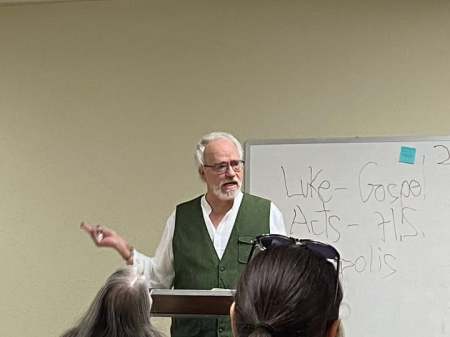
I recently had the privilege of speaking to a class of young Bible college students.
My subject was decidedly not on being successful, but on being a failure. Whole courses are geared toward ministerial success– but where are the ones for failure? I think that it just might be even more important, in the long run.
No human effort is going to erase your past.
I have tried and it can’t be done. I have blitzed my brains on drugs and booze, but I still remember the people I’ve hurt. (And I pray for them.) There really isn’t a cure for the evil we have done. I believe in forgiveness. And I hold to the idea that are sins are never to be a subject of guilty accusation–
“He will again have compassion on us; he will tread our iniquities underfoot. You will cast all our sins into the depths of the sea.”
Micah 7:19
Our dark iniquity is put in a very deep place. But there are the memories of an unkind word, or a sad and dark foolishness that we must learn to live with. There will be many regrets, and we face the terrible consequences of our sins, but it’s enough to know that all is under the blood of Jesus.
We are indeed forgiven. Completely.
We are now to live as forgiven sinners, yet precious in God’s eyes. We discover that although the Father has no favorites among His children, but He does have intimates. We are to live the rest of our lives for His glory, exploring that intimacy.
“Leave the broken, irreversible past in God’s hands, and step out into the invincible future with Him.”
Here are things I’ve heard over the years that we must take a second look at. Here are some possible answers.
“There must be something wrong with your spiritual life.”
Yes, depression CAN be a result of sin. BUT depression is NOT always a result of sin! If it is, God will tell you loud and clear what the problem is. This saying piles on the guilt for the depressed Christian. It’s unlikely that their depression has a spiritual cause, and this implies that they are not good enough spiritually.
“Repent and ask forgiveness for your sin!”
Depression is a result of sin, in that if there was no sin in the world depression wouldn’t exist. But then, neither would diabetes, cancer, or any other illness… Sin caused the world to be not-perfect, therefore illness exists. It’s a sin to be depressed, any more than it is to have any other illness. Depression can be used by God to encourage repentance, but in that case, it will be crystal clear exactly what sin you should repent of. If you don’t know or have just a vague sense of guilt, your depression is not the result of sin.
“You need to have more faith.” or “Have faith in God.”
Hebrews 11:1, “Now faith is the substance of things hoped for, the evidence of things not seen.” How much faith does it take to hold onto the Christian faith when emotions scream at you daily to give up, get out and turn against God? Very often a depressed Christian will be hanging onto faith by their fingernails in something that requires a ton of faith.
“Taking antidepressants is playing God, He can heal you.”
Yes, God can heal. Sometimes he doesn’t just flick a switch to make the illness vanish, sometimes the healing comes through the conventional ways of doctors, psychiatrists, counselors, therapists, and medication. By persuading someone not to take their medicines in preference for a quick, supernatural healing that God may not have in store for them, the sufferer is being denied something that will help them, right now.
“Scripture says everything that happens is for your own good!”
The actual verse found in Romans 8:28, “And we know that in all things God works for the good of those who love him, who have been called according to his purpose.” This verse in no way implies that the sufferer should sit back and accept the illness for the rest of their life. It also does not say that illnesses are not to be fought with the intention of a cure. While God may well have things to do with a depressed person, the illness is not a good thing itself, and it may take years before you see positive results from it.
“You’ve been prayed for, why has nothing changed?”
This can be expressed in several ways and spoken by one of two different groups of people: either the person who asked for prayer or those who prayed for them. We’ll break the underlying situation into two areas: something definite was experienced in the prayer time: chains were obviously broken and new freedom gained, or, nothing apparently happened at all. That is, “I know God set you free,” why aren’t you free yet?
“Depression is a self-discipline problem.”
Self-discipline is important to a Christian. We have to be disciplined enough not to break the laws of the land, and to obey our God. But no amount of discipline will get rid of a medical problem. This statement implies that the sufferer is lazy and could become better by sheer force of will. This is not possible and causes a lot of guilt.
“You’re depressed because you choose to be.”
Why would anyone choose depression? It is hell on earth. It destroys everything it touches. Families, marriages, jobs, churches, and ministries- faith, peace, hope, and love. Depression corrodes all that it touches.
Does a diabetic or cancer patient choose their disease? Does the blind or the deaf person wake up in the morning and decide they aren’t going to keep being handicapped? These are the questions I would ask.
“You just need to rebuke that spirit of depression and tell it to leave you. Don’t let Satan steal your joy.”
There are two problems with this statement. One problem is the assumption that depression is caused by demonic oppression. The other problem is the assumption that joy and happiness are the same things. Blaming a “spirit of depression” can be a wonderful cop-out. Just cast out the spirit and you’re cured! No need for long-term support, prayer, counseling, or anything at all! And with this statement comes the implicit assumption that once again it’s your fault you’re depressed, this time because you’re not “spiritual” enough to get rid of the troublesome spirit yourself.
Yes, it is possible that demonic oppression can cause depression. No, demons are not responsible for every case of depression. Imagine what would happen if this statement was directed at someone with cancer, hemophilia, or osteoporosis (“Just cast out that demon attacking your bones and be strong again! God wants to see you running marathons!”).
The second problem with this statement is that joy is equated with happiness. People with depression are not going to be the happiest souls in the church. I’ve heard it said that happiness depends on what happens, whereas joy can exist in very unhappy situations.
“There’s no such thing as mental illness, it’s all in your mind”
Saying this denies that there is anything actually wrong with the depressed person, and implies that they are just making it up. This piles on the guilt again! A mental illness can be defined as one that affects the mind; the brain is allowed to get ill, just as the liver and lungs are.
“It’s your own fault you’re depressed”
This is the kind of thing that Job’s “comforters” said, and it didn’t help then either. Bad things can happen to good people. Denying this hurts the sufferer.
“Pull yourself together”
If you’ve been trying, someone saying this to you comes across as “You haven’t been trying hard enough, do more, and more, and more until you get it right.” So back you go, pushing more and more, and still getting nowhere because you cannot pull yourself out of depression by your bootstraps, and you can’t fix a medical problem by force of will.