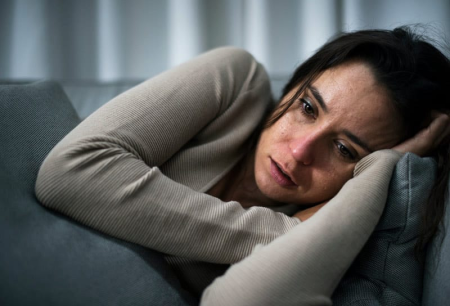
Social Anxiety Understood

“In any social situation, I felt fear. I would be anxious before I even left the house, and it would escalate as I got closer to a college class, a party, or whatever. I would feel sick in my stomach-it almost felt like I had the flu. My heart would pound, my palms would get sweaty, and I would get this feeling of being removed from myself and from everybody else.”

“When I would walk into a room full of people, I’d turn red and it would feel like everybody’s eyes were on me. I was embarrassed to standoff in a corner by myself, but I couldn’t think of anything to say to anybody. It was humiliating. I felt so clumsy, I couldn’t wait to get out.”

Social phobia, also called social anxiety disorder, is diagnosed when people become overwhelmingly anxious and excessively self-conscious in everyday social situations. People with social phobia have an intense, persistent, and chronic fear of being watched and judged by others and of doing things that will embarrass them. They can worry for days or weeks before a dreaded situation.

This fear may become so severe that it interferes with work, school, and other ordinary activities, and can make it hard to make and keep friends.

While many people with social phobia realize that their fears about being with people are excessive or unreasonable, they are unable to overcome them. Even if they manage to confront their fears and be around others, they are usually very anxious beforehand, are intensely uncomfortable throughout the encounter, and worry about how they were judged for hours afterward.

Social phobia can be limited to one situation (such as talking to people, eating or drinking, or writing on a blackboard in front of others) or maybe so broad (such as in generalized social phobia) that the person experiences anxiety around almost anyone other than the family.

Physical symptoms that often accompany social phobia include blushing, profuse sweating, trembling, nausea, and difficulty talking.

When these symptoms occur, people with social phobia feel as though all eyes are focused on them. 

Social phobia affects about 15 million American adults. 

Women and men are equally likely to develop the disorder, which usually begins in childhood or early adolescence. There is some evidence that genetic factors are involved. Social phobia is often accompanied by other anxiety disorders or depression, and substance abuse may develop if people try to self-medicate their anxiety.

The use of anti-anxiety drugs may be used and they can help you get through “bad patches” when anxiety becomes too much. It’s possible that these meds can help. Let your doctor guide you.

Understand that social anxiety can be successfully treated with certain kinds of psychotherapy or medications. You probably should find someone who understands what you’re dealing with. They need to be good listeners and have an encouraging voice.

Bringing in a pastor or elder must be considered.

Prayer and counsel are critical. Holding on to God’s promises is necessary and as you deal with this it can be God’s way of strengthening your walk. The Word is packed full of His promises. The Lord knows-He wants you to take up and understand what He wants to give you in this.

“Fear not, for I am with you; be not dismayed, for I am your God; I will strengthen you, I will help you, I will uphold you with my righteous right hand.”

Isaiah 41:10

Depression: A Few Questions

Here are things I’ve heard over the years that we must take a second look at. Here are some possible answers.

“There must be something wrong with your spiritual life.”

Yes, depression CAN be a result of sin. BUT depression is NOT always a result of sin! If it is, God will tell you loud and clear what the problem is. This saying piles on the guilt for the depressed Christian. It’s unlikely that their depression has a spiritual cause, and this implies that they are not good enough spiritually.  

“Repent and ask forgiveness for your sin!”

Depression is a result of sin, in that if there was no sin in the world depression wouldn’t exist. But then, neither would diabetes, cancer, or any other illness… Sin caused the world to be not-perfect, therefore illness exists. It’s a sin to be depressed, any more than it is to have any other illness. Depression can be used by God to encourage repentance, but in that case, it will be crystal clear exactly what sin you should repent of. If you don’t know or have just a vague sense of guilt, your depression is not the result of sin. 

You need to have more faith.” or  “Have faith in God.”

Hebrews 11:1, “Now faith is the substance of things hoped for, the evidence of things not seen.” How much faith does it take to hold onto the Christian faith when emotions scream at you daily to give up, get out and turn against God? Very often a depressed Christian will be hanging onto faith by their fingernails in something that requires a ton of faith.  

“Taking antidepressants is playing God, He can heal you.”

Yes, God can heal. Sometimes he doesn’t just flick a switch to make the illness vanish, sometimes the healing comes through the conventional ways of doctors, psychiatrists, counselors, therapists, and medication. By persuading someone not to take their medicines in preference for a quick, supernatural healing that God may not have in store for them, the sufferer is being denied something that will help them, right now. 

“Scripture says everything that happens is for your own good!”

The actual verse found in Romans 8:28, “And we know that in all things God works for the good of those who love him, who have been called according to his purpose.” This verse in no way implies that the sufferer should sit back and accept the illness for the rest of their life. It also does not say that illnesses are not to be fought with the intention of a cure. While God may well have things to do with a depressed person, the illness is not a good thing itself, and it may take years before you see positive results from it.  

“You’ve been prayed for, why has nothing changed?”

This can be expressed in several ways and spoken by one of two different groups of people: either the person who asked for prayer or those who prayed for them. We’ll break the underlying situation into two areas: something definite was experienced in the prayer time: chains were obviously broken and new freedom gained, or, nothing apparently happened at all. That is, “I know God set you free,” why aren’t you free yet?

“Depression is a self-discipline problem.”

Self-discipline is important to a Christian. We have to be disciplined enough not to break the laws of the land, and to obey our God. But no amount of discipline will get rid of a medical problem. This statement implies that the sufferer is lazy and could become better by sheer force of will. This is not possible and causes a lot of guilt.

“You’re depressed because you choose to be.” 

Why would anyone choose depression? It is hell on earth. It destroys everything it touches. Families, marriages, jobs, churches, and ministries- faith, peace, hope, and love. Depression corrodes all that it touches.

Does a diabetic or cancer patient choose their disease? Does the blind or the deaf person wake up in the morning and decide they aren’t going to keep being handicapped? These are the questions I would ask.

This image has an empty alt attribute; its file name is image-12.png

“You just need to rebuke that spirit of depression and tell it to leave you. Don’t let Satan steal your joy.”

There are two problems with this statement. One problem is the assumption that depression is caused by demonic oppression. The other problem is the assumption that joy and happiness are the same things. Blaming a “spirit of depression” can be a wonderful cop-out. Just cast out the spirit and you’re cured! No need for long-term support, prayer, counseling, or anything at all! And with this statement comes the implicit assumption that once again it’s your fault you’re depressed, this time because you’re not “spiritual” enough to get rid of the troublesome spirit yourself.

Yes, it is possible that demonic oppression can cause depression. No, demons are not responsible for every case of depression. Imagine what would happen if this statement was directed at someone with cancer, hemophilia, or osteoporosis (“Just cast out that demon attacking your bones and be strong again! God wants to see you running marathons!”).

The second problem with this statement is that joy is equated with happiness. People with depression are not going to be the happiest souls in the church. I’ve heard it said that happiness depends on what happens, whereas joy can exist in very unhappy situations.

“There’s no such thing as mental illness, it’s all in your mind”

Saying this denies that there is anything actually wrong with the depressed person, and implies that they are just making it up. This piles on the guilt again! A mental illness can be defined as one that affects the mind; the brain is allowed to get ill, just as the liver and lungs are.

“It’s your own fault you’re depressed”

This is the kind of thing that Job’s “comforters” said, and it didn’t help then either. Bad things can happen to good people. Denying this hurts the sufferer.

“Pull yourself together”

If you’ve been trying, someone saying this to you comes across as “You haven’t been trying hard enough, do more, and more, and more until you get it right.” So back you go, pushing more and more, and still getting nowhere because you cannot pull yourself out of depression by your bootstraps, and you can’t fix a medical problem by force of will.

bry-signat-1

An Attack of Panic

A panic attack affects one out of 75 people, and it often can be quite disconcerting.  My panic attacks occur roughly once a month and last for about 1/2 hour.  When the acute symptoms first appear my first reaction is to resist giving in to it.  I get the “shakes.” For a long time, I didn’t know what caused them or more importantly what could stop it.

A panic attack is a sudden surge of an incredible fear.

Typically it comes without warning and without any obvious reason. It is far more intense than the feeling of being ‘stressed out’ that most people experience.

As a believer in Jesus, the physical symptoms can be quite real, but the spiritual issues become obvious when we consider Satan’s attacks on our faith. Although we may have a proclivity, we don’t have to surrender to panic as the way of life.

Symptoms of a panic attack include:

  • racing heartbeat
  • difficulty breathing, feeling as though you ‘can’t get enough air’
  • a terror, that is almost paralyzing, a seeming irrational fear
  • dizziness, lightheadedness or nausea
  • trembling, sweating, shaking
  • choking, chest pains
  • hot flashes, or sudden chills
  • tingling in fingers or toes, (‘pins and needles’).
  • fear that you’re going to go crazy, or are about to die

You probably recognize this as the classic ‘flight or fight’ response that human beings experience when we are in a situation of danger. But during a panic attack, these symptoms seem to rise from out of nowhere. They occur in seemingly harmless situations–they can even happen while you are asleep.

In addition to the above symptoms, a panic attack is marked by the following conditions:

  1. it occurs suddenly, without any warning and without any way to stop it.
  2. the level of fear is way out of proportion to the actual situation; often, in fact, it’s completely unrelated.
  3. it passes in several minutes; the body cannot sustain the ‘fight or flight’ response for longer than that. However, repeated attacks can continue to recur for hours.

A panic attack is not dangerous, but it can be a bit terrifying.

Largely because it feels ‘crazy’ and ‘out of control.’ Panic disorder is frightening because of the symptoms associated with it, and also because it often leads to other complications such as phobias, depression, substance abuse, medical complications, even suicide.

Its effects can range from mild social impairment or just pretty a total inability to face the outside world.

As a follower of Jesus, I’m certain that Psalm 91 is written for me. If I may, attacks of fear shouldn’t be faced head on, rather we set our hearts on Jesus, and allow Him to defend and protect us. I suppose we’ll always be susceptible, but we dare not be defeated.

Psalm 91:5, ESV

Further reading and help on panic attacks check out these sites:

A Few Bipolar Basics

Bipolar disorder symptoms are characterized by an alternating pattern of emotional highs (mania) and lows (depression). The intensity of signs and symptoms can vary from mild to severe. There may even be periods when your life doesn’t seem affected at all. Take care when this happens.

The manic phase of bipolar disorder–
Signs and symptoms of the manic phase of bipolar disorder may include:

  • Euphoria
  • Extreme optimism
  • Inflated self-esteem
  • Poor judgment
  • Rapid speech
  • Racing thoughts
  • Aggressive behavior
  • Agitation
  • Increased physical activity
  • Risky behavior
  • Spending sprees, credit card irresponsibility
  • Increased drive to perform or achieve goals
  • Increased sexual drive
  • Decreased need for sleep
  • Tendency to be easily distracted
  • Inability to concentrate
  • Drug abuse

The depressive phase of bipolar disorder–
Signs and symptoms of the depressive phase of bipolar disorder may include:

  • Sadness
  • Hopelessness
  • Suicidal thoughts or behavior
  • Anxiety
  • Guilt
  • Sleep problems
  • Appetite problems
  • Fatigue
  • Loss of interest in daily activities
  • Problems concentrating
  • Irritability
  • Chronic pain without a known cause

Types of bipolar disorder
Bipolar disorder is divided into three main subtypes:

  • Bipolar I disorder. You’ve had at least one manic episode, with or without previous episodes of depression.
  • Bipolar II disorder. You’ve had at least one episode of depression and at least one hypomanic episode. A hypomanic episode is similar to a manic episode but much briefer, lasting only a few days, and not as severe. With hypomania, you may have an elevated mood, irritability, and some changes in your functioning, but generally, you can carry on with your normal daily routine and functioning, and you don’t require hospitalization. In bipolar II disorder, the periods of depression are typically much longer than the periods of hypomania.
  • Cyclothymia. Cyclothymia is a mild form of bipolar disorder. Cyclothymia includes mood swings but the highs and lows are not as severe as those of full-blown bipolar disorder.

Other bipolar disorder symptoms:

In addition, some people with bipolar disorder may have rapid-cycling bipolar disorder. This is the occurrence of four or more mood swings within 12 months. These moods shifts can occur rapidly, sometimes within just hours. In mixed state bipolar disorder, symptoms of both mania and depression occur at the same time.

Severe episodes of either mania or depression may result in psychosis or a detachment from reality. Symptoms of psychosis may include hearing or seeing things that aren’t there (hallucinations) and false but strongly held beliefs (delusions).

Taken from the Mayo Clinic/Bipolar Disorder Symptoms.