Training Your Spirit

Image result for studying

Through suffering, our bodies continue to share in the death of Jesus so that the life of Jesus may also be seen in our bodies.”

2 Corinthians 4:10, NLT

“Since he himself has gone through suffering and testing, he is able to help us when we are being tested.”

Hebrews 2:18

No book, no tutor will give us the education we need.  We must patiently go through seasons of difficulty and temptation before we can understand what our brother or sister is facing.  Furthermore, we must advance through different levels;  sickness, injury, loss and discouragement.  On top of this, we must be tutored in the language of affliction, till we speak it without an accent.

This is a ‘strange’ school.  We’re watched and observed very closely to see what we will do.  “Will he give $5 to the homeless man, or will he turn away like usual?” There are billions of these scenarios that we get placed in.  And often there are multiple layers of these ‘programs’ running simultaneously.

And yet we are always being evaluated in love.

It is very advantageous for you to pass this way, because it lets you speak the dialect of suffering, with its mixture of pain and joy.  Believers now have a common tongue which in we communicate.

When Lynn and I lost our daughter Elizabeth, it was a deep, dark valley.  But I came to see (understand) that in some obscure way now able to speak into the hearts of those who were lost in pain.  Death has a way of touching us deeply.

There are so many different classes in God’s ‘strange’ university.  You may be enrolled in Compassion 101, or Mercy 410.  Oh, and by the way there is a school counselor available to all students that request Him (the Holy Spirit).

Also, we will do remarkably better if we will befriend others who are also enrolled.  Worshipping and the Word are quite critical as we must keep our spirits clean and right.

“He suffered and endured every test and temptation, so that he can help us every time we pass through the ordeals of life.”

Hebrews 2:18, TPT

 bry-signat (1)

cropped-christiangraffiti1.jpg

Coming Home to Father

Rembrandt’s, “Parable of the Prodigal’s Son”

“He was yet a great way off, his father saw him.”

Luke 15:20

The boy had, in the far-away country, a vision of his old home. As he sat there and thought of his dishonor and his ruin, there flashed before him a picture which made him very home-sick. The vision brought back the old home in all its beauty and blessedness. There was plenty there, while here the once happy, favored son was now starving to death.

It was a blessed moment for the prodigal. It was God’s message to him, inviting him to return home. When a child is stolen away from a lovely and tender household, it may be kept among wandering gypsies or savage Indians even to old age, but there are always broken fragments of sweet memories that hang over the soul like trailing clouds in the sky — dim, shadowy memories of something very lovely, very pure, reminiscences of that long-lost, long-forgotten past, when the child lay on the mother’s arms, and was surrounded by beauty and tenderness.

So there is something in the heart of every one who has wandered from God that ever floats about him, even in sin’s revels — a fair, ethereal vision, dim and far away perhaps, but splendid as the drapery of the sunset. It is the memory of lost innocence, of the Father’s love, the vision of a heavenly beauty possible of restoration to the worst.

When the prodigal reached home he found his vision realized. His father was watching for him — had long been watching for him. It is a picture of the heavenly Father’s loving welcome of every lost child of His that comes back home. Thus He receives the worst who comes penitently. Our sweetest dreams of God’s love are a thousand times too poor and dim for the reality. A great way off God sees the returning prodigal, and runs to meet him. No matter how far we have wandered, there is a welcome waiting for us at home.

JR Miller


I have had to edit Pastor Miller’s comments a bit, but absolutely nothing to its original content or integrity. Whatever he has written carries the content he was realizing. I posted this on BB because of his sincere message and burden.

–Pastor Bryan 


cropped-christiangraffiti1.jpg

Don’t Waste Your Sorrows


062_dont_waste_your_sorrows

These little troubles are getting us ready for an eternal glory that will make all our troubles seem like nothing.”

2 Cor. 4:17, CEV

“Before God could bring me to this place He has broken me a thousand times.”                                   

Smith Wigglesworth


As we move toward maturity, over time and through circumstance, we will start to develop exciting new ways of thinking.  We engage the Word and combined with our relationships with people we start the work of God.  We soon learn that the Kingdom of God flows through relationships, almost exclusively.

Pain and sorrow are some of the more intense ways the Lord reaches down and into our lives.

Rick Warren has written, “God intentionally allows you to go through painful experiences to equip you for ministry to others.” 


I think that as we dwell on this we will start to see the hand of God, moving things around in our complicated lives.  As we attend class in this school of the Spirit, we learn things that will change our life and ministry.

But we must consider that we can waste our pain and sorrows by not engaging the issues properly.  Will I submit, or will I grow sullen and cynical? Will I worship through my tears?  Surrendering to Christ is not a once-in-a-lifetime event.  It is a daily, and even hourly process.  I regard any kind of cynicism though, as a hungry predator who is hunting me.  Very dangerous, and I am highly suspectable.

Pain is the way the Father reaches me, he isn’t too concerned about our comfort (it isn’t the real issue, after all.)  When I hurt, I invaribly look for Jesus.  And that cannot be all bad.  Through the trials and pain I begin to reconnect with my Father.  Without the trials, I doubt we would ever call out for His help.

“Don’t waste your sorrows.”  It is easily said but seldom done.  We start to stagger by the weight of our personal issues.  Overwhelmed by the pain we start to panic and grab things, and throw them overboard, to lighten the load.  We can be confused, and will do whatever we must do to stay afloat.  But unless we take these sorrows well, we are just short-circuiting God’s intentions.

C.S. Lewis once commented on our issues,

“Experience: that most brutal of teachers. But you learn—my God do you learn.”

The darkness intends to absorb us.  Satan uses our own bitterness and frustration to do this.  Our discipleship is no longer valid if we commence doing our own will and desires.  Even though we get “flaky” the Father will always love us. But we dare not waste our pain, it comes at too big of a price.

bry-signat (1)

cropped-christiangraffiti1.jpg


The Blessings of a Long Battle, part 4

boxing3

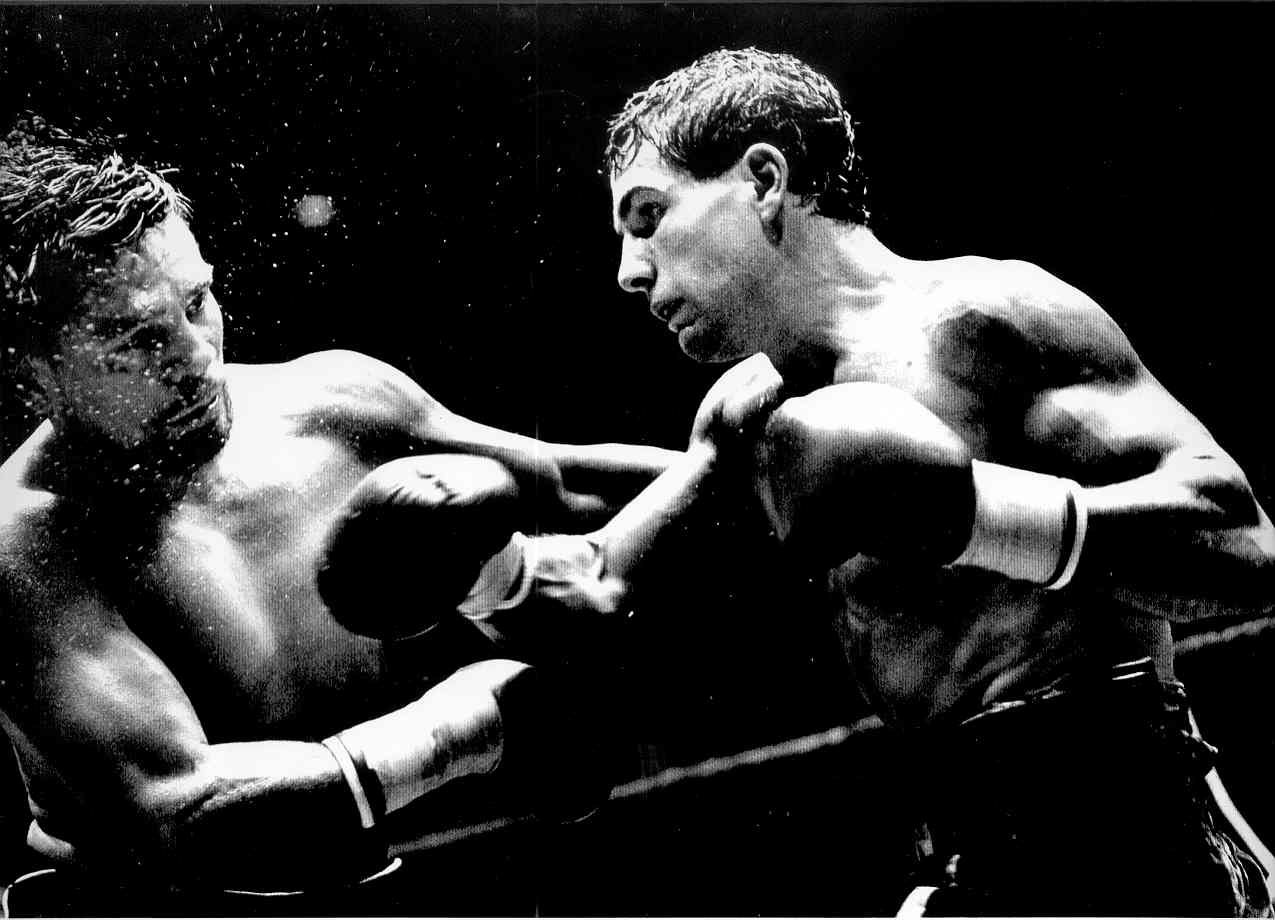
In thinking about this final installment about how God can bring much good out of our protracted struggle with sin, weakness, or a problem, it dawned on me how important it is to see the Big Picture. In some ways this post reiterates truths in part 2 of this series, but also adds important new dimensions to those truths and explores new territory.

When a soldier goes through boot camp, it’s crucial for him or her to see the overall purpose of his training–the Big Picture. He or she is being pushed and tested in different ways to the extreme so that they will be prepared for any situation on the battlefield, won’t crack under pressure, and will be a team player.

In the conquest of Canaan under Joshua’s leadership, the nation of Israel experienced many victories over different hostile nations. However, Judges 3:1–4 says that God did not allow the Israelites to completely triumph but left certain enemies in the land (e.g., the Philistines) so that his chosen people would learn warfare.

When we became Christians, God could have put us in a cocoon of protective grace where we would be insulated from our three primary enemies–the world, the flesh, and the devil–but he didn’t so that we would also learn warfare.

If he would’ve sheltered us from the battle, we would end up like many “trust fund babies,” who, because of their vast inherited wealth, never have to work a day in their lives. They’re protected from the toil and struggle of life and never have to worry about paying the rent or the electric bill.

Often there is something profoundly missing in their lives: many are spoiled, shallow, and have not been battle–tested. Perhaps God designed an existence where we battled the world, the flesh, and the devil so that we would not end up becoming spiritual trust fund babies.

Macarius was a great monk who composed the Macarian Homilies in the 4th century. He was convinced that, if after becoming Christians, we were protected in a cocoon of grace from the temptations of the world, the flesh, and the devil, many of us would soon become conceited and fall as Satan fell. Instead of a three steps forward, two steps back grind that life often is, we would have a series of unbroken successes and become lifted up in pride and fall like Lucifer did.

In seeing the big picture, nothing is more important than understanding that God the Father through the Holy Spirit has been preparing a Bride for his Son in a Marriage that will span eternity. He wants you to be a part of that Bride. The Father wants the Bride to fervently love the Groom.

There is no love without free choice. If we would’ve been protected from the enemies of our soul, and choosing the Groom was exquisitely easy or even automatic, where’s the love that has been tested in the furnace of affliction? Like any spouse, Christ wants to be chosen. If we were automatons or even semi–automatons, where’s the love in that?

When we are in a long struggle with sin or weakness, it is because we have become over–attached to some created thing. Addiction is over–attachment in the extreme (e.g., overeating, alcohol, drugs, pornography, sex, power, work, shopping, etc.)

Christ the Uncreated One wants to be chosen over all the created things. Christ the Groom wants to stand in the midst of all his competitors–i.e. created things–and have the Bride choose him. One of the blessings then of a long battle is this: it’s the vehicle whereby we choose Christ as our Groom, as our only lover.

Does that love somehow go away if you’re a Christian who is up to your eyeballs in sin, addiction, and weakness? If anything God loves you more after you fall, because where sin abounds, grace abounds more. And as the old religious cliché tells us, he loves us in our sin and loves us too much to leave us there.

 *

Jonathan

Check out Jonathan’s own site at http://www.openheavensblog.com/.