Under Quarantine

quarantine

Quarantines are a real possibility, even to this day. A quarantine is imposed when a disease is contagious enough that it would harm a society: Measles, Smallpox, and the recent COVID-19 are just a few physical diseases where isolation must be imposed.

It can be severe— an epidemic, with desperate consequences if not adhered to; in some rare cases, the use of deadly force has been authorized to maintain a quarantine until the disease is no longer communicable.

This may surprise you, but there are examples of ‘quarantines’ in the Bible.

The term ‘unclean’ was used for ‘leprosy.’ Those afflicted had to isolate themselves; they had to ‘announce’ their presence when in contact with society. Lepers lived in groups away from the general populace, as a result of their disease.

In Paul’s epistle to the Corinthians, he addresses another kind of ‘quarantine.’ The situation was dire; the church had advocated a Christian living with his father’s wife.

“I have already passed judgment on this man in the name of the Lord Jesus. You must call a meeting of the church. I will be present with you in spirit, and so will the power of our Lord Jesus. Then you must throw this man out and hand him over to Satan so that his sinful nature will be destroyed and he himself will be saved on the day the Lord returns.”

1 Corinthians 5:3-5, NLT

Understanding the Principle of Usefulness

Now in a large house, there are not only gold and silver vessels, but also vessels of wood and of earthenware, and some to honor and some to dishonor.”

2 Timothy 2:20, NASB

Found in God’s pantry are lots of pots and pans of various uses.  Paul writes Timothy about the ‘large house’ which is the Church inclusive. Look around Timothy, there are gold ones, and there are silver ones. They have a noble purpose fitting for such a great house. These are the ones the guests will use; they befit the significance of the Lord himself. These vessels have great value for they are made of precious metals.

There are vessels of different categories. These are the ones made of wood, and of clay. These are part of the household, make no mistake about it. But their use is one of function, they’re utilized in common and ignoble ways. (A clay ‘bed-pan’ perhaps?!)

21 “Therefore, if anyone cleanses himself from these things, he will be a vessel for honor, sanctified, useful to the Master, prepared for every good work.”

2 Timothy 2:21

Paul, the author of the New Testament doctrine of grace emphasizes the place of personal holiness. We are to ‘cleanse’ ourselves to become a vessel of honor. There is good news here:

  • All are vessels in the Father’s house. Each of us belongs to Him. He alone determines their use.
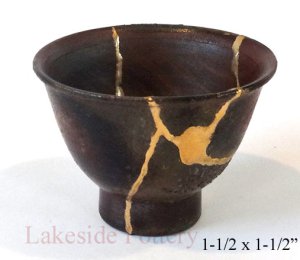
  • Things are not yet in their final state. Changes in status can be experienced. In God’s economy, clay pots can become ‘golden.’ Silver can become ‘wood.’

Some sin is contagious.

It affects believers, and the Church becomes compromised by what we’ve done. And then sometimes we are quarantined by the Holy Spirit–until the contagion passes. This spiritual disease must not be permitted.

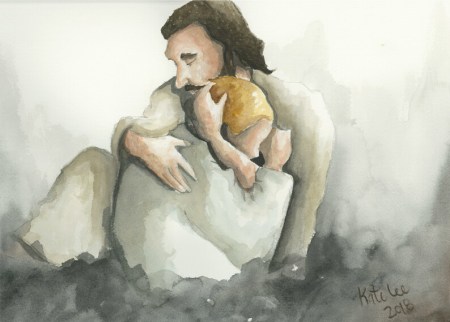
I have experienced this several times in my own discipleship. These are not pleasant times, but there is no condemnation. I’m still His servant, His love for me stays outrageously constant. He has never turned away a sinning child who repents of their sin.

“Yes, I am His servant, but I must wait out in the hall. I haven’t been faithful. So I sit in His waiting room, waiting for His call. This is for my good. And my Father knows what is best.” 

Messed Up People

Elijah was suicidal. Job wished he had never been born. David understood deep depression. Moses was anxious. Hannah was barren. Jonah was angry. Paul was all alone in a prison cell.

And actually, this is only a brief list. The Bible is loaded with flawed people who stumbled trying to be faithful. God uses imperfect people, because there really isn’t any other kind to be found. And there were others.

Noah got spectacularly drunk. Abraham lied. Jacob repeatedly deceived others. Rahab was a whore. Samson lusted. David committed adultery and was a murderer. Peter denied Christ.

Why does God favor and love people who are so disturbed? Honestly, none of us measure up. It seems He uses the weak to carry out a plan and a purpose of redeeming others, and establishing a Kingdom. He takes messes and gives them His message.

He is Love– 100% of the time, and He loves you, and He loves me, He loves the world. (John 3:16.)

Messed up people of faith become instruments and vessels of grace to other messed up people. We carry a treasure that is not ours. Sometimes it takes years to see this. I hope you can understand this. I hope it doesn’t take long.

And nothing is ever really wasted. Our mistakes (sins) become useful things to Him. For example, David’s sin would be transformed into Psalm 51 and 32. Yes, his disobedience had consequences, I won’t dispute that, but something wonderful also came when he repented.

David paid an awful price for his sin. That disobedience almost destroyed him. Not only did it separate him from God, but his family felt the effects of his evil actions.

Yes, you need to repent. But when sin is destroying you, it does seem you need to turn from it, and leave it now.

The first two verses of Psalm 51 can bring tears when we finally understand their profound beauty, for they came out of David’s personal evil:

Psalm 53:1-2, ESV

For thousands of years people of real faith have come and drawn beauty and grace from this song. David knew his sin was real, and incredible pain emerged from that, but the Psalm did also.

Please do not try to hide or excuse your sin, it always has the most awful consequences.

Broken people can be forgiven, redeemed and used. Sometimes I think God gets special enjoyment out of picking the worst and patiently loving us to wholeness. If you really know Him, and know your flaws, you’re well on your way of usefulness in His kingdom.

“But we have this treasure in jars of clay, to show that the surpassing power belongs to God and not to us.”

2 Corinthians 4:7

Taking Your Next Step

J.R. Miller
(1840 – 1912)

“At some point in the Alps, the guides warn tourists not to talk nor sing, nor even to whisper, lest the reverberation of their words in the air may start an avalanche from its poise on the mountain, and bring it down upon the villages and homes in the valley. There are men and women who are carrying such loads of duty, anxiety, or sorrow—that the slightest addition to the weight would crush them. They are battling bravely against odds.

They are holding out under great pressure, sustained by a trembling hope of getting through, at last, successfully. They are bearing up under a burden of difficulty or trouble, comforted by the expectation that in the end—their darkness will turn to light. But everything is “in the balance”.

Then along comes one of these gloomy discouragers.

He has no perception of the fitness of things. He lacks that delicate, sympathetic feeling which enables men of a finer grain and a nobler quality—to enter into the experience of others and put strength into their hearts. He discovers the trouble through which his friends are passing. But instead of speaking a word of cheer to help them to be victorious, he talks in a pessimistic or disheartening way which makes their difficulties seem greater, their burdens heavier, and their sorrows altogether hopeless!

It is hard to be patient with such people, for they are really enemies of human happiness!

They make life immeasurably harder for everyone they meet. They take the brightness out of the sunniest day; the blue out of the clearest sky; and something of the gladness out of the happiest heart. Then they make work harder for every toiler—and pain keener for every sufferer! There ought to be a law making it a crime—for one man to discourage another, and affixing severe penalties to every violation of this law!

How much better it would be—if instead of being discouragers, we would all learn to be encouragers of others! The value of words of cheer is incalculable!

There is an old story of a fireman who was climbing up a ladder amid smoke and flame, trying to reach a high window—to rescue a child from a burning building! The man had almost gained the window—but the heat was so intense, and the smoke so blinding, that he staggered on the ladder and seemed about to turn back. The great crowd below was watching him with breathless interest and, seeing him waver and hesitate, began to “cheer” him! This nerved the fireman anew for his heroic task, and in a moment the brave fellow had entered the house and soon returned, saving the child. It is ‘cheer’ that people need, not discouragement, when they are fighting a hard battle!

Men who give us only their doubts and fears, are misanthropists. True philanthropy brings us hope and heartening. The truest helpers of others—are those who always have words of exhortation and inspiration to speak, who always are encouragers.”

“I would go to the deeps a hundred times to cheer a downcast spirit. It is good for me to have been afflicted, that I might know how to speak a word in season to one that is weary.”

 Charles Spurgeon


Don’t Waste Your Sorrows

“You have given me many troubles and bad times, but you will give me life again. When I am almost dead, You will keep me alive.”

Psalm 71:20, NCV

“He was despised and rejected by men,
    a man of sorrows and acquainted with grief;”

Isaiah 53:3, ESV

Everyone hurts sometimes. We all will face our special sorrows. But there are times when our pain pounds us intensely, and it can get really bad. The darkness rolls in on our souls like a caustic fog. We might devastatingly discover that there are things that are worse than terrible.

I have never spoken out like this, but my wife and I had a daughter who died— she was stillborn. She was doing great, up to a week before her due date. We knew that in seven days, we would be able to see her– face-to-face.

Elizabeth Grace Lowe died shortly after birth from strangulation. It was a sudden and unexpected tragedy that left us devastated.

We were completely undone. 

“For the Lord will not reject forever,
For if He causes grief,
Then He will have compassion
According to His abundant lovingkindness.
For He does not afflict willingly
Or grieve the sons of men.”

Lamentations 3:32-33, NASB

There is pain, but there are also promises.

There can be brutal sadness, but there are also Psalms. There is a blessing for all those who grieve. This topic deserves far more attention than this simple post. (If you’re in the thick of things, I’m trusting the Holy Spirit will help you to your next step.)

There can be such sorrow in this life.

Much more than the human heart can possibly contain. But our Savior has a title (one of many.) He is the “Man of Sorrows.” He is the one who is “on point.” He leads us through such intense hostility. He is there when the switch is flipped and it becomes instantly dark. We can’t, won’t, and will not leave you to face your pain alone.

There are a few things that I want to communicate to you.

These have come out of great darkness. I have tried awfully hard to be a disciple, even through the worst of it. They may be right, wrong or just okay, I don’t really know…

  1. God takes the full blame for our pain and sorrow. He doesn’t shift the blame or deny His presence in our sufferings. Sometimes you need to adjust your theology. Maybe it’s hard to trust Him right now–that’s more than understandable. In eternity, I believe, it’ll make perfect sense.
  2. Jesus has fully shared our sorrow. All that you are feeling right now, He feels. If you feel you are at a minus 10, then He does as well. As you suffer, He is your shadow. He knows.
  3. Nothing is ever wasted. We really shouldn’t treat these moments of sorrow as a waste. Have you ever wondered at Jesus’ ‘economy’ after the 5000 were fed?  He assigns value to the leftovers. The disciples pick up their baskets and collect everything again. Nothing will go to waste. Nothing.
  4. This pain, this sorrow is the intensive crash course in becoming a person of mercy. You now will always walk with a limp. At times the scars will be quite visible to those who can really see. This will become forever a healed wound (but a wound nevertheless.) It helps to seek out others who have walked this same path. I don’t think I will ever fully trust a person who doesn’t walk with some kind of limp.
  5. You will need (but maybe not accept) the transformation of your suffering into glory. This will take some time, and it almost feels like your not progressing at all. I encourage you to re-think each of these simple points. The Holy Spirit may be working, perhaps behind the scenes.
  6. Finally remember this: God is not a monster, stomping on us like a boy crushes ants. He has carried all of our pain and illness. He clearly comes alongside every suffering believer.

It is Satan who would suggest to you that God is a Celestial Menace, not worthy of our love. I will be very blunt with you, that idea has to be implicitly rejected. Its origins are satanic.

“The moment an ill can be patiently handled, it is disarmed of its poison, though not of its pain.”

    Henry Ward Beecher

“The LORD is close to the brokenhearted; he rescues those whose spirits are crushed.”

Psalm 147:3, NLT